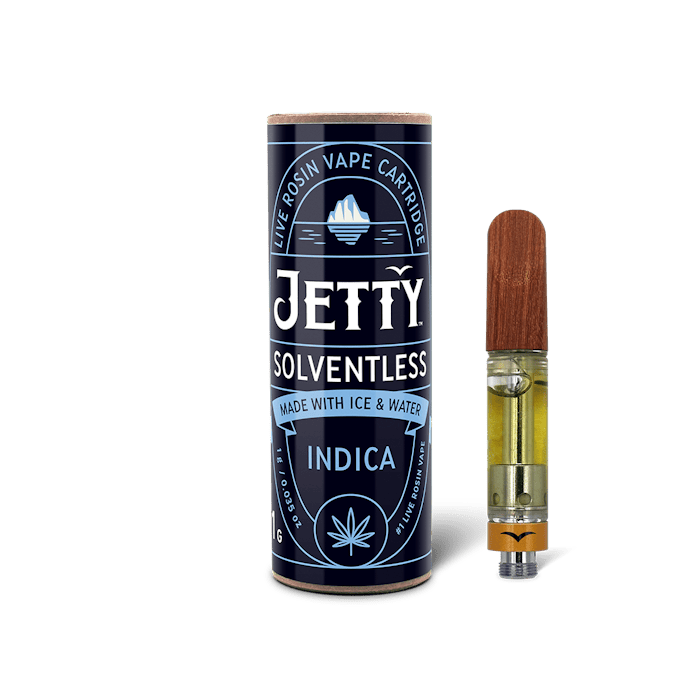
THC 82.92%·CBD 0.19%Indica
Jetty ExtractsJetty Extracts Vape Cartridge Solventless Tropic Stank - Indica · 1g
$68.14
$77after tax

weeddispensarynearme.com
You must be 21 years or older to enter. By entering, you confirm you’re of legal age in your state to purchase cannabis.
For use only by adults 21+ • Keep out of reach of children
1 live products in stock
Quick answer · What is the Tropic Stank cannabis strain?
Tropic Stank arrives with the kind of bold, fruit-forward character that commands attention before the jar is even open. A deeply indica-leaning cultivar, it balances lush tropical aromatics against an earthy, fuel-tinged backbone that keeps the experience grounded and deliberate. For the discerning evening consumer who values a strain as complex on the nose as it is on the palate, Tropic Stank occupies a singular, unhurried corner of the flower case.
$77after tax
About Tropic Stank
Tropic Stank is a relatively recent entry in the contemporary craft cannabis scene, and like many boutique cultivars that have emerged through small-batch breeding programs over the past decade, its precise parentage is not universally documented in public databases. What circulates most consistently among enthusiasts and retailers is that Tropic Stank carries genetics associated with tropical, fruit-forward indica lines — likely drawing from families such as Zkittlez or related fruity indica crosses that gained prominence on the West Coast in the mid-2010s — combined with a pungent, fuel-heavy counterpart that lends the 'stank' half of its name. The breeder has not publicly released a fully verified genetic lineage, so any specific parental claim beyond these broad lineage families should be treated as community-attributed rather than confirmed. What is well-supported is the strain's phenotypic consistency: cultivators and consumers alike report stable, recognizable characteristics batch to batch, which suggests a reasonably well-selected and stabilized pheno rather than an early-generation hybrid. Its rise in popularity tracks with the broader craft market's appetite for strains that deliver layered, complex terpene profiles alongside reliable indica-dominant effects. Genetic siblings or closely related phenotypes have not been formally named by any verified breeder source, though the Zkittlez lineage family has produced a wide array of fruit-forward descendants that share overlapping qualities.
The onset of Tropic Stank is typically measured and deliberate, arriving within five to fifteen minutes when smoked or vaped — a quality that suits the attentive consumer who prefers to pace their session with intention. The initial wave tends to register first as a gentle pressure behind the eyes and a softening of physical tension across the shoulders and jaw, the hallmarks of an indica-forward cannabinoid profile in which THC interacts with the body's CB1 receptors in a progressively sedating pattern. At peak, the experience leans firmly into the body while allowing the mind a quiet, unhurried clarity — not the sharp creative electricity of a sativa-dominant strain, but a settled, contemplative ease that makes ambient activities feel more vivid and sensory pleasures more pronounced. Myrcene, typically the dominant terpene in indica-leaning cultivars, is thought to contribute to the characteristic couch-friendly heaviness, while caryophyllene may add a subtle spiced warmth that tempers any edge of restlessness. Duration runs on the longer side for experienced consumers — commonly ninety minutes to two-and-a-half hours — with a comedown that is gradual and rarely abrupt. The tail end of the experience tends toward drowsiness, making Tropic Stank a natural fit for late-evening hours rather than any time-sensitive engagement. As with any potent indica, those newer to cannabis are encouraged to start low and go slow.
The aroma profile of Tropic Stank is its most immediate and defining characteristic. On first encounter, the nose is met with a pronounced wave of tropical fruit — ripe mango, guava, and a whisper of passionfruit — underpinned by the kind of damp, organic earthiness that recalls overripe fruit left in warm air. This pairing of sweet and funky is not accidental; it reflects the strain's likely terpene architecture, in which myrcene serves as the anchor, delivering both the mango-adjacent sweetness and the earthy, herbal depth that gives the strain its distinctly 'stanky' character. Moving deeper into the profile, caryophyllene asserts itself as a secondary presence — a dry, peppery spice that cuts through the fruit and adds structural complexity, preventing the aroma from reading as one-dimensional. Some phenotypes also express ocimene, which contributes a faintly floral, almost tropical-green note, and terpinolene, which can push the fruitiness in a slightly piney or herbal direction depending on the individual cut. On the palate, the smoke or vapor is notably smooth for a strain with such a pungent aromatic presence. The inhale opens with ripe fruit and a mild floral sweetness; the exhale reveals the earthier, more fuel-tinged base notes alongside a lingering caryophyllene spice that coats the back of the throat gently. The finish is long and satisfying, with the tropical character persisting well after the session concludes.
Tropic Stank produces buds that lean toward the dense, compact structure one expects from a well-cultivated indica-dominant cultivar. Calyxes stack tightly and the overall architecture is chunky and substantial, with a heft in the hand that signals careful cultivation and a thorough dry and cure. The color palette is a study in deep, saturated greens — forest green at the core fading to olive and sage at the outer leaves — occasionally punctuated by flashes of deep purple in phenotypes grown at cooler temperatures during the final weeks of flower. Pistils present in warm amber and burnt orange, contrasting richly against the darker foliage and adding visual warmth to the bud. Trichome coverage is generous and evenly distributed, giving the surface a frosted, almost luminous quality under direct light. The resin glands are predominantly capitate-stalked and appear well-developed, consistent with the strain's reputation for a pungent, resin-forward profile. Overall, the visual presentation of Tropic Stank is as expressive as its aroma — a strain that rewards close inspection.
Tropic Stank is best understood as an intermediate-level cultivar — accessible to growers with a season or two of experience, but not ideally suited to a first-time home grow given the attention its terpene expression demands during the curing phase. Indoors, it is reported to perform well under controlled conditions with a flowering window in the range of eight to nine weeks. Yields are considered moderate to above-average for an indica-dominant strain, with dense bud development that benefits from low-stress training techniques to improve canopy light penetration. Outdoors, Tropic Stank favors a warm, Mediterranean-style climate with stable temperatures and low late-season humidity — conditions that protect the dense bud structure from moisture-related issues during the final weeks of ripening. In New York's variable climate, outdoor cultivation is best suited to sheltered, south-facing sites where the growing season can be maximized. The strain's aromatic intensity during late flower is notably pronounced, a consideration for any cultivator mindful of discretion. A slow, careful cure — typically two to four weeks minimum — is widely regarded as essential to fully realizing the complex tropical terpene profile that defines the strain's appeal.
Tropic Stank is, by temperament, an evening strain — one that suits the hours after the day's demands have receded and there is genuine space to settle into the present moment. Its indica-dominant arc, anchored by myrcene's characteristic physical ease, makes it a natural companion for activities that reward slowness and sensory presence rather than output or social performance. Solo listening sessions with music that has textural depth — jazz with a warm low end, ambient electronic, or any recording where the mix rewards close attention — align naturally with the strain's capacity to heighten auditory detail while quieting mental noise. For food pairings, the strain's tropical fruit aromatics and peppery caryophyllene finish suggest an affinity for bold, spiced cuisines: a well-seasoned Thai curry, a ripe mango with Tajín, or a slow-cooked jerk preparation where the interplay of sweet and heat mirrors the strain's own internal tension. It also suits the post-dinner wind-down shared with a small group of close friends — not a party catalyst, but a convivial, unhurried close to a good evening. For solo consumers, it pairs well with a long bath, a slow film, or the quiet pleasure of doing nothing in particular with full attention.
Zkittlez
Fans of Zkittlez will recognize Tropic Stank's fruit-forward terpene architecture and relaxed indica body feel, making the transition between the two intuitive and rewarding.
Tropicana Cookies
Tropicana Cookies shares the bright, citrus-adjacent tropical aroma profile that defines Tropic Stank, though it leans slightly more cerebral — a useful comparison point for consumers calibrating their preference.
Gelato 41
Gelato 41's dense bud structure, rich trichome coverage, and balanced indica-forward effect profile mirror several of Tropic Stank's most distinctive physical and experiential qualities.
Banana Punch
Banana Punch offers a similarly lush, fruit-saturated aroma with an indica body effect that shares Tropic Stank's unhurried, evening-oriented character.
Runtz
Runtz fans drawn to candy-sweet tropical terpenes layered over a smooth, enveloping indica effect will find Tropic Stank's funkier, earthier take on that same framework deeply satisfying.
Tropic Stank is an indica-dominant cultivar. Its effect profile — progressive physical relaxation, a quieting of mental activity, and a tendency toward drowsiness in the later stages of the experience — aligns consistently with indica-dominant genetics. It is not considered a balanced hybrid and is generally not recommended for daytime use or situations requiring sustained alertness or social energy.
Tropic Stank delivers a layered palate experience anchored by ripe tropical fruit — mango and guava are the most commonly cited notes — with an earthy, faintly fuel-tinged base that provides depth and prevents the profile from reading as purely sweet. On the exhale, a dry peppery spice from caryophyllene lingers at the back of the throat. The finish is long, with the fruit character persisting well after the session ends.
Consumers typically report a gradual onset of physical relaxation beginning in the shoulders and spreading through the body, accompanied by a quiet, unfocused mental ease. At peak, the experience is sedating without being disorienting — a grounded, body-centered state that suits restful or sensory activities. The duration runs approximately ninety minutes to two-and-a-half hours, with the comedown tending toward drowsiness.
Consumers who enjoy Tropic Stank frequently gravitate toward other fruit-forward indica or hybrid cultivars such as Zkittlez, Banana Punch, Runtz, and Gelato 41. These strains share overlapping terpene characteristics — tropical or candy-adjacent sweetness, dense resinous structure, and a relaxed, body-oriented effect profile — while each offering its own distinct variation on that broader template.
Tropic Stank is a potent indica-dominant strain with a pronounced effect profile, and those new to cannabis are advised to approach it with care. Starting with a small amount and allowing ample time — at least thirty minutes — before considering more is a sound practice. Its sedating qualities can be more intense than expected for first-time or occasional consumers, particularly in the later stages of the experience.
Myrcene is widely considered the dominant terpene in Tropic Stank, contributing the strain's characteristic mango-adjacent sweetness and earthy, herbal depth, as well as its physically sedating quality. Caryophyllene appears as a notable secondary terpene, adding a dry peppery spice to the aroma and palate. Some phenotypes also express ocimene and terpinolene, which can introduce faint floral or piney-green nuance to the overall profile.
The precise parentage of Tropic Stank has not been publicly confirmed by a verified breeder source. Community documentation suggests genetics consistent with fruit-forward indica families — possibly including Zkittlez-adjacent lines — crossed with a pungent, fuel-leaning counterpart. Until a breeder formally discloses the full genetic record, any specific parental claim should be understood as community-attributed rather than verified.
Tropic Stank is best suited to evening or late-night consumption. Its indica-dominant effect arc — gradual physical relaxation, a quieting mental state, and a sedating tail — makes it poorly suited to daytime hours or any context requiring focus, productivity, or social performance. It is most at home in the hours after work is finished, when the primary agenda is rest, sensory pleasure, or unhurried connection with close company.
Related strains
Pick your store
We'll show pricing, deals, and delivery zones for the store you pick. You can switch any time from the header.