
Hybrid
All strains The Z
1 live products in stock
Quick answer · What is the The Z cannabis strain?
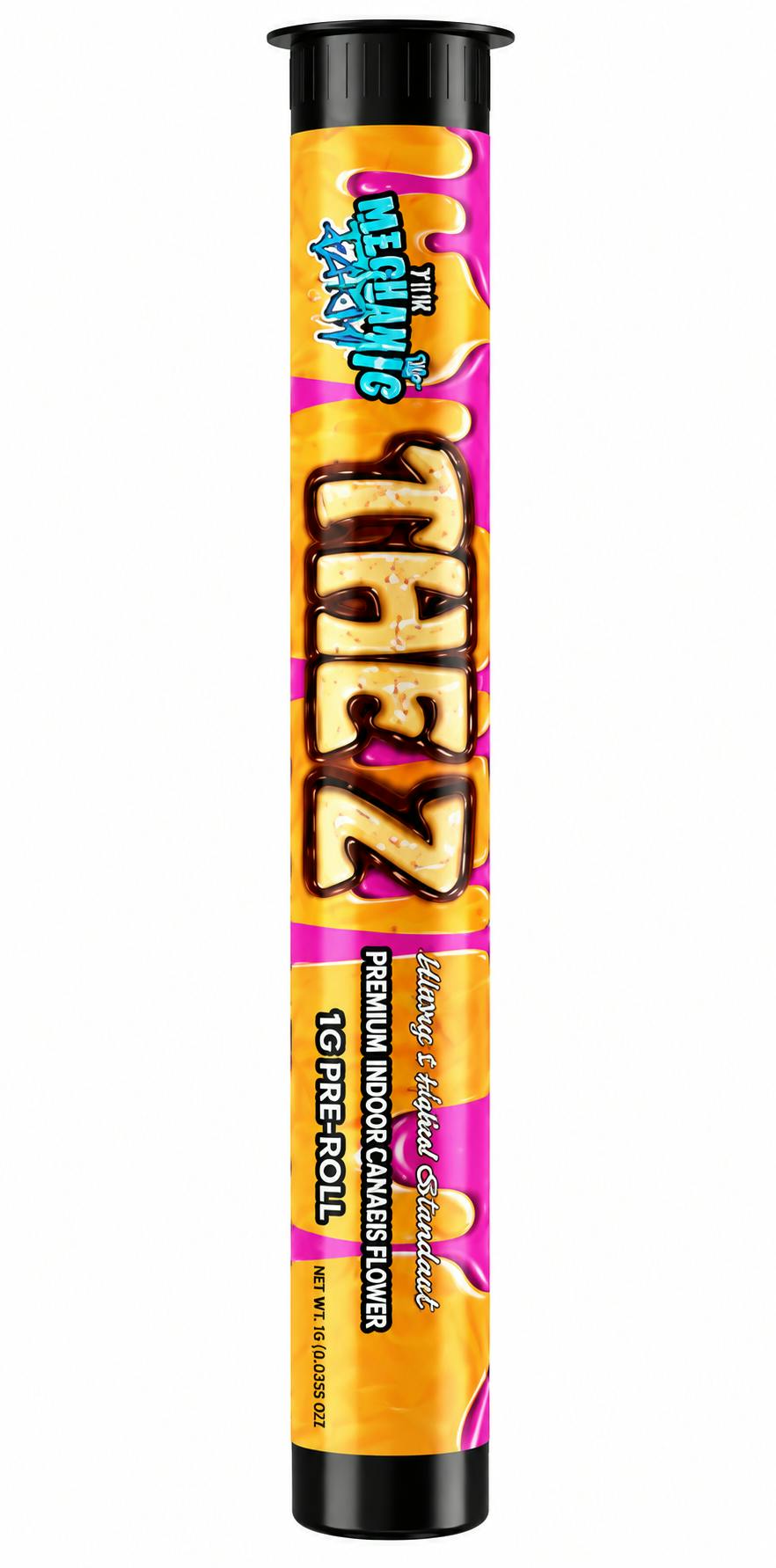
The Z — shorthand for Zkittlez — is a California-born hybrid that arrived quietly and rewrote expectations for what a fruit-forward cannabis experience could be. Dense, resinous, and uncommonly aromatic, it carries a terpene profile that reads like a walk through a tropical orchard in late summer. For those who value nuance over novelty, The Z offers a measured, full-bodied session that lingers well past the first impression.
Shop The Z · 1 of 1 live products
About The Z
Everything to know about The Z.
Lineage & origin
The Z is the colloquial name for Zkittlez, a strain developed by the Northern California breeding collective 3rd Gen Family in collaboration with Terp Hogz. The documented parent strains are Grape Ape and Grapefruit, crossed with an undisclosed third variety — a detail the breeders have never publicly confirmed, though some catalogues suggest a member of the OG or Skunk family may complete the triangle. Grape Ape contributes its signature deep purple pigmentation and relaxing body character, while Grapefruit brings a citrus brightness that lifts the aroma profile considerably. Zkittlez made its public debut around 2015 and accumulated a remarkable competition record in a short span, taking first place at the Emerald Cup in both 2015 and 2016, and later winning the High Times Cannabis Cup in San Francisco. Those accolades accelerated its spread from boutique California cultivation into licensed markets across the United States. Genetically, Zkittlez became a cornerstone of modern breeding. It is a primary parent of Runtz — itself crossed with Gelato — and appears in the lineage of Zourz, Permanent Marker, and a range of other contemporary cultivars. Its influence on the so-called "Z family" of strains is significant enough that the letter itself became shorthand for fruit-candy terpene profiles in dispensary vocabulary.
Effects
The experience of The Z tends to unfold with a relative patience that distinguishes it from more immediately percussive hybrids. Most consumers report an onset window of five to fifteen minutes — slightly longer when vaporized at moderate temperatures — beginning with a gentle pressure behind the eyes and a softening at the temples. The initial character is cerebral without being racy; there is a clarity to the early phase that makes it suitable for conversation or light creative engagement rather than demanding focus. As the session progresses into its peak, The Z tilts toward the body in a manner consistent with its Grape Ape lineage. Myrcene, its dominant terpene, is well-documented for contributing to the sedative, muscle-relaxing quality often associated with indica-leaning hybrids. This physical warmth settles across the shoulders and chest without inducing the sharp couch-lock that some high-myrcene cultivars produce. The overall peak character reads as balanced — a hybrid in the truest sense. Duration for most consumers runs between ninety minutes and two and a half hours at a moderate session size, with a comedown that is notably gentle. The transition out tends to involve a gradual return to baseline rather than an abrupt drop, which contributes to the strain's reputation as an approachable, session-worthy cultivar. Those sensitive to THC are encouraged to follow a start-low, go-slow approach, as the relaxed onset can mask potency in early rounds.
Aroma, flavor & terpenes
The terpene architecture of The Z is dominated by myrcene, which provides the foundational tropical-musk base — earthy and ripe, reminiscent of overripe mango or guava left in afternoon sun. Layered above it, caryophyllene introduces a subtle spice, a faint black-pepper sharpness that keeps the sweetness from becoming cloying and adds structural complexity to the nose. Linalool appears in modest concentrations in many phenotypes, contributing a floral, slightly lavender note that surfaces at the back of the inhale. Humulene, related to caryophyllene and common in cannabis with heritage near OG lines, adds an herbal, slightly woody undertone that grounds the fruitier top notes. Some phenotypes also show terpinolene, which arrives as a fresh, almost piney-citrus brightness that brightens the mid-palate. Together, this stack produces an aroma that is immediately identifiable — sweet, tropical, and gently spiced — without reading as artificial. On the palate, The Z is among the more expressive cultivars in this regard. Combustion produces a smooth, thick smoke with a candy-grape sweetness on the draw and a long, tropical exhale. Vapor at lower temperatures (around 365–380°F) preserves the linalool and terpinolene more faithfully, revealing floral and citrus dimensions that combustion can obscure. The finish is clean, with minimal harshness, and the aftertaste of ripe berries lingers on the tongue for several minutes post-exhale.
Appearance
The Z produces buds that are immediately distinctive on the shelf. The structure is notably dense and compact — a tightly wound calyx formation that reflects its indica-leaning parentage — with a substantial weight-to-volume ratio that signals quality cultivation. The color palette ranges from deep forest green to muted purple, with some phenotypes expressing vivid violet and indigo tones in the outer leaves when exposed to cooler temperatures during the final weeks of flowering. Pistils tend to run amber to burnt orange, often curling back tightly against the bud surface in a way that adds visual warmth against the cooler green and purple canvas. Trichome coverage is generous, particularly on well-grown cuts: a frosted, milky-white resin layer coats both the calyxes and the sugar leaves, lending the finished flower a luminous, almost lacquered appearance in direct light. The overall presentation is dense, resinous, and visually coherent — a cultivar that photographs well precisely because the qualities that make it appealing are visible to the eye.
Growing notes
The Z is considered a moderate-difficulty cultivar for home growers, requiring more attentive canopy management than beginner-friendly strains but rewarding that attention with a consistent and photogenic finished product. It performs well in both indoor and outdoor environments, though controlled indoor grows — particularly those using hydroponic or well-amended living soil setups — tend to produce the most expressive terpene profiles. Indoor flowering time runs approximately eight to nine weeks, with yields that are moderate rather than prolific; cultivators note that The Z is not a heavy producer by weight but compensates with resin density and bag appeal. Outdoor plants prefer a warm, Mediterranean-style climate with low humidity in the final weeks of flower, as the dense bud structure can be susceptible to botrytis in humid conditions. Topping and low-stress training during the vegetative phase help manage lateral branching and improve light penetration. Cold nighttime temperatures in late flower can coax out the purple pigmentation that many cultivators and consumers prize in this variety.
When it's best enjoyed
The Z occupies a particular sweet spot in the session calendar: it is neither a sharp morning motivator nor a purely nocturnal strain, but rather a late-afternoon or early-evening cultivar that transitions well between the active and restful parts of the day. Its balanced effect arc — cerebral at the open, body-forward at the peak — makes it a natural companion for the hour after work winds down: a long walk through a neighborhood that rewards attention, a slow meal with friends, or a vinyl record played at a volume that fills the room without demanding silence. For food pairings, The Z's tropical-fruit terpene profile aligns naturally with cuisines that share its aromatic vocabulary. A chilled Thai larb, mango sticky rice, or a well-dressed ceviche with tropical fruit notes would echo the strain's top-note brightness, while its myrcene base holds up against the richer, earthier components of the meal. Musically, it suits something unhurried and textured — late-period Coltrane, Erykah Badu's "Mama's Gun," or the more introspective corners of neo-soul. For solo sessions, light creative work that does not require sharp analytical focus — sketching, reading fiction, or journaling — pairs naturally with its measured, expansive quality.
If you like The Z, also explore
Runtz
A direct genetic descendant of Zkittlez crossed with Gelato, Runtz shares the candy-fruit terpene profile and balanced hybrid arc that define The Z, making it the most natural next step for fans of this cultivar.
Grape Ape
As a primary parent of The Z, Grape Ape delivers a similar deep grape-and-berry aroma with a more pronounced body effect, appealing to those who want to lean further into the relaxing end of The Z's spectrum.
Gelato
Gelato shares the dense bud structure, rich terpene expression, and smooth smoke character of The Z, with a slightly creamier sweetness and comparably balanced hybrid effects.
Zourz
A Zkittlez-derived cultivar that emphasizes the citrus and sour-fruit dimensions of the terpene profile, Zourz suits The Z enthusiast who wants more brightness and acidity in the nose and palate.
Permanent Marker
Drawing on Zkittlez genetics through its Biscotti lineage, Permanent Marker appeals to consumers who appreciate The Z's resin density and aromatic complexity but prefer a slightly more fuel-forward, earthy finish.
Common questions
Is The Z indica or sativa?+
The Z, known formally as Zkittlez, is classified as a hybrid, though it leans indica in both its bud structure and its effect character. Its Grape Ape parentage contributes a body-forward, relaxing quality at the peak, while the Grapefruit genetics introduce enough cerebral lift at onset to prevent it from feeling purely sedative. Most experienced consumers and catalogues list it as an indica-dominant hybrid.
What does The Z taste like?+
The Z delivers a smooth, candy-sweet smoke with a dominant tropical-fruit and grape character on the draw, transitioning to a slightly spiced, floral exhale. Linalool and caryophyllene add complexity — a faint lavender and black-pepper note — that prevents the sweetness from reading as one-dimensional. The finish is clean and lingering, with a ripe-berry aftertaste that remains on the palate for several minutes after the session.
What are the typical effects of The Z?+
Consumers typically report a gradual onset — five to fifteen minutes — beginning with a mild cerebral clarity and a softening of tension. The peak shifts toward the body, with warmth and relaxation settling through the shoulders and limbs without sharp sedation. The experience arc is balanced and smooth, with a gentle comedown. Duration generally runs between ninety minutes and two and a half hours. Those new to cannabis should start with a small amount and allow adequate time before re-dosing.
What strains are similar to The Z?+
Runtz is the most direct parallel, sharing lineage and a candy-fruit terpene profile. Gelato offers a similar smooth, resinous experience with a creamier sweetness. Grape Ape, a parent of The Z, appeals to those who want a deeper body effect with comparable berry-and-grape aromatics. Zourz and Permanent Marker both draw on Zkittlez genetics and suit fans who want slight variations on The Z's core aromatic and effect character.
Is The Z good for beginners?+
The Z's gradual onset and smooth, balanced effect profile make it more approachable than many high-potency cultivars, but its relaxed entry can cause newer consumers to underestimate its full effect before it peaks. A measured, start-low, go-slow approach is always advisable — particularly for those new to hybrid or indica-leaning cannabis. Waiting the full fifteen minutes before reassessing is a sensible practice with this cultivar.
What are the dominant terpenes in The Z?+
Myrcene is the primary terpene in most expressions of The Z, contributing the tropical-mango earthiness and the body-relaxing quality of the peak effect. Caryophyllene adds spice and complexity, humulene brings an herbal, woody grounding note, and linalool contributes a floral lift. Some phenotypes also show terpinolene, which introduces a piney-citrus brightness to the nose. Together, these terpenes create the cultivar's characteristic fruit-candy-meets-earth aromatic signature.
Where did The Z originate?+
The Z — Zkittlez — was developed in Northern California by the breeding collective 3rd Gen Family in collaboration with Terp Hogz. It gained widespread recognition after winning the Emerald Cup in both 2015 and 2016, and subsequently took top honors at the High Times Cannabis Cup in San Francisco. Its California origins and competition pedigree helped establish it as one of the more influential cultivars in modern domestic breeding, particularly within the broader Z-family of strains.
How does The Z compare to Runtz?+
Runtz is a direct genetic descendant of The Z — a cross of Zkittlez and Gelato — so the two share significant terpene overlap, particularly in their candy-fruit sweetness and dense bud structure. Runtz tends to express a creamier, more dessert-like sweetness and often reads as slightly more potent in effect intensity. The Z's profile is comparably aromatic but somewhat more tropical and straightforwardly fruity, with a smoother, less layered flavor arc on the palate.
Related strains