
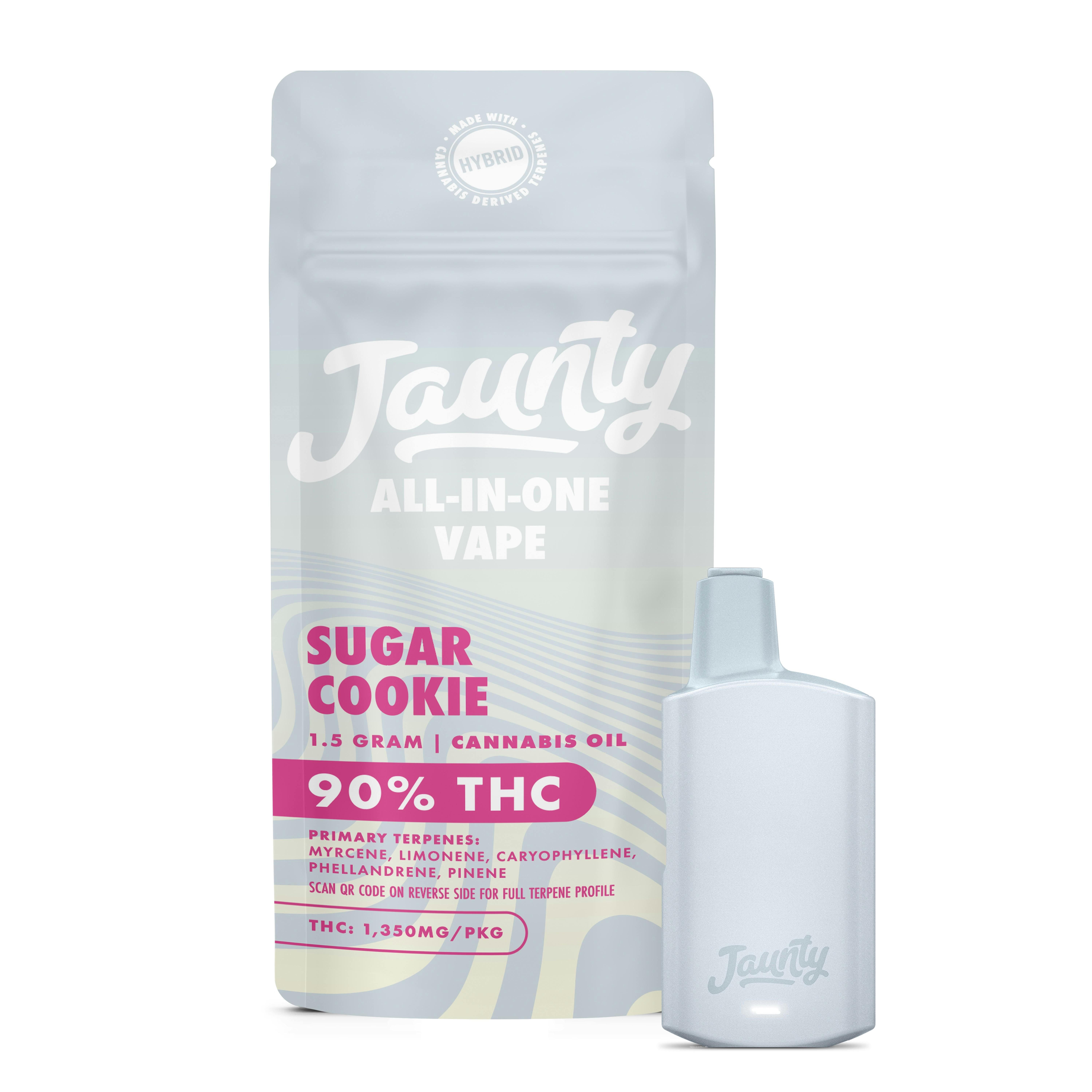
Hybrid
All strains Sugar Cookie
1 live products in stock
Quick answer · What is the Sugar Cookie cannabis strain?
Sugar Cookie arrives with the quiet confidence of a well-made pastry: warm, rounded, and subtly complex beneath a deceptively simple exterior. This balanced hybrid carries a genetic heritage rooted in celebrated California and Colorado breeding stock, yielding a session defined by gentle euphoria and physical ease. Its sweet, doughy aroma and dense, frost-laden buds make it a natural fit for the discerning shopper who values craft over spectacle.
Shop Sugar Cookie · 1 of 1 live products
About Sugar Cookie
Everything to know about Sugar Cookie.
Lineage & origin
Sugar Cookie's parentage is most commonly attributed to a three-way cross of Crystal Gayle, Blue Hawaiian, and Snowcap — a lineage documented across multiple reputable strain databases including Leafly and Wikileaf. Crystal Gayle, itself a potent indica-leaning hybrid, contributes the strain's dense bud structure and resinous trichome production. Blue Hawaiian, a sativa-leaning cross thought to descend from Blueberry and a Hawaiian landrace, introduces the fruity, uplifting notes that lift Sugar Cookie above a purely sedative profile. Snowcap, a vigorous hybrid widely believed to carry Humboldt Snow and a Mystery strain heritage from Northern California, lends a mentholated, sweet edge and rounded cerebral character. The breeder of record is commonly cited as Sin City Seeds, a Las Vegas-based operation with a portfolio built around dessert-forward, high-resin phenotypes. Sin City released Sugar Cookie as part of their exploration of approachable, aromatic hybrids that could appeal to both recreational and experienced consumers. The strain gained traction in the mid-2010s alongside the broader cultural shift toward terpene-forward, flavour-driven cannabis. No widely recognised genetic siblings have been formally released under the Sugar Cookie name, though phenotypic variation — some cuts leaning sweeter and more indica-forward, others retaining Snowcap's brighter, more cerebral edge — is well-documented among cultivators who have worked with the line.
Effects
Sugar Cookie typically opens with a mild, warm onset that arrives within the first five to ten minutes of consumption — a soft cerebral lift that gently brightens mood without crossing into overstimulation. This initial phase is often described as sociable and gently euphoric, carrying the kind of quiet mental clarity that makes conversation feel effortless rather than urgent. The sativa influence of Blue Hawaiian and Snowcap is perceptible here, keeping the experience from settling too heavily too soon. As the session progresses toward its peak — generally in the twenty to forty-five minute window — the indica influence of Crystal Gayle becomes more apparent. A spreading physical warmth moves through the shoulders and lower body, softening tension without fully anchoring the consumer to the couch in moderate quantities. The overall character at peak is a balanced interplay between mental ease and body comfort, which is one reason Sugar Cookie is often positioned as an all-day or early-evening hybrid rather than a strictly nocturnal strain. The comedown is gradual and notably gentle. The cerebral brightness recedes first, leaving behind a settled, restful calm that makes the tail end of a Sugar Cookie session well-suited to winding down without abruptness. Myrcene's sedative undertones likely contribute to this smooth landing. As with any balanced hybrid, individual responses vary; those newer to cannabis are well served by a start-low, go-slow approach.
Aroma, flavor & terpenes
The aromatic profile of Sugar Cookie is anchored by myrcene, the most common terpene in contemporary cannabis, which contributes the warm, slightly musky sweetness that gives the strain its namesake baked-good quality. At the forefront of the nose, myrcene blends with what many describe as a doughy, vanilla-adjacent softness — the olfactory equivalent of a kitchen warming with fresh pastry. Caryophyllene, the only terpene known to interact directly with the endocannabinoid system's CB2 receptors, provides a subtle spiced undercurrent — think a light dusting of white pepper beneath the sweetness — and is credited with tempering the otherwise round, smooth profile with a degree of edge. Terpinolene, present in the Snowcap lineage, introduces a faint floral and orchard-fruit lift to the mid-notes, keeping the aroma from sitting too heavily in the sweet register. Trace amounts of ocimene may contribute a light herbal brightness that becomes more apparent when the flower is broken apart. On the palate, Sugar Cookie is consistently described as smooth: the inhale delivers the sweet, creamy notes promised by the nose, while the exhale carries a faint earthiness and a lingering spice that recalls the caryophyllene signature. Vapor tends to express the terpene profile with greater clarity than combustion, which can introduce a mild woodiness on the finish. The smoke is generally noted as gentle on the throat for a resinous strain.
Appearance
Sugar Cookie produces compact, medium-to-large buds with a structure that leans toward the indica end of the spectrum: dense, tightly packed calyxes that hold their shape well after cure and resist crumbling under light pressure. The trichome coverage is one of the strain's most immediately striking visual qualities — a thick, even blanket of milky and amber glands that gives cured flower an almost frosted, powdered-sugar appearance, a visual attribute that makes the name feel genuinely earned rather than arbitrary. The colour palette ranges from medium to deep green, with some phenotypes expressing soft sage and olive tones through the body of the bud. Pistils — the fine, hair-like structures that signal maturity — tend toward warm amber and burnt orange, providing a pleasing contrast against the pale trichome layer. In cooler grow environments, faint lavender and deep green accents may emerge in the sugar leaves. Overall, the presentation is one of quiet, resinous abundance rather than dramatic colour variation.
Growing notes
Sugar Cookie is considered a moderately approachable strain for cultivators with at least one or two grow cycles of experience. It performs reliably in both indoor and outdoor environments, though indoor cultivation under controlled conditions tends to draw out the fuller terpene expression and preserve trichome integrity. Indoors, the flowering window typically runs eight to nine weeks, with yields that growers describe as moderate to generous depending on training method and light intensity. Outdoors, Sugar Cookie finishes comfortably in a temperate climate by mid-October in the Northern Hemisphere, making it well-suited to the Northeast's outdoor season when weather cooperates. The plant's indica-leaning structure means it tends to stay compact, an advantage in smaller grow spaces, though canopy management and adequate airflow are advisable to protect dense bud clusters from moisture retention. First-time cultivators should note that the robust trichome production can make trimming labour-intensive at harvest. Overall, Sugar Cookie rewards attentive growers with flower that reflects its heritage: aromatic, resinous, and visually striking.
When it's best enjoyed
Sugar Cookie occupies the comfortable middle ground of the cannabis experience — neither demanding full commitment to a deep, sedating evening nor delivering the restless energy of a strongly sativa-forward session. It is, in the truest sense, a transitional strain: equally at home in the golden hour between a workday's end and the evening ahead as it is during a relaxed weekend afternoon. For the solo consumer, Sugar Cookie pairs naturally with low-intensity creative work — journaling, sketching, or meandering through a curated playlist. The terpinolene and caryophyllene combination sits comfortably alongside genres with warm, textured production: soul, classic R&B, or acoustic folk feel particularly well-matched. At the table, the strain's sweet, spiced aromatic profile finds a natural companion in mild, warm-spiced foods — think a well-made chai, a soft cheese board with honeycomb, or a lightly spiced butternut squash soup. For a small gathering, it functions as a sociable, easy-going choice that keeps conversation flowing without demanding deep introspection from everyone in the room.
If you like Sugar Cookie, also explore
Girl Scout Cookies
Fans drawn to Sugar Cookie's dessert-forward aroma and balanced euphoria will find familiar territory in GSC's sweet, earthy profile and its own blend of cerebral lift and body ease.
Gelato
Gelato shares Sugar Cookie's creamy, terpene-rich nose and its hybrid balance between mental brightness and physical relaxation, making it a natural next step for admirers of the sweeter side of the cannabis spectrum.
Blue Dream
Blue Dream's Blue family genetics echo Sugar Cookie's fruity, rounded heritage and similarly approachable, all-day hybrid character, appealing to consumers who value smoothness and consistency.
Snowcap
As a direct parent of Sugar Cookie, Snowcap offers a somewhat brighter, more cerebral expression of the same sweet, mentholated aromatic lineage for consumers who lean toward the sativa end of the experience.
Wedding Cake
Wedding Cake's dense structure, heavy trichome coating, and dessert-adjacent terpene profile make it a compelling choice for Sugar Cookie enthusiasts seeking a richer, more potent variation on the same flavour theme.
Common questions
Is Sugar Cookie indica or sativa?+
Sugar Cookie is a balanced hybrid. Its lineage — Crystal Gayle, Blue Hawaiian, and Snowcap — blends indica and sativa genetics in roughly equal measure. In practice, this means the experience typically opens with a gentle cerebral lift inherited from the sativa side before settling into a physical warmth drawn from the indica heritage. Neither pole dominates, which is a large part of the strain's broad appeal.
What does Sugar Cookie taste like?+
True to its name, Sugar Cookie delivers a sweet, doughy flavour profile on the inhale, often described as reminiscent of warm vanilla pastry with a soft, creamy finish. The exhale introduces a mild earthiness and a subtle spiced note — attributable to caryophyllene — that keeps the palate from sitting entirely in the dessert register. Vapor tends to express the sweetness with greater clarity than combusted flower.
What are the typical effects of Sugar Cookie?+
Sugar Cookie typically produces a warm, gently euphoric onset followed by a progressively relaxing body effect. The cerebral phase is sociable and pleasant without being energising or anxious, while the physical component offers a soft release of tension. The overall arc is smooth and moderate in intensity, landing in a calm, settled state. As with any cannabis product, individual responses vary and a start-low, go-slow approach is always advisable.
What strains are similar to Sugar Cookie?+
Consumers who enjoy Sugar Cookie tend to gravitate toward other dessert-forward balanced hybrids. Girl Scout Cookies and Gelato share the sweet terpene profile and hybrid equilibrium. Snowcap, a direct parent strain, offers a brighter, more cerebral version of the same aromatic lineage. Wedding Cake appeals to those who want a denser, more resinous expression of the dessert-cannabis aesthetic, while Blue Dream suits those drawn to the fruity, approachable character.
Is Sugar Cookie good for beginners?+
Sugar Cookie's balanced hybrid character and generally smooth onset make it one of the more approachable options for adults new to cannabis. That said, no strain is universally appropriate for all beginners. The dense trichome coverage indicates meaningful cannabinoid content, and new consumers should follow a deliberate start-low, go-slow approach — beginning with a minimal amount and allowing adequate time to assess the effects before continuing. This is New York adult-use cannabis, available to those 21 and older.
What are the dominant terpenes in Sugar Cookie?+
Myrcene is typically the dominant terpene in Sugar Cookie, contributing the sweet, earthy, slightly musky aroma most associated with the strain's signature baked-good quality. Caryophyllene follows as a key secondary terpene, adding a warm spice note and a distinctive profile. Terpinolene contributes floral and light fruit nuance, while trace ocimene may account for a subtle herbal brightness. Together, these terpenes define both the strain's aroma and much of its experiential character.
Who bred Sugar Cookie and where does it come from?+
Sugar Cookie is most commonly attributed to Sin City Seeds, a Las Vegas-based cannabis breeding operation known for aromatic, dessert-forward varieties. The strain was developed from a cross of Crystal Gayle, Blue Hawaiian, and Snowcap, drawing on both California and Colorado-adjacent breeding traditions. It gained wider recognition in the mid-2010s as terpene-forward, flavour-driven cannabis became a defining focus of the premium market.
Is Sugar Cookie better for daytime or evening use?+
Sugar Cookie occupies the transitional space between daytime and evening particularly well. Its initial cerebral brightness supports activity and social engagement, while the gradual body relaxation that follows makes it equally suited to winding down. Many consumers find it most enjoyable in the late afternoon or early evening — after obligations have concluded but before the day has fully surrendered to rest. Individual metabolism and tolerance will shape the exact timing of its arc.
Related strains