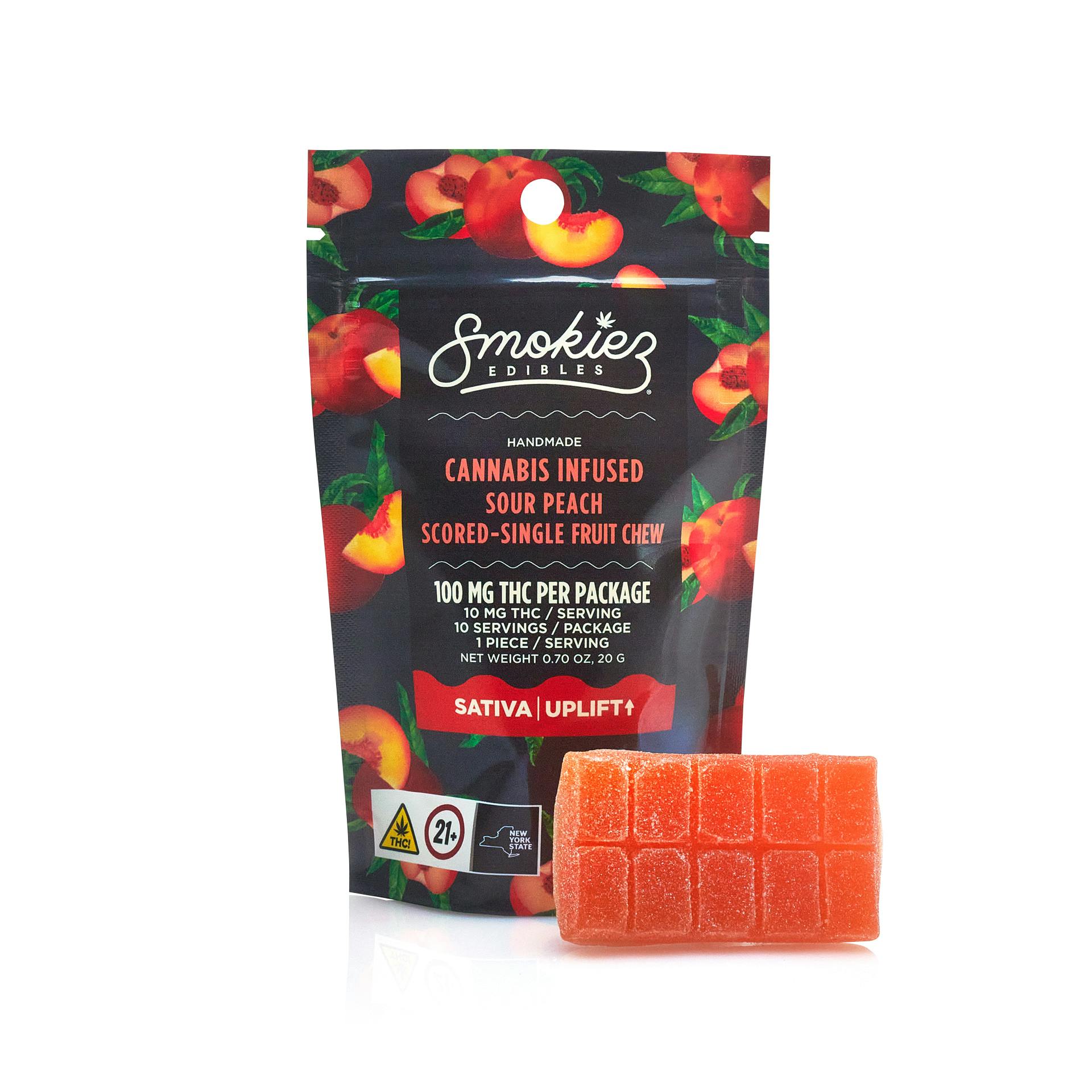
THC 0.4%·CBD 0.02%Sativa
Smokiez EdiblesSour Peach Sativa Scored-Single Piece 100mg THC Fruit Chew · .1g
$15.93
$18after tax

weeddispensarynearme.com
You must be 21 years or older to enter. By entering, you confirm you’re of legal age in your state to purchase cannabis.
For use only by adults 21+ • Keep out of reach of children
3 live products in stock
Quick answer · What is the Sour Peach cannabis strain?
Sour Peach arrives like a warm afternoon in an orchard where citrus trees lean into stone fruit — bright, tangy, and quietly complex. A sativa-leaning cultivar prized for its lifted, sociable energy and a terpene profile that reads as equal parts fruit stand and earthy garden, it suits the discerning New York adult who wants clarity and conversation without the edge of harder-hitting varieties.
$18after tax
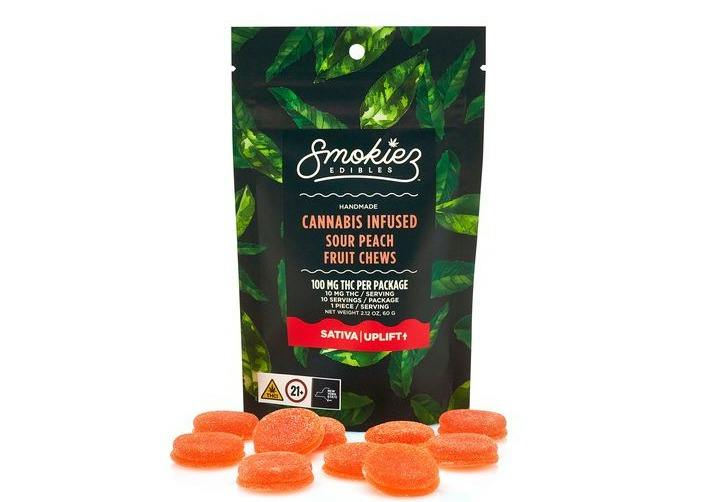
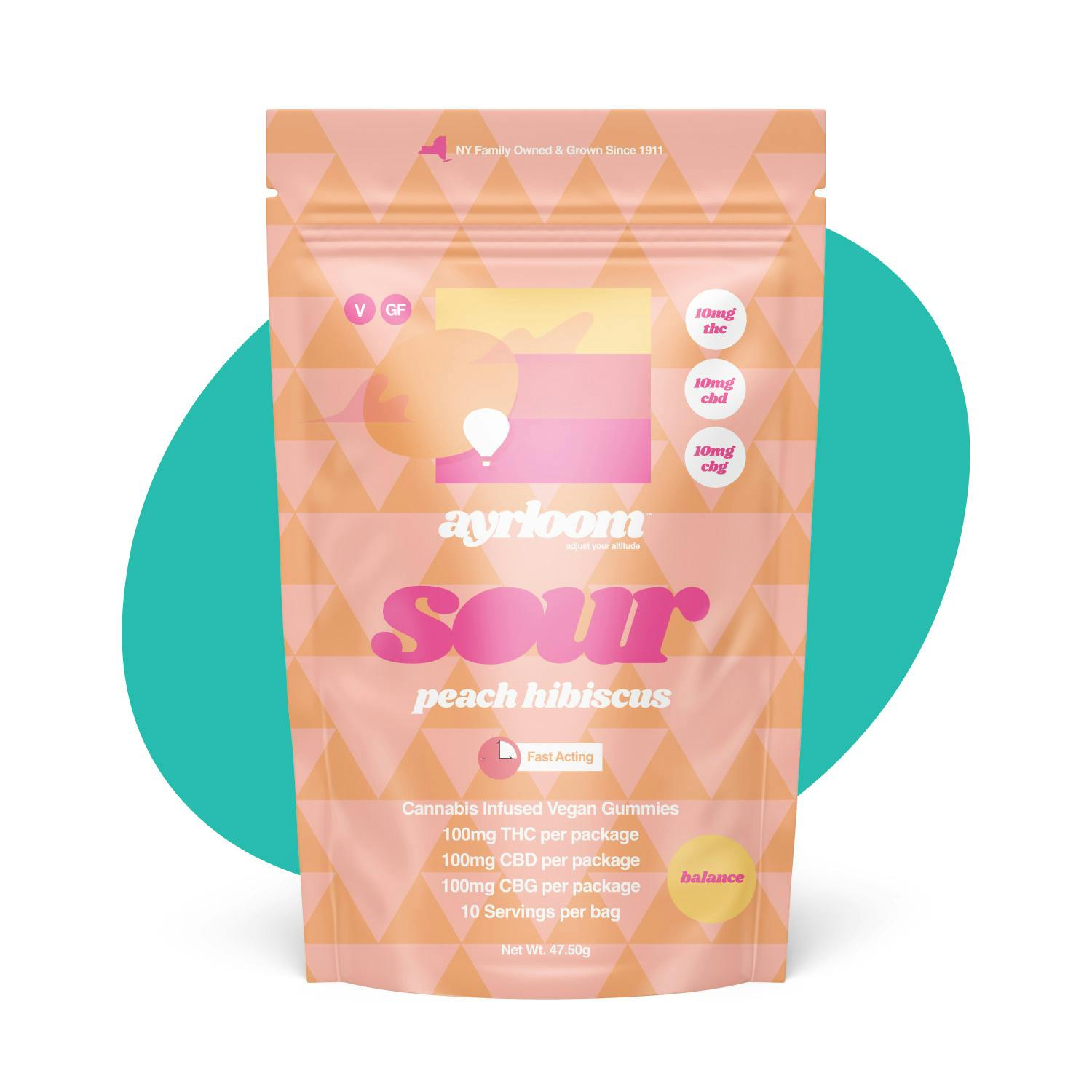
$28after tax
About Sour Peach
Sour Peach's precise genetic lineage is not uniformly documented across public cannabis registries, and the breeder of record has not been universally confirmed in sources such as Leafly or Wikileaf. The most widely cited parentage points to a cross involving Sour Diesel — the legendary New York-rooted sativa whose own lineage traces to Chemdawg 91 and Super Skunk — and a peach- or apricot-phenotype cultivar, sometimes identified as a Peach Rings or Peach Kush variant, lending the characteristic stone-fruit sweetness that distinguishes this strain from its more fuel-forward relatives. Sour Diesel's influence on the American cannabis landscape is difficult to overstate. Emerging from the Northeast underground in the early 1990s, it became a benchmark for cerebral, energetic sativa character and remains one of the most extensively referenced parent strains in modern breeding programs. Crossing it with a softer, terpene-rich stone-fruit variety was a logical step for breeders seeking to temper Diesel's sharp, acrid edge with something more approachable and palate-friendly. Because documentation on Sour Peach's precise release date and originating seed company remains incomplete, shoppers should treat specific breeder claims on unlicensed secondary markets with appropriate skepticism. What is consistent across grower reports and dispensary notes is the strain's stable expression of its sativa-dominant character and its reliable, recognizable aroma signature — markers that suggest reasonable phenotypic consistency across licensed cultivations.
Sour Peach tends toward a relatively prompt onset, with most consumers reporting the first perceptible shift in mood and mental pace arriving within five to fifteen minutes of inhalation. The initial wave is characteristically cerebral — a gentle brightening of focus and a loosening of social inhibition that feels more like turning up ambient light than flipping a switch. Thoughts move with some fluidity, conversations feel easier to enter, and creative associations come with slightly less effort than baseline. This quality makes the early peak particularly well-suited to collaborative settings. As the experience deepens through the first hour, a mild physical warmth tends to accompany the mental lift without undermining it — a sativa-typical balance where the body feels present and comfortable rather than heavy or sedated. The terpene profile, dominated by limonene and terpinolene with supporting myrcene, likely contributes to this quality: limonene is broadly associated with elevated mood and reduced tension, while terpinolene lends an uplifting, almost floral energetic note, and myrcene softens the edges without pulling toward sedation. The comedown from Sour Peach is generally described as gradual and gentle — a slow return to baseline rather than an abrupt drop. Total duration typically falls in the two-to-three-hour range, though individual variation is significant and dependent on consumption method, tolerance, and set and setting. As always, those new to cannabis or sativa-leaning varieties are encouraged to start with a modest amount and allow adequate time before reassessing.
The aroma of Sour Peach is its most immediately arresting quality. On first encounter, the nose picks up a vivid top note of ripe stone fruit — peach and apricot most prominently — undercut by a sharper, almost citrus-sour quality that references Diesel genetics without reproducing their characteristic fuel note in full. This brightness is largely attributable to limonene, a monoterpene present in citrus rind and numerous cannabis cultivars, known for its sharp, clean, lemon-adjacent quality that here reads more as tangy than strictly citric. Terpinolene, a secondary terpene found in cultivars like Jack Herer and Dutch Treat, contributes a floral, slightly herbal lift that sits behind the fruit and prevents the profile from reading as one-dimensional. It is responsible for much of what makes Sour Peach's bouquet feel animated and complex rather than simply sweet. Myrcene, the most ubiquitous cannabis terpene, anchors the profile with an earthy, faintly musky base — a green, garden-bed quality that grounds the sweetness and adds depth. On the palate, whether smoked or vaped, Sour Peach delivers a flavor that tracks closely with its aroma. The inhale tends to foreground fruit — peach skin, a hint of mango — while the exhale introduces a faint sourness and, in some phenotypes, a light piney or herbal note that may reflect trace pinene content. The smoke is generally smooth for a sativa, with a clean finish that does not linger harshly.
Sour Peach typically presents as a moderately dense, sativa-structured bud — elongated rather than compact, with a slightly tapered calyx formation that reflects its upright, branchy growth pattern. The flower often shows a lighter green base — sage to lime-green — occasionally punctuated by deeper forest-green undertones in the inner leaves. Pistils run warm and amber-orange at maturity, weaving visibly through the bud structure and contributing to an overall color palette that is appropriately reminiscent of the fruit in its name. Trichome coverage is moderate to generous, giving cured flower a frosted, slightly luminous appearance under direct light — a sign of the resin production associated with Diesel-influenced genetics. Well-cured Sour Peach feels slightly sticky at the touch and breaks apart easily, releasing its terpene signature immediately upon handling.
Sour Peach, given its sativa dominance, tends toward the taller, more branchy growth habits characteristic of its lineage. Cultivators growing indoors report that the plant responds well to topping and low-stress training techniques that manage vertical height and encourage lateral canopy development — useful in controlled environments where ceiling space is a limiting factor. Indoor flowering time is generally cited in the range of nine to ten weeks, which is on the longer end of typical cannabis cultivation windows and consistent with sativa-leaning genetics. Outdoor cultivation in a climate with a long, warm growing season — similar to the Mediterranean or, in U.S. terms, California's Central Valley or the Southeast — is where Sour Peach can express its full genetic potential in terms of yield and terpene development. Yield data varies considerably by phenotype and growing condition, but cultivators generally describe production as moderate to above average when plants are given adequate root space and light intensity. The strain is considered intermediate in difficulty, meaning first-time home growers may find it less forgiving than indica-dominant or auto-flowering varieties, though experienced hobbyists tend to find the process rewarding.
Sour Peach is a cultivar that earns its place in the calendar of a socially active, creatively engaged adult. Its sativa arc — bright onset, sustained mental clarity, gradual resolution — makes it particularly well-suited to the hours between late morning and early evening, when energy and engagement are wanted but the day is not yet winding down. A solo creative session benefits from its gentle loosening of associative thinking; a gallery visit, a writing afternoon, or a long walk through a neighborhood with strong architectural character all feel enhanced by its particular quality of attention. In company, Sour Peach performs as a quietly sociable companion. Its mood-brightening profile makes it appropriate before or during a casual dinner with close friends where conversation is the main event. Pairing suggestions that align with its terpene profile include dishes with stone-fruit elements — a peach and burrata salad, a duck dish with apricot reduction — and music with a similar balance of brightness and depth: Nina Simone's piano recordings, early Vampire Weekend, or a curated jazz playlist where melody and structure coexist. The goal, as with all sativa-leaning consumption, is to let the strain complement the moment rather than become the moment itself.
Sour Diesel
As the most likely parent cultivar, Sour Diesel shares Sour Peach's cerebral, energetic sativa arc and bright onset, though it leans more toward sharp fuel notes than fruit — a natural next step for anyone who enjoys the lift but wants to explore the lineage.
Mimosa
Mimosa's citrus-forward terpene profile and uplifting, sociable sativa energy closely echo Sour Peach's character, making it an intuitive recommendation for consumers drawn to bright, daytime-appropriate cultivars with a fruit-inflected nose.
Jack Herer
Jack Herer shares the terpinolene-forward floral and herbal brightness found in Sour Peach, and its clear-headed, focused sativa effects will feel familiar to anyone who gravitates toward Sour Peach's creative, conversational quality.
Peach Ringz
For consumers whose primary draw is Sour Peach's stone-fruit sweetness, Peach Ringz offers a similarly lush, peach-dominant flavor profile with a somewhat more relaxed hybrid effect — a softer companion from the same flavor family.
Strawberry Cough
Strawberry Cough's sweet fruit aroma, clear sativa elevation, and sociable, mood-brightening effects position it as a close analog for Sour Peach fans who prefer a slightly smoother, berry-inflected variation on the same general experience.
Sour Peach is a sativa-dominant cultivar. Its growth structure, flowering time, and reported effect profile all align with sativa characteristics — upright branchy plants, a longer flowering window, and effects that lean toward cerebral clarity, social ease, and energetic engagement rather than the physical relaxation and sedation more commonly associated with indica-leaning varieties.
Sour Peach delivers a fruit-forward palate centered on ripe peach and apricot, with a tangy sour edge that references its Diesel lineage without fully reproducing its fuel character. The exhale often introduces a faint herbal or piney quality. The overall flavor is bright and complex, finishing cleanly without harsh residual notes — a profile that tends to be particularly accessible to consumers who favor fruit-expressive cultivars.
Consumers most commonly report a relatively prompt cerebral onset — a brightening of mood, improved sociability, and a gentle loosening of creative thinking — that settles into a sustained, clear-headed elevation over the first hour. A mild physical warmth accompanies the mental lift without producing sedation. The experience typically resolves gradually over two to three hours, with a gentle return to baseline rather than an abrupt drop.
Sour Diesel shares Sour Peach's energetic sativa arc and likely parent genetics. Mimosa and Strawberry Cough offer comparable mood-brightening, fruit-forward sativa profiles. Jack Herer echoes Sour Peach's terpinolene-driven floral clarity. Peach Ringz is the closest flavor analog for consumers primarily drawn to the stone-fruit sweetness of the terpene profile.
Sour Peach can be appropriate for newer consumers given its generally smooth onset and approachable flavor, but its sativa-dominant character means that those sensitive to cerebral or stimulating effects should approach it with care. The standard guidance applies: start with a small amount, allow fifteen to thirty minutes before assessing, and choose a comfortable, familiar setting for early experiences. Those who find sativa effects activating or anxious-making may prefer a hybrid alternative.
Sour Peach's most consistently reported dominant terpenes are limonene, responsible for its citrus-sour brightness and mood-associated character; terpinolene, which contributes floral, herbal lift and is common in sativa-leaning cultivars; and myrcene, which provides an earthy, grounding base note. Trace pinene may also be present in some phenotypes, accounting for a faint herbal or piney quality on the exhale.
Given its sativa-dominant effect profile — energetic onset, clear-headed elevation, sustained sociability — Sour Peach is generally considered a daytime or early-evening cultivar. It is well-suited to hours when mental engagement, creative thinking, or social interaction is the goal. Most consumers find it less appropriate for late-night use when rest is the intention, as its cerebral character is more activating than sedating.
The originating breeder of Sour Peach is not definitively confirmed in widely available public cannabis registries, and specific claims about its creation should be treated with appropriate caution. The most commonly cited parentage involves Sour Diesel crossed with a peach- or stone-fruit-phenotype variety, but documentation on the precise release date and seed company of origin remains incomplete or inconsistent across sources.
Related strains
Pick your store
We'll show pricing, deals, and delivery zones for the store you pick. You can switch any time from the header.