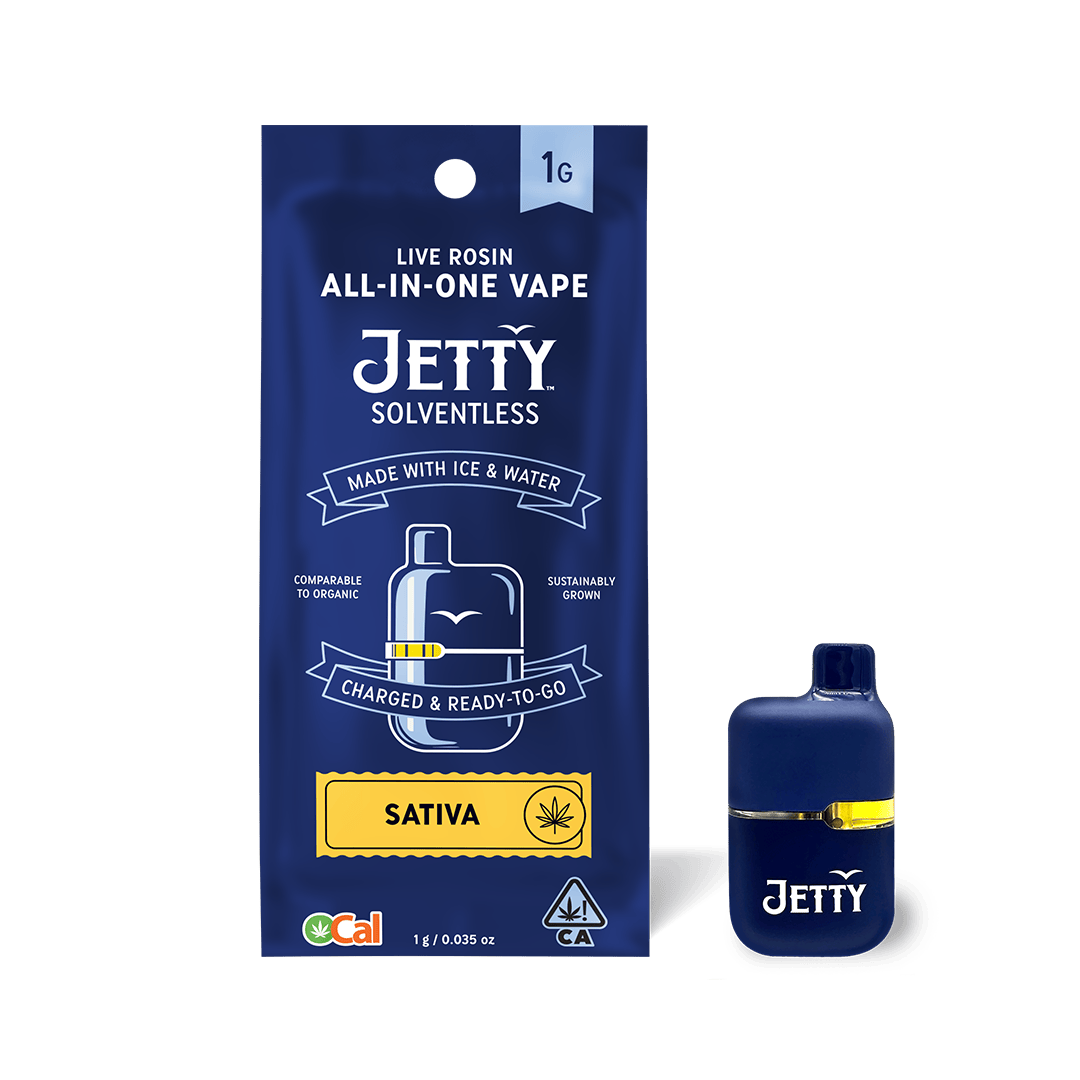
THC 83.6%Sativa
Jetty ExtractsJetty Extracts | Solar Nectar | Vape Mini Tank AIO Solventless · 1g
$71.68
$81after tax

weeddispensarynearme.com
You must be 21 years or older to enter. By entering, you confirm you’re of legal age in your state to purchase cannabis.
For use only by adults 21+ • Keep out of reach of children
1 live products in stock
Quick answer · What is the Solar Nectar cannabis strain?
Solar Nectar arrives like the first warm afternoon of late spring — bright, golden, and quietly electric. This sativa-dominant cultivar carries a citrus-forward terpene profile that opens into something deeper and more complex with each inhale. Unhurried in its onset yet focused in its effect, it rewards the attentive consumer with a clear-headed elevation that feels less like a lift and more like a steady brightening of the room around you.
$81after tax
About Solar Nectar
Solar Nectar's precise lineage is not extensively documented in major public databases such as Leafly or Wikileaf, and the breeder has not publicly named the parent strains with full transparency — a relatively common circumstance among boutique sativa-leaning cultivars that circulate through regional craft markets before receiving formal documentation. What is consistently noted in community-sourced grow logs and dispensary tasting notes is that the strain exhibits characteristics strongly associated with sun-grown equatorial sativa genetics, suggesting heritage lines that may trace back to Haze-adjacent or citrus-dominant Thai or Colombian landrace stock. The name itself is evocative of a lineage philosophy rather than a marketing choice: cultivars christened with solar or luminous imagery often derive from breeders working in the Haze tradition, where lengthy flowering times and expansive cerebral profiles are the intended outcome. Some phenotype reports reference a sweetness and resin structure consistent with OG or Cookies-adjacent influence in the background, though this remains unverified. Until the breeder formally discloses the cross, consumers and cultivators should treat Solar Nectar as a well-expressed sativa phenotype of debated but plausibly Haze-influenced origin, appreciated for what it delivers in the glass rather than for a confirmed family tree.
The onset of Solar Nectar tends to arrive within five to fifteen minutes when smoked or vaped, presenting first as a gentle pressure behind the eyes and a subtle brightening of sensory focus — a hallmark of sativa-dominant cultivars with elevated limonene and terpinolene content. The cerebral character builds steadily rather than surging, settling into a state of alert, open-minded clarity that many consumers describe as conversational and creatively permissive. There is little of the anxious edge that can accompany more aggressively cerebral sativas; instead, Solar Nectar sits closer to a warm, directed attentiveness. At the peak, which typically arrives twenty to forty minutes in, the body registers a light, non-sedating warmth — enough to ease physical tension without pulling attention away from mental engagement. This balance is consistent with a caryophyllene component tempering the more stimulating terpenes. Duration runs approximately two to three hours for most experienced consumers, with a soft, gradual descent rather than an abrupt comedown. New consumers and those with lower tolerance should follow standard start-low, go-slow guidance, as the clear-headed onset can mask the strain's cumulative potency. The finishing notes are gentle: a mild appetite cue and a relaxed, unhurried ease.
The terpene architecture of Solar Nectar is led by what registers immediately as limonene — the same bright, almost polished citrus character found in Meyer lemon zest or freshly squeezed mandarin, clean and sharp without any bitterness. Limonene is well-documented for contributing to uplifting, mood-softening effects alongside its aromatic signature, and here it forms the unmistakable first impression both on the nose and on the exhale. Beneath it, terpinolene introduces a floral, slightly herbal complexity — think dried chamomile or white tea — that keeps the profile from reading as purely fruity. Terpinolene is common in sativa-leaning cultivars and is associated with the kind of light, cerebral quality Solar Nectar expresses in effect. A secondary thread of ocimene adds a sweet, almost tropical warmth — notes of ripe papaya and fresh basil — that gives the aroma genuine depth. On the palate, the smoke or vapor is smooth and relatively light-bodied, with the citrus dominating the inhale and a subtly sweet, faintly herbal note lingering on the exhale. Myrcene, likely present in modest concentrations, rounds the edges without pulling the profile toward earthiness. There is a resinous, sun-warmed quality to the aftertaste that lingers pleasantly and justifies the strain's name in a purely sensory sense. Well-grown, properly cured Solar Nectar is a study in aromatic brightness done with restraint.
Solar Nectar typically presents in elongated, sativa-characteristic buds — structures that are somewhat loose and airy compared to the dense, compacted forms of indica-dominant cultivars, reflecting the genetic tendency of equatorial and Haze-influenced lines to build long, open calyxes during flowering. The color palette is primarily a vivid, medium green with occasional lime-yellow highlights along the interior leaves, giving the dried flower a luminous quality that supports its name. Pistils run a warm amber-to-rust tone and wind visibly through the bud structure in generous density. Trichome coverage is noteworthy for a sativa: a fine, consistent layer of milky-to-amber glandular heads coats both the surface calyxes and the sugar leaves, catching light in a way that reads as genuinely resinous without the heavy, crystalline encrustation seen on some hybrid-dominant cuts. The overall visual impression is of a cultivar grown with patience — the kind of bud that rewards close inspection.
Solar Nectar's sativa lineage implies a preference for warm, moderately humid environments with ample light intensity, and it is reported to perform well both indoors under full-spectrum LED or HID setups and outdoors in temperate-to-warm climates where the growing season extends sufficiently. Flowering time is estimated in the range of nine to eleven weeks indoors — consistent with Haze-influenced genetics — which places it on the longer end of the spectrum and may require patience from cultivators accustomed to faster-finishing hybrids. Yield reports are moderate to moderately generous, with indoor grows producing well-structured harvests when trained with techniques such as low-stress training or screen of green to manage the characteristically vertical, stretching growth pattern. Outdoor plants can reach substantial height given freedom to express their sativa structure, making canopy management a consideration. Difficulty is intermediate: the flowering duration and stretch require attentive environmental control, but the strain is not reported as particularly finicky with respect to nutrient sensitivity. For the cultivator-curious consumer, Solar Nectar represents a rewarding project whose longer runway pays off in aromatic complexity and effect quality.
Solar Nectar is most at home in the hours between late morning and early evening — that particular window when the day still holds possibility and the mind is open to wherever focus leads. It is an excellent companion for solo creative work: writing, sketching, or the kind of deliberate, unhurried listening that a complex piece of music deserves. The limonene and terpinolene profile pairs naturally with activities that benefit from alert, sensory-forward engagement rather than deep physical stillness. For a specific pairing, consider it alongside a bright, lightly acidic white wine — a Grüner Veltliner or an unoaked Chardonnay — or a citrus-forward sparkling water if the session calls for clarity. On the plate, clean, acidic flavors echo the terpene profile well: ceviche, yuzu-dressed salads, or a well-made Vietnamese spring roll. Musically, Solar Nectar tends to serve listeners drawn to textured, melodic work — think west African guitar, Brazilian tropicália, or the kind of jazz that stays melodic and warm rather than abstract. It is equally suited to a small, engaged gathering as it is to a solitary afternoon, provided the setting carries some quality of light.
Lemon Haze
Fans of Solar Nectar's bright citrus-forward limonene profile and clear-headed sativa elevation will find Lemon Haze an immediately familiar and satisfying companion with a well-documented Haze lineage.
Durban Poison
The clean, alert, energetic cerebral character Solar Nectar delivers shares DNA philosophy with Durban Poison's pure sativa heritage and terpinolene-dominant aromatic profile.
Jack Herer
Both cultivars offer a bright, focused onset with a spice-and-citrus terpene complexity, and consumers drawn to Solar Nectar's creative, conversational quality will recognize that energy in Jack Herer.
Tangie
Tangie's pronounced mandarin-orange terpene expression and uplifting sativa effect arc make it a natural recommendation for anyone whose palate was captured by Solar Nectar's citrus-forward openness.
Golden Goat
The warm, tropical sweetness underlying Solar Nectar's brightness connects directly to Golden Goat's signature blend of spice, fruit, and sativa-driven clarity.
Solar Nectar is classified as a sativa-dominant cultivar. Its effect profile — alert, cerebral, and uplifting rather than sedating or body-heavy — reflects that orientation, as does its airy bud structure and extended flowering time. Consumers seeking daytime clarity or creative engagement over physical relaxation typically find the sativa character well-expressed in this strain.
Solar Nectar leads with a bright, clean citrus flavor strongly associated with its limonene content — think fresh mandarin or Meyer lemon zest. As the smoke or vapor develops, a floral, slightly herbal note from terpinolene and a faint tropical sweetness from ocimene round the profile. The exhale is smooth and light, leaving a pleasantly resinous, sun-warmed aftertaste that lingers without heaviness.
Solar Nectar typically produces a clear-headed, alert cerebral elevation that builds gradually over the first fifteen to forty minutes. The effect is described as focused and open rather than racey or anxious, with a light body warmth that does not tip into sedation. Most consumers report a two-to-three-hour duration with a gentle, gradual comedown. New consumers should start conservatively and allow adequate time before redosing.
Consumers who appreciate Solar Nectar often enjoy Lemon Haze and Tangie for their shared citrus-dominant terpene profiles, Durban Poison and Jack Herer for the clean, alert sativa effect character, and Golden Goat for its warm, tropical-sweet brightness. Each of these cultivars occupies a similar space in terms of daytime, clarity-oriented experience.
Solar Nectar can be approachable for new consumers given its relatively smooth onset and absence of heavy sedation, but the cumulative potency of sativa-dominant cultivars can catch inexperienced users off guard. The standard start-low, go-slow approach applies here — begin with a small amount, wait a full fifteen to twenty minutes before assessing the effect, and avoid redosing prematurely. The setting matters: a calm, comfortable environment is advisable.
Based on reported aroma and effect profiles, Solar Nectar's terpene expression appears led by limonene, which contributes the citrus brightness and mood-softening quality, followed by terpinolene for floral, herbal complexity and its association with cerebral sativa effects. Ocimene adds tropical sweetness, and myrcene likely appears in modest background concentrations, providing a degree of body-smoothing warmth without shifting the profile toward earthiness.
Solar Nectar is well-suited to daytime and early evening consumption, particularly during windows when mental engagement, creativity, or social presence is desired. Its clear-headed, alert character makes it less than ideal immediately before sleep. Late morning through late afternoon represents the natural fit for most consumers — a time when the strain's brightening quality can be appreciated without interfering with rest.
Solar Nectar's lineage has not been formally disclosed by a confirmed breeder, and it does not appear with complete parentage documentation in major public strain databases. Its terpene profile and effect character suggest Haze-influenced or equatorial sativa heritage — possibly with Thai or Colombian landrace ancestry — but this remains speculative. Until a breeder publicly names the parent strains, the lineage should be considered debated or undisclosed.
Related strains
Pick your store
We'll show pricing, deals, and delivery zones for the store you pick. You can switch any time from the header.