THC 0.12%·CBD 0.23%Hybrid
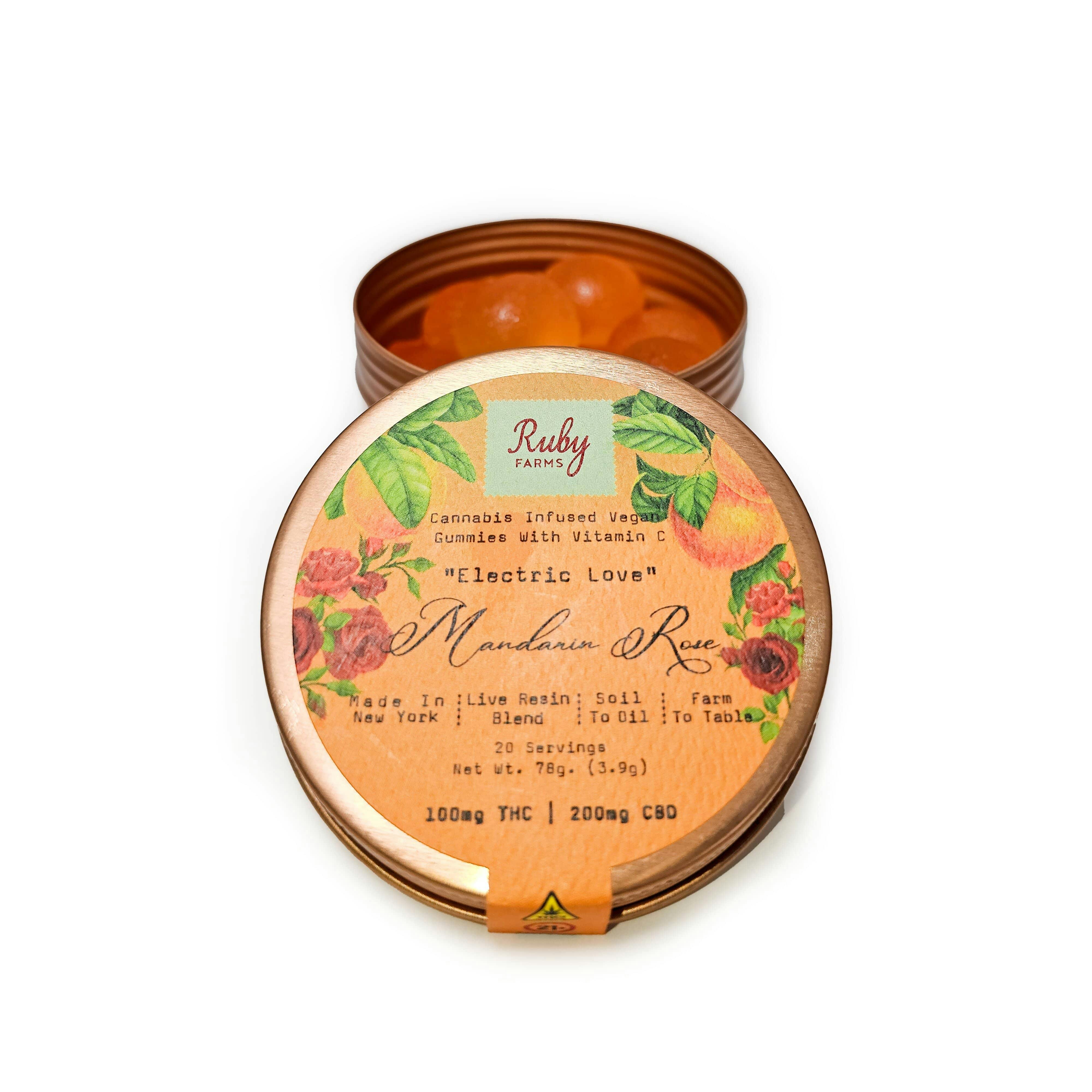
Ruby FarmsRuby Farms | "Electric Love" Mandarin Rose | Live Resin | 20pk · .1g
$25.00
$28after tax

weeddispensarynearme.com
You must be 21 years or older to enter. By entering, you confirm you’re of legal age in your state to purchase cannabis.
For use only by adults 21+ • Keep out of reach of children
3 live products in stock
Quick answer · What is the Rose cannabis strain?
Rose is a floral-forward hybrid whose name announces its character without exaggeration. Delicate petals of sweetness give way to an earthy, herbaceous foundation, while the effect profile moves through the body with a measured, unhurried warmth. Suited to those who prize nuance over intensity, Rose rewards the attentive consumer — a strain best appreciated at leisure, the way one savors a well-composed garden rather than rushing past it.
$28after tax
About Rose
The name 'Rose' has been applied to several distinct cultivars in the contemporary cannabis market, which creates some complexity for researchers tracing a single lineage. The most widely referenced Rose strain is understood to be a hybrid with roots in floral and resinous genetic lines, though the breeder has not publicly named the precise parents with full documentation. Some accounts attribute the strain to crossbreeding within OG or Kush-adjacent genetics and sweeter, terpene-rich varieties selected for their aromatic profile — a pairing intended to amplify floral terpene expression, particularly linalool and geraniol, both of which contribute the rose-like fragrance the strain is named for. Because 'Rose' is also used colloquially as a marketing descriptor for any strain exhibiting strong floral aromatic properties, shoppers may encounter regional phenotypes that carry the name without shared genetic lineage. This is not unusual in cannabis nomenclature, where evocative names travel faster than verified genetics. Consumers seeking consistency are advised to look for third-party certificates of analysis and rely on trusted cultivators. Notwithstanding the contested genealogy, Rose has developed a following in legal adult-use markets, particularly among consumers who gravitate toward aromatic complexity and a softer, more balanced effect profile. It occupies a similar cultural space to other floral hybrids such as Lavender and Mimosa — strains that foreground scent as a primary value proposition.
The onset of Rose tends to be gradual by hybrid standards, typically manifesting within five to fifteen minutes when smoked or vaped, with edible forms following the standard extended timeline. The initial notes are cerebral — a gentle lift in mood and a loosening of mental tension that many consumers describe as a clarifying rather than an electrifying sensation. There is a quality of softening to the experience: thoughts become less insistent, conversations feel more fluid, and the perceptual world takes on a slightly heightened but not disorienting character. As the session deepens into its middle phase, a body component begins to emerge. This is not the heavy sedation associated with classic indica cultivars but rather a diffuse physical ease — shoulders releasing, breath deepening, the body settling into whatever space it occupies. The hybrid balance here is well-suited to social contexts or to creative work that benefits from a relaxed but present mental state. The duration of Rose's effects is moderate, typically two to three hours, with a comedown that is gentle rather than abrupt. Linalool, the terpene most associated with lavender and rose botanicals, is thought to contribute to this smooth arc, as research has suggested its potential role in modulating GABAergic pathways. Myrcene, if present in meaningful quantities as reported in some cultivar analyses, would reinforce the body-ease component. As always, individual experience varies with tolerance, set, and setting, and new consumers should begin with a modest quantity.
The aromatic identity of Rose is anchored by linalool, the terpene responsible for the floral, slightly powdery sweetness that gives the strain its name. Linalool is the same compound that defines lavender's signature scent, and in Rose it functions in an analogous way — offering a fragrance that is immediately recognizable as botanical and refined. On the jar, the initial impression is of fresh cut flowers with a faint underlying sweetness, not unlike a high-quality rose water. Secondary terpenes vary by phenotype, but caryophyllene is frequently present, lending a subtle spice that keeps the floral notes from reading as cloying. Caryophyllene is the only known terpene that also acts as a dietary cannabinoid by binding CB2 receptors, a fact that has attracted considerable scientific interest. Myrcene, when present, adds an earthy, slightly musky depth that grounds the profile and lengthens the finish. Some expressions of Rose also carry notes attributable to geraniol, another floral terpene that sits in the rose-and-geranium family and amplifies the namesake character. On the palate — whether through flower or vaporizer — Rose delivers a smoke that is notably smooth. The inhale reads as sweet and herbal, with the floral top notes most distinct on the draw. The exhale reveals more of the earthy, slightly peppery base, leaving a clean, lasting finish that does not carry the harshness sometimes associated with more resinous cultivars. The overall flavor experience is cohesive and deliberately calibrated.
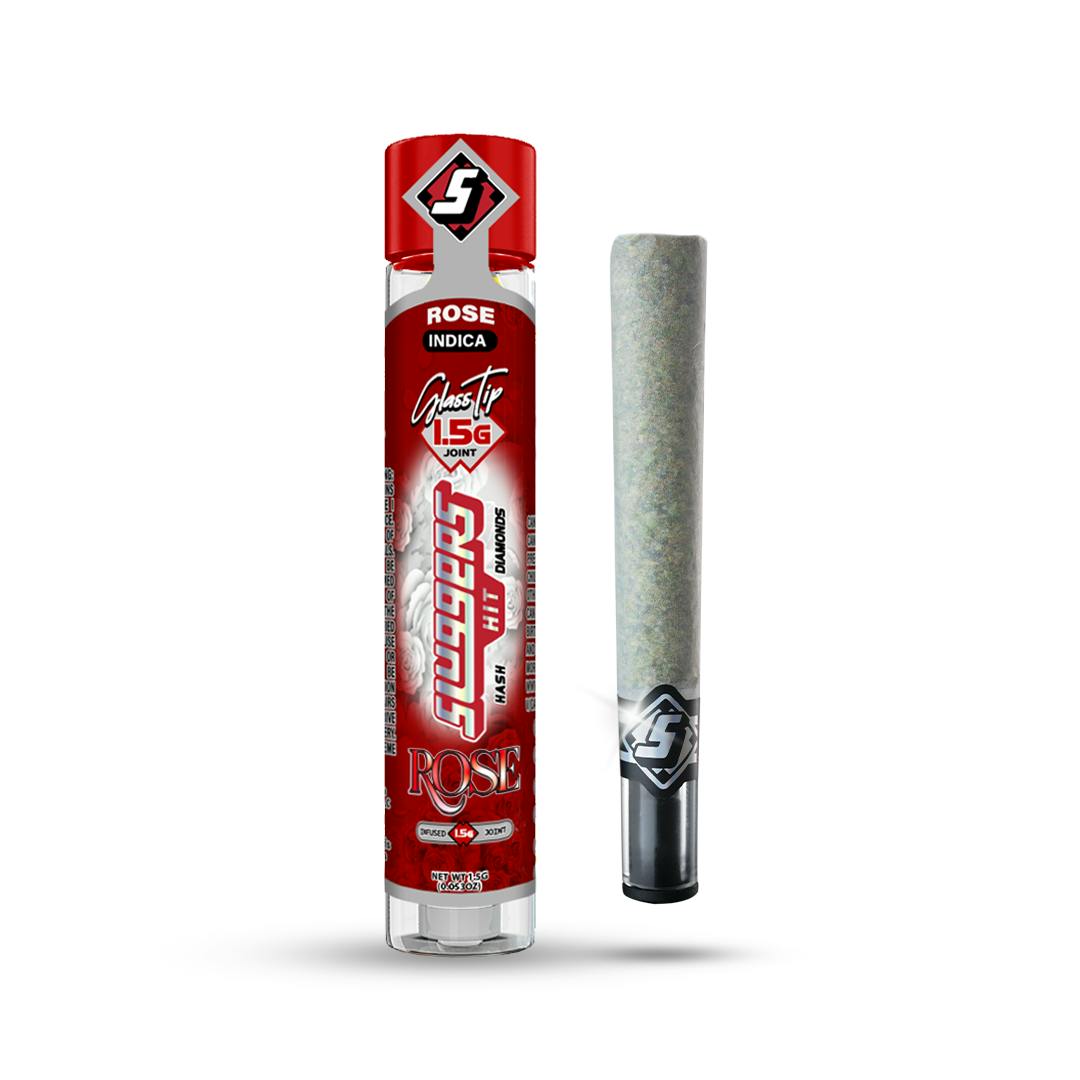
Rose presents with medium-density buds that tend toward a classic hybrid structure — neither the tightly compressed spheres of a heavy indica nor the elongated, leafy formations of sativa-dominant cultivars. The calyxes are well-formed, and the overall bud shape has a slightly tapered, almost sculptural quality. Trichome coverage is moderate to generous, imparting a frosted, matte sheen that signals reasonable resin production without the hyperresinous appearance of some OG-derived varieties. The color palette leans toward medium to deep green, with occasional notes of lighter sage or yellow-green depending on the phenotype and curing conditions. Pistils are typically a warm amber to rust-orange, providing a visual contrast that gives the bud a layered, painterly quality — appropriate for a strain whose aesthetic identity is closely tied to the flower it references. When well-cultivated and properly cured, Rose has a visual polish that suits its premium market positioning.
Rose is generally positioned as a moderately approachable cultivar for home growers, though the specifics of cultivation guidance depend heavily on the genetic lineage of the phenotype in question. Indoor growing environments tend to bring out the most pronounced terpene expression, particularly for linalool-forward profiles, as humidity and light spectrum can be carefully controlled. Indoor flowering is typically estimated in the eight-to-ten-week range, consistent with many balanced hybrid cultivars. Outdoor cultivation is viable in mild, temperate climates — regions with warm days, cool nights, and low humidity during the flowering period, which helps concentrate aromatic compounds and reduce the risk of mold in dense bud clusters. Yield expectations indoors are moderate, comparable to other aesthetically oriented hybrids that prioritize terpene quality over raw biomass. The plant is reported to respond well to low-stress training techniques, which can improve light penetration and evenness of bud development. Consumers curious about cultivation should consult licensed cultivator resources and their state's home-grow regulations.
Rose is a strain well-matched to the unhurried afternoon — the kind of time carved out from a demanding week for reading, gentle creative work, or the easy pleasure of a long conversation with a trusted friend. Its effect arc, which moves from a mild mental clarity into a soft body ease, makes it a natural companion for activities that benefit from presence without requiring sharp focus. It does not demand the consumer's attention in the way that more stimulating or sedating cultivars can; instead, it recedes gracefully into the background of the experience it accompanies. For food pairings, the floral and lightly spiced terpene profile of Rose finds an elegant counterpart in herbal cheeses — a fresh chèvre or a young manchego — or in light Mediterranean dishes where lemon, olive, and herb are prominent. On the musical side, Rose suits acoustic recordings or chamber music, genres where texture and space are as important as melody. It is not a strain for the energy of a concert floor, but it is well-suited to an evening where the record player is running and the windows are open to a warm breeze.
Lavender
Lavender shares Rose's linalool-dominant terpene profile and similarly floral, herbaceous aroma, making it a natural next step for consumers drawn to Rose's botanical character.
Mimosa
Mimosa offers a comparable uplift-to-ease arc and a similarly refined aromatic identity, appealing to the same consumer who values terpene complexity alongside a balanced effect profile.
Zkittlez
Zkittlez shares the sweet, fruity-floral aromatic dimension that draws consumers to Rose, while delivering a similarly smooth and even-tempered experience.
Do-Si-Dos
Do-Si-Dos carries floral and earthy notes alongside a measured body component that parallels Rose's gentle physical ease, particularly in its more balanced phenotypes.
Gelato
Gelato's polished, sweet-earthy flavor profile and its reputation for a composed, socially compatible experience make it appealing to the same discerning consumer that Rose attracts.
Rose is generally classified as a balanced hybrid, though specific phenotypes may lean slightly in one direction depending on the genetic lineage of the cultivar. Its effect profile reflects this balance: an initial cerebral lift that transitions into a measured body ease, without strongly favoring the energizing end of the sativa spectrum or the sedating end of indica expression. As with many contemporary hybrids, the indica-sativa distinction is a useful shorthand rather than a precise pharmacological guide.
Rose delivers a smooth, floral-forward palate anchored by the same linalool terpene found in lavender and rose botanicals. The inhale is sweet and herbal, with a delicate floral quality that is distinct without being perfumed. The exhale introduces a slightly earthier, mildly spiced note — often attributed to caryophyllene — that balances the sweetness and provides a clean, lasting finish. The overall flavor experience is refined and cohesive, making it well-suited to vaporization as well as traditional flower consumption.
Rose typically produces a gradual onset that begins with a gentle cerebral lift — a softening of mental tension and a mild brightening of mood — before transitioning into a diffuse body ease that is relaxing without being heavily sedating. The experience is generally described as balanced and measured, suited to social settings or quiet creative time. Duration is moderate, usually two to three hours, with a smooth comedown. New consumers should begin with a modest amount and allow adequate time before reassessing.
Consumers who enjoy Rose's floral terpene profile and balanced effect arc often find comparable satisfaction in Lavender, which shares the linalool-dominant aromatic character, or in Mimosa, which offers a similarly refined and socially compatible experience. Zkittlez appeals to those drawn to Rose's sweeter, fruit-floral dimension. Do-Si-Dos and Gelato round out the category for consumers who value a polished, even-tempered hybrid with aromatic complexity.
Rose is considered accessible for newer adult-use consumers given its balanced hybrid character and gradual effect onset, which tends to be more forgiving than high-THC cultivars with abrupt, intense profiles. That said, all cannabis experiences are individual, and the standard guidance applies: start with a small amount, in a comfortable setting, with adequate time to observe how the experience develops before consuming more. Those new to cannabis are encouraged to consult knowledgeable staff before selecting any cultivar.
Linalool is the defining terpene of Rose, responsible for its characteristic floral, slightly powdery sweetness that mirrors the scent of the flower it is named for. Caryophyllene is frequently present as a secondary terpene, contributing a subtle spice that anchors the aromatic profile and adds depth. Myrcene may also appear, offering an earthy, musky undertone. Some phenotypes carry geraniol, another floral-family terpene that amplifies the rose-like quality. Terpene expression can vary between cultivators and harvests.
Rose is best suited to the afternoon or early evening — moments when the day's obligations have loosened but full sedation is not yet desired. Its balanced effect profile makes it appropriate for transitions: the window between active work and genuine rest. It pairs well with unhurried social time, light creative pursuits, or a quiet evening at home. Those who find themselves more sensitive to its cerebral component may prefer to save it for later in the day, once the schedule has cleared.
The lineage of Rose is not fully settled in public cannabis documentation. The name has been applied to multiple cultivars across different regional markets and producers, which complicates lineage tracing. While linalool and floral terpene expression appear consistently across descriptions of Rose phenotypes, the specific parent strains and originating breeder have not been confirmed in widely cited public sources. Consumers seeking genetic specificity are encouraged to request certificates of analysis and cultivator documentation from their dispensary.
Related strains
Pick your store
We'll show pricing, deals, and delivery zones for the store you pick. You can switch any time from the header.