On sale· 25% OFF
THC 80.54%·CBD 0.19%Sativa
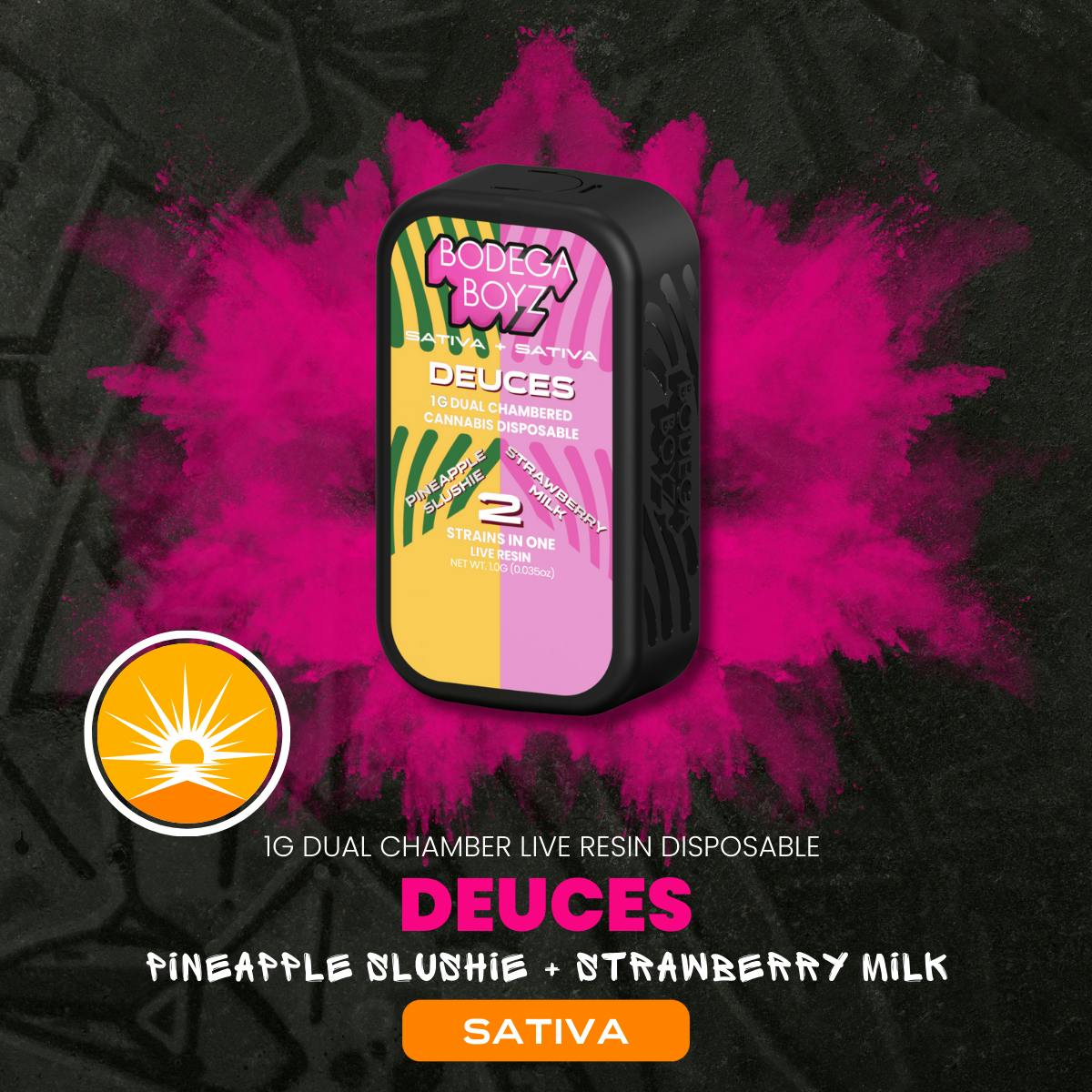
BODEGA BOYZBodega Boyz Pineapple Slushie X Strawberry Milk Live Resin Dual Chamber AIO | Deuces | Sativa X Sativa · 1g
$36.50$48.67
$43after tax

weeddispensarynearme.com
You must be 21 years or older to enter. By entering, you confirm you’re of legal age in your state to purchase cannabis.
For use only by adults 21+ • Keep out of reach of children
1 live products in stock
Quick answer · What is the Pineapple Slushie cannabis strain?
Pineapple Slushie arrives with the quiet confidence of a well-crafted tropical cocktail — bright, citrus-forward, and effortlessly refreshing. This sativa-leaning cultivar earns its evocative name through a terpene profile that layers sweet pineapple and tangy citrus over a clean, almost effervescent finish. The experience is equally polished: a clear-headed lift that invites conversation, creativity, and a certain lightness of spirit suited to the energy of New York at its finest.
$43after tax
About Pineapple Slushie
Pineapple Slushie's precise genetic lineage has not been publicly confirmed by a single authoritative breeder, which is common among boutique tropical-forward cultivars that emerged from the West Coast and Colorado craft cannabis scenes during the mid-2010s. The strain is most frequently cited as a cross involving Pineapple Express and an undisclosed slushie or candy-phenotype parent — some accounts point toward a Trainwreck-adjacent hybrid contributing to its sativa structure, while others suggest influence from OG Kush-lineage genetics that temper its upper-register energy. Pineapple Express itself is a well-documented hybrid popularized by G13 Labs, drawing from Trainwreck and Hawaiian genetics. Those roots give Pineapple Slushie its tropical fruit expressiveness, loose sativa architecture, and characteristic cerebral onset. The 'Slushie' designation appears to have been coined by small-batch cultivators seeking to emphasize the strain's almost candy-like sweetness — a quality that distinguishes it from the earthier, more resinous members of the Pineapple Express family tree. Genetic siblings and close phenotypes worth noting include Pineapple Kush, Pineapple OG, and various tropical candy hybrids that share the myrcene-and-terpinolene terpene architecture. Because the full parentage remains contested, shoppers should treat lineage claims with appropriate skepticism and focus instead on the consistent sensory and experiential qualities that define well-grown Pineapple Slushie phenotypes.
The onset of Pineapple Slushie typically arrives within five to fifteen minutes of inhalation — a gentle but unmistakable brightening of mood and mental focus that distinguishes it from heavier indica-dominant cultivars. The initial wave is primarily cerebral: thoughts quicken, sensory perception sharpens modestly, and social inhibition tends to ease without disappearing entirely. This is a functional lift rather than an overwhelming one, calibrated for engagement rather than escape. At its peak, which most consumers report between twenty and fifty minutes in, Pineapple Slushie occupies a pleasant middle ground — animated enough to support creative brainstorming or lively conversation, yet grounded enough to avoid the anxious edge that higher-terpinolene sativas can occasionally produce in sensitive individuals. Myrcene's modest sedative undertone keeps the body relaxed without dragging the experience earthward. The experience arc tends to be clean and consistent across the two-to-three hour window that most consumers describe. The comedown is notably gentle: a gradual easing of the cerebral brightness rather than a sharp drop in energy. Caryophyllene's presence may contribute to the smooth transition, offering mild tension relief as the primary effects subside. As with any cannabis product, individual response varies considerably — first-time consumers and those sensitive to sativa-dominant cultivars are well served by a measured, start-low approach.
The aromatic profile of Pineapple Slushie is defined by terpinolene as a likely lead contributor, delivering the strain's signature sweet, almost floral-fruity top note that evokes fresh pineapple and tropical hard candy. Terpinolene is associated with uplifting, lively aromatic qualities and is a characteristic terpene in many tropical sativa expressions. On first encounter, the jar opens to a bright, clean sweetness that stops well short of cloying. Myrcene occupies the mid-register, adding a soft, slightly musky earthiness that prevents the profile from reading as purely confectionery. It functions as an aromatic anchor, lending warmth and depth without pulling the nose toward the herbal or diesel notes that define other cannabis families. Secondary contributions from limonene introduce a citrus zest — closer to fresh-squeezed mandarin than sharp lemon — that reinforces the slushie-drink association and contributes a sense of brightness in both aroma and effect. On the palate, well-cured Pineapple Slushie delivers a vapor or smoke experience that mirrors the nose faithfully: a sweet tropical inhale gives way to a faintly tangy, citrus-tinged exhale with a clean, almost effervescent finish. Trace caryophyllene may contribute a mild, peppery back note on the exhale that adds dimension without disrupting the overall tropical character. The finish is typically short and pleasant, with minimal harshness on properly cured flower.
Pineapple Slushie presents the elongated, moderately open bud structure characteristic of sativa-dominant genetics — calyxes stack loosely, and the overall form trends toward the conical rather than the tightly compressed nuggets associated with indica-heavy cultivars. The loose architecture belies a generous trichome density: under close inspection or in good light, the surface carries a fine, consistent layer of milky-to-amber capitate-stalked trichomes that give the flower a slightly frosted, luminous quality. Coloration tends toward lighter, yellow-green hues with patches of pale sage, reflecting the strain's tropical heritage and its preference for conditions that don't stress the plant into deep purple expression. Pistils (the hair-like structures that signal maturity) are characteristically warm — orange to amber-gold — and wind loosely through the bud structure in a manner that adds visual warmth. Overall, the presentation is elegant rather than ostentatious, the botanical equivalent of a well-composed citrus arrangement.
Pineapple Slushie's sativa-dominant architecture means cultivators should expect a plant that reaches with enthusiasm — vertical growth can be pronounced, making low-stress training or screen-of-green techniques particularly useful in indoor environments where canopy management matters. Flowering time is typically reported between sixty-three and seventy days (nine to ten weeks) indoors, placing it in the mid-to-long range common among tropical sativa hybrids. Indoor yields are moderate — not the heaviest-producing cultivar in its class, but the quality of the resin and the aromatic payoff are widely regarded as the trade-off. Outdoor cultivation suits warmer, Mediterranean-like climates with long, dry autumns; the strain is not particularly resistant to humidity or mold, which is worth noting for anyone cultivating in the Northeast's more variable fall conditions. Difficulty level sits at intermediate: manageable for an experienced home cultivator comfortable with sativa-specific training techniques, but potentially demanding for novice growers accustomed to forgiving indica hybrids. For the consumer-curious about cultivation, Pineapple Slushie represents the kind of craft-forward genetics that rewards careful environmental dialing.
Pineapple Slushie was seemingly designed for the hours when the day is still full of possibility — late morning into afternoon, or the early-evening transition between the workday and the evening's first plans. Its clear-headed, socially calibrated lift makes it a natural companion for creative work that benefits from an open, associative mind: writing, design concepting, or the kind of unhurried browsing of art or music that benefits from heightened sensory engagement. For food pairing, the terpene profile's tropical sweetness and citrus brightness align naturally with ceviche, Thai-inspired dishes, or a well-composed fruit and cheese board anchored by aged manchego and fresh mango. On the sonic side, the strain's energized but unforced character pairs well with ambient electronic music or laid-back funk — something with forward motion and warmth but without the intensity that might amplify the experience in an unwelcome direction. It is equally well suited to a rooftop gathering in the early evening or a solo afternoon spent working through a creative backlog, making it one of the more socially versatile sativa cultivars in its flavor family.
Pineapple Express
As the most likely parent strain, Pineapple Express shares the tropical fruit terpene architecture and sativa-forward cerebral lift, making it a natural point of reference for anyone who enjoys Pineapple Slushie's character.
Tropicana Cookies
Tropicana Cookies shares the citrus-dominant, limonene-rich terpene profile and the clean, uplifting cerebral onset that Pineapple Slushie enthusiasts consistently seek.
Mimosa
Mimosa's bright citrus and tropical fruit expressiveness, combined with its smooth sativa energy, appeals to the same palate that gravitates toward Pineapple Slushie's effervescent quality.
Strawberry Cough
Strawberry Cough's sweet, fruit-forward profile and manageable, social sativa effects make it a reliable alternative for consumers who appreciate Pineapple Slushie's approachable brightness.
Clementine
Clementine's terpinolene-and-myrcene-driven citrus sweetness and clear-headed lift closely mirror the aromatic and experiential qualities that define Pineapple Slushie at its best.
Pineapple Slushie is classified as a sativa-dominant hybrid. Its effects lean toward the cerebral and uplifting end of the spectrum — clear-headed, socially engaging, and energized — rather than the body-heavy relaxation associated with indica-dominant cultivars. That said, the myrcene presence in its terpene profile introduces a mild physical ease that keeps the overall experience balanced rather than wired.
Pineapple Slushie tastes much as its name suggests: a sweet, tropical pineapple note on the inhale with a tangy, citrus-inflected exhale that finishes cleanly. Terpinolene drives the confectionery sweetness, while limonene contributes a fresh mandarin-citrus brightness. A faint peppery back note from caryophyllene adds mild complexity on the finish without disrupting the overall tropical, effervescent character.
Consumers most commonly describe Pineapple Slushie as producing an uplifted, clear-headed mood shift accompanied by a mild increase in social energy and creative openness. The onset is relatively prompt, the peak sits comfortably in the cerebral-yet-grounded range, and the comedown is gradual. It is generally regarded as a daytime or early-evening cultivar — functional and engaging rather than sedating or immobilizing.
Consumers who enjoy Pineapple Slushie tend to gravitate toward other tropical, terpinolene-forward sativas with citrus undertones. Strong comparisons include Pineapple Express, Tropicana Cookies, Mimosa, Clementine, and Strawberry Cough — each sharing some combination of sweet fruit expressiveness, clean cerebral lift, and social versatility that defines the Pineapple Slushie experience.
Pineapple Slushie is reasonably approachable for adults new to cannabis, though its sativa-dominant character means that sensitive individuals or those new to cannabis entirely should proceed with a start-low, go-slow approach. The terpene profile and effect arc are generally considered smooth and well-balanced, but higher-terpinolene cultivars can occasionally amplify anxious feelings in susceptible consumers. Moderation and a comfortable setting are always sensible starting points.
Based on reported sensory and effect profiles, the dominant terpenes in Pineapple Slushie are most commonly identified as terpinolene, myrcene, and limonene. Terpinolene contributes the sweet, tropical-floral top note; myrcene adds warmth and mild physical ease; and limonene introduces a bright citrus dimension. Caryophyllene is typically present as a secondary terpene, offering a subtle peppery depth and smooth-transition qualities.
Pineapple Slushie is widely considered a daytime or early-evening cultivar. Its uplifting, clear-headed character makes it well suited to late-morning creative sessions, afternoon social gatherings, or the transitional hours between the workday and evening plans. It is generally less well matched to late-night wind-down routines, where indica-forward or more sedating cultivars tend to serve consumers more effectively.
The full lineage of Pineapple Slushie has not been definitively confirmed by a single authoritative breeder. It is most commonly cited as involving Pineapple Express genetics — itself a cross of Trainwreck and Hawaiian — combined with an undisclosed candy or slushie-phenotype parent. Some accounts suggest additional OG or Trainwreck-adjacent influence. Consumers and cultivators should treat specific lineage claims with appropriate skepticism given the contested nature of its origins.
Related strains
Pick your store
We'll show pricing, deals, and delivery zones for the store you pick. You can switch any time from the header.