
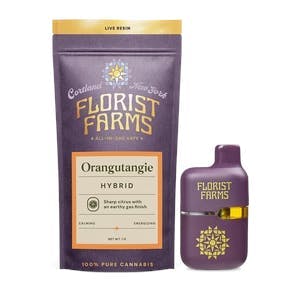
Hybrid
All strains Orangeutangie
1 live products in stock
Quick answer · What is the Orangeutangie cannabis strain?
Orangeutangie arrives like a ripe citrus grove at the height of summer — its peel-forward fragrance unmistakable from the moment the jar opens. A sativa-leaning hybrid with a lineage rooted in two West Coast legends, it delivers a buoyant, sociable lift that feels measured rather than overwhelming. For the discerning New York consumer seeking brightness without edge, Orangeutangie occupies a rare and pleasurable middle ground.
Shop Orangeutangie · 1 of 1 live products
About Orangeutangie
Everything to know about Orangeutangie.
Lineage & origin
Orangeutangie is a cross between Tangie and Sunset Sherbet, two strains that together defined much of the West Coast flavor renaissance of the 2010s. Tangie itself is a modern reinterpretation of the classic Tangerine Dream lineage, developed by DNA Genetics and popularized broadly around 2014 after winning multiple Cannabis Cup awards. It brought an almost aggressive citrus character — mandarin peel, clementine, bright orange zest — back into prominence at a time when fuel and earth notes dominated the conversation. Sunset Sherbet, the second parent, descends from Girl Scout Cookies crossed with an undisclosed Pink Panties cut, and was developed by the Bay Area collective known as Cookie Fam. Where Tangie provides the electric citrus top notes, Sunset Sherbet grounds the profile with a creamy, dessert-like sweetness and a more relaxed body presence. The combination that became Orangeutangie is generally credited to Crockett Family Farms, the same breeders behind Tangie, though some catalogue listings note this is not universally confirmed across every phenotype in circulation. The name itself is a playful portmanteau of 'orange' and 'Tangie,' signaling exactly what to expect before a flower is even opened. Genetic siblings in the broader Tangie family tree include Agent Orange, Tangie Cookies, and Lemon Tangie — each sharing that citrus-forward architecture while diverging in their body and effect profiles depending on the secondary parent involved.
Effects
The onset of Orangeutangie tends to arrive within a few minutes of inhalation — a gentle pressure behind the eyes that quickly opens into a clear-headed, uplifted mental state. This initial cerebral character is consistent with the sativa-leaning influence of its Tangie parentage, and the limonene content that typically registers prominently in its terpene profile. The mind feels alert and communicative rather than scattered, making it well-suited to conversation, creative engagement, or simply appreciating the texture of an afternoon. As the session progresses into its peak — usually somewhere between fifteen and forty-five minutes in — Sunset Sherbet's influence becomes more legible. A mild body warmth settles in beneath the mental brightness, rounding out what might otherwise be a purely cerebral ride. This is not a sedative quality; rather, it functions as a gentle counterweight that keeps the experience feeling whole. The comedown is typically gradual and smooth, fading toward a relaxed, grounded state rather than dropping abruptly. Myrcene, where present, contributes to this bodily ease, while terpinolene — a terpene associated with uplifting and slightly euphoric qualities — reinforces the lively, social character of the peak. As with any cannabis experience, individual response varies considerably, and those newer to cannabis or to sativa-leaning hybrids are encouraged to start with a modest amount and allow adequate time before reassessing.
Aroma, flavor & terpenes
The aromatic signature of Orangeutangie is dominated by limonene, the terpene responsible for its vivid, citrus-peel character. On the nose, it registers less like fresh-squeezed juice and more like the bright, slightly bitter oils expressed when peeling a ripe mandarin — there is a slight resinous quality beneath the fruit, lending depth to what could otherwise read as a single-note profile. This is the Tangie inheritance at its most direct, and it is one of the more recognizable aromas in the contemporary hybrid market. Secondary terpenes fill in the picture considerably. Myrcene introduces a subtle earthiness and a faint tropical undercurrent that softens the citrus brightness without muting it. Caryophyllene, if present — and it frequently is in Sunset Sherbet-influenced genetics — adds a quiet spice note, almost like a distant whisper of black pepper or clove on the exhale. Terpinolene can contribute a herbal, slightly floral nuance that sits between the fruit and earth layers and makes the nose more complex on close inspection. On the palate, Orangeutangie tends to deliver on its aromatic promise. Smoked, it produces a smooth, moderately dense vapor with orange and citrus flavors most pronounced on the inhale. The exhale carries a creamier, slightly sweet quality that reflects the Sherbet lineage — a pleasant finishing note that lingers briefly and does not feel harsh. Vaped at lower temperatures, the citrus character becomes even cleaner and more articulate.
Appearance
Orangeutangie typically presents in medium to large buds with a moderately dense structure — compact enough to hold their shape well, but not so tightly wound as to appear machine-trimmed. The calyxes tend to be rounded and well-developed, giving the flower a full, almost pillowy silhouette that reflects its hybrid architecture rather than leaning toward the classic elongated sativa form. The color palette is one of its more visually distinctive qualities. A vivid medium green forms the base, often accented by brighter lime-green patches where newer growth concentrated during flowering. Rust-orange to amber pistils wind generously through the structure, a visual echo of the citrus character that defines its aroma. Trichome coverage is consistent and reasonably dense — a milky white to faintly golden dusting that gives the surface a soft luminosity under light without appearing coarse or underdeveloped. Well-grown examples have a polished, almost jewel-like quality when examined closely.
Growing notes
Orangeutangie is generally considered a moderately approachable cultivar for those with some prior experience, though its sativa-influenced stretch during the early flowering phase may require some canopy management for indoor growers working with limited vertical space. Indoor flowering time typically falls in the range of nine to ten weeks, and the plant tends to reward training techniques such as low-stress training or topping, which can improve light penetration and encourage more uniform bud development across the canopy. Yields are described as moderate to generous by most cultivators who have documented their runs, with indoor production generally sitting in a respectable range for a sativa-leaning hybrid. Outdoors, Orangeutangie thrives in warm, Mediterranean-style climates — consistent sun, moderate humidity, and a long growing season allow it to express its full citrus terpene profile most completely. In regions with cooler or shorter summers, greenhouse cultivation is a worthwhile consideration. The plants tend to exhibit some structural vigor and may benefit from additional support during the later weeks of flowering as bud weight accumulates.
When it's best enjoyed
Orangeutangie is a strain that rewards social context. Its bright, communicative mental character and approachable body feel make it a natural companion for gatherings where conversation is the main event — a rooftop gathering in the early evening, a studio session with collaborators, or an unhurried walk through a neighborhood whose architecture rewards close attention. The citrus-forward terpene profile and the gently euphoric arc of the experience lend themselves to moments that are active and engaged rather than introspective or sedative. For food pairing, the orange and mandarin aromatics have a natural affinity with dishes that share bright, acidic, or citrus-inflected profiles — a well-dressed ceviche, a Meyer lemon tart, or a lightly dressed citrus salad would all complement rather than compete with the terpene signature. On the musical side, the mid-tempo, melodic character of the experience pairs naturally with jazz-funk hybrids, Brazilian popular music, or the kind of warm, groove-oriented soul that moves the body without demanding full attention. This is a strain for the hours between late afternoon and early evening, before the day has fully closed.
If you like Orangeutangie, also explore
Tangie
As Orangeutangie's direct parent, Tangie shares the dominant mandarin-citrus terpene profile and uplifting cerebral effect, offering a slightly more stripped-back version of the same aromatic experience.
Sunset Sherbet
The second parent contributes the creamy, dessert-forward sweetness that grounds Orangeutangie, and fans drawn to its body warmth and smooth comedown will find familiar comfort in Sherbet's profile.
Agent Orange
Another Tangie-family cultivar with a pronounced citrus and sweet orange character, Agent Orange appeals to consumers who appreciate Orangeutangie's brightness but prefer a slightly different genetic expression.
Clementine
A limonene-rich sativa-leaning hybrid with a near-identical citrus-peel aroma, Clementine offers a comparable daytime energy and social lift for those drawn to Orangeutangie's orange-forward nose.
Mimosa
Bred from Clementine and Purple Punch, Mimosa shares the bright citrus character and hybrid balance of cerebral lift with mild body ease that defines the Orangeutangie experience.
Common questions
Is Orangeutangie indica or sativa?+
Orangeutangie is classified as a sativa-leaning hybrid. It draws its uplifting, cerebral onset from Tangie, a strain with strong sativa influence, while Sunset Sherbet — a more balanced hybrid — contributes a mild body warmth that rounds out the experience. The overall effect profile tends to feel energetic and social rather than sedating, placing it firmly in the daytime or early-evening category for most consumers.
What does Orangeutangie taste like?+
Orangeutangie tastes predominantly of mandarin orange and citrus peel, an aromatic inheritance from its Tangie parentage. On the exhale, the Sunset Sherbet influence introduces a creamy, lightly sweet finish that softens the citrus brightness. Secondary notes of subtle earth and mild spice — likely from myrcene and caryophyllene — add depth beneath the dominant fruit character, making the flavor profile more layered than a first impression might suggest.
What are the typical effects of Orangeutangie?+
Consumers typically report a clear-headed, uplifted mental state that arrives relatively quickly and feels sociable and communicative in character. As the experience progresses, a gentle body warmth from the Sunset Sherbet lineage settles in beneath the cerebral lift. The overall arc is smooth and measured, without sharp peaks or abrupt transitions. The comedown tends to be gradual, fading toward a relaxed, grounded feeling rather than a sudden drop in energy or clarity.
What strains are similar to Orangeutangie?+
Consumers who enjoy Orangeutangie often find similar satisfaction in Tangie, its direct citrus-forward parent; Clementine, another limonene-dominant daytime hybrid; and Mimosa, which shares the bright orange-citrus character with a comparable sativa-leaning balance. Sunset Sherbet, the second parent, is worth exploring for those drawn specifically to the creamy sweetness and mild body feel that grounds Orangeutangie's more energetic qualities.
Is Orangeutangie good for beginners?+
Orangeutangie can be approachable for newer consumers given its relatively balanced hybrid profile, though its sativa-leaning character means that those sensitive to cerebral or mentally stimulating effects should exercise some caution. The standard guidance applies: start with a modest amount, allow sufficient time to understand how the experience develops before consuming more, and choose a comfortable, familiar setting. Its smooth, gradual onset and measured peak make it less abrupt than some strongly sativa-dominant cultivars.
What are the dominant terpenes in Orangeutangie?+
Limonene is the most prominently documented terpene in Orangeutangie, responsible for its signature citrus-peel aroma and associated with uplifting, mood-brightening qualities. Myrcene is frequently identified as a secondary terpene, contributing earthiness and mild body ease. Terpinolene, which is associated with herbal and slightly floral notes as well as an energetic quality, and caryophyllene, which adds subtle spice, are also commonly reported in this strain's terpene profile depending on the specific phenotype and cultivation conditions.
When is the best time of day to consume Orangeutangie?+
Given its sativa-leaning, mentally engaging character, Orangeutangie is generally considered a daytime or early-evening strain. Its citrus-driven terpene profile and uplifting onset make it well-suited to afternoon social occasions, creative work sessions, or the transitional hours before dinner. Most consumers find the mild body warmth of the Sunset Sherbet influence helps ease the transition toward evening without tipping into the kind of sedation that would make later-day consumption impractical.
Who bred Orangeutangie and where does the name come from?+
Orangeutangie is most commonly attributed to Crockett Family Farms, the California-based breeding operation also responsible for Tangie. The name is a portmanteau of 'orange' and 'Tangie,' the dominant parent, and serves as a direct reference to the strain's most defining aromatic and flavor characteristic. Some variation exists in how this lineage is documented across different seed banks and catalogue sources, and not every phenotype in circulation is definitively traced to a single originating breeder.
Related strains