

Sativa
All strains Mule Fuel
3 live products in stock
Quick answer · What is the Mule Fuel cannabis strain?
Mule Fuel arrives with the quiet authority of a strain that has earned its reputation through raw genetic merit rather than novelty. A dense, resinous hybrid carrying deep OG lineage, it opens with a complex diesel-and-earth bouquet before settling into a balanced, full-bodied experience that rewards patience. Equal parts cerebral engagement and physical ease, Mule Fuel is the kind of cultivar that experienced consumers return to with considered deliberation.
Shop Mule Fuel · 3 of 3 live products

THC 22.37%Sativa
Florist FarmsFlorist Farms | Mule Fuel | Live Resin Infused | Joint · 1g
$15.93
$18after tax
About Mule Fuel
Everything to know about Mule Fuel.
Lineage & origin
Mule Fuel is a hybrid cultivar bred by Ethos Genetics, one of the more respected American seed companies to emerge in the 2010s, known for rigorous phenotype selection and documented breeding methodology. The strain is a cross of Lurch and GMO — two heavyweights in the modern OG-derived cannabis landscape. Lurch itself carries Chemdawg and OG Kush heritage, grounding Mule Fuel in the deep diesel-and-earth genetic tradition that defined the California connoisseur market of the early 2000s. GMO, also known as Garlic Cookies, is a cross of Girl Scout Cookies and Chemdawg, bringing an additional layer of savory, pungent complexity along with notably resinous expression. Ethos Genetics released Mule Fuel as part of a broader catalog built around stacking complementary OG and Cookies genetics, and the strain quickly gained traction among cultivators who prized both its bag appeal and its potency ceiling. Because both parent strains carry Chemdawg in their lineage, Mule Fuel can be understood as a Chemdawg-forward double-stack — an intentional amplification of that cultivar's most prized qualities. Several phenotypes have circulated in the market, with some expressions leaning toward the gassy, petroleum-forward character of the GMO parent and others pulling more of Lurch's earthier, slightly sweeter OG finish. No major disputes about the core lineage have surfaced in public breeder documentation.
Effects
Mule Fuel tends to announce itself within the first ten to fifteen minutes of consumption, typically opening with a measured cerebral lift — a gentle brightening of focus and mood rather than a racey or disorienting head rush. This initial phase has a clarifying quality, with thoughts becoming more deliberate and sensory awareness sharpening slightly. For most consumers, the onset is smooth enough to feel controlled, though the strain's potency means that those unaccustomed to Chemdawg-lineage cultivars should approach the first session with care. As the experience deepens into the twenty-to-forty-minute window, the body component asserts itself with increasing presence. A warm, spreading physical ease moves through the limbs and shoulders, complementing rather than displacing the mental clarity of the onset. This dual character — the hallmark of a well-bred hybrid — is where Mule Fuel earns its reputation. The peak is grounded and coherent, neither overwhelmingly sedating nor uncomfortably stimulating. The caryophyllene and myrcene terpene load are consistent with the body-ease dimension of the experience, while the limonene content supports mood elevation. The duration is typically in the two-to-three-hour range for moderate sessions, with a gentle comedown that tends toward relaxation rather than fatigue. Residual physical ease can linger past the more pronounced cerebral phase, making the tail end of the experience notably restful.
Aroma, flavor & terpenes
The aromatic profile of Mule Fuel is emphatically rooted in the diesel-and-garlic tradition inherited from its GMO and Lurch parents. On first approach, the nose encounters a bold, fuel-forward pungency — a petroleum sharpness that is characteristic of high-caryophyllene, Chemdawg-lineage genetics. Beneath that primary note lies a damp, mossy earth quality, reminiscent of forest floor after rain, which anchors the aroma and prevents it from reading as one-dimensional. The dominant terpenes documented across Mule Fuel phenotypes typically include caryophyllene, myrcene, and limonene. Caryophyllene — also found in black pepper and cloves — contributes the spicy, peppery backbone and is the terpene most associated with the savory, almost meat-like depth that distinguishes GMO-adjacent genetics. Myrcene adds a herbal, slightly musky warmth that rounds the profile and softens the more aggressive diesel edge. Limonene lifts the entire bouquet with a faint citrus brightness, providing a counterpoint that keeps the aroma from becoming oppressive. On the palate, Mule Fuel delivers a rich, full-bodied smoke or vapor with considerable density. The initial draw tends to be earthy and gassy, with the garlic-and-fuel character most pronounced on the exhale. A faint sweetness — a quiet inheritance from the Cookies side of its GMO parent — lingers on the finish, adding complexity. The smoke is smooth relative to its potency, with a coating quality that experienced consumers in the OG tradition tend to find distinctly satisfying.
Appearance
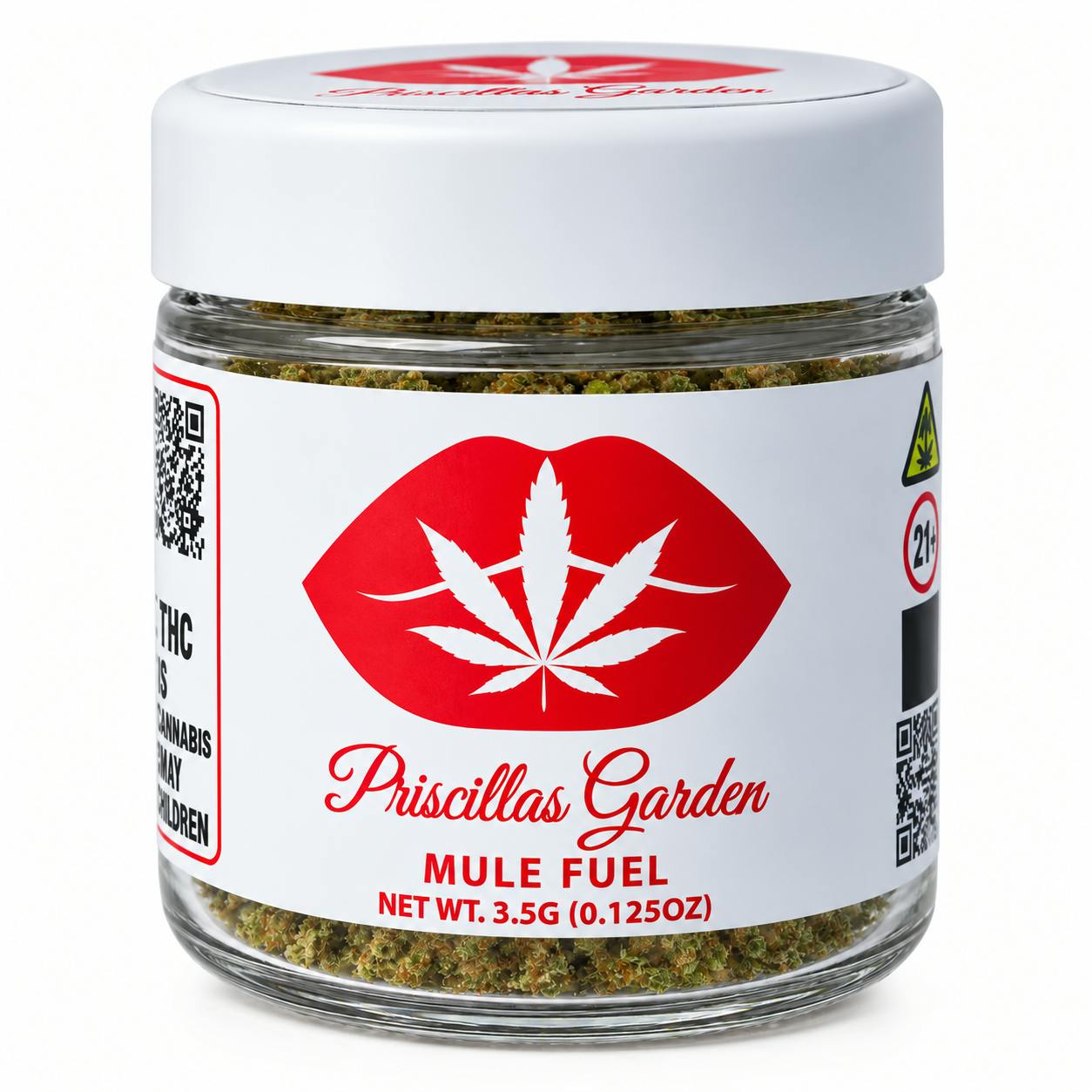
Mule Fuel produces buds that read immediately as the product of careful genetic selection. The structure is dense and compact, with a classic OG-influenced calyx architecture — tightly packed, almost chunky formations that hold their shape well through curing. The trichome coverage is notably heavy, giving well-grown specimens a frosted, silver-white sheen that reflects the strain's resin production capacity. Under adequate light, individual trichome heads are visible to the naked eye across nearly every surface of the bud. The color palette sits in the mid-to-deep green range, with some phenotypes displaying subtle olive or sage undertones in the inner calyxes. Pistils run amber to deep rust-orange, weaving densely through the trichome layer and providing visual contrast against the pale green and white. The overall presentation is one of restrained opulence — not the vivid purples or electric greens associated with novelty cultivars, but the kind of rich, considered appearance that signals depth of character rather than spectacle.
Growing notes
Mule Fuel is considered an intermediate-to-advanced cultivar by most accounts from the Ethos Genetics community and experienced home growers who have documented their runs publicly. Its dense bud structure, while visually impressive, demands attentive airflow management to minimize the risk of moisture retention during the final flowering weeks — a characteristic shared with many OG and Cookies-lineage plants. Indoors, Mule Fuel typically finishes in the eight-to-nine-week range, with some phenotypes pushing toward ten weeks for optimal trichome maturity. Yields are moderate to moderate-high indoors under controlled conditions, rewarding growers who invest in canopy management techniques such as low-stress training or screen-of-green setups. Outdoors, the strain performs well in temperate climates with reliable late-summer warmth, typically reaching harvest in early-to-mid October in the Northern Hemisphere. Its preference for consistent temperatures and lower ambient humidity reflects its OG Kush heritage. Cultivators curious about this strain should be prepared for moderately high nutrient demands during the flowering phase, consistent with its resinous, dense-producing genetics.
When it's best enjoyed
Mule Fuel occupies a particular temporal niche: the late afternoon or early evening hours when the day's obligations have concluded but the night has not yet fully arrived. It is a strain suited to the deliberate pause — the period between work and dinner, between effort and rest. Its balanced hybrid character makes it a compelling companion for solo creative engagement, particularly work that benefits from a combination of focused attention and physical ease: writing, drawing, or any practice that requires both mental presence and a relaxed body. For those inclined toward pairing, the strain's earthy, diesel-forward terpene profile finds a natural counterpart in foods of similar depth and savoriness — aged hard cheeses, charcuterie, or a dish built around roasted root vegetables and umami-rich components. Musically, Mule Fuel aligns well with recordings that share its sense of controlled intensity: late Miles Davis, Portishead, or the more meditative end of modern jazz. It is not a strain for large, chaotic social gatherings, but it rewards a small, unhurried dinner with people who value conversation at a measured pace.
If you like Mule Fuel, also explore
GMO (Garlic Cookies)
As a direct parent of Mule Fuel, GMO shares the same savory, garlic-and-diesel terpene profile and heavy indica-leaning body effect, making it the most direct analog for consumers drawn to that dimension of Mule Fuel's character.
Chemdawg
With Chemdawg ancestry on both sides of Mule Fuel's lineage, fans of the classic petroleum-and-earth aroma and the alert-yet-grounded effect profile will find familiar footing here.
Legend OG
Legend OG's dense structure, heavy resin production, and earthy-fuel aromatic profile appeal to the same connoisseur sensibility as Mule Fuel, particularly for consumers who favor OG-tradition cultivars.
Jet Fuel OG
Jet Fuel OG's diesel-forward aroma, balanced hybrid effects, and caryophyllene-rich terpene expression make it a natural recommendation for consumers who appreciate the gassy, grounded character of Mule Fuel.
Slurricane
Slurricane shares the dense bud structure, substantial resin coating, and deep physical ease of Mule Fuel's body phase, and appeals to consumers who want comparable potency with a slightly sweeter aromatic profile.
Common questions
Is Mule Fuel indica or sativa?+
Mule Fuel is classified as a hybrid, bred by Ethos Genetics from a cross of Lurch and GMO. In practice, it leans toward the indica side of the hybrid spectrum — its body component is pronounced and its overall character is grounding rather than energizing — but the onset carries enough cerebral engagement to keep it from reading as purely sedating. Most consumers describe it as a balanced hybrid with a slight indica influence.
What does Mule Fuel taste like?+
Mule Fuel delivers a rich, savory flavor profile rooted in its GMO and Chemdawg lineage. The dominant notes are diesel, earth, and a distinctive garlic-like pungency on the exhale. A faint citrus brightness lifts the mid-palate, and a subtle sweetness — inherited from the Cookies side of GMO — lingers on the finish. The smoke is dense and coating, with complexity that rewards slower, more deliberate draws.
What are the typical effects of Mule Fuel?+
Mule Fuel typically opens with a measured cerebral lift — a brightening of mood and focus — before transitioning into a warm, spreading physical ease that characterizes the peak experience. The dual-phase character is a hallmark of its well-balanced hybrid genetics. The experience is generally coherent and grounded rather than disorienting, with a duration of roughly two to three hours and a restful, relaxed comedown. Its potency is considered substantial, and a cautious approach is advisable for newer consumers.
What strains are similar to Mule Fuel?+
Consumers who enjoy Mule Fuel often gravitate toward its parent strain GMO for the same garlic-and-diesel profile, or toward Chemdawg for its shared lineage and alert-yet-grounded effect arc. Jet Fuel OG and Legend OG offer comparable diesel-forward aromatic experiences with dense, resinous bud structure. Slurricane appeals to Mule Fuel fans who want similar potency and body ease with a sweeter terpene expression.
Is Mule Fuel good for beginners?+
Mule Fuel is generally better suited to consumers with some prior experience, particularly those familiar with OG and Cookies-lineage cultivars. Its potency ceiling is considered substantial — a reflection of its Chemdawg-stacked genetics — and its dense, resinous bud structure can make portion judgment less intuitive. For adults new to cannabis or returning after a long break, the standard guidance applies: start with a minimal amount, allow adequate time to assess the experience, and proceed deliberately.
What are the dominant terpenes in Mule Fuel?+
Mule Fuel's terpene profile is typically led by caryophyllene, myrcene, and limonene. Caryophyllene contributes the spicy, peppery, and savory qualities most associated with its GMO parent — including the distinctive garlic-adjacent note. Myrcene adds herbal warmth and a musky depth that softens the more aggressive diesel edge. Limonene provides a faint citrus brightness that lifts the overall profile and contributes to the strain's mood-elevating dimension.
Who bred Mule Fuel and where does it come from?+
Mule Fuel was bred by Ethos Genetics, a seed company that built its reputation during the 2010s through documented, methodical breeding programs focused on OG and Cookies-lineage genetics. The strain is a cross of Lurch — itself a Chemdawg and OG Kush descendant — and GMO, also known as Garlic Cookies, a Girl Scout Cookies and Chemdawg cross. Ethos Genetics has made its lineage documentation publicly available through its catalog.
How does Mule Fuel compare to GMO?+
Mule Fuel and GMO share the same savory, garlic-and-diesel aromatic foundation and a substantial body effect, but Mule Fuel's Lurch parentage introduces an additional layer of OG earthiness and a slightly more balanced onset — somewhat less intensely sedating than a pure GMO experience. Consumers who find GMO too heavily indica-leaning may appreciate Mule Fuel's more evenly distributed cerebral and physical character, while still accessing the depth of flavor that defines both cultivars.
Related strains