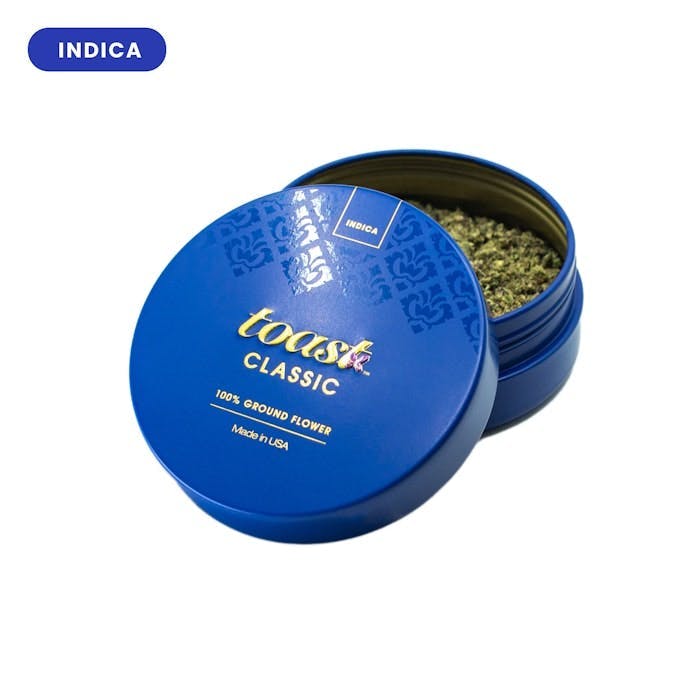
THC 44.3%·CBD 0.23%Indica
ToastToast | Moroccan Gold | Infused Ground Flower · 7g
$110.00
$124after tax

weeddispensarynearme.com
You must be 21 years or older to enter. By entering, you confirm you’re of legal age in your state to purchase cannabis.
For use only by adults 21+ • Keep out of reach of children
1 live products in stock
Quick answer · What is the Moroccan Gold cannabis strain?
Moroccan Gold is a landrace-rooted indica that carries the quiet gravity of the ancient Rif Mountain cannabis tradition. Its resinous, hash-forward character speaks to centuries of careful cultivation, expressing warm spice, dried fruit, and cedar on the palate. Slow to announce itself yet deliberate in its descent, this strain rewards those who approach it with patience and intention — an evening companion suited to stillness, reflection, and the unhurried pleasures of a well-appointed room.
$124after tax
About Moroccan Gold
Moroccan Gold traces its roots to the landrace cannabis populations of the Rif Mountains in northern Morocco, a region that has cultivated cannabis — locally known as kif — for centuries. These landrace plants are among the oldest documented cannabis cultivars in the world, shaped by generations of open pollination, traditional selection, and the specific soil and climate conditions of the Atlas corridor. The strain is generally understood to be a stabilized or semi-stabilized expression of Moroccan landrace genetics, though no single breeder has been publicly credited with a definitive modern release under this name, and commercial presentations of Moroccan Gold vary across seed banks and dispensaries. The Moroccan landrace lineage places it within the broad indica family, sharing ancestry with other North African and Middle Eastern cultivars that gave rise to the global hashish trade. Genetic siblings and closely related expressions include various Moroccan Kif phenotypes, as well as crosses that breeders have created using Moroccan landrace stock — most notably early versions of strains like Ketama, named for the Rif region town historically associated with premium cannabis cultivation. Some seed banks have released Moroccan Gold as a distinct feminized variety, selecting phenotypes that emphasize the strain's characteristic resin production and compact bud structure, though documentation of specific crossing work remains limited in the public record. Shoppers should note that lineage details for landrace-derived strains are often contested or incompletely documented.
The onset of Moroccan Gold tends to be measured rather than abrupt, typically arriving within five to fifteen minutes when smoked or vaped, and presenting first as a gentle pressure behind the eyes and a softening of muscular tension across the shoulders and jaw. This early phase carries a mild mental quieting — not a pronounced cerebral lift, but rather a gradual dimming of mental noise that is characteristic of indica-leaning landrace expressions. The dominant cannabinoid profile leans toward THC with a supporting cast of minor cannabinoids that contribute to the rounded, non-jarring quality of the experience. As the session deepens, the body component becomes more pronounced, with a warmth that moves from the chest downward and encourages a natural inclination toward stillness. The peak is typically characterized by a heavy, contented physical ease rather than sedation, though at higher consumption levels the strain can become genuinely sleep-inducing. Myrcene, which is prominent in most Moroccan landrace expressions, is associated in the literature with this kind of relaxing, muscle-easing quality. The comedown is gradual and smooth, with no notable rebound alertness, making Moroccan Gold a strain best positioned for late afternoon or evening use. Those new to cannabis or sensitive to THC are well advised to start low and go slow, as the indica density of the experience can feel more substantial than its unhurried onset initially suggests.
The aromatic profile of Moroccan Gold is anchored by myrcene, which delivers the strain's foundational character: a deep, earthy musk with overtures of ripe stone fruit and damp cedar. This terpene gives the dried flower a dense, almost resinous quality on the nose — reminiscent of pressed Moroccan hashish, which is itself a myrcene-forward product. Secondary contributions from caryophyllene introduce a dry, peppery warmth that sharpens the earthiness and adds structural complexity, while humulene lends a subtle woody, herbal note that recalls aged spice or dried herbs. On the palate, Moroccan Gold offers a smoke or vapor character that is smooth and full-bodied at measured temperatures. The initial draw tends to present that familiar earthy-cedar quality, transitioning on the exhale to a gentle sweetness with dried fruit undertones — fig, dark plum, or tamarind are common descriptors among experienced consumers. Trace pinene may appear in select phenotypes, adding a brief flash of resinous green that lifts the mid-palate before the warmer notes reassert themselves. The finish is long and slightly spiced, with the caryophyllene-driven pepper note lingering comfortably. This is not a strain defined by brightness or citrus clarity; rather, its flavor architecture is warm, contemplative, and rooted — a profile that aligns naturally with the ritual-minded hashish tradition from which its genetics descend.
Moroccan Gold presents with the compact, dense bud structure characteristic of indica landrace genetics shaped by harsh, variable mountain climates. The calyxes are tightly stacked, producing small to medium-sized flowers that feel notably heavy relative to their size. The color palette is restrained and earthy: a muted olive to forest green base, occasionally deepening toward khaki or pale amber in cooler curing conditions, with burnt-orange to deep russet pistils winding throughout. Trichome density is one of the strain's most defining visual qualities. The resin glands are generous and closely packed, giving the surface of the flower a frosted, almost dusty appearance that reflects the strain's hashish heritage — Moroccan landrace plants were, after all, selected for centuries in part on the basis of resin yield. Under magnification, the trichomes present as broad-headed and predominantly cloudy to amber at harvest, consistent with the full, rounded effect profile the strain delivers. There is a tactile richness to well-cured Moroccan Gold; the buds leave a faint resinous residue when handled, a quiet confirmation of their provenance.
Moroccan Gold, drawing on landrace genetics adapted to the semi-arid, seasonally variable Rif Mountain climate, tends to be a resilient cultivar with natural tolerance for lower humidity and moderate drought stress. Outdoors, it performs well in Mediterranean-style climates with warm, dry summers and ample sun — conditions that encourage the terpene and resin development central to its character. Indoor cultivation is entirely viable and allows for more precise control over the environmental variables that shape its aromatic expression. Flowering time typically falls in the range of eight to nine weeks indoors, with outdoor harvest windows generally occurring in late September to mid-October in the Northern Hemisphere. Yield potential is moderate rather than exceptional, which is consistent with landrace-type genetics that were not selected for commercial bulk production. The plant structure is appropriately compact for indoor spaces, with an indica-typical internodal spacing that keeps canopy management straightforward. Cultivator-curious shoppers should note that landrace-derived strains like this one can exhibit some phenotypic variability — individual plants from the same seed lot may differ meaningfully in aroma intensity, resin density, and bud density. Difficulty is generally rated as beginner to intermediate, making it an approachable project for the home cultivator with basic environmental controls in place.
Moroccan Gold is, at its core, an evening strain — one suited to the deliberate unwinding of a demanding day rather than to the energetic opening of one. Its most natural context is solitary or intimately social: a single thoughtful session after dinner, or a quiet shared hour with a close companion. The hash-forward aromatic profile and measured body effect make it particularly well suited to environments where sensory richness is already present — a warmly lit room, textured textiles, a considered soundtrack. For music pairings, the strain's earthy, spiced depth aligns naturally with artists whose work occupies similar sonic territory: Gnawa and North African classical traditions feel almost literarily appropriate, while low-tempo jazz — Bill Evans, late-night ECM recordings — honors the strain's contemplative cadence. At the table, Moroccan Gold complements foods that share its warm, spiced character: a slow-cooked lamb tagine, dark chocolate with sea salt, or dried fig and aged cheese. The caryophyllene-forward pepper note in the strain has a natural affinity with food that carries similar spice-forward complexity. This is a strain for those who understand that unhurried evenings are not wasted ones.
Afghan
Another ancient indica landrace with comparable resin density, earthy-hash aromatics, and a deeply relaxing body effect that appeals to the same contemplative, evening-oriented consumer.
Ketama
Directly named for the Moroccan Rif region associated with Moroccan Gold's lineage, Ketama shares the strain's spiced earthiness, compact bud structure, and hashish-heritage terpene profile.
Hindu Kush
A geographically adjacent landrace indica whose myrcene-and-caryophyllene-forward profile, dense trichome production, and smooth, sedating body effect closely parallel the Moroccan Gold experience.
Mazar
Bred from Afghan and Skunk genetics with a similarly resinous, hash-inflected character, Mazar appeals to consumers who appreciate Moroccan Gold's warm earthiness and measured, full-body indica effect.
Black Hash Plant
A dark, resin-rich indica whose spiced, woody aromatic profile and pronounced physical relaxation make it a natural companion recommendation for Moroccan Gold enthusiasts.
Moroccan Gold is classified as an indica, rooted in the landrace cannabis populations of Morocco's Rif Mountains. These ancient plants were shaped by centuries of cultivation in a climate and tradition that selected strongly for resin production, compact structure, and the kind of deeply relaxing body effect that defines indica-dominant experiences. Its character — unhurried onset, physical warmth, and a quieting mental quality — is consistent with that classification.
Moroccan Gold delivers a warm, earthy palate strongly influenced by myrcene and caryophyllene. The smoke or vapor presents as smooth and full-bodied, with initial notes of cedar and damp earth transitioning on the exhale to dried stone fruit — fig, dark plum — and a lingering pepper-spice finish. The overall flavor profile is rich and contemplative, evoking the pressed hashish tradition from which its genetics originate rather than the bright citrus or floral notes found in more modern hybrids.
The experience tends to begin with a gentle settling of mental tension and a softening of physical tightness, arriving within five to fifteen minutes. As it deepens, a warm, contented body heaviness becomes the dominant note — grounding rather than jarring. The peak leans physical rather than cerebral, and the comedown is smooth and gradual. At elevated consumption levels the strain can become quite sedating. It is generally regarded as an evening-appropriate cultivar best suited to rest and quiet reflection.
Consumers drawn to Moroccan Gold typically appreciate other resin-rich, landrace-rooted indicas with hash-forward aromatic profiles. Afghan and Hindu Kush are the most direct comparisons, sharing similar earthiness and body-centered relaxation. Ketama is geographically and genetically adjacent, named for the very region associated with Moroccan Gold's origins. Mazar and Black Hash Plant round out a family of strains unified by their warm spice, dense trichome production, and measured, deeply physical effects.
Moroccan Gold's unhurried onset and smooth, rounded effect profile make it approachable in moderate amounts, but its indica depth and resinous potency mean that new consumers should take a genuinely patient, start-low-go-slow approach. The body effect can intensify gradually and feel more substantial than the initial onset suggests. For someone new to cannabis or new to indica-dominant landrace strains specifically, beginning with a modest amount and allowing ample time before considering additional consumption is the sensible path.
Myrcene is the dominant terpene, contributing the strain's earthy musk, stone-fruit undertones, and relaxing physical quality. Caryophyllene provides a dry, peppery warmth that adds aromatic complexity and is the only terpene known to interact with the body's endocannabinoid system directly. Humulene rounds out the primary profile with woody, herbal depth. Select phenotypes may also express trace amounts of pinene, adding a brief resinous green note. Together these terpenes create the warm, spiced, hash-inflected aromatic signature the strain is known for.
Moroccan Gold is rooted in the landrace cannabis tradition of the Rif Mountains in northern Morocco, a region with a documented history of cannabis cultivation spanning centuries. These plants — locally known as kif — were shaped by the specific soil, altitude, and climate of the region and by generations of traditional selection. No single modern breeder is universally credited with the commercial stabilization of the strain, and some variation exists between different seed bank presentations bearing the Moroccan Gold name.
Moroccan Gold is best suited to late afternoon or evening use. Its deepening body warmth, gradual mental quieting, and smooth but pronounced physical weight make it poorly matched to productive daytime hours or socially demanding situations. It is most naturally at home in the hours after dinner — a deliberate, unhurried session that allows its full effect arc to unfold without interruption. Those with early mornings or unfinished obligations would do well to reserve this strain for a genuinely open evening.
Related strains
Pick your store
We'll show pricing, deals, and delivery zones for the store you pick. You can switch any time from the header.