
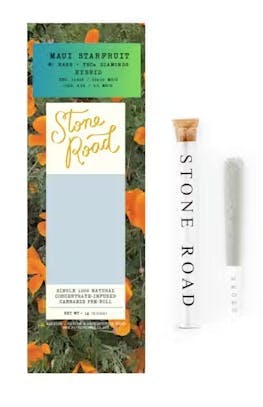
Hybrid
All strains Maui Starfruit
1 live products in stock
Quick answer · What is the Maui Starfruit cannabis strain?
Maui Starfruit arrives like the first warm hour of a tropical morning — unhurried, luminous, and gently disarming. This hybrid leans sativa-forward in its energy while softening the edges with a grounding body presence. Its terpene signature evokes ripe stone fruit, sweet citrus, and a faint floral exhale, making it a natural choice for those who seek clarity without edge and pleasure without excess.
Shop Maui Starfruit · 1 of 1 live products
About Maui Starfruit
Everything to know about Maui Starfruit.
Lineage & origin
Maui Starfruit is a hybrid believed to draw from the Maui Wowie lineage — a storied Hawaiian landrace known for its clean, sun-drenched sativa character that has circulated in American cannabis culture since at least the 1970s. The second presumed parent is thought to belong to a tropical or fruity hybrid family consistent with strains carrying starfruit and papaya flavor profiles, though the breeder has not publicly named a confirmed second parent, and the full genetic documentation remains limited in verified public sources. This ambiguity is not unusual for boutique hybrid releases that gained early traction through independent cultivators rather than large seed banks. Maui Wowie itself is one of the more historically significant American landraces, cultivated in the volcanic soil of Hawaii and celebrated for its relatively light, euphoric high that was considered remarkably clean for its era. Its influence on the broader hybrid market has been considerable — strains such as Pineapple Express and numerous tropical crosses owe an indirect debt to Hawaiian genetics. Maui Starfruit likely emerged as a phenotype or purposeful cross developed sometime in the mid-to-late 2010s, during a period when tropical, terpene-forward cultivars were attracting significant attention from both connoisseurs and licensed producers. It has since appeared on dispensary menus across the West Coast and Northeast, carrying a reputation for approachable potency and a distinctive aromatic signature that sets it apart from more pungent, fuel-forward hybrids.
Effects
The onset of Maui Starfruit typically arrives within minutes of inhalation — a gentle brightness behind the eyes that gradually opens into a wider sense of mental ease and light engagement. The early experience tends to be cerebral in character: thoughts become a little more fluid, conversation flows without friction, and there is a mild perceptual lift that stops well short of overstimulation. This quality reflects the sativa-leaning genetics inherited from its Hawaiian ancestry, which has historically been associated with the terpene pairing of myrcene at low levels with elevated terpinolene and limonene contributing to an upward, clarifying effect arc. As the experience moves into its peak — generally within thirty to sixty minutes — a soft body warmth settles beneath the mental clarity, providing a measure of physical ease without heaviness or sedation. The balance here is the strain's signature quality: present enough to be felt, light enough not to anchor the user to the couch. This makes Maui Starfruit functional for most of the day, particularly for consumers who find purely sativa-dominant cultivars too activating. The comedown is characteristically gentle. As the cerebral lift subsides over two to three hours, a mild, pleasant relaxation typically follows — smooth rather than abrupt. Consumers with lower tolerance are well advised to begin with modest amounts and allow adequate time before redosing, as the soft onset can occasionally lead to misjudging the full effect. Dry eyes and dry mouth are the most commonly reported minor side effects.
Aroma, flavor & terpenes
Maui Starfruit leads with a terpene profile that is immediately tropical and slightly sweet — a combination that distinguishes it from earthier, more resinous cultivars on the market. Terpinolene is likely the dominant force here, contributing a bright, floral-fruity quality with undertones of fresh herb that evoke tropical fruit and light pine. Terpinolene is among the less universally present terpenes in cannabis, which partly accounts for why this strain's aroma registers as distinctive and refreshing rather than familiar. Limonene contributes a secondary layer of citrus sweetness — think ripe meyer lemon or the pith of a kumquat rather than an aggressive zest. This terpene also carries well-documented associations with elevated mood and reduced tension, reinforcing the strain's characteristically easy-going effect arc. Myrcene appears as a quieter background note, lending a subtle earthiness and musky depth that prevents the profile from reading as purely confectionery. Ocimene, when present in strains of this character, often adds a waxy, slightly herbaceous finish that rounds out the tropical impression. On the exhale, Maui Starfruit delivers a smooth, almost creamy vapor character with a clean finish — there is little of the harshness found in high-caryophyllene cultivars, and the floral sweetness lingers briefly on the palate. Those who appreciate the aromatic elegance of strains like Papaya or Mimosa will find a similar sense of careful tropical architecture here.
Appearance
Maui Starfruit presents with a medium to moderately dense bud structure that reflects its hybrid character — neither the tight, compact architecture of an indica-dominant variety nor the elongated, wispy formation of a true sativa. The calyxes are well-defined and typically layered in a moderate spiral arrangement, giving each nugget a slightly sculpted quality. The color palette skews toward medium to light green, often with subtle golden or pale amber undertones that emerge during the final stages of curing. Pistils tend toward a warm russet or burnt orange, threading through the buds in a quantity that adds visual texture without overwhelming the base coloration. Trichome coverage is consistent across the surface and sugar leaves, giving dried flowers a frosted, slightly luminous quality under direct light. The visual effect is clean and inviting rather than dramatically encrusted — appropriate for a strain whose appeal rests more on aromatic finesse than raw resin weight.
Growing notes
Maui Starfruit, given its likely Hawaiian sativa lineage, is generally considered a moderately challenging cultivar for home growers — particularly those working in temperate climates. Its probable sativa ancestry suggests a preference for warm, humid conditions with strong light intensity, conditions that indoor cultivators can approximate with careful environmental management. Indoors, a flowering period in the range of nine to ten weeks is typical for sativa-leaning hybrids of this profile, though specific timing may vary by phenotype. Indoor yields are generally moderate, rewarding growers who invest in techniques such as low-stress training or screen-of-green setups to manage the vertical stretch that Hawaiian-influenced genetics often exhibit. Outdoor cultivation is best suited to warm, Mediterranean-style climates or genuine tropical environments, where the plant can reach its natural structure without being truncated by an early autumn frost. For the cultivator-curious shopper, it is worth noting that strains of this tropical heritage often produce their most expressive terpene profiles when given ample light and a slightly longer finishing window.
When it's best enjoyed
Maui Starfruit is at its most natural during the unhurried stretches of the day — a Sunday morning with an open calendar, or an early afternoon where the work is creative and the stakes are low. Its cerebral clarity and tropical warmth make it a genuine companion for artistic endeavors: visual work, writing, or any pursuit that benefits from a relaxed, mildly heightened attentiveness. It is a social strain in the same way a well-chosen aperitivo is social — it opens conversation without dominating it. For food pairings, the strain's terpinolene and limonene profile finds a natural counterpart in dishes built around bright, acidic flavors — a Thai green mango salad, fresh ceviche, or a chilled glass of sparkling water with yuzu. On the musical side, the clean, unhurried energy of this cultivar suits artists whose work shares a similar quality of radiant ease: think Toro y Moi, Khruangbin, or early Stereolab. It is equally well-suited to a solo hike in mild weather, where its body-lightening effect and sensory attunement can turn an ordinary trail into something quietly remarkable.
If you like Maui Starfruit, also explore
Maui Wowie
As the foundational Hawaiian landrace that likely anchors Maui Starfruit's lineage, Maui Wowie offers the same clean, sun-drenched sativa energy with a pineapple-and-citrus profile that will feel like familiar territory.
Pineapple Express
Sharing a tropical fruit-forward terpene character and a balanced hybrid effect arc, Pineapple Express will appeal to Maui Starfruit fans seeking a slightly warmer, more resinous expression of the same broad flavor family.
Mimosa
Mimosa's limonene-heavy, citrus-bright profile and gently uplifting hybrid effects closely mirror the bright, functional daytime quality that defines Maui Starfruit's appeal.
Papaya
Papaya's rich tropical aroma and grounding body presence offer a slightly more indica-leaning parallel for consumers who appreciate Maui Starfruit's exotic fruit terpene signature but prefer a deeper physical component.
Tropicana Cookies
Tropicana Cookies delivers a similarly vivid citrus and tropical aromatic experience with an energetic, mood-elevating effect profile that should resonate strongly with Maui Starfruit enthusiasts.
Common questions
Is Maui Starfruit indica or sativa?+
Maui Starfruit is classified as a hybrid, though it leans sativa-forward in its effect character. It delivers a mentally clarifying, uplifting onset consistent with its likely Hawaiian sativa ancestry, while a softer body warmth — typical of hybrid genetics — grounds the experience without producing the heaviness associated with indica-dominant cultivars. It is generally considered more functional and daytime-appropriate than sedating.
What does Maui Starfruit taste like?+
Maui Starfruit offers a tropical, lightly sweet flavor profile anchored by notes of ripe stone fruit, fresh citrus, and a subtle floral exhale. The smoke or vapor is smooth and relatively clean on the palate, with a creamy mid-note and a gentle herbal finish. Terpinolene and limonene are the primary drivers of its distinctive taste, placing it firmly in the tropical-fruit end of the flavor spectrum rather than the earthy or fuel-forward categories.
What are the typical effects of Maui Starfruit?+
Consumers typically describe an initial cerebral lift — a brightening of mood and a mild opening of focus — that settles into a balanced, functional state of relaxed attentiveness. Physical ease builds gradually without progressing to sedation. The experience is generally considered approachable and social, lasting two to three hours with a gentle comedown. Those newer to cannabis are advised to begin with a modest amount and allow the full onset before considering additional consumption.
What strains are similar to Maui Starfruit?+
Consumers who enjoy Maui Starfruit tend to appreciate other tropical, sativa-leaning hybrids with bright terpene profiles. Maui Wowie, the likely ancestral strain, offers the closest genetic parallel. Mimosa, Tropicana Cookies, Pineapple Express, and Papaya each share elements of the fruity-citrus aromatic architecture and uplifting hybrid character that define Maui Starfruit's appeal, though each carries its own distinct balance of energy and body relaxation.
Is Maui Starfruit good for beginners?+
Maui Starfruit is generally considered accessible for adult consumers new to cannabis, though its sativa-leaning character means that some individuals sensitive to stimulating effects may find the mental activation mildly intense. Its relatively smooth onset and balanced body component make it more forgiving than purely sativa-dominant cultivars. As with all cannabis products available at ZenZest, the standard guidance applies: start with a small amount, go slowly, and give yourself ample time to assess the full effect.
What are the dominant terpenes in Maui Starfruit?+
Based on its aromatic profile and effect character, Maui Starfruit is believed to be led by terpinolene — a terpene known for its bright, floral-fruity, and slightly herbal quality that is less common in cannabis than myrcene or caryophyllene. Limonene contributes a secondary layer of citrus brightness, while myrcene appears as a quieter earthy foundation. Ocimene may also be present, adding a waxy, tropical dimension to the overall aromatic composition.
What is the lineage of Maui Starfruit?+
Maui Starfruit is believed to descend primarily from Maui Wowie, the celebrated Hawaiian landrace with deep roots in American cannabis culture. The second parent has not been publicly confirmed by any recognized breeder, and lineage documentation in verified sources remains limited. This is not unusual for boutique tropical hybrids that emerged through independent cultivation circuits rather than through established seed banks with formal genetic records.
When is the best time of day to consume Maui Starfruit?+
Maui Starfruit's uplifting, functional hybrid character makes it well-suited to morning and afternoon use — broadly, any window where mental clarity and a light physical ease are welcome without the need for deep sedation. Its tropical aromatic character and social, creative effect profile also make it a thoughtful choice for early evening gatherings. It is generally less suited to late-night consumption for those who are sensitive to stimulating cerebral effects near bedtime.
Related strains