
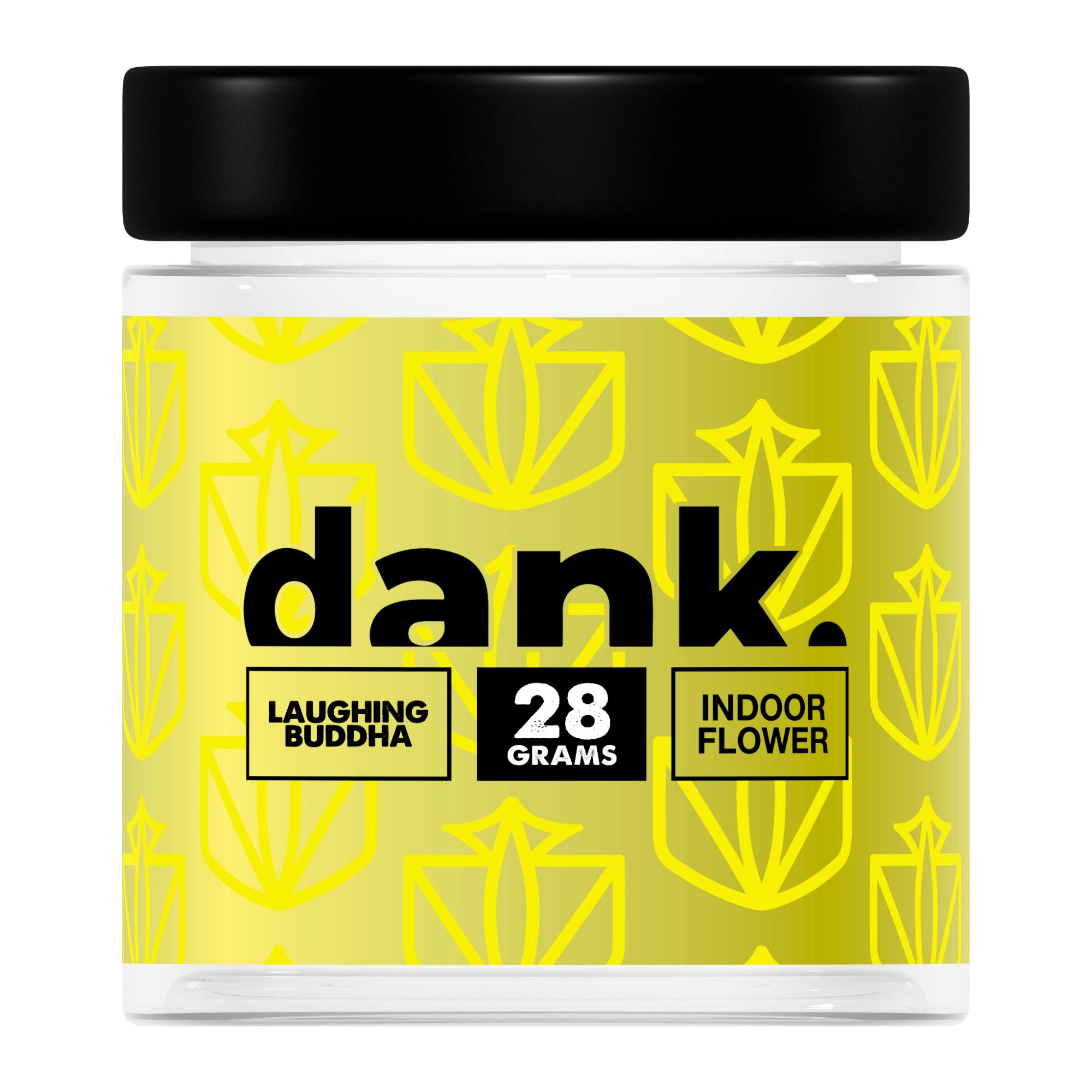
Sativa
All strains Laughing Buddha
1 live products in stock
Quick answer · What is the Laughing Buddha cannabis strain?
Laughing Buddha arrives as a sun-drenched dispatch from the Golden Triangle, a landrace-rooted sativa that has earned its reputation through decades of consistent, buoyant character. Its long-flowering structure and towering growth habit betray its tropical heritage, while the finished flower delivers a warm, spiced citrus aroma and an uplifting mental quality that feels less like a jolt and more like a gradual brightening of the room.
Shop Laughing Buddha · 1 of 1 live products
About Laughing Buddha
Everything to know about Laughing Buddha.
Lineage & origin
Laughing Buddha was developed by Barney's Farm, the Amsterdam-based seed company founded by Derry, and is widely documented as a cross between Thai and Jamaican landrace genetics. The strain was introduced in the early 2000s and went on to claim the High Times Cannabis Cup in the sativa category in 2003, a distinction that solidified its place in the canon of competition-winning sativas. The Thai parent contributes the strain's pronounced cerebral lift and its famously extended flowering window, traits long associated with equatorial Southeast Asian genetics. The Jamaican component is credited with softening the edges of the Thai influence, lending a more sociable, smooth quality to the experience and contributing to the warm citrus and spice notes in the aroma profile. Barney's Farm has been transparent about these parent strains in their published seed catalogue, making Laughing Buddha one of the more cleanly documented landrace hybrids of its era. No major contested phenotype lines have emerged in the public record, though as with any widely distributed seed strain, phenotypic variation between individual plants can be notable. Its genetic siblings within the Barney's Farm catalogue share a similar emphasis on landrace-forward, full-sun sativa architecture.
Effects
The onset of Laughing Buddha tends to be relatively measured for a sativa of its lineage, often arriving within five to ten minutes of inhalation as a gentle pressure behind the eyes and a loosening of the internal monologue. This unhurried start gives way to a peak character that is decidedly cerebral — thoughts become more associative, conversation flows easily, and there is a characteristic mood elevation that inspired the strain's name. The experience rarely tips into anxious overstimulation in moderate use, a quality likely connected to its myrcene content, which provides a grounding counterpoint to the limonene-driven uplift. Body sensation remains present but secondary: a mild warmth across the shoulders and a general easing of physical tension that does not approach sedation. Duration at peak typically runs ninety minutes to two hours before a gradual, unforced comedown that returns the user to baseline without notable heaviness or fog. The transition out of the experience is one of Laughing Buddha's more appreciated qualities. Because of its sativa-forward intensity at peak, those newer to cannabis are encouraged to start with a conservative amount and allow adequate time before reassessing. The terpene-cannabinoid interplay here — particularly limonene's well-documented association with elevated mood and myrcene's modulating role — aligns with the experiential reports catalogued across major cannabis databases.
Aroma, flavor & terpenes
Laughing Buddha's aromatic profile opens with a bright, slightly sweet citrus note underscored by an unmistakable herbal spice, a signature of its Thai landrace ancestry. Limonene is widely reported as a prominent terpene in well-grown expressions of this strain, delivering the lemony top note that greets the nose on first encounter. Beneath that brightness, myrcene contributes an earthy, faintly musky warmth that prevents the aroma from reading as sharp or one-dimensional. Caryophyllene, the only terpene known to interact with the endocannabinoid system directly, adds a subtle peppery depth that becomes more apparent as the flower warms in the hand or in a grinder. Some phenotypes lean toward a secondary note of ripe tropical fruit — a characteristic often attributed to terpinolene or ocimene influence, though published terpene breakdowns for Laughing Buddha vary by batch and cultivator. On the palate, the smoke or vapor presents as notably smooth for a sativa of this structure, with the citrus and spice notes carrying clearly through the inhale. The exhale tends to introduce a lingering herbal quality, faintly reminiscent of dried lemongrass or warm chai spice, that makes the experience as much a sensory occasion as a functional one. The finish is clean, without the harshness sometimes associated with long-flowering tropical varieties.
Appearance
True to its sativa heritage, Laughing Buddha produces elongated, somewhat airy buds rather than the compact, resin-dense nuggets associated with indica-dominant varieties. The calyxes are notably large and loosely stacked, a structural trait inherited from its equatorial parents, whose open bud architecture evolved to resist moisture and mold in humid climates. Coloration sits primarily in the mid to light green range, with occasional golden or amber hues developing in well-finished, properly cured material. Pistils are abundant and tend toward a warm orange or rust tone at maturity, weaving visibly through the loose floral structure. Trichome coverage is present across the surface and sugar leaves, lending a frosted quality that belies the bud's open architecture. The overall visual impression is of a sativa that wears its lineage openly — elongated, golden-tinged, and generously hairy in a way that signals both its tropical origin and the extended flowering time required to bring it to full expression.
Growing notes
Laughing Buddha is a genuinely demanding cultivar by home-growing standards, best suited to experienced growers with patience and adequate vertical space. Its flowering time runs long, typically eleven to thirteen weeks indoors, a reflection of its equatorial landrace genetics. Outdoors in warm, Mediterranean-style or tropical climates, harvest falls in late October to November in the Northern Hemisphere. Indoors, growers frequently employ low-stress training or screen-of-green techniques to manage its vigorous vertical stretch and to maximize light penetration across the open canopy. Yields are considered generous relative to its flowering time, with indoor grows commonly producing substantial harvests when grown skillfully. The plant's open bud structure makes it relatively resistant to mold and blight in well-ventilated environments, though consistent airflow remains important. For the cultivator-curious shopper, Laughing Buddha represents a window into the growing conditions that shaped cannabis culture in Southeast Asia and the Caribbean — a living artifact of equatorial sativa horticulture that rewards those willing to extend their timeline.
When it's best enjoyed
Laughing Buddha occupies a particular niche as a daytime companion for occasions that call for genuine engagement and social warmth. It is well-suited to the kind of unhurried weekend morning or early afternoon where conversation is the main event — a long brunch with thoughtful friends, a walk through a museum or gallery, or a creative session that benefits from loosened associative thinking. Its mood-elevating character and smooth energy profile make it a natural fit for social environments where connection is the goal rather than quiet contemplation. For solo use, it pairs well with music that rewards close listening: jazz, West African highlife, or any genre with layered rhythmic complexity. On the food pairing side, the strain's citrus and warm spice terpene profile finds a natural echo in Thai or Southeast Asian cuisine — a lemongrass-forward dish, a bright green papaya salad, or a cup of properly brewed jasmine tea served alongside. The key thread in all of these pairings is a certain quality of warmth and presence: Laughing Buddha suits moments that benefit from being slightly more vivid than ordinary, without demanding that the experience become its own destination.
If you like Laughing Buddha, also explore
Amnesia Haze
Another Amsterdam-era, landrace-derived sativa with a comparable citrus-forward terpene profile and long-lasting cerebral uplift, making it a natural follow-on for Laughing Buddha enthusiasts.
Strawberry Cough
Shares Laughing Buddha's social, mood-brightening sativa character while adding a sweeter berry dimension that appeals to those drawn to the strain's smooth, approachable quality.
Super Silver Haze
A fellow High Times Cannabis Cup winner with strong sativa lineage and an energetic, euphoric peak that mirrors Laughing Buddha's cerebral arc, rooted in a similar Haze-and-landrace genetic framework.
Durban Poison
A pure African sativa landrace that shares Laughing Buddha's clean, uplifting mental clarity and functional daytime character, appealing to those who appreciate the strain's unfussy, grounded energy.
Jack Herer
The spiced, herbal complexity and focused cerebral lift of Jack Herer echo Laughing Buddha's warm, conversational character and make it a reliable choice for fans of this strain's terpene signature.
Common questions
Is Laughing Buddha indica or sativa?+
Laughing Buddha is a sativa-dominant strain, developed by Barney's Farm from Thai and Jamaican landrace genetics. Its growth structure, extended flowering time, and experiential profile are all characteristic of equatorial sativa lineage. Users can expect an uplifting, cerebral quality rather than the body-forward, sedative character typically associated with indica-dominant varieties.
What does Laughing Buddha taste like?+
Laughing Buddha presents a warm citrus and herbal spice flavor on the inhale, with notes often described as lemon, dried herbs, and a faint tropical fruit sweetness. The exhale carries a lingering spice quality reminiscent of lemongrass or chai. The smoke is notably smooth for a sativa of its tropical lineage, with a clean, dry finish that does not linger heavily on the palate.
What are the typical effects of Laughing Buddha?+
The effects are characteristically cerebral and mood-elevating, unfolding gradually before reaching a peak marked by associative thinking, social ease, and a sense of buoyant well-being. A mild body warmth runs alongside the mental experience without producing sedation. The comedown is gentle and unforced. Its name reflects the characteristic quality of open, easy sociability that well-grown material tends to produce.
What strains are similar to Laughing Buddha?+
Laughing Buddha shares meaningful common ground with Amnesia Haze, Super Silver Haze, Jack Herer, Strawberry Cough, and Durban Poison. Each offers a comparable emphasis on cerebral uplift and daytime functionality, with slight variations in terpene profile and flavor. Fans of Laughing Buddha's warm citrus-spice character and social energy will likely find familiar qualities in all five.
Is Laughing Buddha good for beginners?+
Laughing Buddha's potency and strongly sativa character make it worth approaching with care if you are new to cannabis. The strain's cerebral peak can be more intense than expected, particularly for those unaccustomed to full-spectrum sativa effects. A conservative start — a small amount with adequate time to assess before continuing — is the sensible approach. The standard guidance of starting low and going slow applies here.
What are the dominant terpenes in Laughing Buddha?+
Published analyses and cultivator reports consistently identify limonene, myrcene, and caryophyllene as the most prominent terpenes in Laughing Buddha. Limonene contributes the strain's signature citrus brightness and is associated with mood elevation. Myrcene provides an earthy, grounding warmth. Caryophyllene adds peppery spice depth. Some phenotypes also show terpinolene or ocimene, contributing tropical and herbal nuance.
Who bred Laughing Buddha and when was it released?+
Laughing Buddha was developed by Barney's Farm, the Amsterdam seed company, in the early 2000s. The strain won the High Times Cannabis Cup in the sativa category in 2003, which brought it significant attention and established it as one of the more respected competition sativas of that era. Barney's Farm has publicly documented its Thai and Jamaican landrace parent genetics.
What time of day is best for Laughing Buddha?+
Given its sativa-dominant, energizing character, Laughing Buddha is best suited to daytime and early evening use. Morning or midday sessions pair well with creative work, social activity, or any occasion that benefits from heightened engagement. Using it late in the evening may interfere with the ease of winding down, as its cerebral lift tends to sustain focus rather than encourage rest.
Related strains