On sale· 15% OFF
THC 0.19%Hybrid
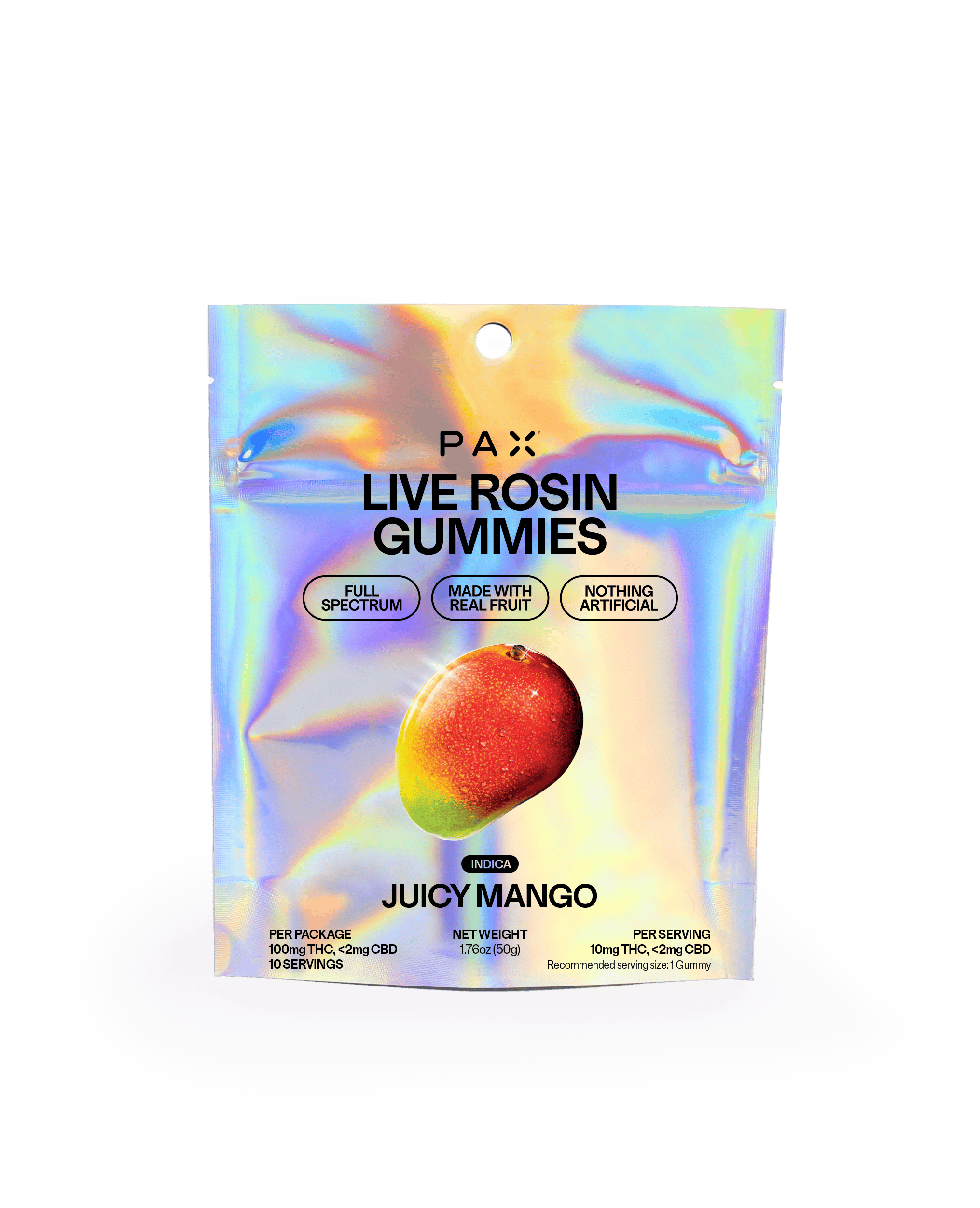
PAXLive Rosin Gummies | Juicy Mango | 10 Pieces · .1g
$25.58$30.09
$29after tax

weeddispensarynearme.com
You must be 21 years or older to enter. By entering, you confirm you’re of legal age in your state to purchase cannabis.
For use only by adults 21+ • Keep out of reach of children
1 live products in stock
Quick answer · What is the Juicy Mango cannabis strain?
Juicy Mango arrives like a ripe fruit pulled from warm afternoon air — its name a precise description rather than a boast. This balanced hybrid carries the tropical sweetness of its mango-forward genetics into every facet of the experience, from the first aromatic bloom upon opening the jar to a smooth, even-keeled session that neither overwhelms nor underwhelms. For the New York consumer seeking something both approachable and genuinely pleasurable, Juicy Mango occupies a quietly confident place on the shelf.
$29after tax
About Juicy Mango
Juicy Mango is most commonly attributed to the crossing of Mango — itself a storied indica-leaning cultivar with roots tracing back to KC Brains, a Dutch seed company that worked extensively with the strain in the 1990s — and an undisclosed or variably reported secondary parent, which some sources suggest carries Haze influence to introduce a measure of sativa lift. The original Mango strain is believed to descend from Afghani, KC 33, and possibly a landrace Hawaiian cultivar, giving the lineage a genuinely international character. Because 'Juicy Mango' appears under multiple breeders and under slightly different phenotypic expressions across regional markets, the precise genetic record is not uniformly settled. Some iterations are linked to independent American breeders working in the post-legalization West Coast scene of the 2010s, while others appear to trace back to seed banks operating in the Netherlands. Shoppers should understand that the name functions somewhat as a flavor-descriptor category as much as a locked proprietary lineage. Genetic siblings and expressions that share this tropical Mango heritage include Mango Kush, Mango Haze, and Mango OG — each pulling from overlapping parent stock but landing in noticeably different experiential territory. What unites them is the myrcene-dominant, fruity aromatic signature that the original Mango genetics reliably pass forward across generations.
The onset of Juicy Mango typically arrives within five to fifteen minutes when smoked or vaped, beginning as a gentle brightening behind the eyes and a mild lift in mood. The initial character leans toward the cerebral — thoughts become more fluid, and a quiet sociability tends to emerge without the sharp, sometimes anxious edge that purely sativa-dominant cultivars can produce. This measured elevation reflects the hybrid balance at the strain's core. As the session deepens into its peak — generally between twenty and forty-five minutes in — a warm physical ease settles through the shoulders and limbs without crossing into sedation for most consumers. The body component is present enough to soften tension, particularly in the upper body, but the mind generally remains clear and engaged. Myrcene, the dominant terpene in most Mango-lineage cultivars, is associated in the broader cannabis literature with relaxing, mildly sedative body effects, and its contribution here is consistent with that profile. The comedown is gradual and unhurried. Most consumers report a gentle tapering over two to three hours that ends in a comfortable, rested state rather than a sharp drop. Sessions that run longer or involve higher consumption may tip the experience further toward physical relaxation and drowsiness, particularly in the evening. As with all cannabis, individual response varies, and a measured approach — particularly for those new to the cultivar — remains the most sensible path.
The aromatic profile of Juicy Mango is anchored, predictably but pleasingly, by myrcene — the most prevalent terpene in cannabis overall and the one most responsible for the ripe, slightly musky tropical-fruit character that the strain wears so openly. Myrcene in high concentrations produces a warm, almost velvety sweetness that reads as mango skin and overripe papaya, with just enough earthiness beneath to give the nose some depth. Secondary terpene contributions most commonly noted in Mango-lineage cultivars include caryophyllene, which introduces a faint spice — closer to cracked black pepper than anything sharp — and ocimene, which adds a lighter, more floral and slightly herbal note that lifts the profile out of pure sweetness and into something more nuanced. Some phenotypes also carry detectable amounts of terpinolene, lending a faint pine-citrus brightness that keeps the overall impression fresh rather than cloying. On the palate, the smoke or vapor opens with an immediate tropical sweetness that coats the mid-tongue. Combustion tends to deepen the earthy, musky undertones while preserving the fruit character on the exhale. Vaporization at lower temperatures isolates the lighter floral and citrus notes more cleanly, which many connoisseurs find reveals the strain's more delicate complexity. The finish is smooth and relatively clean, without significant harshness or bitterness, making Juicy Mango a particularly accessible choice for those with discerning palates.
Juicy Mango buds tend toward a medium-to-dense structure — compact enough to suggest careful cultivation and proper dry and cure, but not so compressed as to obscure the visual detail within the flower. The calyxes are typically rounded and well-stacked, producing a slightly chunky silhouette that speaks to its indica heritage without fully abandoning the lighter architecture of any sativa influence in the blend. The color palette runs from a deep forest green at the core to lighter lime and yellow-green at the outer edges of well-grown specimens. Pistils — the fine, hair-like structures winding through the bud — present in shades of amber to burnt orange, sometimes deepening to a warm rust under proper finishing conditions. Trichome coverage is generally generous, giving the surface a frosted, resinous quality that catches light with a soft, pearlescent glint. The visual impression is one of ripe abundance — consistent with the aromatic promise the strain makes the moment the jar is opened.
Juicy Mango is generally considered a moderate-difficulty cultivar, accessible to intermediate home growers but perhaps most rewarding in the hands of someone with at least one or two previous grows as reference points. It performs well both indoors under controlled conditions and outdoors in warm, Mediterranean-adjacent climates — think long dry summers with good light intensity and predictable nighttime temperature drops as the season turns. Indoor flowering typically concludes between eight and nine weeks, with some phenotypes running slightly longer depending on the environment and training approach. Yields indoors are reported as moderate to above-average when grown under adequate light intensity with attentive canopy management. Outdoor plants, given a full season in a favorable climate, can reach generous sizes and produce substantial harvests, typically finishing by mid-to-late October in the Northern Hemisphere. The strain responds well to low-stress training techniques and benefits from good airflow through the canopy to manage the humidity that the dense bud structure can invite. Home cultivators interested in the genetics should note that, because the name covers multiple phenotypic expressions, sourcing from a reputable seed bank with transparent lineage documentation is worth the additional attention.
Juicy Mango occupies a comfortable middle position in the experiential spectrum — neither so stimulating that it demands a specific context nor so sedating that it closes down the evening. Its most natural home is the transitional hour: the late afternoon slide into early evening, when the day's obligations have largely resolved and the night has not yet fully claimed the space. A walk through a farmers' market, an unhurried gallery visit, or a slow meal on a warm terrace each suit the strain's sociable, sensory-forward character. On the pairing front, the tropical-fruit terpene profile finds natural resonance with cuisine that carries its own brightness and sweetness — Thai food, fresh ceviches, or a well-composed charcuterie board with fruit accompaniment all complement rather than compete with the aromatic experience. Musically, the strain's balanced, mid-tempo character pairs well with West African highlife, early bossa nova, or ambient electronic music with organic texture — anything that moves without urgency. For the solo consumer, a creative project that benefits from openness and sustained attention — sketching, writing, or slow photographic work — fits the session's arc particularly well.
Mango Kush
Sharing direct Mango lineage and a comparably tropical, myrcene-forward aromatic profile, Mango Kush offers fans of Juicy Mango a familiar fruity sweetness with a slightly more indica-leaning body effect.
Mango Haze
For Juicy Mango consumers drawn more to the sativa-lift side of the experience, Mango Haze extends that cerebral brightness while preserving the tropical fruit character that defines the Mango family.
Pineapple Express
A well-documented tropical hybrid that shares the approachable sweetness and balanced onset that Juicy Mango fans tend to favor, though Pineapple Express leans somewhat more citrus than stone-fruit on the palate.
Mimosa
Mimosa's bright, fruit-forward profile and mood-elevating hybrid character appeal to the same consumer who gravitates toward Juicy Mango's cheerful, sensory openness without heaviness.
Tropicana Cookies
Consumers who appreciate Juicy Mango's tropical aromatic complexity and balanced effects often find Tropicana Cookies a natural next step, offering similar fruit brightness with added citrus depth from its tangerine-forward terpene expression.
Juicy Mango is classified as a balanced hybrid. Its lineage carries indica-dominant Mango genetics — which trace back to Afghani and other indica-leaning ancestors — alongside reported sativa influence that contributes a measured cerebral lift. The result sits comfortably between the two poles, making it a versatile choice for consumers who want neither a purely stimulating nor a deeply sedating experience.
True to its name, Juicy Mango leads with a pronounced tropical-fruit sweetness on both the inhale and exhale — ripe mango skin, hints of papaya, and a soft floral note that rounds the profile. Secondary impressions of light pepper and subtle earthiness emerge on the finish, adding dimension without disrupting the fruit-forward character. Vaporization tends to isolate the lighter, more citrus-adjacent notes more distinctly than combustion.
Juicy Mango typically opens with a gentle mood lift and a pleasant mental clarity that encourages sociability and creative engagement. As the session progresses, a warm physical ease settles through the body — relaxing without being immobilizing for most consumers. The overall arc is smooth and even-keeled, lasting two to three hours, with a gradual comedown. Individual response varies, and a measured, patient approach is always advisable.
Consumers who enjoy Juicy Mango's tropical aroma and balanced hybrid character tend to appreciate Mango Kush for a closer indica-leaning parallel, Mango Haze for more cerebral elevation, Pineapple Express for comparable sweetness with a citrus shift, Mimosa for a brighter mood-forward experience, and Tropicana Cookies for added citrus complexity alongside similar fruit-forward warmth.
Juicy Mango is generally considered approachable by cannabis newcomers due to its balanced character and smooth aromatic profile. That said, individual sensitivity to THC varies considerably, and the standard guidance applies: start with a small amount, allow sufficient time to gauge the onset before consuming more, and choose a comfortable, familiar environment. The strain's even temperament makes it less likely to produce an overwhelming experience when approached with appropriate care.
Myrcene is the dominant terpene in most Juicy Mango expressions, responsible for the ripe, tropical-fruit muskiness the strain is known for. Secondary terpenes commonly include caryophyllene, which contributes mild spice and is associated with relaxing qualities, and ocimene, which adds a lighter floral and herbal brightness. Some phenotypes also carry terpinolene, introducing a subtle pine-citrus note that lifts the overall aromatic profile.
Juicy Mango is most widely attributed to genetics rooted in the Mango strain — a cultivar developed in part by KC Brains in the Netherlands during the 1990s, with reported ancestry including Afghani and KC 33 genetics. The secondary parent in various Juicy Mango expressions is not uniformly documented, and because the name has been applied across multiple breeders' offerings, the full lineage should be considered partially contested. Sourcing from a reputable provider with clear genetic documentation is advisable.
Juicy Mango suits the transitional hours of late afternoon and early evening particularly well, when its balanced character can complement the shift from the day's energy to a more relaxed state. It is approachable enough for daytime use by experienced consumers who want mild cerebral engagement without disruption, and its moderate body effect makes it a reasonable choice before a social meal or a low-key creative session rather than immediately before sleep.
Related strains
Pick your store
We'll show pricing, deals, and delivery zones for the store you pick. You can switch any time from the header.