
Sativa
All strains Hawaiian Sunrise
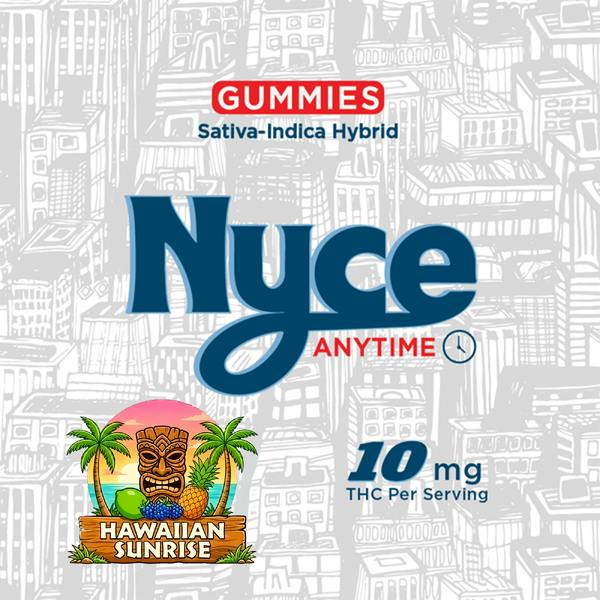
1 live products in stock
Quick answer · What is the Hawaiian Sunrise cannabis strain?
Hawaiian Sunrise arrives like the first light over open water — warm, luminous, and gently energizing. A sativa-leaning variety with roots in the tropical landrace tradition, it carries a citrus-and-floral perfume that speaks to its island heritage. The experience unfolds with a clarity that invites conversation and creative thought, making it a considered choice for those who prefer their afternoons unhurried but purposeful.
Shop Hawaiian Sunrise · 1 of 1 live products
About Hawaiian Sunrise
Everything to know about Hawaiian Sunrise.
Lineage & origin
Hawaiian Sunrise draws its foundational genetics from Hawaiian landrace cannabis, a family of equatorial sativas long cultivated across the Hawaiian archipelago. These landraces were brought to wider attention during the 1970s and 1980s, when connoisseurs prized their uplifting, clear-headed character as a counterpoint to the heavier indica varieties gaining popularity on the mainland. The precise second parent of Hawaiian Sunrise is not universally agreed upon across public cannabis databases; some sources suggest a cross with a Skunk-derived line to add resin density and tighten the structure of the otherwise airy landrace phenotype, while others point to a Haze influence that would account for the pronounced citrus and spice in the aroma profile. The breeder of record has not been definitively established in widely available public sources, which is consistent with many Hawaiian-heritage strains that passed through informal breeding communities before reaching licensed cultivation. What is documented is that Hawaiian Sunrise belongs to a broader constellation of tropical sativa hybrids — alongside Hawaiian Snow, Maui Wowie, and Pineapple Express — that share the landrace's characteristic terpene signature and energetic effect profile. Within this genetic family, Hawaiian Sunrise occupies a middle ground: more structured than a pure landrace, yet distinctly less sedating than most Skunk or Kush hybrids. Its influence is evident in later tropical crosses that sought to preserve the clean mental lift of equatorial genetics while improving yield and flowering consistency for indoor cultivation.
Effects
The onset of Hawaiian Sunrise is typically described as gradual and sociable, arriving within five to fifteen minutes when smoked or vaped. Unlike some sativas that announce themselves with an almost jarring cerebral rush, the opening movement here is bright but measured — a gentle elevation of mood and sensory attention that feels less like acceleration and more like the slow widening of a window. Conversations become more fluid, ambient details grow more interesting, and creative associations tend to surface with relative ease. At its peak, the experience leans decisively toward the cerebral, with minimal body weight. The dominant terpene myrcene contributes a mild, grounding undertone that prevents the clarity from tipping into restlessness, while limonene — prominent in tropical sativa lineages — is widely associated in terpene research with an uplifting, mood-elevating quality. The result is a session that feels engaged without feeling scattered. Duration tends to fall in the one-and-a-half to two-and-a-half hour range for most consumers, with the comedown notably gentle. Rather than a pronounced drop in energy, the experience tends to taper into a calm, mildly reflective state. Those newer to sativa varieties should approach with the standard guidance in mind: start with a small amount, allow adequate time to assess before adding more, and choose a setting where activity — rather than obligation — defines the afternoon.
Aroma, flavor & terpenes
The aromatic profile of Hawaiian Sunrise is anchored by limonene, the terpene responsible for the bright citrus top note that greets the nose immediately upon opening a well-cured batch. The impression is of fresh-cut Meyer lemon and ripe tangerine, clean and slightly sweet rather than sharp or astringent. Beneath this, myrcene adds an herbal, faintly tropical muskiness — closer to ripe mango skin than to the damp earthiness it lends more indica-forward varieties. Secondary terpenes introduce welcome complexity. Ocimene, present in several Hawaiian-heritage strains, contributes a floral, almost honeyed sweetness that lifts the middle register and connects the citrus top notes to the earthier base. Terpinolene adds a further dimension: pine and herb with a slight floral edge, a terpene common in equatorial sativas and associated with the particular brightness that distinguishes this genetic family from more resinous, fuel-forward hybrids. On the palate, the smoke is smooth and relatively light-bodied, consistent with its sativa structure. The inhale delivers that citrus-floral brightness cleanly, while the exhale lingers with a gentle sweetness and a faint herbal finish. Vapor at lower temperatures tends to accentuate the limonene and ocimene layers, bringing the tropical character forward more distinctly. Those who appreciate the aromatic logic of fresh-squeezed juice and island flora will find the terpene architecture here both coherent and quietly sophisticated.
Appearance
Hawaiian Sunrise buds reflect their sativa heritage in structure: elongated, somewhat airy calyxes that stack loosely rather than compressing into the tight, rounded nuggets typical of indica-dominant varieties. This open architecture is not a deficiency — it is the natural expression of genetics developed in warm, humid equatorial climates where dense buds would invite mold rather than reward it. The color palette tends toward bright, almost electric greens, occasionally accented by lime-yellow undertones that speak to the strain's tropical origin. Pistils are long and typically orange to amber at maturity, threading visibly through the open bud structure. Trichome coverage is respectable for a sativa-leaning variety — a fine, even frost rather than the dramatic crystal caking seen on some resin-forward hybrids — and the glands tend to be clear to cloudy at peak harvest, consistent with an effect profile that prioritizes mental clarity over sedation.
Growing notes
Hawaiian Sunrise is considered an intermediate challenge for home cultivators, primarily because its sativa lineage favors a longer flowering window and vertical growth patterns that require management. Flowering typically runs between nine and eleven weeks indoors, which is longer than most hybrid strains and demands patience from those accustomed to faster-finishing varieties. Outdoors, the plants prefer a warm, consistently sunny climate — unsurprising given the tropical origins of the foundational genetics — and are best suited to environments that mirror Mediterranean or subtropical conditions. Indoor growers generally benefit from low-stress training or screen-of-green techniques to manage the plant's tendency to stretch, and attention to humidity during the flowering stage is advisable given the open bud structure. Yields are moderate indoors and can be more generous outdoors in a suitable climate, where the plant has room to express its full canopy. For the cultivator-curious shopper, Hawaiian Sunrise is an instructive example of how landrace genetics both reward and test a grower's willingness to work on the plant's own timetable rather than impose one.
When it's best enjoyed
Hawaiian Sunrise is most at home in the warmer half of the day — late morning through mid-afternoon — when the sun is present and the schedule has some productive looseness to it. It pairs naturally with solo creative work: writing with no deadline, sketching, or the kind of deliberate, unhurried music listening where the goal is simply to hear something new in something familiar. The limonene and terpinolene terpene combination aligns well with activities that benefit from brightened sensory engagement and easy lateral thinking. For a social context, it suits a small gathering with genuine conversation as the centerpiece — a rooftop afternoon, a slow brunch where the food is taken seriously, or a walk through a neighborhood that rewards looking closely at things. On the culinary pairing front, the citrus-and-tropical terpene character complements fresh, acid-forward dishes: ceviche, yuzu-dressed salads, or tropical fruit with a little sea salt. For music, the case is straightforward: classic Hawaiian slack-key guitar, or the more expansive reaches of Afrobeat and bossa nova, which share the strain's quality of feeling both unhurried and quietly alive.
If you like Hawaiian Sunrise, also explore
Maui Wowie
A fellow Hawaiian landrace descendant with a comparable citrus-and-tropical terpene signature and energetic, clear-headed effect profile that appeals to the same palate.
Pineapple Express
Shares the tropical fruit aromatic character and sativa-leaning uplift, with a slightly more structured hybrid balance that familiar Hawaiian Sunrise consumers tend to find approachable.
Hawaiian Snow
A Haze-influenced Hawaiian cross that offers a similar brightness and long-duration cerebral engagement for those who want to explore further within the Hawaiian genetic tradition.
Tangie
For consumers drawn primarily to Hawaiian Sunrise's dominant citrus-limonene aroma, Tangie delivers a similarly vivid orange-and-tangerine profile with an energetic, mood-elevating character.
Golden Pineapple
A tropical hybrid with overlapping terpene notes of citrus and sweet fruit that resonates with the island-inspired aromatic logic Hawaiian Sunrise fans appreciate.
Common questions
Is Hawaiian Sunrise indica or sativa?+
Hawaiian Sunrise is a sativa-dominant variety rooted in Hawaiian landrace genetics. It leans clearly toward the cerebral, energetic end of the effect spectrum rather than the body-heavy, sedating character associated with indica-dominant strains. Its open bud structure, longer flowering time, and terpene profile all reflect its sativa heritage. Those seeking a grounding, couch-oriented experience would likely find this strain better suited to daytime or early-evening use.
What does Hawaiian Sunrise taste like?+
The flavor profile centers on bright citrus — Meyer lemon and ripe tangerine — supported by a faintly tropical, herbal sweetness from myrcene and ocimene. The smoke is smooth and relatively light, with a clean citrus-forward inhale and a gentle floral-herbal finish on the exhale. Vaped at lower temperatures, the tropical and citrus layers become particularly expressive. The overall palate impression is fresh, clean, and coherently island-inspired.
What are the typical effects of Hawaiian Sunrise?+
Consumers most commonly describe a gradual, mood-elevating onset that settles into a clear, engaged cerebral experience. The effect leans toward heightened focus, conversational ease, and creative association rather than physical relaxation. Body weight is minimal. The duration typically spans one and a half to two and a half hours, with a gentle, reflective comedown. As with any sativa-dominant variety, those newer to cannabis are well served by starting with a conservative amount.
What strains are similar to Hawaiian Sunrise?+
Consumers who appreciate Hawaiian Sunrise often gravitate toward Maui Wowie and Hawaiian Snow for their shared landrace tropical heritage, Tangie for its parallel citrus-limonene profile, Pineapple Express for its accessible tropical-hybrid character, and Golden Pineapple for its sweet, fruit-forward aromatic expression. All five share the general quality of being energetic, day-use-friendly sativa or sativa-leaning hybrids with prominent tropical or citrus terpene notes.
Is Hawaiian Sunrise good for beginners?+
Hawaiian Sunrise can be approachable for newer consumers given its gradual onset and relatively smooth comedown, but its sativa-dominant character means the cerebral effects can feel stimulating or, in larger amounts, overly activating for those unaccustomed to the category. The standard guidance applies: start with a small amount, choose a comfortable and familiar setting, and allow sufficient time — at least fifteen to twenty minutes — before considering more.
What are the dominant terpenes in Hawaiian Sunrise?+
The dominant terpenes in Hawaiian Sunrise are typically limonene, myrcene, ocimene, and terpinolene. Limonene provides the primary citrus brightness; myrcene adds an herbal, tropical muskiness as a grounding base note; ocimene contributes floral sweetness; and terpinolene adds a light pine-and-herb complexity. This combination is characteristic of Hawaiian-heritage sativas and distinguishes the strain's aromatic profile from earthier, fuel-forward, or floral-heavy varieties.
When is the best time of day to use Hawaiian Sunrise?+
Hawaiian Sunrise is suited to daytime and early-afternoon use, when its energizing, clarity-oriented effect profile aligns naturally with activity, creativity, or sociability. Its sativa character makes it less than ideal for late-evening or pre-sleep sessions, where a consumer might prefer something more grounding. Late morning through mid-afternoon, in a setting that allows for purposeful leisure rather than obligation, tends to be when this strain is most at home.
Does Hawaiian Sunrise have a strong smell?+
The aroma is pronounced but not overwhelming — aromatic rather than pungent. The citrus and tropical floral notes from limonene, ocimene, and terpinolene give it a bright, clean scent that is distinctive without the fuel, skunk, or heavy earthiness found in more resin-saturated varieties. A well-cured batch will announce itself clearly in a room, but the impression is pleasant and fresh rather than sharp or intrusive.
Related strains