THC 85.44%Sativa
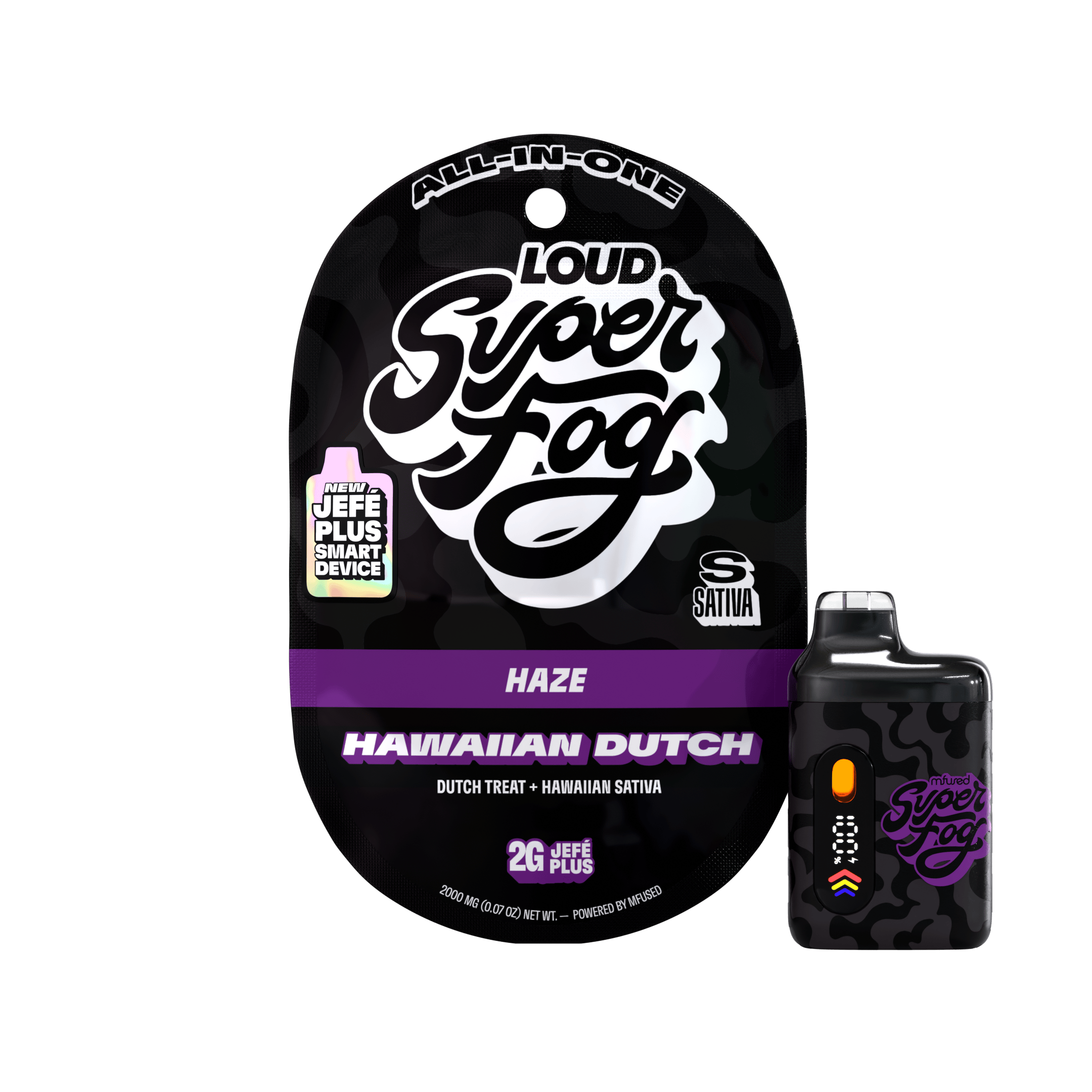
MfusedMfused | Hawaiian Dutch | LOUD High Terpene Extract | Jefé Plus · 2g
$70.80
$80after tax

weeddispensarynearme.com
You must be 21 years or older to enter. By entering, you confirm you’re of legal age in your state to purchase cannabis.
For use only by adults 21+ • Keep out of reach of children
1 live products in stock
Quick answer · What is the Hawaiian Dutch cannabis strain?
Hawaiian Dutch arrives like a postcard from somewhere warm and unhurried — bright citrus on the nose, a clean cerebral lift on the exhale, and an easy sociability that feels almost effortless. A sativa of notable tropical lineage, it carries the kind of sun-drenched character that suits long afternoons and open conversation. For those who appreciate a clear-headed, mood-elevating experience without the weight of heavier hybrids, Hawaiian Dutch offers a refined and distinctly luminous ride.
$80after tax
About Hawaiian Dutch
Hawaiian Dutch is understood to be a cross between Hawaiian, one of the most storied equatorial landrace varieties in cannabis history, and a Dutch-bred strain — most commonly cited as Dutch Treat, though some sources leave the precise Dutch parent ambiguous. The Hawaiian landrace, long cultivated across the islands of the Pacific, has contributed its signature tropical brightness and energetic, clear-headed elevation to countless hybrid programs over several decades. Dutch Treat itself, a northwest American and Dutch coffeehouse staple with roots in British Columbia breeding circles of the late 1980s and early 1990s, brings a more structured, resinous architecture to the pairing. The breeder behind Hawaiian Dutch has not been publicly named with consistent authority across major cannabis reference platforms, and the precise year of its formal introduction remains unverified. What is documented is its presence within the broader tradition of tropical-sativa hybridization that gained momentum in the 1990s and early 2000s, as breeders sought to stabilize the vibrancy of equatorial landraces within more manageable, commercially viable genetic frameworks. Genetic siblings and phenotypes vary depending on the cut and seed source. Some phenotypes lean heavily into the Hawaiian side, expressing a looser, more airy structure with pronounced fruit-forward aromatics, while others inherit more of the Dutch Treat influence in bud density and resin production. It sits within a well-regarded family of tropical sativas that includes Maui Wowie, Pineapple Express, and Island Sweet Skunk as cultural touchstones.
The onset of Hawaiian Dutch tends to be relatively prompt for a sativa, with most consumers noting an upward shift in mood and mental clarity within ten to fifteen minutes of inhalation. The experience opens cerebrally — a gentle brightening of focus and an elevation of social energy that does not carry the anxious edge that can accompany more potent, terpinolene-heavy sativas. Thoughts become more fluid, conversation feels easier, and there is often a noticeable uptick in creative association. At its peak, Hawaiian Dutch occupies a characteristically sativa space: the body remains light and functional, free from the sedative weight of indica-dominant varieties, while the mind hums with an engaged, outward-facing energy. This is not a strain that pulls the consumer inward or encourages introspection in the more meditative sense — it orients toward the external world, making it well-suited to social settings and active daytime pursuits. The duration is moderate, typically settling into a gentle plateau before a smooth, unhurried comedown that leaves most consumers feeling mellow rather than depleted. The terpene profile, particularly the limonene and myrcene content inherited through both parent lines, likely contributes to the brightness of the peak and the relative ease of the descent. As with any cannabis experience, individual responses vary, and those newer to sativa-dominant varieties would benefit from a conservative approach to serving size.
The aromatic profile of Hawaiian Dutch is anchored by a tropical fruit brightness that announces itself the moment the flower is disturbed. Limonene is a dominant force here, contributing the characteristic citrus lift — a blend of sweet lemon and ripe mandarin — that gives the strain its immediate identity on the nose. Beneath that, myrcene introduces a faintly earthy, almost mango-like underpinning that deepens the tropical impression without pulling it toward the heavier, more sedative associations myrcene can carry in indica-forward varieties. Terpinolene, which appears with some regularity in tropical sativa lineages, may contribute a secondary floral and slightly piney note — a thread of complexity that keeps the aroma from reading as simply sweet. Some cuts also carry a whisper of ocimene, an uncommon terpene with a bright, herbaceous, and faintly sweet character that reinforces the tropical register and adds a sense of lightness to the overall bouquet. On the palate, Hawaiian Dutch translates its aromatic promise faithfully. The smoke or vapor opens with ripe citrus and a gentle sweetness, the fruit character spreading across the mid-palate before a clean, mildly piney exhale. There is minimal harshness in quality-cultivated specimens, and the finish tends toward a pleasant, lingering tropical sweetness. The flavor profile pairs naturally with light, fresh foods and does not impose itself on the palate in a heavy or resinous way — a refinement that suits its premium positioning.
Hawaiian Dutch buds reflect their sativa heritage with a structure that leans toward the elongated and slightly airy rather than the compact, dense form associated with indica-dominant varieties. The calyxes are typically slender and well-spaced, stacking in loose, tapered formations that allow light to pass through the flower and illuminate the trichome layer within. The color palette is a warm, medium green with occasional chartreuse highlights, accented by pistils that range from a vivid burnt orange to a deeper amber depending on the maturity of the harvest. Trichome coverage, while not as visually extravagant as some resin-forward hybrids, is present in a fine, even coat that gives the dried flower a soft, slightly frosted appearance. Well-grown specimens carry a visual lightness and elegance that mirrors their effect profile — nothing excessive, nothing heavy, simply well-composed.
Hawaiian Dutch presents a moderately challenging cultivation profile, as one might expect from a strain with significant equatorial landrace genetics. Indoors, flowering typically runs between nine and eleven weeks — somewhat longer than many contemporary hybrids — reflecting the Hawaiian parent's natural adaptation to long, tropical growing seasons. Indoor yields are considered moderate, and cultivators often find that techniques such as low-stress training or a screen of green setup help manage the plant's naturally upward, stretching growth pattern and encourage more uniform canopy development. Outdoors, Hawaiian Dutch thrives in warm, dry climates that approximate its ancestral growing conditions. It prefers long, sunny seasons and does not respond well to early cold or excessive humidity, which can invite mold issues given its somewhat open bud structure. In favorable conditions, outdoor plants can reach considerable height, and yields improve substantially when the season allows for a full, unhurried maturation. For the cultivator-curious shopper, Hawaiian Dutch represents a more demanding but ultimately rewarding grow — one that rewards patience and environmental attention with a finished product of notable aromatic and experiential distinction.
Hawaiian Dutch is, at its core, a daylight strain — one that suits mornings with purpose and afternoons without urgency. It finds its most natural expression during the hours when clarity and sociability are assets: a weekend brunch on a sun-filled terrace, a long walk through a neighborhood that rewards curiosity, or an afternoon spent sketching, writing, or exploring a creative project that benefits from loosened associations and a light touch. For those who enjoy pairing cannabis with food, Hawaiian Dutch's limonene-forward profile aligns particularly well with bright, citrus-inflected dishes — a well-seasoned ceviche, a yuzu-dressed salad, or a plate of tropical fruit. The strain's aromatic brightness holds its own alongside flavors of similar register without competing or clashing. Musically, Hawaiian Dutch suits the kind of sound that is warm, open, and rhythmically unhurried: classic Hawaiian slack-key guitar, 1970s soul, or the more melodic end of indie pop. It is a strain for shared experiences as much as solitary ones — equally at home in a gathering of close friends as in the company of a good book and an open window.
Maui Wowie
A fellow Hawaiian landrace descendant, Maui Wowie shares the tropical citrus brightness and energetic, clear-headed sativa lift that define Hawaiian Dutch's most appealing qualities.
Pineapple Express
Those drawn to Hawaiian Dutch's fruit-forward aroma and smooth, functional daytime energy will find a familiar warmth in Pineapple Express, which offers a comparable tropical profile with a slightly more grounded body presence.
Island Sweet Skunk
Island Sweet Skunk echoes Hawaiian Dutch's uplifting, sociable character and sweet tropical nose, making it a natural recommendation for fans of equatorial sativa expression with added aromatic complexity.
Durban Poison
For those who appreciate Hawaiian Dutch's cerebral clarity and sativa-dominant focus, Durban Poison offers a similarly energetic and clear-headed experience, though with a spicier, more anise-forward aromatic signature.
Strawberry Cough
Strawberry Cough shares Hawaiian Dutch's smooth, sociable, and mood-brightening qualities while introducing a berry-inflected sweetness that appeals to consumers who favor fruit-forward sativas.
Hawaiian Dutch is classified as a sativa-dominant strain. Its lineage — drawing from the Hawaiian landrace and a Dutch-bred parent — produces the elongated structure, clear-headed effects, and energetic character associated with sativa varieties. Consumers can expect an uplifting, outward-facing experience rather than the body-heavy relaxation more typical of indica-dominant cultivars.
Hawaiian Dutch delivers a flavor profile defined by ripe citrus and tropical fruit sweetness, with a clean, slightly piney exhale that keeps the palate engaged. Limonene drives the bright lemon and mandarin character on the inhale, while myrcene adds a faintly earthy, mango-like depth. The finish is smooth and pleasantly sweet, with minimal harshness in well-cultivated specimens.
Hawaiian Dutch is known for producing a clear-headed, uplifting cerebral experience with a notably social and mood-brightening character. Onset is relatively prompt, typically within ten to fifteen minutes of inhalation. The body remains light and functional throughout, making it well-suited to daytime use. The comedown is smooth and unhurried, leaving most consumers feeling pleasantly settled rather than depleted.
Consumers who enjoy Hawaiian Dutch tend to also appreciate Maui Wowie, Pineapple Express, Island Sweet Skunk, Durban Poison, and Strawberry Cough. These strains share qualities of tropical or fruit-forward aromatics, clear-headed sativa elevation, and sociable, daytime-appropriate energy — the defining characteristics of Hawaiian Dutch's experiential profile.
Hawaiian Dutch can be approachable for those new to cannabis, though its sativa-dominant character means that sensitive consumers may find its cerebral energy pronounced. As with any cannabis experience, starting with a modest amount and allowing adequate time to assess the effects before continuing is the most prudent approach. Those who find strong cerebral sativas overstimulating may prefer a gentler hybrid introduction.
The dominant terpenes in Hawaiian Dutch are typically limonene, which contributes the bright citrus and tropical fruit character prominent in its aroma and flavor, and myrcene, which adds an earthy, mango-adjacent depth. Terpinolene and ocimene may also be present, lending secondary floral, piney, and herbaceous notes that give the strain its rounded aromatic complexity.
Hawaiian Dutch is best suited to daytime and early evening consumption. Its clear-headed, energizing sativa effects make it a natural companion for mornings, active afternoons, and social gatherings where mental clarity and an elevated mood are desirable. Its light body character means it does not encourage the kind of deep relaxation associated with evening or pre-sleep cannabis use.
Hawaiian Dutch is most commonly cited as a cross between the Hawaiian landrace — an equatorial variety long associated with the Pacific Islands — and a Dutch-bred strain, frequently identified as Dutch Treat. The breeder has not been publicly named with consistent authority, and the precise Dutch parent is occasionally debated across cannabis reference platforms. It belongs to a well-regarded tradition of tropical sativa hybridization.
Related strains
Pick your store
We'll show pricing, deals, and delivery zones for the store you pick. You can switch any time from the header.