
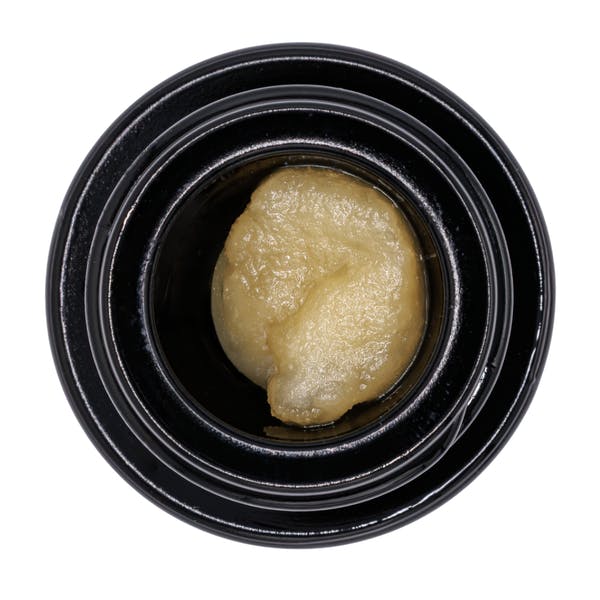
Hybrid
All strains Good Company
1 live products in stock
Quick answer · What is the Good Company cannabis strain?
Good Company arrives as its name promises — warm, convivial, and quietly elevating. This balanced hybrid carries the easy sociability of a well-chosen dinner guest: present without overwhelming, stimulating without edging into anxiety. Its terpene-forward profile layers sweet citrus and earthy depth across a smoke that is as pleasant on the palate as it is on the mind, making it a natural centerpiece for unhurried evenings and thoughtful conversation.
Shop Good Company · 1 of 1 live products
About Good Company
Everything to know about Good Company.
Lineage & origin
Good Company is a proprietary hybrid whose precise parentage has not been fully disclosed by its breeder in public-facing documentation, which is not uncommon among boutique and craft-market cultivars making their debut in regulated adult-use markets. Based on available third-party lab and retail data, the strain appears to draw from a lineage rooted in the broader OG and Gelato family tree — two of the most influential genetic threads in contemporary American cannabis breeding. The OG side would account for its grounded, resinous body, while Gelato descendants are consistent sources of the sweet, dessert-adjacent aromatics that characterize this cultivar's nose. The Gelato lineage itself traces back to the Bay Area's Cookie Fam collective, whose work crossing Thin Mint Girl Scout Cookies with Sunset Sherbet in the mid-2010s produced one of the most replicated genetic lines in modern cannabis. If Good Company carries Gelato heritage — as its terpene expression and effect profile suggest — it inherits that tradition of balanced, sociable hybridity. Until the breeder publicly names the parent strains, shoppers should regard the lineage as partially confirmed and enjoy the cultivar on its own sensory merits rather than genetic pedigree alone.
Effects
Good Company tends to open with a mild cerebral lift that arrives within five to fifteen minutes of inhalation — a gentle brightening of mood and attention that feels less like acceleration and more like a room coming into focus. The onset is characteristically smooth for a balanced hybrid, rarely producing the sharp head-rush associated with high-THC sativas or the immediate heaviness of an indica-dominant cultivar. Experienced consumers often describe the early phase as socially facilitative: conversation flows more naturally, ambient detail becomes pleasantly interesting, and the background noise of daily stress recedes without disappearing entirely. As the session progresses into its peak, the body begins to register a mild but genuine physical ease — a softening of tension in the shoulders and jaw that complements rather than competes with the mental clarity. This dual-register quality, where neither the cerebral nor the physical component dominates, is the hallmark of well-executed hybrid breeding. Myrcene's sedating contribution likely underpins the body warmth, while limonene is associated in the literature with mood elevation. The comedown is gradual and gentle, making Good Company a strain that does not leave a jarring transition in its wake. Most consumers report a total session arc of ninety minutes to two and a half hours, ending in relaxed readiness rather than fatigue.
Aroma, flavor & terpenes
The nose of Good Company opens with a pronounced citrus character — bright lemon zest and a softer orange-peel sweetness — that points clearly to limonene as a dominant terpene. Limonene, one of the most well-documented terpenes in cannabis and in nature broadly, contributes that clean, uplifting citrus signature and has been associated in general terpene research with mood-brightening properties. Beneath the citrus, a layer of sweet earthiness emerges, reminiscent of fresh soil after rain, which is consistent with the presence of myrcene — the most commonly occurring terpene in cannabis and a known contributor to the plant's grounding, herbal character. Secondary terpenes round out the profile with quiet complexity. Beta-caryophyllene lends a faint spice — think cracked black pepper at the back of the palate — and is notable for being the only terpene known to directly bind to CB2 receptors, contributing a gentle body-warming quality. Hints of linalool, the floral terpene shared with lavender, soften the overall aromatic picture into something approaching a botanical blend rather than a single-note fragrance. On the inhale, the smoke or vapor is smooth and moderately dense, carrying the citrus sweetness forward. The exhale delivers the earthier, spiced undertones, with a clean finish that does not linger uncomfortably — an important quality for those who favor extended sessions.
Appearance
Good Company presents as a well-structured hybrid in the visual sense as well: buds are medium to moderately dense, occupying the middle ground between the tight, golf-ball compression of classic OG phenotypes and the slightly airier architecture of Gelato-adjacent cultivars. The color palette is a deep forest green punctuated by occasional hints of muted purple in cooler-grown phenotypes, a chromatic expression driven by anthocyanin production rather than any particular breeding trait. Orange to amber pistils weave through the bud structure with moderate density, adding warmth to the green base. Trichome coverage is notably generous — a fine, even blanket of milky to amber resin glands that communicates both potency and careful harvest timing. Under direct light, the surface carries a faint crystalline shimmer that speaks to the resinous genetic heritage this cultivar appears to carry. Overall, the visual presentation is dignified rather than theatrical, consistent with its name.
Growing notes
Good Company, as a newer or boutique cultivar, has a limited body of publicly documented cultivation data, which is worth acknowledging honestly for the cultivator-curious shopper. Based on its probable hybrid heritage — leaning toward Gelato-adjacent genetics — it likely follows the general parameters of that family: a flowering window of approximately eight to nine weeks indoors under a standard twelve-twelve light cycle, with moderate indoor yields that reward patient canopy management and attentive feeding. The strain is presumed to perform best in a controlled indoor environment where temperature and humidity can be dialed in precisely. Gelato-lineage cultivars are generally considered intermediate in cultivation difficulty — more forgiving than pure landrace sativas but more particular about environmental conditions than workhorse indica strains. Outdoor cultivation in climates similar to Northern California or the milder zones of the Northeast may produce viable harvests, though the plant's resinous structure makes adequate airflow and late-season humidity management important considerations. As with any newer cultivar, prospective home growers in compliant jurisdictions should seek out cultivar-specific grow reports as they accumulate in the community.
When it's best enjoyed
Good Company earns its name most fully in the golden hours of late afternoon into early evening — that transitional window when the day's obligations have eased but the night has not yet demanded any particular shape. It is a natural companion for a gathering of four to six people around a well-laid table, where the conversation has found its rhythm and no one is in a hurry. The strain's sociable, mood-brightening qualities make it well-suited to these unhurried social contexts without producing the scattered over-stimulation that can accompany more sativa-dominant cultivars. For the solo consumer, Good Company pairs naturally with activities that benefit from engaged but not laser-focused attention: working through a playlist with intention, sketching, or reading long-form narrative nonfiction. On the culinary side, its citrus and earthy terpene profile finds a pleasing resonance with dishes that share those registers — a roasted chicken with preserved lemon, or a mushroom risotto where earthiness is the point. Musically, something in the space between jazz and soul — Bill Withers, Khruangbin, or late-period Joni Mitchell — matches the strain's temperament with a quiet precision.
If you like Good Company, also explore
Gelato
Gelato fans drawn to its sweet dessert aromatics and balanced cerebral-body effect will recognize a familiar sensibility in Good Company's smooth, sociable profile.
Wedding Cake
Wedding Cake shares the earthy-sweet terpene character and gentle physical ease that defines Good Company, making it a natural next step for those who enjoy one or the other.
Runtz
Runtz lovers who appreciate a candy-adjacent nose layered over a relaxed, even-keeled hybrid effect will find Good Company occupies adjacent sensory and experiential territory.
Blue Dream
Blue Dream's reputation for approachable, mood-lifting hybridity and smooth onset makes it a logical companion strain for consumers who gravitate toward Good Company's easygoing character.
Mimosa
Mimosa's citrus-forward terpene profile and upbeat, social energy closely mirrors the limonene-driven brightness that defines Good Company's early-session experience.
Common questions
Is Good Company indica or sativa?+
Good Company is classified as a balanced hybrid, meaning it draws on characteristics associated with both indica and sativa genetics without strongly favoring either. In practice, this translates to an experience that offers mild cerebral lift alongside a gentle physical ease — neither purely energizing nor sedating. Most consumers find it well-suited to the hours between active daytime and late evening, when a middle-register effect is precisely what the moment calls for.
What does Good Company taste like?+
Good Company delivers a palate that opens with bright citrus — lemon zest and soft orange peel — driven by limonene. The mid-palate introduces an earthy, herbal sweetness consistent with myrcene, while the exhale carries a faint spiced warmth attributed to beta-caryophyllene. The overall flavor impression is clean and layered, with a finish that does not linger heavily. Consumers who appreciate dessert-adjacent hybrids with a natural, botanical edge tend to find the flavor profile immediately appealing.
What are the typical effects of Good Company?+
Consumers typically report a smooth onset of mood elevation and mild mental clarity within five to fifteen minutes, followed by a gradual body ease that softens physical tension without inducing heaviness. The peak experience is sociable and even-keeled — conversation feels natural, ambient awareness is pleasantly heightened, and the edges of daily stress recede. The session arc runs roughly ninety minutes to two and a half hours, closing with a gentle, restful transition rather than an abrupt come-down.
What strains are similar to Good Company?+
Consumers who enjoy Good Company often find common ground with Gelato, Wedding Cake, Runtz, Blue Dream, and Mimosa. Each of these cultivars shares at least one defining characteristic with Good Company — whether that is a sweet, terpene-forward nose, a balanced hybrid effect profile, or a smooth, approachable onset. The degree of similarity will vary by individual batch and phenotype, so exploring one or two adjacent strains is a reasonable way to map your personal preferences.
Is Good Company good for beginners?+
Good Company's balanced hybrid character makes it a reasonable choice for adults who are newer to cannabis, though the standard guidance applies: start with a single, modest inhalation and allow a full fifteen to twenty minutes before reassessing. The strain does not appear to skew toward the anxiety-inducing end of the sativa spectrum or the disorienting heaviness of potent indicas, which positions it as a relatively approachable entry point. That said, individual responses to cannabis vary considerably, and moderation is always prudent.
What are the dominant terpenes in Good Company?+
Based on available sensory and retail data, Good Company's terpene profile appears anchored by limonene, which contributes its characteristic citrus brightness and mood-adjacent qualities, and myrcene, which provides the earthy, herbal depth and softer body warmth. Beta-caryophyllene adds a faint spice and is notable for its CB2 receptor activity. Linalool may appear as a minor contributor, lending a soft floral note that rounds the aromatic picture into something more complex than citrus alone.
When is the best time of day to enjoy Good Company?+
Good Company occupies that transitional window most comfortably — late afternoon into early evening. Its balanced effect profile means it rarely disrupts daytime function the way heavier indicas might, but it carries enough physical ease to feel out of place at a high-productivity morning. Think of it as a cultivar calibrated for the hours when the day has released its grip but the evening has not yet made demands: a social gathering, a creative pause, or a well-earned moment of quiet.
What food or activities pair well with Good Company?+
The citrus and earthy terpene character of Good Company finds natural resonance with dishes that share those registers — think preserved lemon roasted chicken, mushroom-forward pastas, or a thoughtfully assembled charcuterie spread. Activity-wise, the strain suits unhurried social evenings, exploratory playlist listening, or light creative work such as sketching or journaling. Its sociable, even-tempered effect makes it particularly well-suited to small gatherings where good conversation is the primary agenda.
Related strains