
Hybrid
All strains Gatorade
1 live products in stock
Quick answer · What is the Gatorade cannabis strain?
Gatorade is a well-balanced hybrid whose name evokes refreshment, and the strain delivers on that promise with a citrus-forward aroma and a measured, even-tempered experience. Equal parts invigorating and grounding, it occupies that rare middle ground where mental clarity and physical ease coexist without competing. For the discerning New York consumer who wants an afternoon companion rather than an extreme, Gatorade offers quiet complexity in a profile that rewards slow, attentive consumption.
Shop Gatorade · 1 of 1 live products
About Gatorade
Everything to know about Gatorade.
Lineage & origin
Gatorade's precise lineage is not universally documented across public cannabis databases, and the breeder of record has not been definitively established in widely cited sources such as Leafly or Wikileaf. What is most commonly reported is a cross between Grape Ape and Lemon OG — two strains with well-understood profiles — which would account for the cultivar's signature blend of fruity sweetness and citrus-fuel depth. Grape Ape, itself a cross of Mendocino Purps, Skunk, and Afghani, contributes the dense, resinous structure and the subtle grape and berry tones that round out the nose. Lemon OG, a phenotype within the OG Kush family, brings the sharp citrus edge and the classic OG earthiness that grounds the experience. Because the strain name 'Gatorade' has been applied by multiple regional cultivators — a common occurrence in the American cannabis market — some variations in phenotype and terpene expression do exist from batch to batch and region to region. Consumers and cultivators in legal markets across the West Coast first brought the strain to wider attention in the mid-2010s. A small number of seed banks have listed Gatorade genetics, though independent verification of those lineage claims remains limited. Shoppers should understand that, as with many colloquially named cultivars, phenotypic consistency depends heavily on the specific farm and cultivation run.
Effects
The onset of Gatorade tends to be measured rather than abrupt — most consumers report the first sensations arriving within five to fifteen minutes of inhalation, beginning as a gentle lift behind the eyes and a mild brightening of mood. The cerebral component is present and pleasant, encouraging a sense of relaxed focus that suits conversation or light creative engagement without tipping into overstimulation. This is not a strain that demands your attention; it invites you to settle into the moment. As the experience matures into its peak phase — generally between thirty and sixty minutes — the body component becomes more apparent. A warm, diffuse relaxation moves through the shoulders and the lower back without arriving as sedation. This balance between mental engagement and physical ease is the hallmark of well-expressed hybrid genetics, and Gatorade exemplifies it when the phenotype is well-cultivated. The effect profile likely reflects the interplay between myrcene's calming body influence and limonene's mood-elevating properties, a combination that cannabis researchers have noted as producing synergistic modulation of the overall experience. The duration is typically moderate, running two to three hours before a gentle, unhurried comedown. There is little of the abrupt drop associated with some sativa-leaning hybrids; the return to baseline feels gradual and clean. Those new to cannabis should follow the standard counsel — start with a conservative amount, allow sufficient time between sessions, and assess personal sensitivity before increasing consumption.
Aroma, flavor & terpenes
The aromatic profile of Gatorade is its most immediately distinctive quality. On first opening the jar, the nose is greeted by a bright, zesty citrus note — most analysts attribute this to an elevated limonene presence, which lends its characteristic lemon and orange-peel brightness. Beneath that citrus lead, a sweeter layer of grape and mixed berry emerges, a contribution commonly traced to the Grape Ape parentage and likely supported by trace concentrations of myrcene and linalool, which soften the sharper edges and add a mild floral warmth. A secondary earthy, fuel-adjacent undercurrent runs through the profile — the OG fingerprint that caryophyllene helps define. Caryophyllene, a sesquiterpene, contributes both a faintly spicy, woody depth on the nose and what some researchers suggest is a distinctive interaction with CB2 receptors, giving it an edge of physiological relevance beyond pure aroma. Pinene, if present, adds a faint herbal-green note that prevents the profile from reading as purely fruit-candy sweet. On the palate, Gatorade's smoke or vapor is generally described as smooth for its terpene density. The inhale carries the citrus-forward sweetness, while the exhale reveals the earthier, spiced undertones. Vapor tends to express the fruit notes with more precision and less harshness than combustion, which can intensify the caryophyllene's pepper character. The finish is clean, with a lingering hint of citrus rind that extends well beyond the session itself.
Appearance
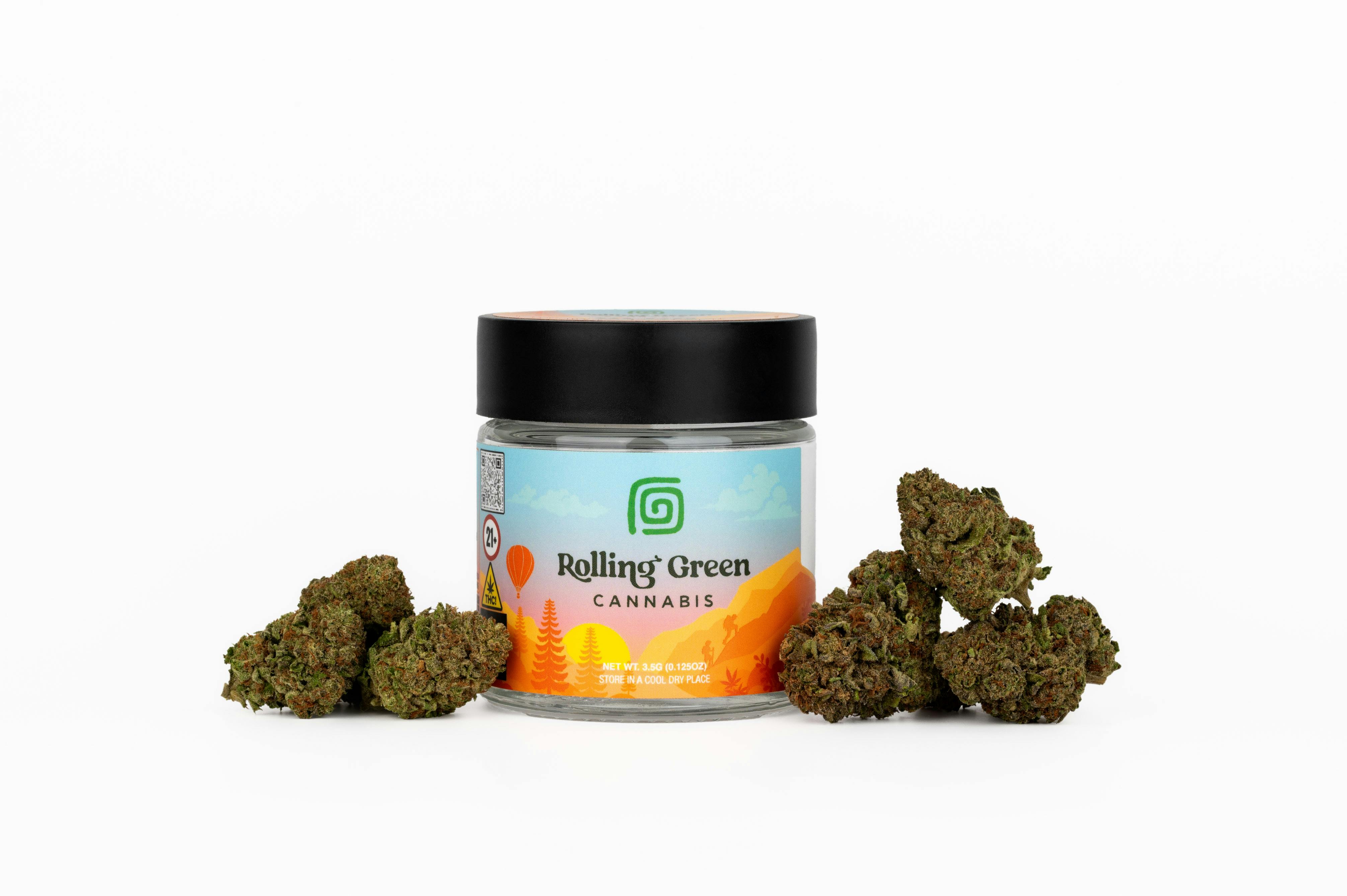
Well-cultivated Gatorade presents as medium to large buds with a moderately dense structure that splits the difference between the tight, golf-ball compactness of classic OG phenotypes and the slightly looser architecture of sativa-influenced hybrids. The calyxes are plump and well-formed, and the overall bud shape leans elongated rather than round. The color palette is among the strain's more visually striking attributes. A base of deep forest green is interrupted by purple and violet undertones — inheritance from the Grape Ape lineage — which become more pronounced in harvests that experienced cooler late-flowering temperatures. Amber and orange pistils wind through the canopy in moderate density, offering a warm contrast to the cooler greens and purples beneath. Trichome coverage is generous; the surface carries a thick, frost-like layer of milky to amber resin heads that signal the strain's resinous potential and give dried buds a tactile stickiness even through a glove.
Growing notes
From a cultivation standpoint, Gatorade presents as an intermediate-level project — manageable for an experienced home grower but likely to reward patient technique over beginner improvisation. The strain performs well both indoors under controlled lighting and outdoors in warm, Mediterranean-style climates where humidity remains moderate through the flowering window. Indoors, a flowering period of approximately eight to nine weeks is most commonly cited, placing it in the mid-range that allows cultivators meaningful control over terpene expression through temperature manipulation in the final weeks. Indoor yields are reported as moderate to above average, and the plant responds well to training techniques such as low-stress training and selective defoliation, which open the canopy and encourage the secondary colas to develop more fully. Outdoors, harvest typically falls in mid-October in Northern Hemisphere growing regions. The plant develops a moderate stretch after flip, so vertical space management is worth planning. Because of the grape and OG genetics, late-season temperature drops of ten to fifteen degrees Fahrenheit during the dark cycle can deepen the purple pigmentation considerably, an aesthetic outcome that many cultivators deliberately engineer.
When it's best enjoyed
Gatorade occupies an afternoon or early-evening slot with particular ease. Its balanced hybrid character makes it a natural companion for the transitional hours between productive daytime activity and the slower, more contemplative pace of evening — think the hour after a long walk through Riverside Park, when the body carries a pleasant tiredness and the mind is ready to slow from the pace of the city without fully surrendering to it. For solo consumption, the strain pairs well with activities that benefit from relaxed engagement: unhurried reading, sketching, or moving through a playlist with genuine attentiveness. In a social setting, Gatorade's measured cerebral quality makes it conversationally friendly without the anxiety edge that higher-stimulation cultivars can introduce at a dinner table or a small gathering. From a terpene-pairing perspective, the citrus and grape notes harmonize with light Mediterranean cuisine — an arugula salad dressed with lemon and shaved pecorino, perhaps, or a chilled glass of dry sparkling water with a citrus garnish. Musically, the profile suits something with groove and texture — early Khruangbin, or a well-mastered soul record — where the details reward the attention that this strain quietly encourages.
If you like Gatorade, also explore
Grape Ape
As a direct parent of Gatorade, Grape Ape shares the dense bud structure, grape-and-berry aromatic core, and relaxing body character that define the lower register of the Gatorade experience.
Lemon OG
The other foundational parent, Lemon OG, delivers the same citrus-forward brightness and earthy OG depth that Gatorade fans find most appealing in the upper register of its aroma and the mental clarity of its onset.
Zkittlez
Zkittlez shares Gatorade's fruit-forward profile and balanced hybrid disposition, making it a natural next step for consumers drawn to sweet, layered terpene expressions and even-tempered effects.
Mimosa
Mimosa's citrus dominance and uplifting-yet-grounded hybrid character mirror Gatorade's limonene-leaning brightness, appealing to the same consumer who wants clarity without overstimulation.
Gelato
Gelato's dessert-sweet aromatic complexity and polished hybrid balance resonate with Gatorade's own fruit-meets-earth profile and its capacity to satisfy both body and mind in a single session.
Common questions
Is Gatorade indica or sativa?+
Gatorade is classified as a hybrid. Its most commonly cited lineage — Grape Ape crossed with Lemon OG — brings together an indica-dominant parent and an OG-family hybrid, resulting in a cultivar that expresses both relaxing body characteristics and a degree of mental clarity. Neither pole dominates emphatically, which is precisely what makes it suited to a range of settings and times of day.
What does Gatorade taste like?+
The flavor profile leads with bright citrus — lemon peel and orange zest — followed by a sweeter layer of grape and mixed berry inherited from the Grape Ape lineage. An earthy, faintly spiced undertone rounds out the exhale, a characteristic drawn from the OG ancestry. Vapor tends to express the fruit notes with more precision, while combustion deepens the pepper and earth character on the finish.
What are the typical effects of Gatorade?+
Gatorade tends to open with a gentle mood lift and a softening of mental tension, arriving within five to fifteen minutes of inhalation. At peak, a warm physical relaxation complements the cerebral quality without producing sedation. The overall arc is balanced and moderate in intensity, lasting two to three hours before a gradual, unremarkable comedown. It is generally regarded as approachable rather than forceful in character.
What strains are similar to Gatorade?+
Consumers who enjoy Gatorade often find similar satisfaction in Grape Ape, Lemon OG, Zkittlez, Mimosa, and Gelato. Each shares one or more of Gatorade's defining qualities — fruit-forward terpene expression, balanced hybrid effects, or the citrus-and-earth interplay that gives the strain its particular character. Grape Ape and Lemon OG are especially close given their roles as parent cultivars.
Is Gatorade good for beginners?+
Gatorade's balanced hybrid profile and measured intensity make it a reasonable option for adults new to cannabis, provided they approach it with the standard 'start low, go slow' sensibility. Begin with a small amount, allow at least fifteen to twenty minutes to assess the onset before consuming more, and choose a comfortable, familiar environment for the first session. The strain is not known for extreme potency, but individual sensitivity always varies.
What are the dominant terpenes in Gatorade?+
Based on the strain's reported lineage and aromatic character, limonene and myrcene are most commonly identified as dominant terpenes. Limonene contributes the citrus brightness and mood-elevating quality; myrcene underpins the body relaxation and adds a subtle earthiness. Caryophyllene provides the spiced, woody depth on the exhale, and linalool may contribute a faint floral warmth that bridges the fruit and earth elements.
When is the best time of day to consume Gatorade?+
Gatorade suits the afternoon to early evening window most naturally. Its balanced hybrid disposition supports the transitional hours between active daytime engagement and a slower evening pace — after work, after physical activity, or as a social accompaniment at a relaxed gathering. It is not ideally positioned as a morning cultivar, nor is it heavy enough to serve as a dedicated nightcap for those who prioritize deep sedation before sleep.
Is Gatorade's lineage verified?+
The lineage is not universally confirmed across major cannabis databases. The most widely cited cross is Grape Ape and Lemon OG, which aligns with the strain's aroma and effect character, but the original breeder has not been definitively established in public sources. Multiple regional cultivators have applied the Gatorade name to their own phenotypes, which means some variation in expression exists across different farms and harvests.
Related strains