
Sativa
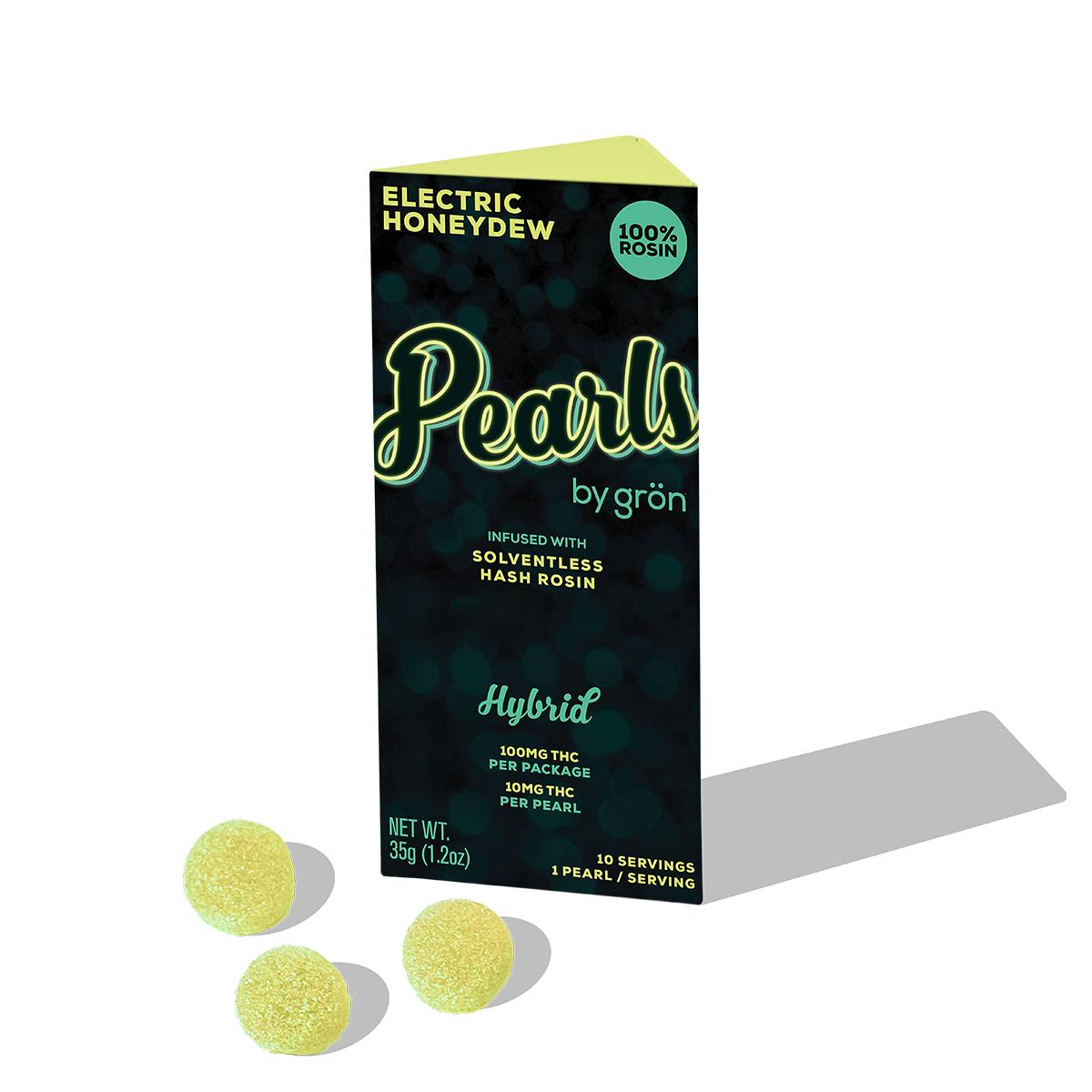
All strains Electric Honeydew
1 live products in stock
Quick answer · What is the Electric Honeydew cannabis strain?
Electric Honeydew arrives like the first warm afternoon of late spring — luminous, lightly sweet, and quietly invigorating. A sativa-leaning cultivar distinguished by its melon-forward terpene profile and a cerebral lift that feels measured rather than jarring, it occupies a rare space between refreshment and focus. For those who prefer their cannabis to complement a full day rather than interrupt it, Electric Honeydew offers a considered, clean-burning experience worth savoring slowly.
Shop Electric Honeydew · 1 of 1 live products
About Electric Honeydew
Everything to know about Electric Honeydew.
Lineage & origin
Electric Honeydew is a relatively modern sativa-dominant cultivar whose precise lineage has not been fully disclosed by its originating breeders, placing it among a number of boutique strains that emerged from the craft-cannabis renaissance of the late 2010s and early 2020s. What is generally documented in community sources is that the strain draws from melon-phenotype Honeydew genetics — a lineage noted for its distinctive cucurbit-adjacent sweetness — crossed with an electrically terpene-rich sativa, likely carrying haze or tropical heritage that provides the characteristic upward lift. The 'Electric' prefix in contemporary cannabis naming conventions has been applied to several cultivars to signal an energetic, terpene-forward character, and Electric Honeydew fits that convention neatly. Its breeders, whose identity remains publicly unconfirmed across major aggregator platforms including Leafly and Wikileaf at the time of this writing, appear to have prioritized terpene expression and effect clarity over raw cannabinoid accumulation — a philosophy increasingly common among West Coast and Northeast boutique seed houses. Genetic siblings or phenotypic variants of the broader Honeydew family include selections that trend toward either heavier body effects or brighter, more citrus-adjacent flavor profiles depending on the pheno selected during breeding. Electric Honeydew itself has gained traction in New York adult-use retail circles for its consistency of expression and its approachability relative to heavier haze-derived sativas.
Effects
The onset of Electric Honeydew typically presents within five to fifteen minutes of inhalation, beginning as a gentle brightening of awareness behind the eyes and temples — a sensation often described by experienced consumers as a clearing rather than a rush. Unlike some sativa cultivars that lead with anxious momentum, this strain's terpene composition appears to temper the initial cerebral energy, producing a focused, sociable alertness that feels relatively smooth in its ascent. At peak, the experience is predominantly cerebral: thought tends to move with slightly greater fluidity, sensory details become more engaging, and conversation or creative tasks feel naturally compelling. The body remains present but largely unobtrusive — a mild warmth through the shoulders and limbs that anchors the mental activity without sedating it. This balance is consistent with a terpene profile weighted toward ocimene and terpinolene, both of which are associated in consumer-reported literature with uplifting, clear-headed states rather than couch-lock. Duration for most experienced adult consumers runs approximately two to three hours before tapering into a calm, grounded comedown that rarely carries significant fatigue. Novice consumers should approach with measured portions, as the cerebral clarity can intensify quickly under heavier inhalation. The general counsel of starting low and going slow is particularly apt here — the strain's accessibility is best appreciated at a moderate pace.
Aroma, flavor & terpenes
The aromatic profile of Electric Honeydew is its most immediately recognizable attribute. On the nose, the dominant impression is one of ripe, pale-fleshed melon — honeydew specifically, with its cool, subtly vegetal sweetness — layered over a quieter base of fresh green herbs and a faintly tropical suggestion that points toward its sativa ancestry. This primary sweetness is thought to derive in significant part from ocimene, a monoterpene associated with soft, floral, and tropical-fruity aromas, present here in notable concentration. Secondary terpenes contribute meaningful complexity. Terpinolene — common in sativa-leaning cultivars and documented across platforms including Leafly — adds a layer of fresh pine and faintly floral character that lifts the sweetness and prevents it from reading as cloying. Myrcene, if present in moderate quantities as community reports suggest, provides a soft, herbal undercurrent that rounds the profile and gives the aroma a slight earthiness in the background. Trace caryophyllene may introduce a very mild peppery accent on the finish, adding just enough edge to keep the profile from being one-dimensional. On the palate, whether consumed via flower or vapor, Electric Honeydew delivers a notably clean draw. The melon sweetness translates faithfully from nose to tongue, with a mid-palate that opens into something faintly citrus-adjacent before resolving into a smooth, herbaceous exhale. Vapor at lower temperatures tends to foreground the fruity, floral notes most distinctly.
Appearance
Electric Honeydew produces buds that lean toward the moderately dense side of the sativa spectrum — not the loose, airy structure common to equatorial landrace-adjacent genetics, but not the tight, compact architecture of an indica-dominant cultivar either. Calyxes are well-defined and stack with a measured, elongated structure that reflects the strain's sativa heritage while suggesting a degree of breeding refinement. The color palette is a study in light greens: lime and sage tones predominate across the body of the bud, occasionally punctuated by faint yellow-green highlights that reinforce the honeydew visual association. Pistils — the hair-like structures that curl through the flower — present in warm amber and pale orange, adding warmth against the cool green ground. Trichome coverage is generous without being extraordinary, giving the surface a frosted, slightly luminous quality under direct light that speaks to the cultivar's terpene richness as much as its cannabinoid accumulation.
Growing notes
Electric Honeydew is understood to express best under controlled indoor environments, where light spectrum, humidity, and temperature can be managed to coax its terpene profile to full expression. Community cultivation reports suggest a flowering window in the range of nine to ten weeks, which places it on the slightly longer end of the sativa spectrum — a reflection of its tropical-influenced genetics requiring adequate time to develop its characteristic aroma compounds. Indoor yields are reported as moderate to generous for cultivators who maintain appropriate canopy management, with the plant tending toward vertical stretching during the vegetative phase — a common sativa trait that benefits from low-stress training or screen techniques to maximize light penetration. Outdoor cultivation is possible in warm, temperate climates with long growing seasons, though the strain's sensitivity to humidity fluctuation makes it less forgiving than some hybrid cultivars in variable northeastern conditions. For the home cultivator, Electric Honeydew is generally rated as intermediate in difficulty — rewarding for those with some experience but perhaps not the most forgiving introduction for first-time growers.
When it's best enjoyed
Electric Honeydew is, at its core, a daylight strain — one that earns its place on a morning or early afternoon that calls for engaged, pleasant awareness rather than heavy sedation or introspection. It pairs naturally with creative work that benefits from a loosened, associative quality of thought: writing, visual design, photography, or any pursuit where noticing small details feels like an asset rather than a distraction. Socially, the strain functions well as a pre-activity companion — before a gallery walk through Chelsea, a long brunch with people whose company you genuinely enjoy, or an afternoon spent at a greenmarket. Its terpene profile, with its melon-sweet and faintly tropical character, finds a natural culinary counterpart in light, acidic dishes: a ceviche, a green salad with citrus dressing, or a chilled fruit plate where the strain's own sweetness can resonate rather than clash. For a musical pairing, ambient electronic music with organic instrumentation — the kind of work produced by artists in the tradition of Four Tet or Bonobo — mirrors the strain's balance of warmth and precision. It is, in essence, a strain for people who want the afternoon to feel a little more alive without losing the thread of it entirely.
If you like Electric Honeydew, also explore
Green Crack
Fans of Electric Honeydew's sharp, focused cerebral energy and fruity terpene brightness will recognize a familiar daytime clarity in Green Crack's well-documented mango-and-citrus sativa profile.
Maui Wowie
The tropical sweetness and smooth, uplifting sativa arc of Maui Wowie share a similar emotional register with Electric Honeydew, appealing to consumers who prize light-bodied, flavor-forward experiences.
Tangie
Tangie's citrus-dominant terpene expression and energetic-yet-measured sativa effect make it a natural companion recommendation for Electric Honeydew enthusiasts drawn to sweet, terpene-rich daytime cultivars.
Mimosa
Mimosa's blend of tropical fruit aroma and a sociable, mood-brightening effect profile overlaps meaningfully with Electric Honeydew's accessible, pleasant sativa character.
Durban Poison
Consumers who appreciate Electric Honeydew's clean, focused onset and anise-free sweetness may find Durban Poison's equally clear-headed, terpinolene-forward sativa energy a worthy exploration.
Common questions
Is Electric Honeydew indica or sativa?+
Electric Honeydew is a sativa-dominant cultivar. Its effect profile — characterized by cerebral clarity, uplifted mood, and relatively light body sensation — is consistent with sativa-leaning genetics. While all modern cannabis exists on a genetic continuum rather than a strict binary, consumers seeking an energizing, daytime-appropriate experience will find Electric Honeydew behaves reliably in the sativa tradition.
What does Electric Honeydew taste like?+
The flavor profile centers on ripe honeydew melon — cool, lightly sweet, and faintly vegetal in the most appealing sense — with secondary notes of fresh pine, tropical fruit, and a mild herbal exhale. At lower vaporizer temperatures, the fruity and floral terpene notes come through most distinctly. The smoke is notably smooth, with a clean finish that does not linger heavily on the palate.
What are the typical effects of Electric Honeydew?+
Consumers commonly report a focused, socially engaged mental uplift that arrives within fifteen minutes of inhalation and sustains for roughly two to three hours. The experience is predominantly cerebral — alert, curious, and lightly energized — with a mild physical warmth that grounds without sedating. The comedown is typically gentle, settling into a calm baseline without significant fatigue or abrupt drop-off.
What strains are similar to Electric Honeydew?+
Consumers who enjoy Electric Honeydew often find common ground with Green Crack, Maui Wowie, Tangie, Mimosa, and Durban Poison. Each of these cultivars shares some combination of sativa-dominant effect character, fruit-forward terpene expression, and daytime-appropriate energy that mirrors Electric Honeydew's profile. Personal preference for specific flavor notes or effect intensity will help determine which of these alternatives resonates most.
Is Electric Honeydew good for beginners?+
Electric Honeydew is relatively approachable by sativa standards, but new adult-use consumers should still apply the universal principle of starting low and going slow. The cerebral effects can intensify quickly with larger portions, and those sensitive to sativa-style stimulation may find the mental acceleration more than they anticipated. Beginning with a modest amount and waiting a full fifteen minutes before reassessing is a prudent approach.
What are the dominant terpenes in Electric Honeydew?+
Community reports and aggregator sources point to ocimene and terpinolene as the primary terpenes shaping Electric Honeydew's distinctive melon-sweet, lightly tropical aroma. Myrcene appears as a supporting terpene, contributing a soft herbal earthiness, while trace caryophyllene may account for a mild peppery accent on the finish. This terpene combination is associated with uplifting, clear-headed effects in the broader consumer literature.
What is the best time of day to consume Electric Honeydew?+
Electric Honeydew is best suited to morning and early afternoon use, when its energizing, focus-oriented character can be put to practical or pleasurable use. Its sativa-dominant effect profile makes it a poor candidate for late evening consumption for most adults, as the cerebral activation it produces is more likely to sustain wakefulness than encourage restful transition. It is, in the most direct sense, a cultivar built for daylight hours.
Where does the name Electric Honeydew come from?+
The name reflects two distinct qualities the strain is bred to express: the 'Honeydew' component signals the melon-forward, cool-sweet terpene profile that defines its aroma and flavor, while 'Electric' follows a contemporary naming convention applied to cultivars with a noticeably bright, energized effect character. The combination signals to experienced consumers that they can expect both sensory sweetness and a lively, terpene-driven experience.
Related strains