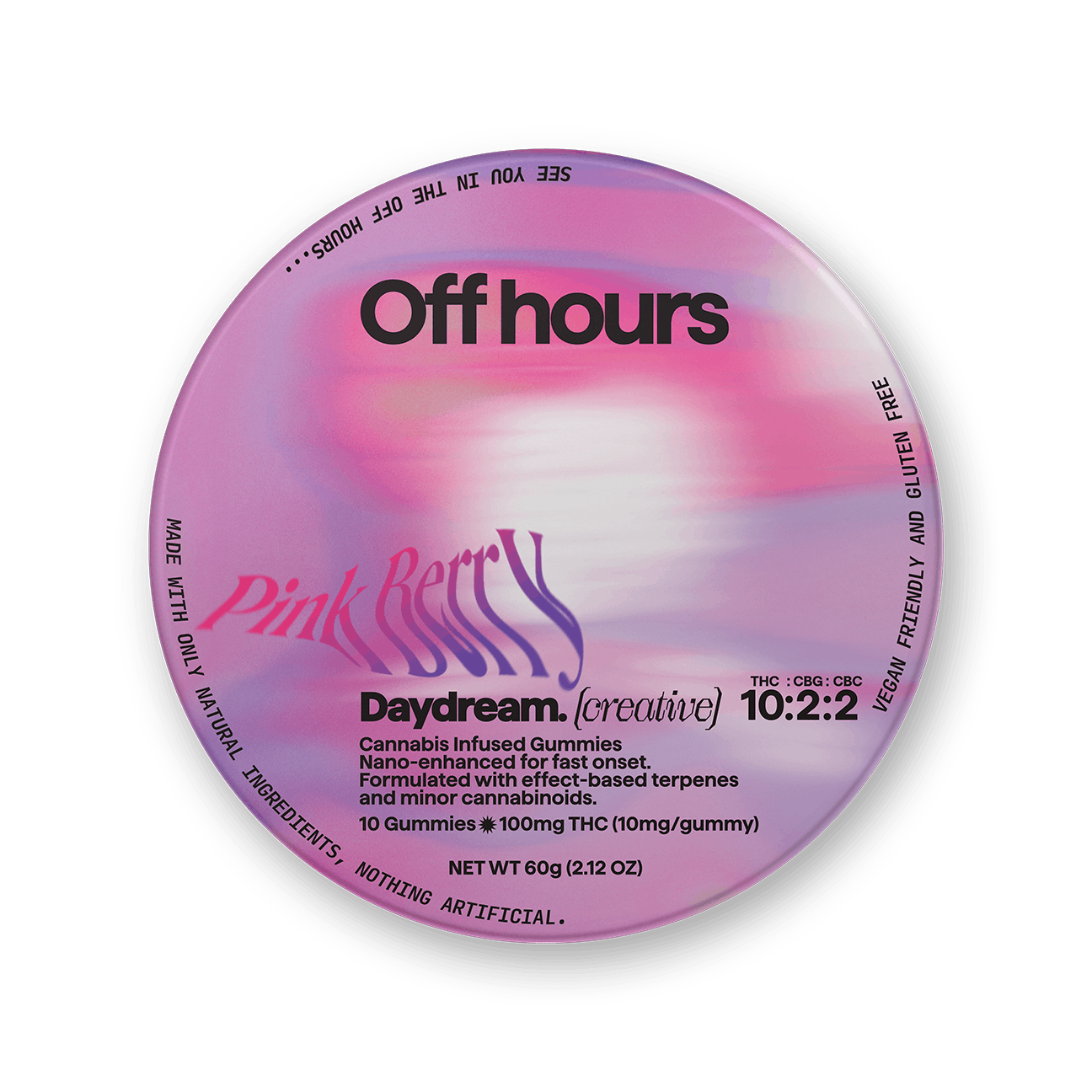
THC 0.19%Sativa
Off HoursOff hours - Daydream (creative) Strawberry Acai Coconut Gummies · .1g
$28.32
$32after tax

weeddispensarynearme.com
You must be 21 years or older to enter. By entering, you confirm you’re of legal age in your state to purchase cannabis.
For use only by adults 21+ • Keep out of reach of children
1 live products in stock
Quick answer · What is the Daydream cannabis strain?
Daydream is a sun-drenched, sativa-leaning cultivar that carries its name with quiet conviction. Its uplifting, mentally clarifying character unfolds gradually, inviting a state of soft focus rather than frenetic stimulation. With a terpene profile that leans toward citrus and fresh earth, it suits the thoughtful explorer equally well in a sun-lit studio or on a long afternoon walk through the city.
$32after tax
About Daydream
Daydream's precise lineage is not uniformly documented across public cannabis databases, and the breeder has not formally published a single, definitive genetic record. What is broadly cited is a heritage rooted in sativa-dominant genetics, with some sources pointing to a cross involving Amnesia Haze and a bright, resinous sativa partner — though this specific parentage remains debated in enthusiast communities. Amnesia Haze itself is a storied cultivar with origins in the early 2000s Amsterdam coffee-shop scene, descended from South Asian and Jamaican landraces crossed with Haze varieties. If this lineage holds, Daydream inherits a deeply international genetic passport. The strain gained quiet traction in the American market as part of a broader movement toward thoughtfully named, mood-forward sativas that prioritized cerebral clarity over sheer potency. It is positioned within a family of cultivars that prize daytime usability, alongside genetic neighbors like Amnesia and various Haze phenotypes that emerged from similar stock. Some phenotypes sold under the Daydream name may reflect distinct regional cuts, which is not uncommon in a market where popular names migrate across different genetics. Shoppers should treat any single Daydream offering as a specific expression of a concept rather than a locked, single-breeder product.
The onset of Daydream tends to arrive within the first ten to fifteen minutes — a gentle brightening behind the eyes and a subtle lift in mood that does not announce itself aggressively. This initial wave is predominantly cerebral, marked by an increased sense of mental openness and a mild heightening of sensory awareness. Conversations feel a touch more engaging, ambient sounds register more clearly, and the mind inclines toward association and curiosity rather than linear task completion. As the experience deepens into its peak — typically between the thirty- and sixty-minute mark — the cerebral quality remains dominant, though a gentle physical ease settles into the body without weight or sedation. This is the phase most suited to creative or reflective activity. The limonene and terpinolene presence common in sativa-forward cultivars is thought to contribute to this alert-but-calm character, though individual biochemistry will always mediate the final experience. The comedown is gradual and rarely abrupt. Over two to three hours, the mental clarity softens into a mild, pleasant tranquility. Dry mouth is among the more commonly reported minor effects; staying well hydrated is a sensible practice. As with any cannabis experience, those new to sativa-dominant strains are encouraged to start with a modest amount and allow adequate time before reassessing.
The aromatic profile of Daydream opens with a pronounced citrus note — bright lemon zest and a faint orange rind quality that registers immediately on breaking the bud. This is consistent with a meaningful limonene presence, a terpene associated with elevated mood and an uplifting sensory character. Beneath that citrus brightness sits a layer of fresh, slightly floral earthiness that many describe as reminiscent of a garden after light rain. Terpinolene, where present in Daydream cuts, contributes a herbal, faintly piney nuance alongside subtle floral notes — a combination that adds dimension to what might otherwise read as a straightforward citrus profile. Myrcene, though typically less dominant in sativa-leaning cultivars, appears in supporting quantities and imparts a mild muskiness that rounds the sharper edges of the aroma. On the palate — whether experienced as smoke or vapor — Daydream tends to deliver a clean, smooth draw. The citrus and herbal notes carry through on the inhale, while the exhale reveals a quiet sweetness and a trace of pine. The finish is relatively clean rather than heavy or resinous, making the experience approachable across consumption methods. Vapor tends to accentuate the floral and citrus nuances, while combustion brings a touch more earthiness to the foreground.
Daydream typically presents in the classic sativa-influenced bud structure — longer, somewhat airy calyxes that stack loosely rather than compressing into the dense, rounded forms associated with indica-heavy genetics. Despite this lighter architecture, well-cultivated examples carry a respectable trichome coating: a fine, silver-white layer of resin glands that catches light and signals potency without overwhelming the eye. The colour palette trends toward bright, medium greens with occasional yellow-green undertones, reflecting the strain's sativa temperament. Pistils — the hair-like structures that thread through the calyx — are typically a warm amber to rust-orange, offering a pleasing contrast against the lighter foliage. The leaves visible through the bud structure tend to be narrower and more elongated, another marker of its sativa heritage. Overall, the visual impression is of something light and luminous rather than heavy and opaque.
Daydream, consistent with its sativa-leaning genetics, rewards growers who can accommodate its preference for vertical space and extended flowering cycles. Indoors, the plant typically flowers within nine to eleven weeks, though some phenotypes may stretch toward the longer end of that range. Yields are considered moderate to generous under optimized conditions, and indoor setups with good vertical clearance — such as Screen of Green or low-stress training systems — tend to produce the most efficient results. Outdoors, the cultivar performs well in warm, Mediterranean-style climates with long, dry autumns, which allow the full flowering cycle to complete before any threat of moisture-related mold. Given the airy bud structure, humidity management is a meaningful consideration regardless of environment. For the cultivator-curious shopper, Daydream is generally regarded as a moderately experienced grow — not beginner-hostile, but most expressive in the hands of someone who has managed a sativa-dominant plant before and understands the patience its timeline requires.
Daydream is at its most eloquent during the unhurried hours of a mid-morning or early afternoon — that window when obligations have not yet gathered momentum but the day still holds possibility. It suits the solo creative well: the writer facing a blank document, the illustrator returning to an unfinished canvas, or the photographer editing a long-deferred archive. The mental openness it encourages makes it a quiet companion for work that benefits from association and lateral thinking rather than strict sequential focus. Beyond solitary pursuits, Daydream transitions thoughtfully into a social setting that values conversation over spectacle — a long Sunday brunch with a small group of close friends, or a slow gallery walk through a neighborhood show. In terms of pairing, the citrus and herbal terpene profile has a natural affinity with foods of similar brightness: think fresh goat cheese with herb-infused oil, or a well-made gin cocktail built around citrus and botanicals. For a sonic companion, ambient or jazz-influenced music — artists working in the space between structure and improvisation — tends to harmonize with the cultivar's unhurried, curious character.
Amnesia Haze
Sharing probable genetic roots and a similar citrus-forward, cerebrally expansive character, Amnesia Haze appeals to anyone drawn to Daydream's uplifting mental clarity and Haze-lineage aroma.
Jack Herer
Jack Herer's blend of earthy pine and bright, focused euphoria mirrors Daydream's daytime-friendly uplift, making it a natural next step for those who appreciate clear-headed sativa experiences.
Super Lemon Haze
The pronounced lemon-citrus terpene profile and energizing onset of Super Lemon Haze overlap meaningfully with Daydream's limonene brightness and gentle mood elevation.
Green Crack
For Daydream fans seeking a similarly alert, daytime-oriented experience with a sharper mango-citrus aromatic edge, Green Crack occupies a close experiential neighborhood.
Durban Poison
Durban Poison's landrace-derived clarity and sweet anise-tinged aroma appeal to the same consumer who values Daydream's focus-forward, non-sedating character.
Daydream is classified as a sativa-dominant cultivar. Its effects profile — characterized by cerebral uplift, mental openness, and a relatively light physical footprint — aligns with what cannabis consumers typically associate with sativa-leaning genetics. It is generally considered a daytime-appropriate strain rather than one suited to evening wind-down or restful purposes.
Daydream delivers a clean, citrus-forward palate with notes of lemon zest, subtle orange rind, and a herbal, faintly piney undertone. The finish is gently sweet rather than heavy or resinous. Vapor tends to highlight the floral and citrus nuances, while combustion brings a mild earthiness to the forefront without overpowering the brighter top notes.
The experience typically begins with a brightening of mood and a gentle increase in mental focus within ten to fifteen minutes. The peak is predominantly cerebral — characterized by creative openness and heightened sensory awareness — with a mild physical ease accompanying it. The comedown is gradual, usually unfolding over two to three hours, and rarely abrupt or disorienting.
Consumers who enjoy Daydream often respond well to Amnesia Haze, Jack Herer, Super Lemon Haze, Green Crack, and Durban Poison. Each shares some combination of citrus-forward aroma, sativa-dominant effect character, and daytime usability that makes them natural companions to the Daydream experience.
Daydream can be approachable for those new to cannabis, provided they observe a start-low, go-slow approach. As a sativa-dominant cultivar, it can occasionally amplify mental activity in ways that feel intense for less experienced consumers. Beginning with a modest amount and allowing a full thirty minutes before reassessing is a sensible and widely recommended practice.
Daydream's terpene profile is generally understood to be led by limonene, which accounts for its bright citrus aroma and mood-elevating character. Terpinolene contributes herbal, floral, and faintly piney notes, while myrcene appears in supporting quantities, adding a mild earthiness that rounds the overall profile without pushing it toward sedation.
Given its sativa-dominant, mentally clarifying character, Daydream is best suited to morning or early-to-mid afternoon consumption. It is not typically associated with the body heaviness or sedation that makes some cultivars appropriate for evenings. Its effects tend to support activity, social engagement, and creative focus rather than rest.
Daydream's precise lineage is not definitively documented across public cannabis sources, and the breeder has not published a single authoritative genetic record. Some sources point to Amnesia Haze as a probable parent, with a sativa-dominant partner completing the cross, though this remains debated. Consumers should be aware that phenotype variation across different producers may affect the experience.
Related strains
Pick your store
We'll show pricing, deals, and delivery zones for the store you pick. You can switch any time from the header.