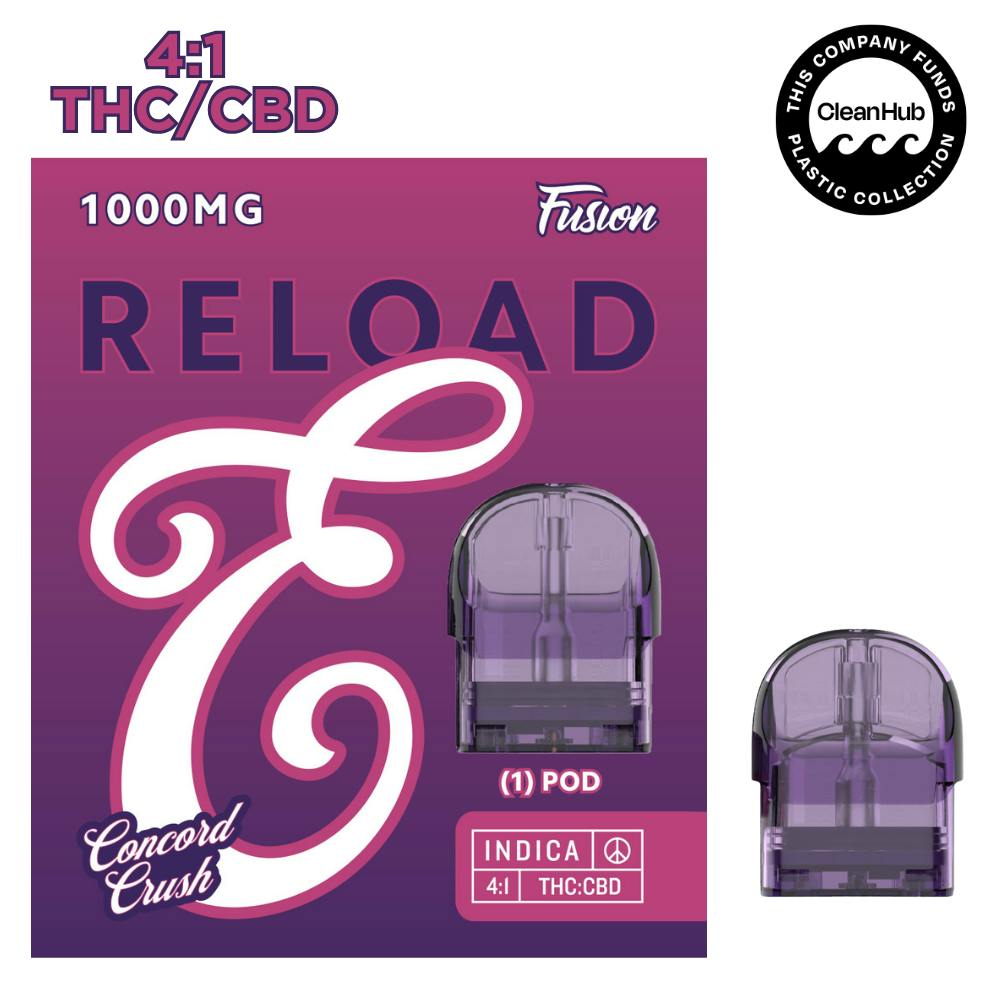
THC 59.3%·CBD 25.97%Hybrid
EUREKARELOAD - 1g FUSION - Concord Crush (4:1 THC/CBD) · 1g
$45.00
$51after tax

weeddispensarynearme.com
You must be 21 years or older to enter. By entering, you confirm you’re of legal age in your state to purchase cannabis.
For use only by adults 21+ • Keep out of reach of children
3 live products in stock
Quick answer · What is the Concord Crush cannabis strain?
Concord Crush arrives like a late-summer harvest — deep violet hues, a perfume of ripe grape and warm earth, and an effect profile that settles the mind without abandoning it entirely. This balanced hybrid carries the unmistakable character of its Concord-grape lineage through every stage of the experience, from the first aromatic exhale to a gently grounding finish that invites reflection as readily as it invites rest.
$51after tax
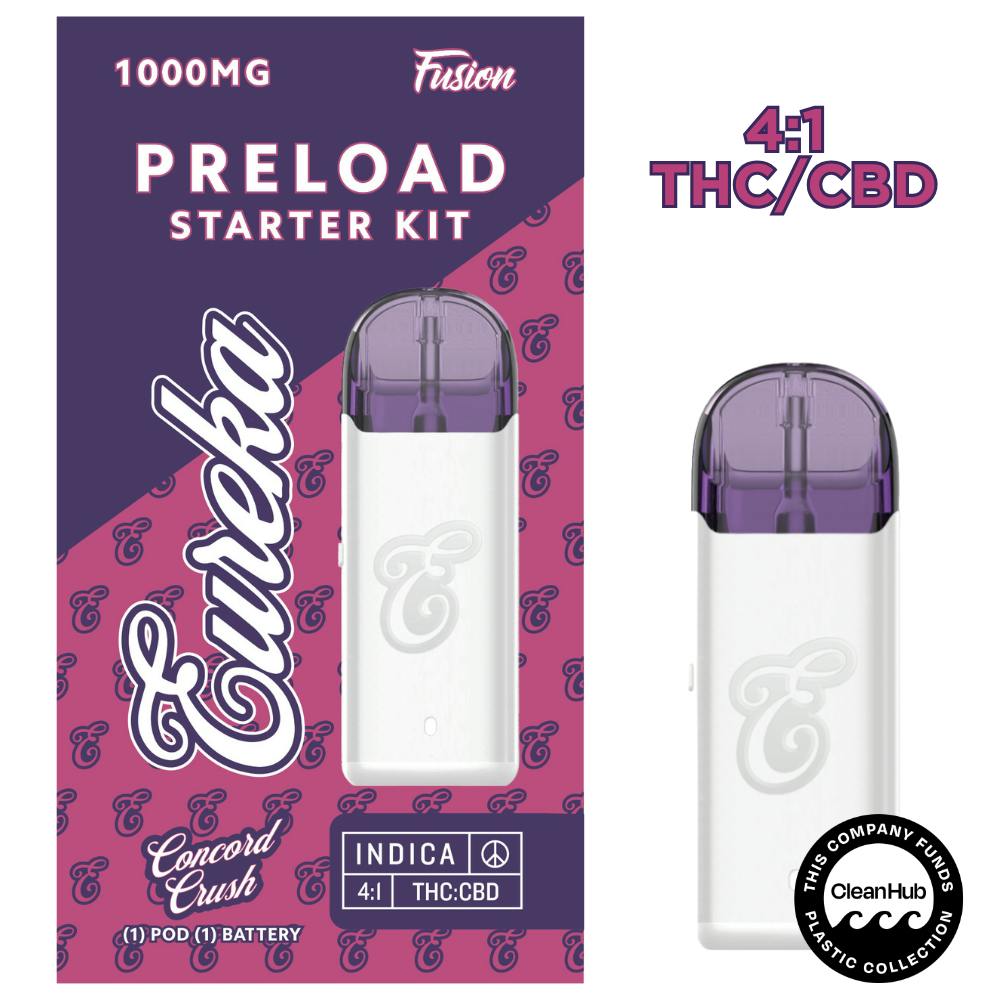
$62after tax
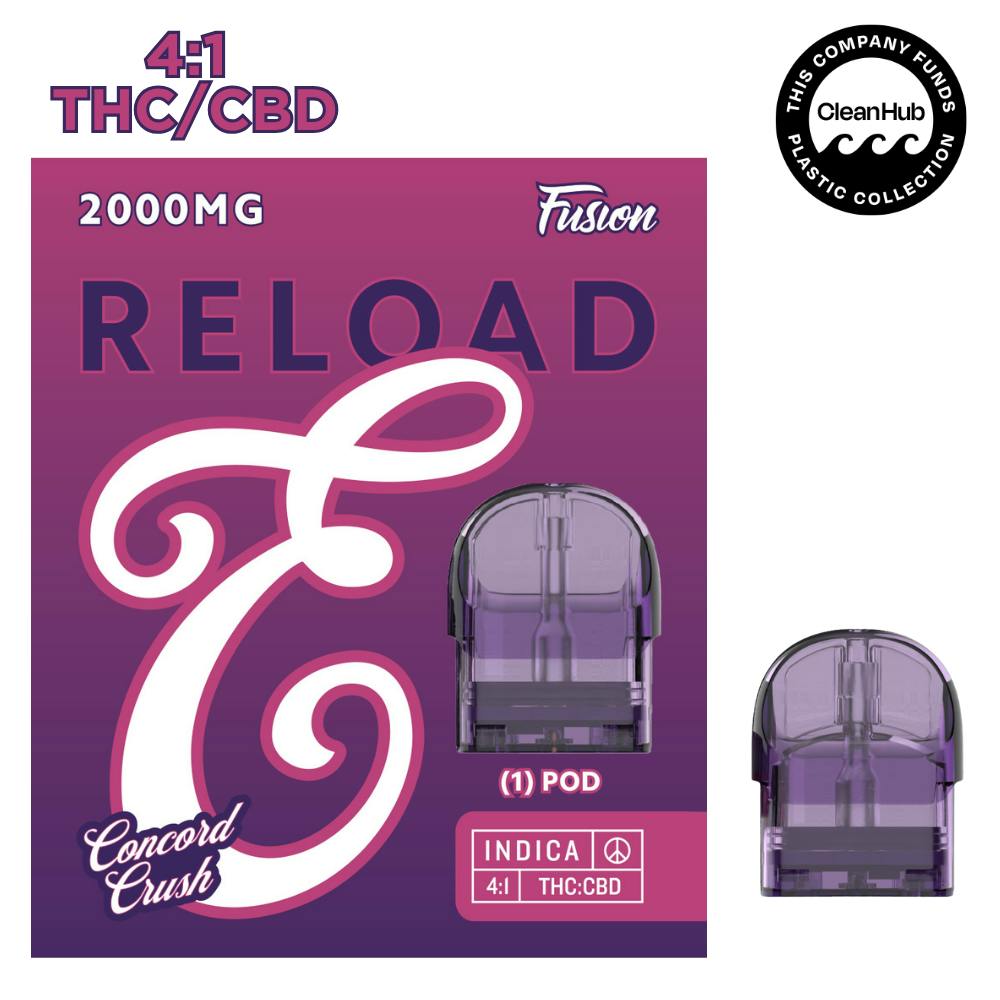
About Concord Crush
Concord Crush is understood to descend from Grape Ape, a heavy indica-leaning strain itself bred from Mendocino Purps, Skunk No. 1, and Afghani genetics, crossed with a complementary hybrid that reinforces both fruity terpene expression and a more balanced effect profile. The precise second parent and the originating breeder have not been publicly confirmed with consistency across cannabis databases, making the full pedigree somewhat debated in enthusiast communities. What is well-documented is the strong Grape Ape foundation, which accounts for the strain's signature anthocyanin-driven pigmentation and its pronounced grape-forward nose. Grape Ape itself was popularized by Apothecary Genetics and Barney's Farm in the mid-2000s, a period when West Coast breeders were actively exploring the intersection of Afghani resin production and North American landrace fruitiness. Concord Crush emerged from that same cultural and horticultural moment, carrying forward the legacy of purple-hued, terpene-rich cultivars that defined that era. Genetic siblings in spirit — if not always in documented lineage — include Grape Stomper, Grape Gasoline, and Purple Punch, each of which shares the emphasis on anthocyanin expression and a similar terpene architecture. Among connoisseurs who prize distinctly fruit-forward hybrids with visual drama, Concord Crush occupies a recognizable and respected position.
The onset of Concord Crush tends to arrive with measured deliberateness — most consumers note the first perceptible shift within five to ten minutes of inhalation, beginning as a gentle clarifying lift behind the eyes and temples. This initial cerebral quality is not sharp or racy; rather, it carries the easy warmth of a hybrid that has inherited balanced genetics, easing the mind into a more open, unhurried state without producing pronounced anxiety or disorientation in most users. As the experience deepens toward its peak, the body begins to register the Grape Ape influence more fully. A soft physical weight settles across the shoulders and limbs — comfortable rather than sedating at moderate consumption — while the mental tone remains present and conversational. This combination of relaxed body and approachable mind is characteristic of well-executed balanced hybrids and is one reason Concord Crush has found favor among those who find purely indica-dominant cultivars too heavy for social or creative settings. The comedown is generally smooth, with the cerebral element receding first and the body relaxation lingering pleasantly. Duration at moderate consumption typically spans two to three hours. The terpene profile, particularly the presence of myrcene and caryophyllene, is consistent with this arc — myrcene is associated with muscle ease and sedation at threshold levels, while caryophyllene contributes a grounding, anti-anxious quality through its interaction with CB2 receptors. Those new to cannabis are advised to start with a conservative amount and allow ample time before reassessing.
The aromatic profile of Concord Crush is dominated by myrcene, which underpins the entire olfactory experience with a ripe, musky grape sweetness that genuinely evokes the Concord grape variety — a deeper, more jammy fruit character than the lighter sweetness associated with table grapes. This is not an artificial or candy-like impression; it reads as orchard-ripe and organic, with a hint of fermentation warmth at the back of the nose. Caryophyllene provides a secondary layer of mild spice and dry earthiness that keeps the profile from reading as purely fruity. Its pepper-like contribution adds complexity and prevents sweetness from becoming cloying. Linalool, where present in tested samples, contributes a subtle floral lift — faint lavender undertones that surface most clearly in freshly broken flower. Pinene, another secondary terpene noted in some phenotypic expressions, introduces a whisper of green herbaceousness that grounds the profile in something botanical and real rather than confected. On the palate, the smoke or vapor character tends to be smooth and rounded. The inhale carries the grape and berry sweetness forward, while the exhale reveals the earthier, spiced notes contributed by caryophyllene and any residual humulene in the profile. Humulene, when present, adds a dry, woody hop-like quality that adds length and savoriness to the finish. The overall flavor impression is one of layered, well-integrated fruit and earth — a profile that rewards slow, attentive consumption rather than hurried sessions.
Concord Crush presents with the kind of visual depth that makes it immediately identifiable on a well-curated dispensary shelf. The buds are typically medium to large in size, with a moderately dense structure that reflects its indica-leaning heritage without becoming so compact as to impede airflow during curing. The color palette is genuinely dramatic: deep forest greens recede behind washes of indigo, violet, and occasionally near-black purple — all the result of anthocyanin pigments activated during the cooler temperatures of the flowering and curing phases. Trichome coverage is generous and evenly distributed, lending the surface a frosted, almost dusty visual quality that signals substantial resin production. Pistils — the fine hair-like structures — run from amber to a deeper rust-orange against the dark background of the calyx, a contrast that gives the flower a jewel-like quality under direct light. The calyxes themselves are well-formed and plump, and the overall presentation suggests attentive cultivation and proper drying and curing technique.
Concord Crush is considered a moderately challenging cultivar for home growers, primarily because achieving its signature purple coloration requires intentional temperature management during the final weeks of flowering — cooler nighttime temperatures in the range typically associated with autumn harvests are necessary to fully activate the anthocyanin expression that defines the strain aesthetically. Indoors, Concord Crush is reported to flower in approximately eight to nine weeks, with yields that are moderate and consistent under well-maintained conditions. It responds well to low-stress training techniques that open the canopy and improve light penetration to lower bud sites. Outdoors, it thrives in climates with warm days and cool nights in late summer and early autumn — conditions that both accelerate terpene development and deepen the purple pigmentation. It is not particularly drought-tolerant and benefits from attentive moisture management to avoid mold pressure on its denser colas. For the cultivator-curious dispensary visitor, this strain represents a genuinely rewarding grow for those willing to invest in environmental precision.
Concord Crush is particularly well-suited to the transitional hours of the day — late afternoon into early evening — when the pace of activity begins to ease but the desire for engagement has not yet given way entirely to the pull of rest. Its balanced effect profile makes it a considered choice for unhurried conversation among a small group, where the cerebral ease it provides keeps interaction fluid while the body relaxation prevents the restlessness that can accompany more sativa-forward cultivars. For solo enjoyment, this strain pairs naturally with music that shares its character: richly layered, unhurried, and textured. Something in the vein of late-period jazz or modern ambient composition tends to complement the contemplative mood it can encourage. On the table, the grape and earth terpene architecture makes it a thoughtful companion to a simple charcuterie arrangement — aged cheeses, fig preserves, and cured meats all find a natural counterpart in the jammy fruit and pepper notes of the strain's profile. It is also a fine accompaniment to an evening walk in a park as the season turns, when the air carries that same quality of ripe, cooling earthiness that Concord Crush so reliably evokes.
Grape Ape
As the foundational parent strain, Grape Ape shares the same deep grape terpene character and anthocyanin-driven purple aesthetics, making it the most direct comparison for any Concord Crush admirer.
Purple Punch
Purple Punch mirrors Concord Crush's fruit-forward nose and smooth, body-relaxing effect arc, with a similarly approachable hybrid balance that appeals to the same consumer sensibility.
Grape Stomper
Grape Stomper offers a comparable sweetness and visual drama while leaning slightly more sativa in its effect, making it a natural next step for those curious to explore the fruit-hybrid category.
Granddaddy Purple
GDP shares the indica-rooted grape and berry profile alongside a similarly calming body effect, offering familiar sensory territory for those drawn to Concord Crush's deeper, more grounding qualities.
Obama Runtz
For consumers who appreciate Concord Crush's purple visual character and sweet, complex aroma but want a slightly more contemporary genetic expression, Obama Runtz delivers comparable aesthetics with added candy-like depth.
Concord Crush is classified as a balanced hybrid. It draws its body-relaxing and visually dramatic qualities from indica-leaning ancestry — primarily Grape Ape — while a complementary hybrid parent introduces enough cerebral ease to keep the experience from feeling fully sedating. Most consumers describe it as leaning slightly indica in its physical character while remaining mentally approachable, making it versatile across a range of settings and times of day.
The flavor profile centers on ripe, jammy grape — an impression genuinely reminiscent of the Concord grape variety rather than an artificial candy analog. On the exhale, earthy spice from caryophyllene and a dry, woody undertone from humulene add complexity and length. Faint floral and herbal notes from linalool and pinene round out the finish. The overall palate experience is layered and savory-sweet rather than one-dimensional.
Concord Crush typically opens with a gentle cerebral lift — a clarifying, unhurried sense of ease rather than an energetic rush — followed by a comfortable physical relaxation that deepens gradually through the peak. The balance between these qualities makes it suitable for both social and solo contexts. The comedown is smooth, and the overall duration at moderate consumption tends to fall within a two-to-three-hour window. New consumers are encouraged to start conservatively.
Consumers drawn to Concord Crush's grape-forward character and balanced hybrid profile will find familiar ground in Grape Ape, its primary parent strain, as well as Purple Punch and Granddaddy Purple, which share the fruit-rich, anthocyanin-expressive lineage. Grape Stomper offers a comparable aromatic profile with a slightly more uplifting effect character. Obama Runtz appeals to those who appreciate the visual drama and sweet complexity but prefer a more contemporary genetic expression.
Concord Crush is reasonably approachable for adults new to cannabis, provided they follow a start-low, go-slow approach. Its balanced hybrid profile means it is less likely to produce the pronounced sedation of a heavy indica or the potential over-stimulation of a potent sativa. That said, its terpene-rich profile and well-developed resin production mean it can be more potent than its smooth character initially suggests. A conservative first session is always advisable for those building familiarity.
Myrcene leads the terpene profile, contributing the foundational grape-musk sweetness and the strain's characteristic body-ease quality. Caryophyllene follows as a prominent secondary terpene, adding spice, dry earthiness, and a grounding effect through its interaction with CB2 receptors. Linalool and pinene appear in secondary positions across various phenotypes, introducing subtle floral and herbal dimensions respectively. Humulene contributes a dry, hop-like savoriness that adds depth to the finish.
The deep violet and indigo hues that define Concord Crush's appearance result from anthocyanin pigments — water-soluble compounds present in the plant's genetics that become visually active when temperatures drop during the later weeks of the flowering cycle. This is an inherited trait from Grape Ape ancestry. The coloration is a natural biological response rather than a sign of stress or damage, and well-grown examples display this quality most vividly when cultivated with deliberate cool-night temperature management.
Concord Crush is best suited to late afternoon and early evening consumption, when the day's obligations have largely receded but a full transition into rest is not yet desired. Its balanced effect profile — cerebral ease paired with body relaxation — makes it a thoughtful choice for the hours between active engagement and winding down. It is less commonly chosen for morning use, where its grounding physical qualities may feel at odds with the demands of a productive day.
Related strains
Pick your store
We'll show pricing, deals, and delivery zones for the store you pick. You can switch any time from the header.