Hybrid
All strains Code Red
1 live products in stock
Quick answer · What is the Code Red cannabis strain?
Code Red arrives with the quiet confidence of a strain that has earned its following through consistent character rather than trend-chasing. A well-balanced hybrid with roots in classic American genetics, it offers a layered experience that moves through the senses with measured ease — equal parts warmth and clarity. For the discerning New York cannabis enthusiast seeking something familiar yet nuanced, Code Red rewards patience and attentiveness in equal measure.
Shop Code Red · 1 of 1 live products
About Code Red
Everything to know about Code Red.
Lineage & origin
Code Red is generally attributed to the cross of The White and Red Poison, though some sources cite slight variations in the genetic story depending on the phenotype or seed run in question. The White, sometimes called Triangle, is a Florida-origin strain that gained wide respect in the early 2000s for its exceptionally heavy trichome production and relatively neutral flavor profile — traits that made it an ideal genetic canvas for breeders seeking to amplify the characteristics of a second parent. Red Poison, a colorful indica-leaning variety developed by Sweet Seeds, a Spanish seed bank, contributes the distinctive red and purple pigmentation that defines Code Red's visual signature, along with a fruity, berry-forward aromatic foundation. Sweet Seeds released Red Poison around 2012 as an autoflowering variety notable for its dramatic autumn-like coloration under cooler temperatures. When crossed with The White's trichome-dense structure, the resulting Code Red hybrid inherited the visual drama of its indica parent alongside the more open, functional character that The White's lineage tends to produce. The combination created a strain that sits comfortably in the balanced hybrid category — neither dominantly sedating nor aggressively stimulating. Genetic siblings and related phenotypes are relatively uncommon in the broader market, as this particular pairing has not generated the same volume of derivative crosses seen with more widely distributed parent strains. Code Red remains a moderately regional selection, prized by those who seek it out specifically for its distinctive appearance and even-handed effects.
Effects
Code Red typically announces itself with a gentle but clear cerebral lift that arrives within the first ten to fifteen minutes after inhalation. The onset carries a mild brightening of mood and a subtle increase in sensory awareness — colors may appear slightly more saturated, conversation flows more easily, and the mind tends to settle into a relaxed but engaged state. This initial phase is not jolting or anxious in character; rather, it unspools at a pace that allows the consumer to orient themselves comfortably. As the experience deepens into its peak phase, usually between thirty and sixty minutes in, a body warmth begins to complement the cerebral dimension without overtaking it. This is where Code Red's hybrid balance is most evident: the physical ease is present enough to release tension in the shoulders and limbs, yet it does not anchor the consumer to the couch. The dominant terpene profile — likely myrcene and caryophyllene working in concert — contributes to this dual quality, with myrcene lending physical ease and caryophyllene adding a grounding, subtly spiced undertone that keeps the experience from feeling unmoored. The comedown is gradual and unhurried, settling into a quiet, content relaxation that is well-suited to evening hours. Duration tends to run in the range of two to three hours for most consumers, though individual response varies considerably. Those newer to cannabis are encouraged to begin with a conservative amount, allowing the arc to develop before reassessing.
Aroma, flavor & terpenes
The aromatic profile of Code Red draws most directly from its Red Poison lineage, with a ripe berry sweetness — somewhere between fresh blackcurrant and dark cherry — forming the dominant first impression on the nose. This fruitiness is not candied or artificial in character; it carries the slight tartness of real fruit at peak ripeness, giving it an appealing naturalistic quality. The terpene most responsible for this impression is likely myrcene, which in higher concentrations produces that earthy, musky-sweet depth associated with ripe tropical and dark fruits. Beneath the primary berry note, secondary aromas of fresh earth and a mild spice emerge as the flower is broken apart or ground. Caryophyllene, a sesquiterpene found in black pepper and cloves, contributes this peppery warmth and is one of the few terpenes known to interact directly with the endocannabinoid system's CB2 receptors. A subtle floral thread — possibly linalool — adds softness and roundness without asserting itself prominently. Pinene may be present in minor quantities, contributing a faint background freshness that prevents the profile from feeling overly heavy. On the palate, Code Red translates its aromatic promise faithfully. Vapor tends to carry the berry-spice character cleanly through the mid-palate, finishing with a mild earthiness on the exhale. Combustion introduces a slightly richer, woodier note on the back of the throat, though the overall smoke character remains smooth for a cultivar of this density. The flavor lingers pleasantly, making it a natural candidate for slow, attentive sessions.
Appearance
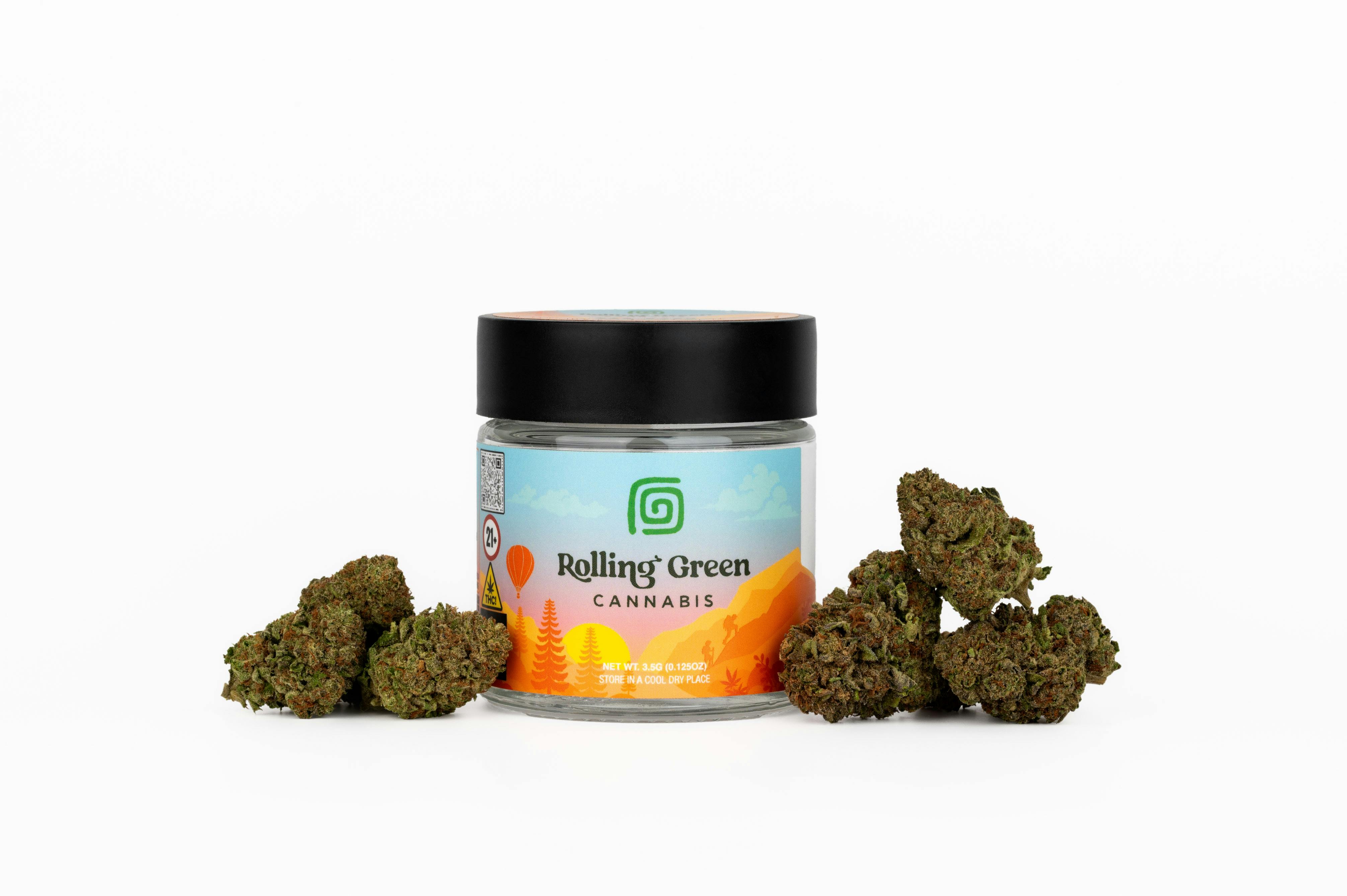
Code Red is among the more visually distinctive hybrids available in the New York market, owing directly to its Red Poison parentage. Under cooler curing or finishing temperatures, the calyxes develop deep purple and burgundy tones that contrast vividly against the orange and amber pistils coiled throughout the bud structure. This coloration is not superficial — it runs through the interior of the flower as well, a result of anthocyanin expression triggered by cooler conditions during the final weeks of flowering. The bud structure itself reflects The White's genetic contribution: dense, tightly packed calyxes that hold their form well and feel substantial in hand. Trichome coverage is notably generous, lending the surface a frosted, almost crystalline quality that speaks to the resin production The White is historically known for. The overall impression is of a well-constructed, jewel-like flower — deep-toned, heavily coated, and compact in a way that suggests careful cultivation and attentive post-harvest handling.
Growing notes
Code Red presents moderate cultivation demands, making it an approachable project for cultivators with some prior experience, though perhaps not the most forgiving choice for a first-time home grow. Indoors, it tends to flower in approximately eight to nine weeks, producing yields that are respectable without being exceptional — The White's genetics are known more for quality and resin content than raw bulk output. Climate control is worthwhile, as cooler temperatures during the final two weeks of flowering encourage the anthocyanin expression that gives Code Red its signature purple and burgundy coloration. Outdoor cultivation is viable in temperate climates that experience genuine autumn coolness, which naturally triggers the same color development. The plant remains manageable in height, leaning toward the compact, bushy structure typical of indica-influenced genetics. Humidity management during the late flowering period is important given the density of the buds, which can be susceptible to moisture retention. Overall, a cultivator familiar with dense, resinous hybrids and comfortable with basic environmental dialing will find Code Red a rewarding strain to bring to full expression.
When it's best enjoyed
Code Red occupies the comfortable space between daytime functionality and evening ease, making it particularly well-suited to the transitional hours of late afternoon — the period between the obligations of the day and the full release of the evening. Its balanced character lends itself to solo creative pursuits where a degree of physical calm is welcome but mental disengagement is not: sketching, writing longhand, or working through a complex playlist with genuine attention are natural companions. For social settings, Code Red suits small, unhurried gatherings better than high-energy environments. A dinner among close friends, particularly one centered on richly flavored food, aligns well with the strain's berry-and-spice terpene profile. On the table, dishes with dark fruit components — a duck breast with cherry reduction, an aged cheese board with preserves — echo the strain's aromatic language in a way that feels considered rather than coincidental. Musically, the experience pairs naturally with something measured and textured: late-period Coltrane, the quieter corners of Bon Iver's catalog, or a well-curated ambient session. Code Red rewards the kind of evening that has no particular agenda.
If you like Code Red, also explore
The White
Fans of Code Red who appreciate its heavy trichome density and balanced hybrid character will find The White — one of Code Red's parent strains — offers a similarly resinous experience with a cleaner, more neutral flavor profile.
Purple Punch
Purple Punch shares the dark-fruit aromatic signature and relaxed, body-inclusive hybrid arc that defines Code Red's appeal, making it a natural next exploration for those drawn to berry-forward cultivars.
Zkittlez
Like Code Red, Zkittlez offers a richly fruity nose and a calm, even-tempered experience that sits comfortably between cerebral and physical — well-suited to consumers who value terpene complexity alongside moderate potency.
Granddaddy Purple
Those who are drawn to Code Red's anthocyanin-driven purple coloration and its indica-influenced body warmth will recognize a familiar aesthetic and experiential register in Granddaddy Purple.
Black Cherry Punch
Black Cherry Punch echoes Code Red's dark berry terpene profile and dense bud structure, offering a closely related sensory experience for consumers who seek that specific combination of visual drama and fruit-forward flavor.
Common questions
Is Code Red indica or sativa?+
Code Red is classified as a balanced hybrid. Its parentage — The White and Red Poison — brings together a trichome-dense, broadly balanced American strain with an indica-leaning Spanish cultivar. The resulting experience leans neither strongly sedating nor strongly stimulating, offering elements of both a relaxed body state and a clear, engaged mental quality. Most consumers describe it as an even-handed hybrid well-suited to late afternoon or early evening use.
What does Code Red taste like?+
Code Red presents a flavor profile centered on dark berry — think ripe blackcurrant and fresh cherry — with a secondary layer of mild earthiness and spice. On the exhale, a warm, slightly peppery note emerges, likely from caryophyllene. The overall palate impression is smooth and naturally fruity without leaning into artificial sweetness. Vapor tends to carry the fruit character more cleanly, while combustion introduces a richer, woodier finish on the back of the throat.
What are the typical effects of Code Red?+
Code Red typically produces a gentle cerebral lift at onset, followed by a gradual body warmth that complements rather than overwhelms the mental clarity. Consumers often report a brightened mood, mild sensory enhancement, and a pleasant physical ease that does not typically result in heavy sedation. The experience is generally described as balanced and sociable during the peak, settling into a quiet, contented relaxation as it concludes. Duration for most consumers falls in the two-to-three-hour range.
What strains are similar to Code Red?+
Consumers who enjoy Code Red often find common ground with The White, Purple Punch, Zkittlez, Granddaddy Purple, and Black Cherry Punch. Each shares one or more defining characteristics — whether the dense, resinous structure inherited from The White, the dark-fruit aromatic profile contributed by Red Poison, or the balanced hybrid arc that makes Code Red approachable across a range of settings and experience levels.
Is Code Red good for beginners?+
Code Red can be a reasonable choice for newer consumers given its balanced hybrid character and the absence of an aggressively cerebral or heavily sedating onset. That said, individual sensitivity to cannabis varies considerably, and no strain is universally low-risk for first-time consumers. The standard guidance applies: begin with a conservative amount, allow sufficient time for the full arc of effects to develop — at least thirty minutes — before considering additional consumption.
What are the dominant terpenes in Code Red?+
The dominant terpenes in Code Red are generally understood to include myrcene, caryophyllene, and likely linalool, with possible contributions from pinene. Myrcene drives the dark, musky-sweet berry aroma and contributes to the physical ease associated with the experience. Caryophyllene adds warmth and spice while interacting with the body's CB2 receptors. Linalool lends a gentle floral softness. Exact terpene expression can vary between harvests and growing conditions.
Where does Code Red come from?+
Code Red is generally attributed to a cross between The White — a well-regarded Florida-origin hybrid known for exceptional resin production — and Red Poison, an autoflowering indica-leaning variety developed by the Spanish seed bank Sweet Seeds, which released Red Poison around 2012. The pairing brought together The White's trichome density and neutral base with Red Poison's vivid coloration and berry-forward aromatic profile to produce the distinctive hybrid known as Code Red.
Why does Code Red sometimes appear purple?+
The purple and burgundy coloration in Code Red is the result of anthocyanin expression, a natural pigment response inherited from its Red Poison parent. Anthocyanins develop when temperatures drop during the final weeks of flowering, causing pigments already present in the plant's genetics to become visible. This is a fully natural process and does not alter the potency or flavor of the flower. Well-grown, properly finished Code Red can display some of the most vivid color development of any hybrid currently available.
Related strains