THC 53.81%·CBD 0.96%Hybrid
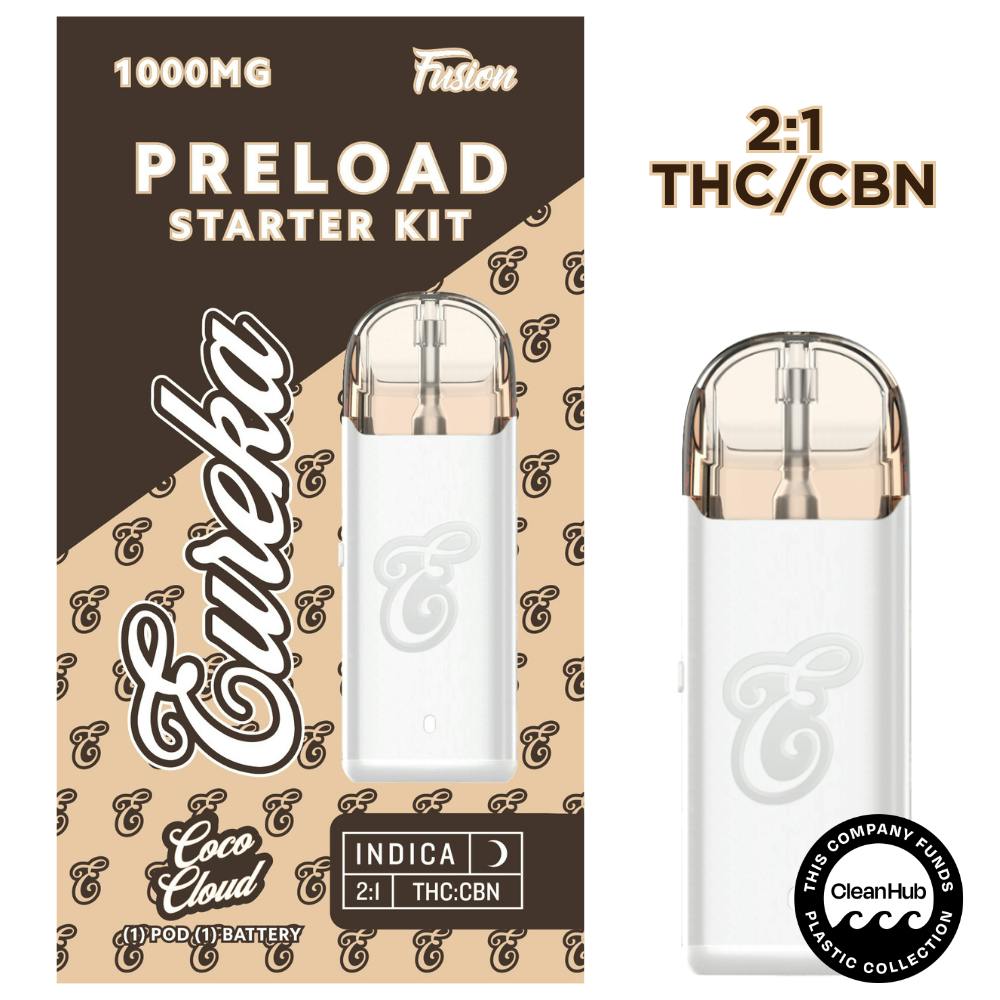
EUREKAPRELOAD - 1g FUSION - Coco Cloud (2:1 THC/CBN) · 1g
$55.00
$62after tax

weeddispensarynearme.com
You must be 21 years or older to enter. By entering, you confirm you’re of legal age in your state to purchase cannabis.
For use only by adults 21+ • Keep out of reach of children
1 live products in stock
Quick answer · What is the Coco Cloud cannabis strain?
Coco Cloud arrives like a well-composed dessert — soft, tropical, and unexpectedly layered. This hybrid leans toward the gentler side of the spectrum, wrapping the consumer in a gauzy warmth that never quite tips into sedation. Its coconut-forward aroma and creamy smoke make it a natural choice for the discerning New Yorker who wants depth without intensity, pleasure without complication.
$62after tax
About Coco Cloud
Coco Cloud's precise genetic lineage is not extensively documented in major public cannabis databases, which is common for newer boutique or craft-tier hybrids that emerge from smaller regional breeding programs. The name and terpene profile strongly suggest parentage drawing from tropical and cream-leaning cultivars — a lineage pattern consistent with crosses involving strains like Tropicana Cookies, Coconut Kush, or similarly dessert-inflected genetics, though the breeder has not publicly confirmed specific parents as of this writing. What can be reasonably inferred from its aromatic and effect character is a genetic backbone rooted in balanced hybrid architecture — likely a crossing of an indica-dominant resin producer with a terpene-rich sativa-leaning cut, a construction that became increasingly popular among boutique American breeders throughout the late 2010s and into the 2020s. This generation of hybrids prioritized nose and palate experience over raw potency metrics, reflecting a broader shift in consumer preference toward nuanced terpene profiles. If Coco Cloud originates from a specific licensed New York or East Coast cultivator — as several dispensary-exclusive phenotypes do — that provenance would place it within a lineage of regionally crafted genetics designed to appeal to the post-legalization luxury consumer. Shoppers seeking clarity on the exact genetic tree are encouraged to ask their ZenZest floor staff, who maintain direct relationships with cultivating partners.
The experience of Coco Cloud typically opens within ten to fifteen minutes of inhalation, beginning as a mild cerebral brightening — a quiet clearing of mental static rather than a sharp sativa jolt. The onset is gentle enough that newer consumers often describe it as settling in like warmth spreading from a central point, which aligns with the myrcene-forward terpene profile that characterizes many tropical hybrid cultivars. This measured onset makes the experience approachable, though the standard adult-use principle of starting low and going slow remains relevant regardless of perceived gentleness. At its peak, Coco Cloud occupies a thoughtful middle ground: the mind remains engaged and mildly creative without veering into anxious over-stimulation, while the body gradually releases accumulated tension without collapsing into full sedation. This is the hallmark of a well-constructed balanced hybrid — present enough to feel distinct, composed enough to remain functional. The cerebral quality is soft rather than electric, conducive to quiet focus or relaxed socializing. The duration of the primary experience typically runs between ninety minutes and two and a half hours, tapering into a gentle, warm comedown rather than a sharp drop. Consumers rarely report a pronounced grogginess in the aftermath, which distinguishes it from heavier indica-forward cultivars. The cannabinoid balance — likely a moderate relationship between THC and trace supporting cannabinoids — contributes to this cleaner resolution.
The first impression from a freshly opened jar of Coco Cloud is unmistakably tropical and creamy, with the kind of dimensional sweetness that suggests ripe fruit left to warm in afternoon light. Myrcene, which typically registers as the dominant terpene in cultivars of this character, contributes the foundational earthiness beneath the sweetness — a subtle musk that prevents the profile from reading as purely confectionery. It grounds the nose in something botanical and real. Moving deeper into the aroma, notes of limonene introduce a bright citrus undertone — not the sharp pith of a naval orange but something closer to yuzu rind or dried lime zest — lifting the profile into something genuinely complex. Caryophyllene, a sesquiterpene found in black pepper and clove, adds a faint spiced warmth that lingers at the back of the nose and prevents any cloying sweetness from dominating. Some phenotypes may also exhibit traces of ocimene, a lighter floral-herbal terpene that reinforces the tropical impression with a subtle sweetness reminiscent of basil or fresh mango skin. On the palate — whether consumed as flower or vapor — the smoke is notably smooth. The dominant flavor mirrors the aroma: coconut cream, soft citrus, and a whisper of warm spice on the exhale. Vapor at lower temperatures tends to preserve the tropical fruit notes most faithfully, while combustion introduces a pleasantly nutty, almost toasted quality that complements the coconut character. The finish is clean and gently sweet, without the harsh residual bitterness of more resin-dense cultivars.
Coco Cloud presents as a visually polished cultivar, typically producing medium-to-large buds with a moderately dense structure — substantial enough to feel well-formed in hand, but not so tightly packed as to restrict airflow during a slow break. The calyx architecture tends toward the rounded and slightly elongated, a common trait among hybrid genetics that balance indica density with sativa airiness. The color palette is one of this strain's more striking features: a base of deep sage and forest green, accented in well-cured examples by occasional muted purple undertones in the inner leaves — a pigment expression influenced by temperature during the final weeks of cultivation rather than a genetic certainty. Pistils run a warm amber-to-rust spectrum, weaving visibly through the structure. Trichome coverage is generous without being extraordinary, giving the surface a frosted, slightly luminous quality under direct light that reinforces the premium visual impression. Overall, it is a strain that photographs and presents well at the counter — refined and inviting rather than aggressively crystalline.
While Coco Cloud's specific cultivation data has not been broadly published by a named breeder, its phenotypic traits suggest a hybrid that performs well in controlled indoor environments where temperature and humidity can be managed through the flowering window. Cultivars of this aromatic type — terpene-rich, moderately resinous — tend to benefit from the stable conditions that indoor growing provides, particularly in preserving the volatile terpene compounds responsible for the coconut and citrus character. Flowering time for comparable tropical hybrid cultivars typically falls in the eight-to-nine-week range under a standard twelve-hour light cycle, though this remains an estimate in the absence of breeder-confirmed data. Yields are generally moderate, reflecting the cultivar's apparent prioritization of terpene quality over raw flower mass. Outdoor cultivation in a warm, Mediterranean-style climate is plausible given the tropical genetic influences, though northeastern American outdoor conditions may challenge terpene expression in cooler autumn cycles. For the cultivator-curious consumer, this is a strain that rewards patience and environmental precision — intermediate growers with climate control will likely find it more rewarding than absolute beginners.
Coco Cloud earns its place in the quiet hours of an afternoon or an unhurried evening — the kind of session that accompanies reflection rather than demanding it. Its balanced, gently warming character makes it well-suited to solo creative work: the sort of low-stakes project that benefits from a loosened inner critic and a slightly softened sense of time. Writing longhand, working through a playlist curation, or sketching without agenda all sit naturally alongside this cultivar's effect arc. For a food pairing, the coconut and citrus terpene profile finds an intuitive complement in Southeast Asian-inspired cuisine — a bowl of Thai coconut curry, a mango sticky rice, or a simply composed yuzu-dressed salad would all mirror and extend the palate rather than compete with it. On the musical side, the strain's unhurried, warm character aligns with artists who work in the space between ambient and melodic: early Four Tet, Nils Frahm's more restrained recordings, or a well-assembled neo-soul playlist. It is not a strain that demands a particular setting so much as it rewards the consumer who has already chosen to be deliberate about the moment.
Tropicana Cookies
Fans of Tropicana Cookies will recognize the same bright citrus-tropical terpene architecture in Coco Cloud, with a similarly smooth and approachable hybrid experience.
Mimosa
Mimosa shares the uplifting, fruit-forward profile and balanced onset that characterizes Coco Cloud, making it a natural next exploration for those drawn to creamy, citrus-inflected cultivars.
Pineapple Express
The tropical fruit nose and functional, clear-headed hybrid effects of Pineapple Express mirror Coco Cloud's general sensibility, appealing to consumers who favor the sweeter end of the hybrid spectrum.
Gelato 41
Gelato 41's dessert-leaning terpene profile and smooth, moderately sedating body feel occupy similar aesthetic territory for consumers who enjoy Coco Cloud's creamy, refined character.
Wedding Cake
Wedding Cake appeals to the same palate — rich, sweet, and slightly earthy — while offering a somewhat heavier body effect for those looking to deepen the Coco Cloud experience.
Coco Cloud is classified as a hybrid, meaning it draws characteristics from both indica and sativa lineages. In practice, it leans toward the balanced center of that spectrum — mentally present and modestly uplifting without the restlessness associated with strong sativa cultivars, and physically relaxing without the pronounced sedation typical of heavy indica genetics. It is well-suited to consumers who prefer an even-handed experience.
Coco Cloud delivers a notably smooth smoking or vaporizing experience centered on tropical coconut sweetness, soft citrus undertones, and a faint warmth of spice on the exhale. The finish is clean and gently sweet. Lower-temperature vaporization tends to highlight the fruit and floral notes most clearly, while combustion brings out a pleasantly toasted, nutty quality that complements the strain's creamy aromatic character.
Consumers typically describe a measured onset of mild cerebral brightening followed by a gradual, full-body warmth that settles without becoming heavy. The peak experience supports quiet focus and relaxed sociability. The overall arc runs approximately ninety minutes to two-and-a-half hours, with a gentle, clean comedown. As with any adult-use cannabis product, first-time consumers are encouraged to start with a modest amount and allow adequate time before considering additional consumption.
Consumers who enjoy Coco Cloud often find similar satisfaction in Tropicana Cookies, Mimosa, and Pineapple Express for their shared tropical, fruit-forward terpene profiles and approachable hybrid effects. Those drawn to the creamy, dessert-like quality may also appreciate Gelato 41 or Wedding Cake, which occupy comparable aromatic territory while offering a moderately fuller body experience.
Coco Cloud's balanced hybrid character and smooth, measured onset make it one of the more approachable options for adults new to cannabis. Its effects are neither overwhelmingly cerebral nor deeply sedating. That said, individual responses to cannabis vary considerably, and the standard guidance applies: begin with a small amount, consume slowly, and allow sufficient time to assess the experience before consuming further. Adult-use products are intended for consumers 21 and older.
Based on its aromatic and flavor profile, Coco Cloud appears to be led by myrcene — which contributes the underlying earthy musk and body-relaxing quality — alongside limonene for citrus brightness and caryophyllene for the faint warm spice on the exhale. Some phenotypes may also express ocimene, a lighter floral-tropical terpene that reinforces the coconut and mango impressions. Precise lab-tested terpene data, where available, can be requested at the ZenZest counter.
Coco Cloud is particularly well-suited to afternoon and early evening consumption — the window when the day's obligations have eased but the full weight of night has not yet arrived. Its balanced, gently warming profile supports relaxed creativity, unhurried socializing, or quiet personal time without the stimulating edge that makes some cultivars less conducive to winding down. It is less commonly chosen as a morning or high-activity strain, though individual preferences vary.
To maintain Coco Cloud's characteristic tropical and creamy aroma, flower should be stored in an airtight glass container away from direct light, heat, and humidity fluctuations. Relative humidity in the range of 58 to 62 percent — maintained with a two-way humidity pack — helps preserve both terpene integrity and an ideal moisture level for combustion or vaporization. Proper storage meaningfully extends the window during which the full aromatic profile remains expressive.
Related strains
Pick your store
We'll show pricing, deals, and delivery zones for the store you pick. You can switch any time from the header.