THC 90.81%·CBD 0.17%Hybrid
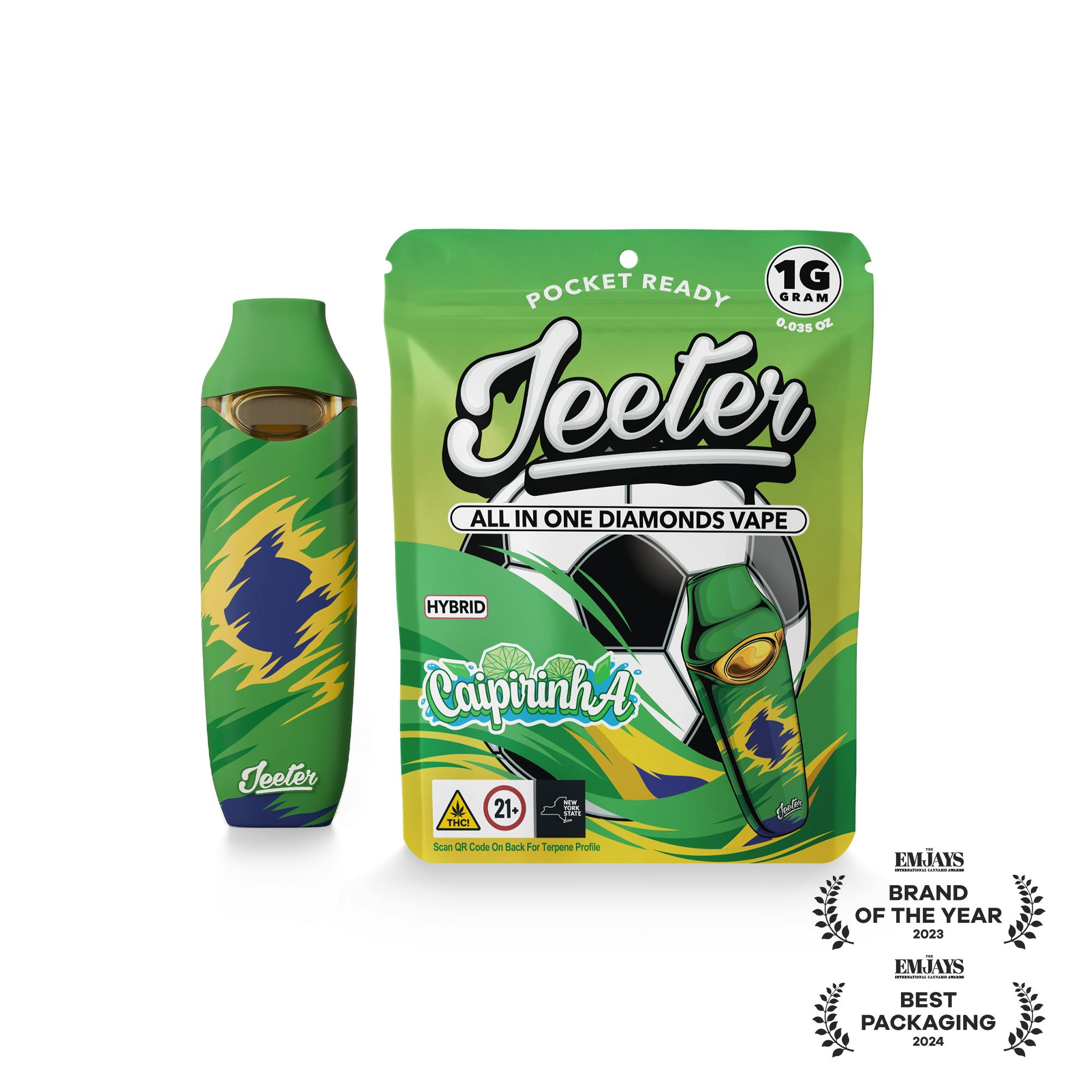
JeeterJeeter Caipirinha All In One Liquid Diamonds Vape · 1g
$47.79
$54after tax

weeddispensarynearme.com
You must be 21 years or older to enter. By entering, you confirm you’re of legal age in your state to purchase cannabis.
For use only by adults 21+ • Keep out of reach of children
1 live products in stock
Quick answer · What is the Caipirinha cannabis strain?
Caipirinha arrives with the unhurried confidence of its namesake Brazilian cocktail — a bright, citrus-forward hybrid that balances uplifting clarity with a gently grounding warmth. Its terpene profile reads like a warm evening in Rio: lime zest, crushed tropical fruit, and a faint herbal undercurrent that keeps the experience from tipping into pure sweetness. For those who prefer their cannabis session spirited yet composed, Caipirinha earns its place on any discerning shelf.
$54after tax
About Caipirinha
Caipirinha is a boutique hybrid whose precise lineage has not been comprehensively documented in widely available public databases such as Leafly or Wikileaf at the time of this writing. The breeder has not publicly confirmed the full parentage, which places it among a growing category of craft-market releases where provenance is known primarily within cultivator and dispensary circles rather than through formal seed-bank records. What is generally attributed to the strain is a cross involving Brazilian or South American landrace genetics — consistent with its namesake — possibly blended with a resin-heavy modern hybrid to improve structure, trichome density, and indoor adaptability. South American landrace sativas are historically associated with long, equatorial grow cycles, sour-citrus aromatics, and a cerebral, soaring quality that breeders frequently introduce into hybrid programs to add elevation and sensory brightness. If the lineage attribution to a landrace-dominant parentage is accurate, Caipirinha joins a lineage tradition that includes strains like Maui Wowie and Durban Poison in its philosophical DNA — sunshine-forward genetics refined for contemporary cultivation standards. Consumers and cultivators interested in verified parentage should consult directly with the producing breeder or point-of-sale documentation, as lineage for newer craft strains can shift between phenotype selections and market releases.
Caipirinha tends to announce itself with a relatively brisk onset — typically within five to ten minutes when smoked or vaped — beginning as a gentle brightening behind the eyes and a quiet lift in mood that feels more like stepping into natural light than any sudden jolt. This initial cerebral quality, likely tied to the presence of limonene and terpinolene if the reported terpene profile holds, settles into a focused, sociable energy during the peak phase. The mind feels engaged without racing; conversation flows more easily, and creative threads tend to stay accessible rather than dissolving into distraction. For a hybrid, the body component is present but measured — a mild physical ease that prevents the experience from feeling wired or anxious, without pulling the session toward sedation. Duration for most consumers lands in the two-to-three-hour range, with the peak lasting roughly sixty to ninety minutes before a gradual, unhurried comedown that rarely feels abrupt. The finish is typically gentle — a quiet settling of energy rather than a hard stop — which makes Caipirinha well-suited to occasions where functional clarity is valued throughout. As with any cannabis product, individual response varies considerably, and those new to the strain are encouraged to start with a conservative amount and allow adequate time before reassessing.
The aromatic identity of Caipirinha is its most immediately persuasive quality. On the nose, the dominant impression is bright citrus — specifically lime peel and lemon zest, which points toward a meaningful concentration of limonene in the terpene profile. Limonene is well-documented for contributing sharp, clean citrus notes and is often associated with mood-elevating characteristics in cannabis aroma studies. Beneath the citrus layer, a tropical fruitiness — passionfruit, guava, a hint of overripe mango — suggests the possible presence of myrcene, a terpene that adds musky, fruit-forward warmth and provides a grounding counterpoint to limonene's brightness. Terpinolene, if present as a secondary contributor, would account for the faint floral and herbaceous nuance that emerges midway through the aroma — a quality common in several sativa-leaning hybrids with landrace heritage. On the palate, the smoke or vapor opens with that same lime-forward sweetness before transitioning to a rounder, earthier mid-note. The exhale carries a clean, slightly spiced finish — possibly a light caryophyllene contribution — that prevents the flavor from reading as cloying. Overall, the tasting experience is cohesive and layered: the kind of profile that rewards slow, attentive consumption rather than rushed sessions.
Caipirinha's buds tend toward a moderately dense, well-formed structure — not the tight, golf-ball compression of an archetypal indica, but with enough substance to suggest a hybrid with solid resin-producing genetics on one side of its family tree. The color palette leans into bright, vivid greens, occasionally punctuated by lighter, almost lime-toned patches that visually echo the citrus notes in its aroma — a characteristic sometimes observed in strains with active carotenoid and flavonoid expression during the final weeks of flowering. Pistils are typically amber to burnt orange, weaving through the canopy of the flower in a manner that adds warmth to the overall visual impression. Trichome coverage is generous across the primary and secondary calyxes, presenting a frosted, almost translucent sheen under direct light that speaks to the hybrid's resin quality. When handled, the flower should feel slightly tacky — a reliable indicator of terpene richness — and the structure should hold without excessive crumbling.
Based on its reported lineage characteristics, Caipirinha presents as a moderate-difficulty cultivar — approachable for intermediate home growers but perhaps less forgiving than stabilized commercial hybrids for complete newcomers. If South American landrace genetics are genuinely part of its heritage, growers may encounter plants with a naturally taller, more stretchy growth pattern during the vegetative phase, which benefits from early low-stress training or topping to manage canopy height and encourage lateral branching. Indoor cultivation is likely the preferred environment for most cultivators outside of tropical or subtropical climates, with a flowering window that is estimated in the range of eight to ten weeks, though precise data has not been confirmed publicly. Outdoor cultivation in warm, Mediterranean-style climates with long, dry summers could allow the strain's sativa tendencies to express more fully. Yield expectations for craft hybrids of this type tend toward moderate indoors, with the outdoor potential climbing meaningfully in optimal conditions. The strain's reported terpene richness suggests that attention to the final weeks of flowering — including careful environmental controls around humidity and temperature — will reward the cultivator with a more expressive aromatic result at harvest.
Caipirinha is, at its core, a social and sensory hybrid — a strain that earns its place in moments defined by warmth, leisure, and present-tense enjoyment rather than intense introspection or deep sedation. The early-evening hour feels like its native environment: after the productive demands of the day have eased but before the night has fully settled into stillness. A gathering of close friends on a terrace, an unhurried dinner where conversation takes precedence over the clock, or a solo session with a playlist that rewards close listening — these are the contexts where Caipirinha's profile aligns most naturally with the occasion. Its citrus-forward terpene character pairs elegantly with food and drink that share that same brightness: ceviche, grilled fish with a squeeze of lime, fresh mango, or a well-made agua fresca. On the music side, Brazilian jazz — bossa nova in particular — feels almost self-evidently right, though the strain's energetic-yet-composed quality also translates well to upbeat electronic sets or acoustic guitar. Those seeking a strain for solo creative work — writing, sketching, or exploring a new playlist — will find that Caipirinha's cerebral lift provides enough elevation to be generative without becoming distracting.
Durban Poison
Fans of Caipirinha's bright, cerebral lift and landrace-adjacent citrus character will recognize a kindred spirit in Durban Poison's clean, energetic sativa profile.
Maui Wowie
The tropical fruit brightness and easygoing, sociable energy of Maui Wowie make it a natural companion for consumers drawn to Caipirinha's warm, equatorial aromatic register.
Tangie
Tangie's assertive citrus-forward terpene profile and uplifting hybrid effects share significant common ground with Caipirinha's lime-zest aromatics and mood-elevating onset.
Strawberry Cough
The fruity brightness, manageable body sensation, and social clarity of Strawberry Cough appeal to the same consumer who gravitates toward Caipirinha's spirited but grounded character.
Super Lemon Haze
Super Lemon Haze's limonene-dominant profile and energetic, creative focus make it a reliable alternative for those who appreciate Caipirinha's citrus intensity and functional uplift.
Caipirinha is classified as a hybrid, though its reported characteristics — bright cerebral onset, citrus-forward aromatics, and energetic mid-session quality — lean toward the sativa end of the hybrid spectrum. The physical ease it provides is present but secondary, making it a hybrid that functions more like an active, social experience than a deeply relaxing one. The balance may vary between phenotypes, so individual batches could express either side more prominently.
Caipirinha delivers a tasting profile centered on bright lime and lemon zest, with a tropical undercurrent of mango and passionfruit that adds depth without sweetness. The smoke or vapor transitions from citrus on the inhale to a rounder, slightly earthy mid-note, finishing with a clean, mildly spiced exhale. The overall palate experience is cohesive and refreshing — closer to a freshly squeezed citrus drink than a candy-sweet profile.
Caipirinha typically produces a brisk, uplifting onset that brightens mood and sharpens social focus without inducing anxiety or racing thoughts. The peak is characterized by cerebral engagement and a gentle physical ease that keeps the experience comfortable. Duration tends to run two to three hours, with a gradual, calm comedown. As with all cannabis, individual response varies — those new to this strain are encouraged to start conservatively and allow time before reassessing.
Consumers who enjoy Caipirinha's citrus-forward aromatics and uplifting hybrid effects will likely find common ground with Tangie, Super Lemon Haze, and Durban Poison for their shared brightness and cerebral character. Maui Wowie offers a similar tropical warmth and easygoing social energy, while Strawberry Cough provides a comparable fruity profile with a manageable, functional lift. Each shares at least one defining dimension of the Caipirinha experience.
Caipirinha's hybrid balance and moderate-to-elevated potency make it a reasonable option for adult-use consumers with some prior experience, though true beginners should approach with care. The cerebral onset can feel pronounced if too much is consumed too quickly. New York adult-use guidelines recommend starting low and going slow — a small amount, followed by adequate time to assess the experience before consuming more, is a sound approach for anyone unfamiliar with this strain.
Caipirinha's terpene profile, as broadly reported, is led by limonene — responsible for the sharp, clean citrus character — alongside myrcene, which contributes tropical fruit warmth and a grounding physical note. Terpinolene is believed to be a secondary contributor, adding a light floral and herbaceous lift common in sativa-leaning hybrids. Caryophyllene may also appear in the finish, providing a mild spice that rounds out the overall aromatic and flavor experience.
The precise parentage of Caipirinha has not been fully documented in major public cannabis databases, and the breeder has not formally published the crossing details. The strain is broadly attributed to genetics with South American or Brazilian landrace heritage, likely crossed with a resin-forward modern hybrid to improve indoor adaptability and structure. Consumers seeking verified lineage information are encouraged to consult directly with their point of purchase or the producing cultivator.
Caipirinha's energetic yet composed hybrid profile makes it most naturally suited to the late afternoon and early evening — a transitional window when the demands of the day have lifted but the night has not yet called for full rest. Its sociable, mood-brightening character also makes it a thoughtful choice for gatherings or creative leisure in the hours before dinner. It is generally less suited to late-night use for those who prefer cannabis that supports sleep.
Related strains
Pick your store
We'll show pricing, deals, and delivery zones for the store you pick. You can switch any time from the header.