
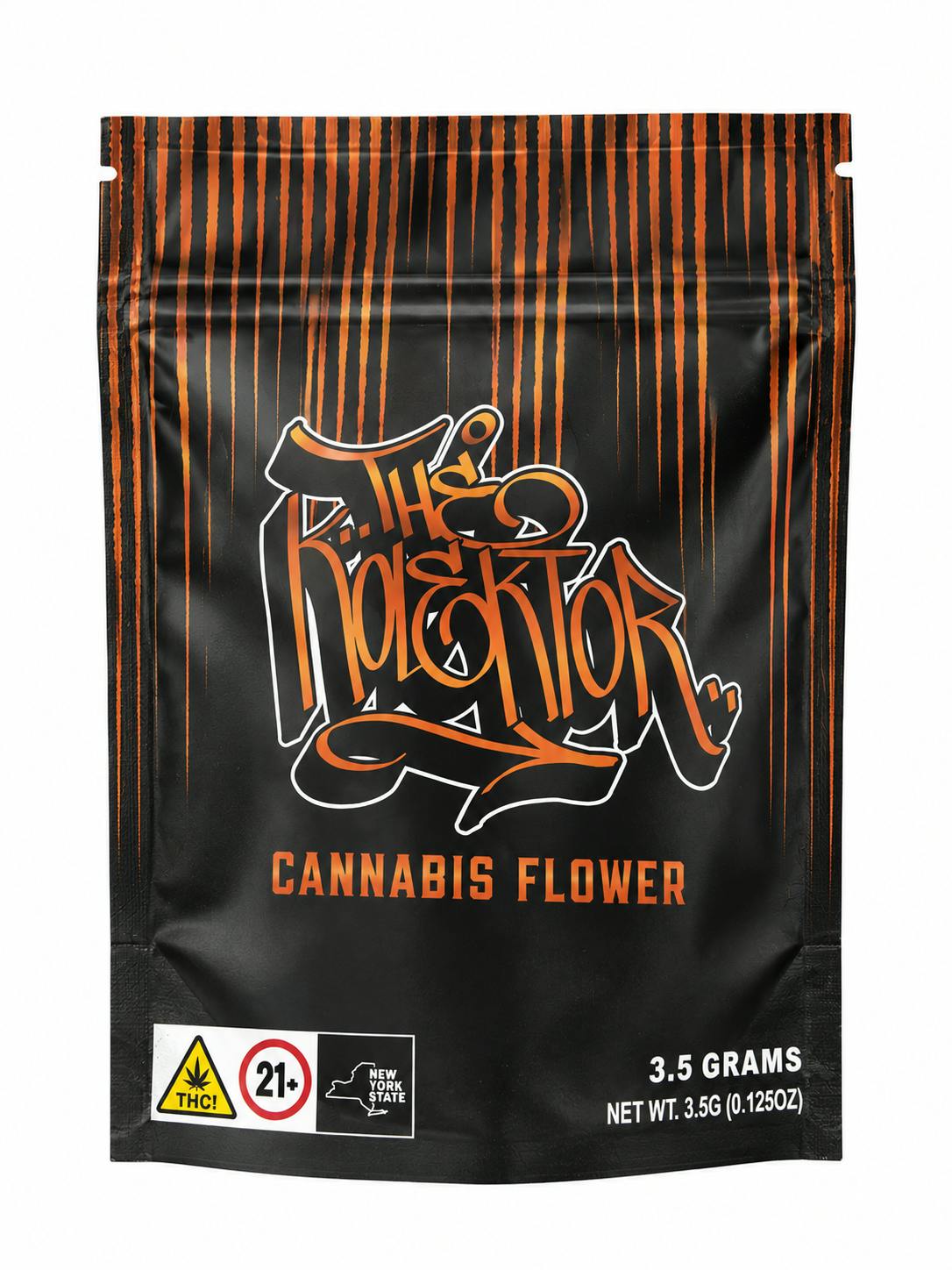
Indica-Hybrid
All strains Big Apple
1 live products in stock
Quick answer · What is the Big Apple cannabis strain?
Big Apple is a hybrid cultivar that wears its New York identity with quiet confidence — a dense, resinous flower whose layered aromatics lean toward ripe orchard fruit and subtle earthiness. The experience unfolds in measured phases, neither raucously sativa nor deeply sedating, occupying that considered middle ground suited to the discerning adult-use consumer who values balance as much as potency.
Shop Big Apple · 1 of 1 live products
About Big Apple
Everything to know about Big Apple.
Lineage & origin
Big Apple's precise lineage is not uniformly documented across public cannabis databases, and the breeder has not released a fully verified parentage statement, which is worth acknowledging plainly. The most widely cited account traces the strain to a cross involving Sour Apple — itself a hybrid of Cinderella 99 and Sour Diesel — and one or more New York-area cuts that emphasize a classic East Coast diesel-and-fruit profile. Some catalogue entries suggest a further Skunk or Cheese-adjacent influence in the background genetics, though this remains debated among enthusiasts and has not been confirmed officially. What is consistent across community reporting is that Big Apple belongs to a broader lineage tradition that prizes terpene-forward expression over sheer THC accumulation, a philosophy that traces back to the Sour Diesel and Chemdawg family trees that defined New York cannabis culture through the 1990s and 2000s. The strain's name is as much a nod to its geographic cultural home as to any single apple-scented parent. No formal release year has been pinned down in publicly available records, though the strain has circulated within New York dispensary networks and legacy markets since at least the early 2020s, gaining recognition particularly for its approachable hybrid balance and regional branding appeal. Genetic siblings or stable phenotypes have not been widely documented in seed-bank catalogs as of this writing.
Effects
Big Apple tends to announce itself within five to fifteen minutes of inhalation, a timeline consistent with its hybrid character and a terpene profile that leans toward mood elevation before any pronounced physical settling. The onset is typically described as a brightening of mental clarity — a gentle lift that sharpens focus without producing the anxious edge sometimes associated with high-limonene sativas. Myrcene's grounding influence keeps the cerebral opening from feeling untethered. As the session progresses into its peak phase — generally between twenty and fifty minutes in — the experience balances more evenly between mind and body. There is a warmth that moves through the shoulders and neck, a softening of held tension that feels earned rather than imposed. This is where the hybrid designation becomes meaningful: neither the mental acceleration of a classic sativa nor the gravitational pull of a heavy indica, but a considered co-existence of both registers. The comedown is notably gentle. Most consumers report a gradual return to baseline over one to two hours, without the abrupt cognitive fog that can follow more sedating cultivars. This relative smoothness makes Big Apple a strain that rewards attention without demanding recovery time afterward. As with any cannabis experience, individual physiology, tolerance, and consumption method will shape the arc considerably — starting low and going slow remains the most sensible approach for those new to the cultivar.
Aroma, flavor & terpenes
The aromatic profile of Big Apple is anchored by myrcene, a terpene responsible for the ripe, almost musky fruit character that surfaces on first opening the jar. Myrcene's contribution here reads closer to crisp orchard apple than tropical mango, suggesting a particular expression of the terpene that skews green and slightly tart rather than purely sweet. This is the dominant first impression — fresh, clean, with a hint of the cellar. Caryophyllene enters as a secondary presence, adding a faint spiced complexity — hints of dried clove and warm wood — that prevents the fruit-forward nose from becoming one-dimensional. Its peppery edge is subtle but persistent, and it provides a slight counterweight that keeps the overall profile grounded and dry. Limonene may be present in some phenotypes, lending a brighter citrus lift to the upper register of the aroma, though its presence appears variable across batches. On the palate, Big Apple delivers a smoke or vapor character that is smoother than its aromatic intensity might suggest. The inhale carries that familiar cool, slightly tart apple quality, while the exhale resolves into an earthier, almost herbal finish — the caryophyllene's influence becoming more apparent on the back of the tongue. Pinene may contribute a faint evergreen note in the mid-palate, adding structural clarity to what might otherwise be a purely fruit-driven tasting experience. The overall impression is of a well-integrated flavor arc that rewards slow, attentive consumption.
Appearance
Big Apple produces buds that tend toward medium to dense structure, with a calyx formation that sits between the tightly wound nuggets of classic indica heritage and the slightly more elongated architecture of sativa-influenced genetics. The result is a flower that feels substantial in the hand without being compressed to the point of opacity — there is still dimension and visual depth to each bud. The color palette leans into deep forest green with occasional olive and sage undertones, offset by rust-orange to amber pistils that curl through the surface in a dense pattern. Trichome coverage is generous and even, giving the dried flower a frosted, almost chalky appearance under direct light that speaks to the resin production expected from its Sour Apple ancestry. Under closer inspection, the trichome heads appear well-developed and intact in properly cured examples, contributing to the strain's reputation for a satisfying tactile and aromatic experience at the point of purchase.
Growing notes
Big Apple is considered a moderately approachable cultivar for home growers with some prior experience, though it is not typically recommended as a first-time project given the attention its resin production and humidity sensitivity can demand. Publicly available cultivation notes suggest the strain performs well indoors under controlled conditions, where temperature and humidity can be managed closely — particularly through the final weeks of flowering, when dense bud structure can create conditions favorable to moisture-related issues if airflow is insufficient. Flowering time is generally cited in the range of eight to nine weeks indoors, with yields described as moderate to above-average when plants are given adequate spacing and canopy management. Outdoor cultivation is viable in temperate climates with a long, warm growing season, with harvest typically falling in mid to late October in the Northern Hemisphere. The strain's fruit-forward terpene expression tends to intensify in the final two weeks of maturation, rewarding cultivators who resist the temptation to harvest early. For the cannabis-curious shopper, understanding these growing dynamics offers a useful frame for appreciating what goes into a well-finished example of the cultivar.
When it's best enjoyed
Big Apple occupies an elegant temporal middle ground — it is neither a strain to reach for at sunrise nor one to reserve for the final hour before sleep. Its most natural home is the afternoon or early evening, when the day's structure has loosened enough to permit genuine leisure but the night has not yet arrived to call for deeper sedation. A solo creative session — writing, drawing, or engaging with music as an active listener rather than background noise — suits its cerebral clarity particularly well. The strain also translates graciously into a social setting that values conversation over spectacle. A small gathering before or during a dinner where the food itself is the focal point would pair well with Big Apple's fruit-and-spice terpene profile. Culinary pairings that echo its aromatics tend to resonate: aged cheddar with tart apple slices, or a dry Riesling whose acidity mirrors the strain's citrus and green-fruit top notes. For a musical companion, something with melodic structure and dynamic range — late-period jazz, chamber folk, or a carefully sequenced vinyl side — allows the strain's balanced mental lift to find its natural expression without distraction.
If you like Big Apple, also explore
Sour Apple
As a likely parent strain sharing the same fruit-forward, diesel-adjacent terpene profile, Sour Apple offers Big Apple fans a familiar aromatic foundation with a slightly more sativa-leaning energy.
Sour Diesel
Those drawn to Big Apple's East Coast heritage and cerebral onset will recognize the energetic, fuel-tinged lift that Sour Diesel helped establish as a defining New York cannabis characteristic.
Green Crack
Sharing a comparable focus-sharpening onset and fruit-forward terpene profile, Green Crack appeals to consumers who appreciate Big Apple's daytime-capable clarity without heavy sedation.
Cinderella 99
Cited as a possible grandparent cultivar, Cinderella 99's bright, tropical-fruit aromatics and balanced hybrid effects offer a refined reference point for experienced Big Apple consumers.
Ghost Train Haze
For consumers who enjoy Big Apple's cerebral lift but want to explore a more intensely aromatic, resin-forward expression within the same hybrid energy range, Ghost Train Haze presents a natural next step.
Common questions
Is Big Apple indica or sativa?+
Big Apple is classified as a hybrid, and its effects reflect that designation in a meaningful way. The experience combines a cerebral lift associated with sativa-influenced genetics alongside a gentle physical ease more characteristic of indica lineage. Neither quality dominates the other, which is part of what makes the strain appealing to consumers who find pure expressions of either type too one-dimensional for everyday use.
What does Big Apple taste like?+
Big Apple delivers a flavor profile centered on crisp, tart orchard fruit — specifically a green apple quality rather than anything sugary or artificial. Caryophyllene introduces a subtle spiced, peppery note on the exhale, while a faint earthiness rounds out the finish. The overall palate impression is clean and well-integrated, leaning dry rather than sweet, with a smooth smoke or vapor character that holds up across a full session.
What are the typical effects of Big Apple?+
Consumers typically report a balanced onset that begins with a brightening of mood and mild mental clarity, followed by a gradual physical ease that settles into the body without producing heavy sedation. The experience arc is considered smooth and relatively predictable, with a gentle comedown that does not leave a pronounced cognitive residue. As with all cannabis, individual response varies — approaching the strain incrementally on first encounter is advisable.
What strains are similar to Big Apple?+
Consumers who appreciate Big Apple often gravitate toward Sour Apple, Sour Diesel, or Cinderella 99 for their shared fruit-forward aromatics and balanced hybrid character. Green Crack offers a comparable daytime-capable lift for those drawn to the strain's cerebral opening. Ghost Train Haze suits consumers looking to explore a more intensely resinous expression within a similar energy range.
Is Big Apple good for beginners?+
Big Apple's hybrid balance and relatively smooth onset make it one of the more approachable options for adult-use consumers new to cannabis, though its resin production and terpene intensity mean potency should not be underestimated. The standard guidance applies: start with a small amount, allow adequate time to assess the experience before consuming further, and choose a comfortable, familiar environment for a first session with any new cultivar.
What are the dominant terpenes in Big Apple?+
Myrcene is considered the primary terpene, contributing the ripe, slightly musky orchard-fruit quality that defines the strain's aromatic identity. Caryophyllene follows as a grounding secondary presence, adding spice and warm wood notes. Limonene and pinene may appear in varying concentrations depending on the phenotype and growing conditions, lending citrus brightness and a faint evergreen clarity to the overall profile respectively.
When is the best time of day to consume Big Apple?+
Big Apple is well-suited to afternoon or early evening consumption, when its balanced cerebral lift and gentle body ease can be appreciated without interfering with morning obligations or the need for full evening rest. Its hybrid character makes it functional enough for creative or social activity while still offering enough physical ease to serve as a transition into a quieter evening. It does not demand a specific moment so much as reward one chosen with some intention.
What is the lineage of Big Apple?+
The most commonly cited parentage traces Big Apple to a cross involving Sour Apple — a Cinderella 99 and Sour Diesel hybrid — though the full genetic picture has not been officially confirmed by a named breeder. Some reports suggest additional Skunk or Cheese-influenced genetics in the background. The lineage should be understood as partially documented rather than definitively established, which is consistent with many regionally circulated hybrid cultivars of its generation.
Related strains