On sale· 25% OFF
THC 86.06%·CBD 0.17%Sativa
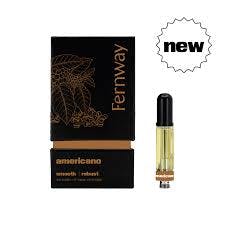
FernwayFernway Americano Cartridge - Sativa · 1g
$37.83$50.44
$44after tax

weeddispensarynearme.com
You must be 21 years or older to enter. By entering, you confirm you’re of legal age in your state to purchase cannabis.
For use only by adults 21+ • Keep out of reach of children
1 live products in stock
Quick answer · What is the Americano cannabis strain?
Americano arrives like a well-pulled shot of espresso on a bright Manhattan morning — sharp, clarifying, and quietly self-assured. This sativa-dominant cultivar carries an energetic lift that feels purposeful rather than jarring, making it a considered choice for those who prefer their cannabis experience to mirror the pace of a productive urban afternoon. Its terpene profile leans toward citrus and earth, grounding its cerebral character with just enough warmth to keep the mind from racing too far ahead.
$44after tax
About Americano
Americano's precise lineage has not been exhaustively documented in major public databases, and the breeder of record has not widely publicized full parent strain details — a situation not uncommon among boutique sativa selections that emerge from smaller craft cultivation circles. What is broadly understood is that Americano expresses the genetic hallmarks of classic sativa heritage, suggesting influence from equatorial or Haze-adjacent genetics that have long dominated the sativa landscape. Some accounts point to origins within the broader American craft cannabis scene of the 2010s, a period during which independent breeders began marketing regionally distinct sativa cuts under evocative, place-inspired names. Without a confirmed single-source breeder page or verified seed-bank catalog entry, it would be inaccurate to assign specific parent strains with confidence. What can be observed phenotypically — and what places Americano within the sativa tradition — is its tendency toward longer internodal spacing, lighter green canopy, and a terpene expression that echoes strains like Jack Herer or early Haze crosses. Shoppers curious about its direct lineage are encouraged to ask their dispensary's floor staff, who may have batch-specific cultivation documentation from the licensed producer. Americano occupies an interesting position in the contemporary New York market: a strain whose name evokes both the classic coffee preparation and a distinctly American cannabis sensibility — craft-minded, regionally aware, and oriented toward daytime utility.
The onset of Americano is typically described as arriving within five to fifteen minutes of inhalation, presenting first as a gentle pressure behind the eyes and temples before blooming into a wider sense of mental clarity. Unlike sativa expressions that tip quickly into anxious overstimulation, Americano's character tends to sit in a more measured register — alert without being edgy, engaged without being scattered. This quality makes the early phase of the experience well-suited to tasks requiring sustained concentration or creative ideation. At peak, the experience is predominantly cerebral. The body remains largely unencumbered — functional and light — while the mind takes on a quality of heightened receptivity. Conversations feel more textured; creative problems become more approachable. This phase typically persists for one to two hours depending on individual metabolism and consumption method. The dominant terpene profile, which likely features limonene and pinene, aligns with research suggesting these compounds may contribute to uplifted, alert states, though individual response always varies. The comedown from Americano is gentle by sativa standards. Rather than an abrupt drop into fatigue, most accounts describe a gradual softening of the peak clarity, leaving a calm, grounded quality in its wake. As with any cannabis product, newcomers are advised to start with a conservative amount and allow adequate time between sessions to gauge their individual response.
On the nose, Americano opens with a bright citrus note — likely the signature of limonene, one of the most recognizable terpenes in the sativa canon. This initial freshness is supported by a secondary layer of clean pine, which points to the presence of alpha-pinene, a terpene associated with sharp, resinous forest character and widely noted for its potential to support mental clarity. Together, these two terpenes establish an aromatic profile that is crisp and invigorating — reminiscent, not incidentally, of the citrus peel that sometimes garnishes a properly prepared espresso. As the nose settles, earthier base notes emerge. Myrcene, if present in supporting quantities, would account for a mild herbal muskiness that softens the citrus brightness and gives the overall aroma a sense of depth and groundedness. Some phenotypes of Americano have been noted to carry a subtle spice on the back end — a quality that may suggest trace caryophyllene, which contributes a faintly peppery warmth to the bouquet without overwhelming the dominant citrus-pine architecture. On the palate, Americano is generally described as smooth and clean in vapor, with the citrus notes translating faithfully from nose to exhale. The finish is light and relatively dry, avoiding the heavy resinous aftertaste associated with high-myrcene indica-dominant strains. Those who appreciate the flavor profiles of Jack Herer or Lemon Haze will find familiar notes here, albeit arranged in a composition that feels distinctly its own.
Americano's flowers reflect the classic sativa phenotype: elongated, moderately dense calyxes that stack loosely along an airy bud structure rather than compressing into the tight, golf-ball formations typical of indica-dominant cultivars. This open architecture allows light to pass through the flower, revealing layers of lime green and pale sage beneath a generous dusting of trichomes that catch the light with a silvery, almost frost-like quality. Pistils run a warm amber-to-orange spectrum and are distributed generously across the surface, providing a pleasing visual contrast against the lighter green of the underlying plant matter. The trichome density, while consistent with well-cultivated sativa genetics, does not obscure the underlying color palette — a characteristic that allows the full visual complexity of the bud to remain legible to the eye. Overall, Americano's appearance is elegant rather than ostentatious: a flower that communicates quality through refinement rather than excess.
Americano's sativa-dominant genetics suggest a cultivation profile aligned with strains that prefer warm, stable climates and longer light cycles during the vegetative phase. Indoor growers should anticipate a flowering window in the range of nine to eleven weeks — longer than many hybrid cultivars, which is typical of sativa-leaning genetics that require additional time to fully develop their terpene and cannabinoid profile. Vertical space is a meaningful consideration, as sativa phenotypes tend toward significant stretch during the early weeks of flower. Outdoors, Americano is likely to perform well in temperate to warm climates with consistent sun exposure and low humidity during the final weeks of ripening. Indoor yields are generally moderate for the sativa category, and the cultivar may reward experienced growers who employ training techniques such as low-stress training or screen of green to manage canopy height and improve light distribution. For the cultivator-curious shopper, Americano represents a strain whose growing demands reflect its genetic complexity — not a first-time grow, but a rewarding one for those with some experience and patience.
Americano is at its best when the day still has potential to be shaped. A late morning session before a creative writing project, a walk through a neighborhood with a sketchbook, or the quiet hour before a social gathering begins — these are the contexts in which Americano's alert, engaged character finds its most natural expression. It is not a strain designed for the couch; it is a strain designed for movement, whether physical or intellectual. For food pairings, consider accompaniments that complement its citrus-forward terpene profile without competing for attention: a small plate of aged pecorino with lemon zest, or a bright, lightly dressed arugula salad with shaved fennel. On the musical side, Americano's tempo maps well onto something with rhythmic precision and melodic clarity — mid-period Miles Davis, or the more structured compositions of Khruangbin, where groove and focus coexist without tension. For those who prefer their pairing be an activity, a purposeful urban walk through a culturally dense neighborhood offers an ideal companion experience.
Jack Herer
Jack Herer shares Americano's sativa-forward clarity and citrus-pine terpene architecture, making it a natural reference point for those who appreciate a focused, cerebral experience without heavy body sedation.
Lemon Haze
With its pronounced limonene-driven citrus profile and uplifting, mood-brightening character, Lemon Haze appeals to the same sensibility as Americano — bright, energetic, and well-suited to daytime use.
Green Crack
Green Crack's reputation for sharp mental focus and sustained energetic output aligns closely with the experience arc that Americano offers, particularly for those who favor sativas during creative or active pursuits.
Durban Poison
As one of the foundational pure sativa landrace-derived cultivars, Durban Poison shares Americano's clean, alert quality and earthy-sweet aromatic underpinning, appealing to those who prefer their sativa experience unencumbered by heavy hybrid influence.
Super Silver Haze
Super Silver Haze's complex terpene layering — citrus, spice, and earth in near-equal measure — resonates with the multi-dimensional aromatic character of Americano and similarly rewards slow, attentive consumption.
Americano is classified as a sativa-dominant cultivar. Its typical effects profile — cerebral clarity, an energetic onset, and a relatively light body sensation — aligns consistently with the sativa phenotype. As with all cannabis, individual response varies based on personal biology, consumption method, and setting, so a cautious starting approach is always advisable, particularly for those newer to cannabis.
Americano presents a clean, citrus-forward flavor profile on the exhale, anchored by bright lemon and light pine notes that reflect its likely limonene and pinene terpene composition. A subtle earthy base rounds out the palate, preventing the citrus from feeling sharp or one-dimensional. In vapor, the taste is smooth and relatively dry, finishing without the heavy resinous weight associated with indica-dominant cultivars.
Americano typically delivers a focused, mentally alert experience with a relatively gentle body component. Onset occurs within five to fifteen minutes of inhalation, building toward a peak characterized by clarity and heightened engagement. The experience tends to be described as purposeful rather than overwhelming. Duration runs roughly one to two hours at peak intensity, with a gradual, calm descent. New consumers should begin with a minimal amount and wait before considering more.
Those who appreciate Americano's sativa-forward profile and citrus-pine terpene character may find common ground with Jack Herer, Lemon Haze, Green Crack, Durban Poison, and Super Silver Haze. Each of these cultivars shares at least one dimension — whether terpene profile, effect character, or energetic onset — that resonates with what Americano offers. Ask ZenZest's floor staff for current availability of comparable cultivars.
Americano can be approachable for beginners who are specifically seeking a sativa experience, but its energetic cerebral onset warrants a measured approach. Those new to cannabis or new to sativa-dominant cultivars are encouraged to start with a very small amount, allow fifteen to twenty minutes for effects to develop, and consume in a comfortable, familiar setting. Sativas can occasionally amplify anxious tendencies in sensitive individuals, so pacing is essential.
Based on its observed aroma and effect profile, Americano likely features limonene as a primary terpene, contributing its characteristic citrus brightness and uplifting sensibility. Alpha-pinene appears prominently in the secondary profile, lending the sharp, clean pine note on the nose. Myrcene may be present in supporting quantities, providing earthy depth, and trace caryophyllene could account for the faint spice noted in some phenotypes. Exact terpene percentages vary by batch and producer.
Americano's sativa character makes it most naturally suited to morning or early afternoon consumption, when its clarifying, energetic qualities can be channeled productively. Evening use is not contraindicated, but those sensitive to mental stimulation may find the alerting quality of this cultivar less conducive to winding down before sleep. It is particularly well-matched to creative work, social engagement, or any activity that benefits from heightened focus and an elevated mood.
Americano's precise lineage has not been fully confirmed in major public cannabis databases, and the breeder of record has not widely published parent strain details. Its phenotypic characteristics — sativa structure, citrus-pine terpene expression, and cerebral effect profile — suggest influence from Haze-adjacent or equatorial sativa genetics. Shoppers seeking batch-specific genetic documentation are encouraged to consult with ZenZest's knowledgeable staff for producer-provided information.
Related strains
Pick your store
We'll show pricing, deals, and delivery zones for the store you pick. You can switch any time from the header.