THC 92.7%Sativa
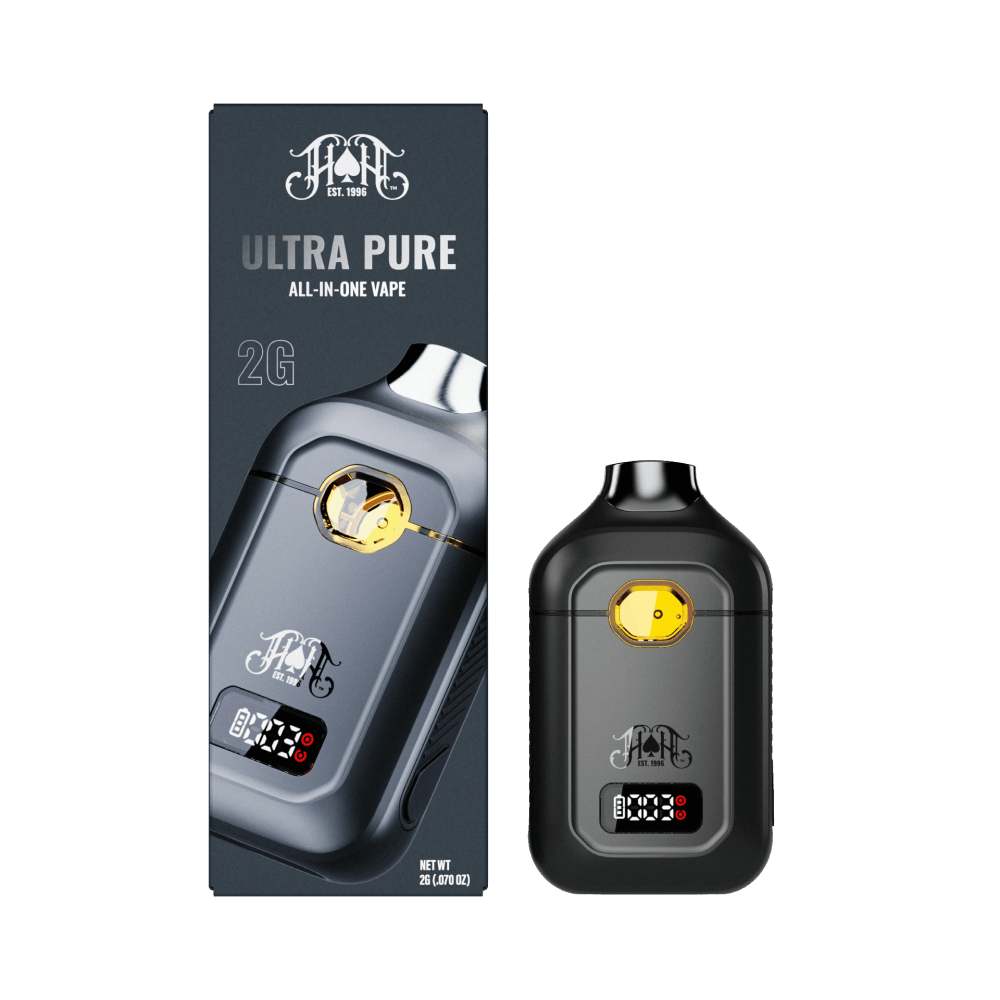
Heavy HittersAlaskan Thunder F| Sativa - Ultra Extract High Potency Oil - 2g All-In-One Vape · 2g
$100.00
$113after tax

weeddispensarynearme.com
You must be 21 years or older to enter. By entering, you confirm you’re of legal age in your state to purchase cannabis.
For use only by adults 21+ • Keep out of reach of children
1 live products in stock
Quick answer · What is the Alaskan Thunder F cannabis strain?
Alaskan Thunder Fuck — known colloquially as ATF — is a legendary sativa whose reputation was forged in the Matanuska Valley of Alaska long before craft cannabis became a cultural conversation. Earthy, pine-forward, and possessed of a clarifying, energetic lift, it occupies a rare place in the canon: a landrace-adjacent cultivar that has remained relevant across generations not through marketing, but through consistent, compelling character.
$113after tax
About Alaskan Thunder F
Alaskan Thunder Fuck's origins are rooted in the Matanuska-Susitna Valley of Alaska, where it is believed to have been cultivated as early as the 1970s. The strain is widely understood to be a Northern Californian sativa — likely of the Afghani-influenced families common to that era — that was brought north and adapted over successive generations to the extreme photoperiod conditions of the Alaskan interior. Some accounts, documented on cannabis culture forums and via Leafly's historical strain notes, suggest that a Russian ruderalis was later introduced to improve cold-hardiness, though this parentage remains debated and has never been formally confirmed by a named breeder. Because ATF predates the era of structured seed companies and intellectual-property-conscious breeders, no single originator has claimed the strain. It exists more as a regional landrace-type expression than a commercially bred cultivar. This ambiguity is part of its mystique. Over time, seed banks including Nirvana Seeds have offered ATF-derived genetics, working to stabilize phenotypes while preserving the strain's characteristic sativa growth pattern and effect profile. Genetic siblings or direct descendants are difficult to trace with certainty given the informal breeding history, but strains such as Matanuska Thunder Fuck (sometimes used interchangeably, though purists distinguish between the two) represent the same Alaskan lineage. The strain's influence on Pacific Northwest cannabis culture is well documented anecdotally, and it remains a touchstone for those studying American sativa heritage.
ATF is regarded as a genuinely sativa-dominant experience, and the onset reflects that character. Most consumers report the first perceptible shift arriving within five to ten minutes of inhalation — a gentle brightening of sensory focus that expands into something more expansive over the following fifteen to twenty minutes. The peak is predominantly cerebral: thoughts sharpen and then loosen in a way that feels conducive to creative free-association rather than structured analytical work. There is warmth to it, a sociability that makes conversation feel effortless without the anxious edge that higher-THC sativas can occasionally produce. The body component is present but subordinate. A mild physical ease settles in around the shoulders and chest without tipping into heaviness — a quality likely tied to the strain's reputed ruderalis or Afghani influences, which may contribute a grounding terpene profile dominated by myrcene and caryophyllene alongside the more volatile top notes. Duration runs moderate to long for a sativa, typically two to three hours of pronounced effect with a gentle, unhurried comedown that rarely feels abrupt. As with all high-THC sativa cultivars, those new to cannabis or sensitive to THC should approach ATF with the standard caution of starting with a conservative amount and allowing adequate time between sessions. The strain's stimulating character means that overconsumption may amplify rather than quiet an active mind.
The terpene profile of Alaskan Thunder Fuck leans toward the resinous and green end of the aromatic spectrum. Myrcene is consistently cited as a primary terpene, contributing the earthy, faintly musky base note that grounds the more volatile top layer. Over that foundation, pinene — specifically alpha-pinene — is prominent, delivering the strain's most distinctive characteristic: a clean, crisp forest-air quality reminiscent of mature spruce or fir, which aligns intuitively with the strain's Alaskan provenance. Caryophyllene adds a subtle spiced depth — think white pepper rather than anything sharp — and is understood by researchers to interact with the endocannabinoid system's CB2 receptors, which some scientists associate with the strain's mild grounding quality. Secondary terpenes including terpinolene and ocimene contribute a lifted, almost floral brightness that keeps the aroma from feeling too heavy or resinous in isolation. The result is a bouquet that reads as simultaneously wild and composed: pine resin, damp earth, a thread of citrus zest, and a faint sweetness on the exhale. On the palate, ATF smokes with notable smoothness for a sativa. The pine and earth carry through from aroma to flavor faithfully, with the pinene-forward top note remaining perceptible through the inhale. The exhale softens to a mild, almost menthol-adjacent coolness. Vapor delivery accentuates the floral and citrus secondary notes that combustion can obscure, making it a strain that rewards slower, lower-temperature consumption.
Alaskan Thunder Fuck buds express the hallmarks of a sativa-dominant phenotype: the structure is elongated rather than dense, with a loose, open calyx arrangement that reflects the strain's adaptation to cold, high-altitude growing conditions where airflow was historically more important than compactness. The colas tend to be long and tapered, with leaves that reach outward in the characteristic open fan pattern of equatorial and sub-equatorial sativa genetics. Coloration sits in a medium-to-deep green range, occasionally accented by subtle blue-grey undertones in cooler growing environments — a phenotypic response to cold-induced anthocyanin expression consistent with the strain's Alaskan history. Pistils are typically rust-orange to amber, curling tightly over a surface that, when well-cultivated, carries a generous and uniform trichome frost. The resin production is considered above average for a sativa of this lineage, contributing a slight stickiness and a visual translucence to the bud surface when examined closely.
Cultivating Alaskan Thunder Fuck presents a moderate challenge. The strain's sativa dominance means it stretches considerably during the vegetative phase and continues to gain height into early flower, which can strain vertical space in indoor grow rooms without deliberate training techniques such as LST or topping. Indoor flowering time typically runs eight to ten weeks, on the longer end for a sativa-leaning cultivar, and yields are considered moderate — the trade-off for the strain's complexity of character. Outdoor cultivation aligns naturally with the strain's genetic history. ATF demonstrates tolerance for cooler nighttime temperatures and shorter growing seasons that would stress many equatorial sativas, making it a reasonable candidate for northern-latitude outdoor gardens where summers are bright but abbreviated. It prefers well-draining, slightly acidic soil and benefits from consistent airflow given its open bud structure. Humidity management during late flower is advisable to protect the loose calyxes from moisture accumulation. For the home cultivator curious about ATF, it is best approached as an intermediate project — rewarding with patience but not recommended as a first-time grow.
ATF's energizing, cerebral profile makes it most at home during the daylight hours, and it suits moments that benefit from a loosening of habitual thought without a complete departure from function. A weekend morning writing session, an unhurried gallery visit, or a long walk in a park where the textures of the natural world feel worth examining at length — these are the contexts in which ATF tends to distinguish itself. It is social without being performatively so, making it a natural companion for small, conversational gatherings where ideas are the currency. On the pairing front, the strain's pine and earth terpene profile harmonizes particularly well with foods that share resinous or green aromatics: a simple board of aged alpine cheeses, or a dish featuring fresh herbs — thyme, rosemary, or tarragon — would complement rather than compete with what's in the bowl. Musically, ATF's expansive but unhurried quality aligns with recordings that reward attention without demanding it: the catalog of Icelandic post-rock, Pacific Northwest folk, or any recording made with space and natural reverb in mind. The strain is best experienced without an agenda, in the company of people or ideas you already find compelling.
Durban Poison
Fans of ATF's clean, energizing sativa lift and terpene-forward clarity will find a familiar brightness in Durban Poison's anise-and-pine profile and its reputation as one of the most functional, focused pure sativas in the canon.
Jack Herer
Jack Herer shares ATF's piney, resinous terpene architecture and its reputation for a creative, articulate high that leans cerebral without abandoning physical ease — a natural next step for any ATF enthusiast.
Green Crack
For consumers who specifically seek ATF's daytime energy and mental acuity, Green Crack delivers a similarly forward, motivating sativa experience, though with a fruitier terpene profile that contrasts ATF's earthy pine.
Trainwreck
Trainwreck occupies similar Pacific Northwest sativa heritage territory, offering the same piney, lemon-earth aroma and an energetic onset that ATF devotees will recognize, with slightly more pronounced body warmth.
Super Silver Haze
Super Silver Haze extends ATF's cerebral, euphoric sativa arc into slightly longer duration and a more complex spice-and-skunk terpene dimension, making it a natural companion strain for those who enjoy ATF's effect profile.
Alaskan Thunder Fuck is firmly classified as a sativa-dominant strain. Its origins in the Matanuska-Susitna Valley of Alaska, where it adapted to long summer photoperiods, produced a cultivar with the elongated bud structure, energetic onset, and cerebral effect profile characteristic of sativa genetics. Some accounts suggest a minor ruderalis or Afghani influence, but its overall experience and growth pattern align consistently with the sativa classification.
ATF delivers a flavor profile that is earthy, resinous, and pine-forward, reflecting its dominant terpenes — myrcene and alpha-pinene. The inhale carries a clean, forest-air quality with subtle pepper and damp earth underneath. On the exhale, a mild sweetness and a faint coolness emerge, reminiscent of menthol without being sharp. Secondary notes of citrus and light floral character become more apparent when consumed via vapor at lower temperatures.
ATF is known for a clarifying, energizing onset that arrives quickly and builds into a sustained cerebral lift. Users commonly describe enhanced creativity, ease of conversation, and a brightening of sensory awareness. A mild physical warmth accompanies the mental experience without producing heaviness or sedation. The overall duration is moderate to long for a sativa, with a gradual, unhurried comedown. Those sensitive to THC should begin conservatively.
Consumers who appreciate ATF tend to gravitate toward other resinous, pine-forward sativas with energetic, cerebral profiles. Jack Herer and Durban Poison are the most frequently cited companions — both share ATF's clarity and functional lift. Trainwreck and Super Silver Haze extend the same Pacific Northwest sativa lineage with slight variations in terpene character and duration. Green Crack offers a comparable daytime energy with a fruitier aromatic profile.
ATF is a potent, sativa-dominant cultivar with a notably energizing effect profile. While it is not the most overwhelming strain available, its cerebral intensity means that those new to cannabis should approach it with caution. Starting with a small amount and allowing sufficient time before consuming more is the standard guidance. The strain's stimulating character can amplify an already active mind, which may feel uncomfortable for first-time or low-tolerance consumers.
ATF's terpene profile is led by myrcene, which contributes the earthy, slightly musky base note characteristic of the strain, and alpha-pinene, responsible for the clean, resinous pine aroma for which ATF is best known. Caryophyllene provides a subtle spice and mild grounding quality. Secondary terpenes including terpinolene and ocimene add a lifted, lightly floral dimension that prevents the profile from reading as too heavy or one-dimensional.
The name is rooted in the strain's geographic origin — the Matanuska-Susitna Valley of Alaska — and reflects the irreverent naming conventions of 1970s underground cannabis culture, when colorful, emphatic names were used to signal potency and distinctiveness. The 'Thunder' component is generally understood as an evocative descriptor of the strain's effect intensity rather than a literal reference. The name has remained unchanged largely because it is inseparable from the strain's identity and history.
Given its energizing, cerebral character, ATF is best suited to daytime or early-evening consumption. Morning or midday use aligns naturally with the strain's functional, socially engaging profile, particularly for creative work, outdoor activity, or unhurried social settings. Evening use is possible but may interfere with sleep onset for those sensitive to stimulating sativas. It is generally not considered a strain for winding down at the end of the day.
Related strains
Pick your store
We'll show pricing, deals, and delivery zones for the store you pick. You can switch any time from the header.