
Hybrid
All strains Wrank
1 live products in stock
Quick answer · What is the Wrank cannabis strain?
Wrank arrives at the intersection of pungent earth and sharp fuel, a hybrid that commands attention from the first jar-opening to the final exhale. Neither timid nor overwhelming, it occupies a middle ground that experienced consumers often seek — grounded enough to quiet a restless mind, alert enough to keep conversation flowing. Its character is deliberate, its aroma unambiguous, and its place in New York's cultivated cannabis culture quietly assured.
Shop Wrank · 1 of 1 live products
About Wrank
Everything to know about Wrank.
Lineage & origin
Wrank's precise lineage is not widely documented in major public databases such as Leafly or Wikileaf, and the originating breeder has not made an authoritative public statement regarding its parentage. What is understood within enthusiast communities is that the name itself — a portmanteau evoking 'rank' in the classic street-slang sense of intensely pungent — points toward a genetic heritage rooted in chemotype-heavy, fuel-forward cultivars. Speculation among growers and collectors frequently places Wrank within the broader OG Kush and Chem family tree, given its pronounced fuel and earth aromatics, though this has not been confirmed through any documented breeding record. The strain appears to have circulated first through East Coast underground markets before achieving more visible placement in licensed dispensaries, a trajectory common to many funk-forward hybrids whose reputations preceded their formal documentation. Its influence, while modest compared to landmark cultivars, reflects a clear consumer appetite for strains that lead with aggressive terpene profiles rather than sedation or sweetness. If siblings or phenotypic variants exist, they have not been formally named or catalogued by any breeder on record. Shoppers curious about verified lineage should understand that Wrank, like a number of contemporary hybrids, belongs to a category where sensory profile has outpaced genetic paperwork.
Effects
As a hybrid, Wrank tends to deliver an onset that arrives within the first five to ten minutes of inhalation — an initial cerebral lift that sharpens focus without tipping into anxiety for most consumers at moderate quantities. The opening phase has an energizing, slightly clarifying quality that many describe as a clearing of mental fog, a characteristic loosely associated with the limonene and caryophyllene presence common in fuel-forward hybrids. The peak settles into a balanced middle register: the mind remains engaged and conversational while the body begins to acknowledge a warm, grounding weight — not immobilizing, but present. This duality is the hallmark of well-constructed hybrids, and Wrank appears to maintain that tension without collapsing fully into either direction. Duration is typically moderate, with most consumers noting a window of one and a half to two and a half hours before the experience softens toward a gentle, unhurried comedown. The descent is rarely abrupt. Wrank tends to wind down without the heaviness that marks more indica-dominant cultivars, leaving the consumer in a calm, rested state rather than a sedated one. Those newer to cannabis are advised to approach any potent hybrid with measured, patient sessions — starting low and waiting before any additional consumption, as with all adult-use cannabis. The interplay of its terpene profile and cannabinoid content appears to support a functional yet fully felt experience.
Aroma, flavor & terpenes
The defining aromatic signature of Wrank is its frank, unapologetic pungency — an olfactory profile that draws from the same lineage vocabulary as Chem and OG cultivars. Myrcene, a terpene present in a broad range of cannabis cultivars and associated with earthy, musky, and faintly herbal notes, likely forms the aromatic base here, contributing the dense, damp-earth quality that underlies the more volatile top notes. Caryophyllene, the only terpene known to interact directly with the body's endocannabinoid system, adds a spiced, peppery edge — a dry, almost woody heat that punctuates the earthiness and gives the aroma its slight sharpness. Limonene, when present, would account for flashes of bright citrus that some consumers detect in the background, acting as a counterpoint to the heavier basal notes. Humulene, associated with hop-like, slightly bitter aromatics, may contribute to the dry, fuel-adjacent character that gives the strain its name-worthy intensity. On the palate, Wrank delivers a smoke or vapor profile that is thick and resinous, with the earthen and fuel notes carrying through from the nose into the chest. The exhale reveals a faint herbal sweetness that softens what might otherwise be a relentlessly dank profile. Combustion tends to amplify the pepper and earth; vaporization at lower temperatures allows more of the citrus and herbal nuance to surface, rewarding those who take the time to dial in their preferred method.
Appearance
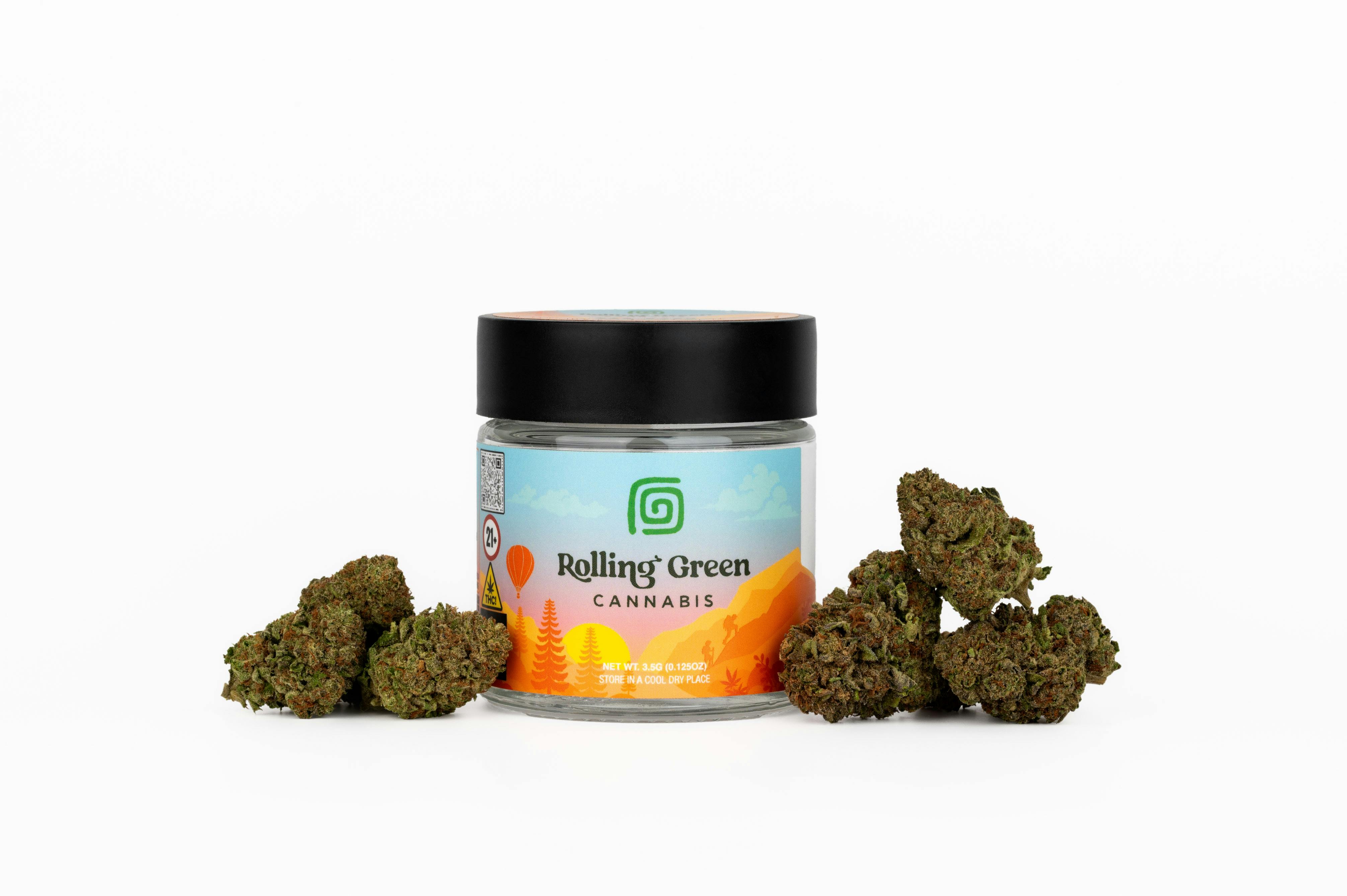
Wrank's buds tend toward a dense, compact structure — the kind of tightly wound calyx formation that signals a heritage in resin-productive chemotypes. The overall silhouette is squat and chunky rather than elongated, with leaves that pull close to the bud rather than splaying outward. The color palette sits primarily in medium to deep greens, often accented by flashes of olive and, in well-cured specimens, occasional hints of muted purple where anthocyanin expression has been encouraged by cooler late-stage growing temperatures. Pistils — the fine, hair-like structures winding through the bud — tend toward amber and rust orange at maturity, providing visual warmth against the cooler greens. Trichome coverage is generous: a frosted, resinous layer that visually communicates the cultivar's potency and contributes to the sticky, substantial feel of a well-grown specimen. The overall impression is of a bud that has been grown with intention rather than rushed.
Growing notes
Because Wrank's genetic background is not formally documented, specific grow data sourced from a breeder's technical sheet is unavailable. What can be inferred from cultivars of similar profile and presumed lineage — OG and Chem-adjacent hybrids — suggests a plant that rewards controlled indoor environments where humidity, temperature, and airflow can be carefully managed. Flowering time for hybrids in this terpene family typically falls between eight and nine weeks under a standard twelve-twelve light cycle indoors. Yields tend to be moderate rather than exceptional — a common trade-off in resin-heavy cultivars where the plant's energy is directed toward terpene and cannabinoid production rather than raw volume. Outdoor cultivation is viable in temperate climates with a long, warm autumn, though the dense bud structure makes diligent airflow management important to guard against moisture-related issues in humid conditions. For the cultivator-curious dispensary shopper, Wrank represents the kind of cultivar that likely performs best in the hands of a grower with at least one prior harvest of experience — not for any exotic difficulty, but because its quality ceiling rises noticeably with attentive technique.
When it's best enjoyed
Wrank occupies a temporal niche that suits the measured pace of a late afternoon or early evening — after the demands of the workday have resolved but before the full surrender of night. Its balanced hybrid character makes it a thoughtful companion for solo creative pursuits: writing, visual work, or any activity that benefits from a mind that is both quieted and gently stimulated. In a social register, it fits naturally at a small gathering where conversation is the main event — not a loud party, but the kind of unhurried dinner or rooftop session where ideas move slowly and pleasurably. Given its terpene profile's earthy, peppery depth, it pairs with food in the way a bold natural wine might: aged hard cheese, dark bread, or a simply prepared mushroom dish would echo the cultivar's forest-floor earthiness rather than compete with it. Musically, the experience aligns with something deliberate and textured — mid-period jazz, measured post-rock, or the kind of ambient production that rewards close listening. The strain's balanced arc means it neither demands your full attention nor allows you to fully disengage, a quality that suits the attentive, present state of mind that characterizes a genuinely good evening.
If you like Wrank, also explore
Chemdawg
Consumers drawn to Wrank's fuel-forward, pungent earthiness will find Chemdawg's classic diesel and chemical profile a natural and well-documented counterpart.
OG Kush
The earthy, spiced backbone and balanced hybrid arc of OG Kush shares tonal similarities with Wrank's grounded yet cerebral character.
Sour Diesel
Those who appreciate Wrank's sharp, acrid top notes and energizing onset will recognize a kinship in Sour Diesel's iconic fuel-and-citrus profile.
GSC (Girl Scout Cookies)
For consumers who enjoy Wrank's balanced hybrid effects and resinous density, GSC offers a similarly full-spectrum experience with an added layer of sweetness.
Headband
Headband's OG and Chem lineage produces a cerebral, pressure-forward hybrid that appeals to the same consumer who gravitates toward Wrank's deliberate, focused onset.
Common questions
Is Wrank indica or sativa?+
Wrank is classified as a hybrid, meaning it carries characteristics associated with both indica and sativa cultivars. In practice, this translates to a balanced experience: an initial cerebral lift common to sativa-leaning genetics, followed by a grounding body quality more often associated with indica heritage. Neither side dominates decisively, which makes it appealing to consumers who find pure expressions of either type too one-directional.
What does Wrank taste like?+
Wrank presents a flavor profile that is earthy, fuel-forward, and slightly peppery — consistent with cultivars influenced by Chem and OG genetics. On the inhale, expect a dense, resinous earthiness with a diesel-adjacent sharpness. The exhale softens slightly, introducing a faint herbal note that rounds out what is otherwise a firmly pungent, dank palate. Vaporization tends to reveal more nuance than combustion, including hints of citrus in the background.
What are the typical effects of Wrank?+
Consumers typically describe an onset within five to ten minutes: an initial mental clarity and mild elevation that settles into a balanced state combining focus with physical ease. The peak sustains for roughly one to two hours before a gentle, unhurried comedown. The experience is generally described as functional — present and felt without being disorienting — making it suitable for both active and restful contexts at appropriate consumption levels.
What strains are similar to Wrank?+
Consumers who appreciate Wrank's pungent, fuel-and-earth profile and balanced hybrid arc may find affinity with Chemdawg, OG Kush, Sour Diesel, GSC, and Headband. Each of these cultivars shares at least one defining characteristic with Wrank — whether in terpene character, effect profile, or bud structure — and represents a well-documented option for those seeking a comparable experience with established genetic provenance.
Is Wrank good for beginners?+
Wrank is a hybrid with a notably assertive terpene profile and, by most accounts, a potency level that warrants respect. Beginners to adult-use cannabis are encouraged to approach any such cultivar with a start-low, go-slow mindset: a small, single inhalation followed by a patient wait of fifteen to twenty minutes before considering more. The balanced hybrid nature means the experience is not extreme, but inexperienced consumers benefit from caution with any potent cultivar.
What are the dominant terpenes in Wrank?+
Based on its aroma and effect profile — and by inference from cultivars of similar character — Wrank likely features myrcene, caryophyllene, and limonene as its primary terpene drivers, with possible supporting contributions from humulene and linalool. Myrcene provides the earthy, musky base; caryophyllene adds spice and pepper; limonene contributes brightness; humulene brings a dry, hoppy undertone. Precise lab-verified terpene data should be consulted at point of purchase for accuracy.
Where does the name Wrank come from?+
The name appears to be a deliberate play on the word 'rank,' a term used colloquially — particularly in East Coast cannabis culture — to describe an intensely pungent, diesel-heavy aroma profile. The altered spelling distinguishes it as a strain name while preserving the olfactory signaling. It functions as a kind of honest self-description: consumers who see the name can reasonably expect something unapologetically dank and aromatic rather than floral or sweet.
How should I consume Wrank for the best experience?+
Wrank's terpene complexity is perhaps best appreciated through vaporization at moderate temperatures, which tends to preserve more of the citrus and herbal nuance beneath the dominant fuel and earth notes. Combustion — whether in a pipe or rolled — is equally valid and emphasizes the heavier, resinous base character. As with all adult-use cannabis in New York, responsible consumption means knowing your tolerance, choosing a comfortable environment, and allowing sufficient time between sessions.
Related strains