On sale· 50% OFF
THC 37.8%Sativa-Hybrid
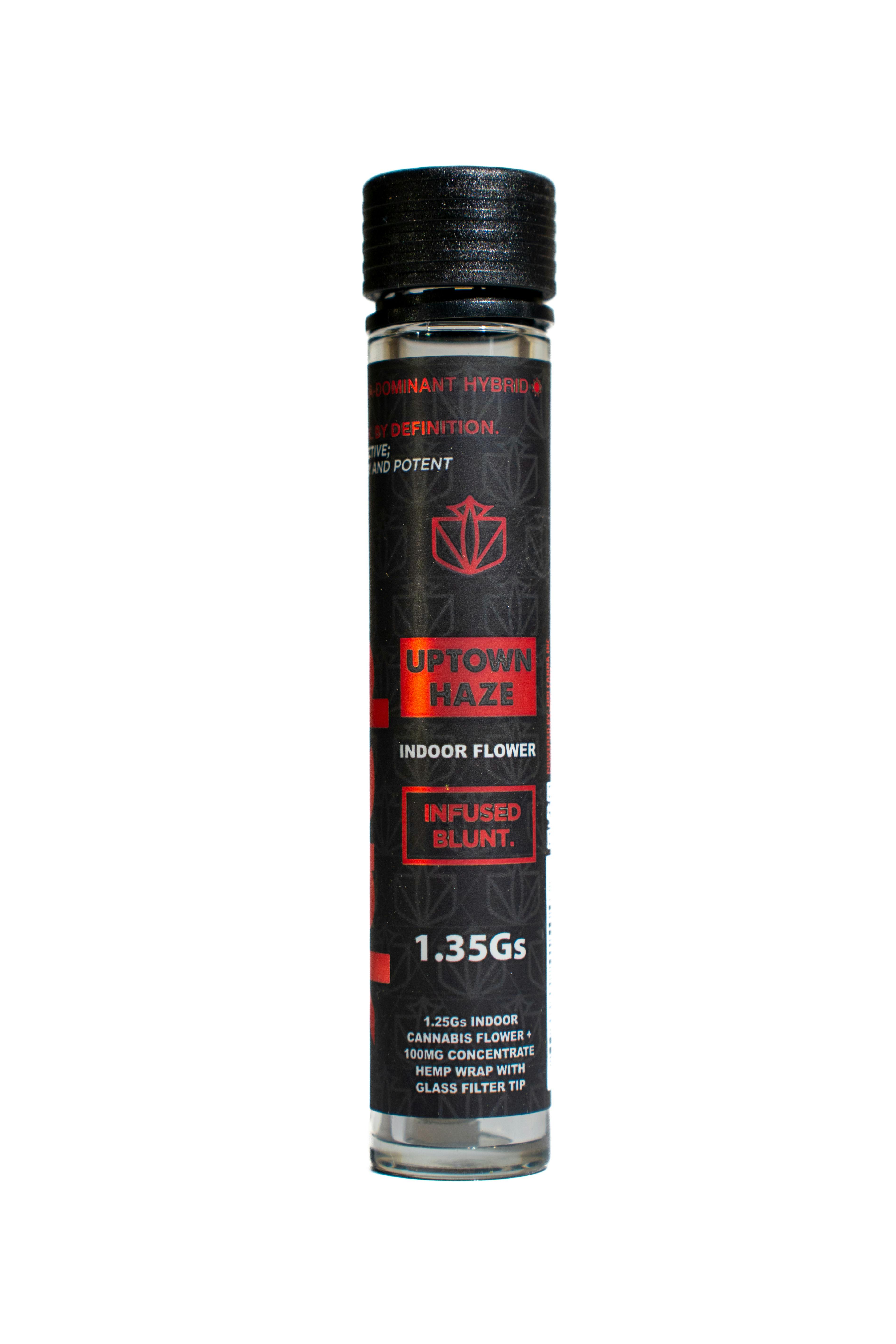
Dank By Definition.UPTOWN HAZE 1.35G PRE-ROLL INFUSED BLUNT · pre-roll
$12.50$25.00
$16after tax

weeddispensarynearme.com
You must be 21 years or older to enter. By entering, you confirm you’re of legal age in your state to purchase cannabis.
For use only by adults 21+ • Keep out of reach of children
1 live products in stock
Quick answer · What is the Uptown Haze cannabis strain?
Uptown Haze arrives as a tribute to the long, luminous lineage of classic haze genetics — a sativa-dominant cultivar that rewards patient smokers with a slow-building cerebral lift and an aromatic profile reminiscent of damp earth, sweet citrus, and a thread of warm spice. Grown with the refined consumer in mind, it carries the unhurried sophistication of a well-aged single-origin espresso: complex, deliberate, and entirely unmistakable on the palate.
$16after tax
About Uptown Haze
Uptown Haze draws its identity from the storied haze family, a lineage that traces its roots to the Santa Cruz, California scene of the early 1970s. The original Haze cultivar — widely attributed to the Haze Brothers, Sam and R. Haze — was itself a multi-generational cross drawing from South American, South Asian, Mexican, and Thai landrace genetics. This broad geographic tapestry gave classic Haze its characteristically long flowering cycle and soaring, psychoactive profile. Uptown Haze refines that legacy through selective breeding that emphasizes the more approachable, city-friendly qualities of its predecessors: a somewhat tightened flowering window compared to original Haze cuts, with the cerebral character intact. The specific breeder behind Uptown Haze has not been widely documented in major public cannabis databases, and the precise parentage beyond the broader Haze family remains debated in enthusiast communities. What is generally accepted is that cultivars of this name carry strong Haze dominant genetics, potentially crossed with a stabilizing hybrid to moderate some of the more intense landrace characteristics. Notable genetic siblings within the extended haze family include Super Silver Haze, Amnesia Haze, and Lemon Haze — each of which shares that signature cerebral architecture while diverging in terpene expression and growth structure. Uptown Haze occupies its own distinct space within that distinguished family tree.
The onset of Uptown Haze aligns with what experienced sativa consumers have come to expect from haze-lineage cultivars: it is not instantaneous. The first several minutes may feel almost neutral, followed by a gradual brightening of mental focus that becomes unmistakable around the ten-to-fifteen-minute mark. Attention sharpens, conversation quickens, and there is a distinct sense of the world coming into slightly higher resolution — colors and sounds register with heightened clarity without tipping into overstimulation for most consumers. The peak of the experience is predominantly cerebral in character, with relatively modest physical sedation. This profile is consistent with the strain's terpene composition, particularly the presence of terpinolene, which research associates with uplifting, alert qualities, and limonene, which contributes to mood elevation. For consumers sensitive to THC, the sativa-forward nature and potential potency of haze genetics warrant a measured, start-low approach on first acquaintance. Duration tends to run longer than many hybrid cultivars — a hallmark of landrace-influenced genetics — with the peak experience extending comfortably before a gradual, unhurried comedown. The resolution is typically clear rather than heavy, making Uptown Haze a strain that does not necessarily demand an afternoon of recovery. Overall, the arc is one of intellectual engagement followed by a gentle return to baseline.
The aromatic identity of Uptown Haze is anchored by terpinolene, a terpene that manifests here as a fresh, almost floral-herbal top note with subtle hints of orchard fruit — think unripe pear or white peach skin — alongside a clean, resinous undercurrent. Terpinolene is the dominant terpene in many haze-family cultivars and is responsible for that characteristic bright, almost luminescent quality that sets haze strains apart from earthier cannabis families. Myrcene provides a quieter foundation, contributing warmth and a faintly musky, herbal depth that grounds the more volatile top notes. Limonene threads through the profile with a bright citrus quality — closer to lemon zest than to sweet orange — that lifts the nose and adds a cleansing quality to both the aroma and the smoke. Caryophyllene introduces a subtle spice note, a faint peppery accent that adds structural complexity without overwhelming the more delicate elements of the bouquet. On the palate, Uptown Haze opens with that same citrus-herbal freshness before settling into a rounder, slightly sweet mid-palate on the exhale. The smoke is smooth rather than sharp, with a light earthiness that lingers pleasantly. Vapor accentuates the more delicate floral and fruit notes, making a low-temperature vaporizer an ideal delivery method for those who wish to explore the full aromatic depth of this cultivar.
Uptown Haze presents with the elongated, airy bud structure characteristic of sativa-dominant and haze-influenced genetics. The calyxes are loosely stacked and somewhat wispy compared to the dense, compact architecture of indica-forward cultivars — a structural quality that reflects the plant's landrace heritage and longer internodal spacing during growth. This open structure should not be mistaken for poor quality; it is an expression of genetic authenticity. Coloration runs across a palette of medium to light greens, occasionally showing warmer yellow-green tones that suggest the plant's equatorial ancestry. Amber and rust-colored pistils weave generously through the flower, providing warm contrast against the cooler green backdrop. Trichome coverage is present and resinous, appearing as a fine, even frost across the surface of the buds and sugar leaves, with the glands appearing somewhat more slender and elongated than those found on heavily indica-dominant cultivars — another hallmark of haze genetics when examined closely.
Uptown Haze, as a haze-dominant cultivar, presents a moderate-to-challenging grow profile that is most rewarding in the hands of cultivators with some prior experience managing sativa-leaning genetics. Indoor cultivation is generally preferred in the New York climate, where the plant's preference for warm, consistent temperatures and extended light cycles can be precisely controlled. Flowering time is typically in the range of ten to twelve weeks — longer than many popular hybrids, but in line with what haze-family genetics have historically required. Indoor yields are moderate, reflecting the strain's prioritization of potency and terpene development over raw biomass production. Outdoor cultivation is possible in climates that offer a long, warm autumn, though the extended flowering window can make timing a challenge in northeastern regions. Vertical growth is vigorous and the plant may require training techniques such as low-stress training or screen growing to manage canopy height effectively. For the cultivator-curious consumer, Uptown Haze represents a rewarding, if patient, project — one that pays dividends in aromatic complexity and a distinctive final product.
Uptown Haze is best suited to the daylight hours, particularly the mid-morning through early afternoon window when its energizing, focus-oriented qualities can be put to constructive use. It is a natural companion for creative work — writing, sketching, playing music, or any pursuit that benefits from an open, associative mindset. The strain's cerebral clarity and elevated mood tone make solo creative sessions feel particularly expansive, while its social warmth lends itself equally well to engaged, thoughtful conversation. For a food pairing, consider the bright, citrus-forward terpene profile alongside a composed salad of fresh herbs, citrus segments, and a light vinaigrette — the limonene and terpinolene in the strain find natural resonance with lemon, fennel, and fresh basil. For a music pairing, the structured yet improvisational quality of classic jazz — Miles Davis's Kind of Blue, for instance, or John Coltrane's A Love Supreme — mirrors the strain's balance of mental clarity and emotional depth. Uptown Haze rewards those who bring intention to the experience.
Super Silver Haze
A direct descendant of the same Haze lineage, Super Silver Haze shares Uptown Haze's sativa-forward cerebral lift and long-duration experience, with an added resinous sweetness from its Northern Lights and Skunk No. 1 parentage.
Amnesia Haze
Another celebrated member of the haze family, Amnesia Haze offers a similarly energetic, thought-accelerating onset and a comparable citrus-earth aromatic profile, making it a natural point of reference for Uptown Haze enthusiasts.
Lemon Haze
Lemon Haze amplifies the citrus dimension found in Uptown Haze's terpene profile, offering a brighter, more immediate lemon-forward aroma alongside the classic haze cerebral character.
Jack Herer
For consumers drawn to Uptown Haze's balanced clarity and herbal-spice complexity, Jack Herer provides a closely related experiential arc with a slightly more resinous, pine-accented terpene profile.
Durban Poison
Durban Poison shares the alert, functional sativa energy and terpinolene-forward terpene architecture of Uptown Haze, offering a similarly clean, long-lasting mental uplift with a distinct anise-and-sweet-earth aromatic character.
Uptown Haze is a sativa-dominant cultivar rooted in the classic haze lineage, which itself descends from a broad cross of South American, South Asian, Mexican, and Thai landrace genetics. Consumers can expect the experience to lean decidedly toward the cerebral, energetic, and uplifting end of the spectrum, with relatively limited physical sedation — a profile consistent with its sativa-forward genetic heritage.
Uptown Haze delivers a layered flavor profile anchored by fresh citrus — particularly lemon zest — alongside herbal and floral top notes contributed by its dominant terpinolene content. A faint peppery spice from caryophyllene adds structural depth on the exhale. The smoke is smooth and clean, with a light earthiness that lingers pleasantly. Vapor at lower temperatures accentuates the more delicate fruit and floral nuances.
Uptown Haze produces a gradual, building cerebral lift that sharpens focus and elevates mood without heavy physical sedation. Onset takes roughly ten to fifteen minutes, with a peak characterized by mental clarity, heightened sensory awareness, and an open, sociable energy. The experience tends to run longer than many hybrid cultivars, consistent with its haze heritage. The comedown is smooth and clear rather than heavy or disorienting.
Consumers who enjoy Uptown Haze often find resonance with other haze-family cultivars including Super Silver Haze, Amnesia Haze, and Lemon Haze, all of which share its sativa-forward cerebral character and citrus-herbal aromatic profile. Jack Herer and Durban Poison offer related experiential qualities — sustained mental uplift and terpinolene-forward terpene architecture — for those seeking accessible points of comparison.
Uptown Haze warrants some caution for first-time or low-tolerance consumers. Haze-dominant genetics are associated with potent, long-lasting cerebral effects that can feel overwhelming for those unaccustomed to sativa-forward cultivars. A start-low, go-slow approach is always advisable with any new cannabis product, and this holds particularly true for Uptown Haze — waiting a full fifteen minutes before considering any additional consumption is a reasonable guideline.
Uptown Haze is anchored by terpinolene as its primary terpene, contributing bright floral-herbal and orchard-fruit aromas characteristic of the haze family. Supporting terpenes include limonene, which adds citrus clarity and mood-elevating associations; myrcene, which provides a grounding earthy warmth; and caryophyllene, which contributes a subtle peppery spice note and is the only terpene known to interact with the body's endocannabinoid system as a dietary cannabinoid.
The effects of Uptown Haze tend to run longer than those of many contemporary hybrid cultivars — a trait consistent with its haze-dominant genetic heritage, which draws from landrace strains known for extended experiences. Most consumers report a meaningful peak lasting one to two hours, followed by a gradual, comfortable resolution. Individual duration varies based on tolerance, consumption method, and quantity, so mindful, measured consumption is always encouraged.
Given its energizing, focus-forward effects profile, Uptown Haze is most naturally suited to daytime use — mid-morning through early afternoon being the window in which its qualities are most constructively channeled. It is generally not considered a wind-down or evening cultivar, as its cerebral stimulation may not be conducive to rest for most consumers. Creative work, outdoor activity, and social engagement during daylight hours are among the most fitting contexts.
Related strains
Pick your store
We'll show pricing, deals, and delivery zones for the store you pick. You can switch any time from the header.