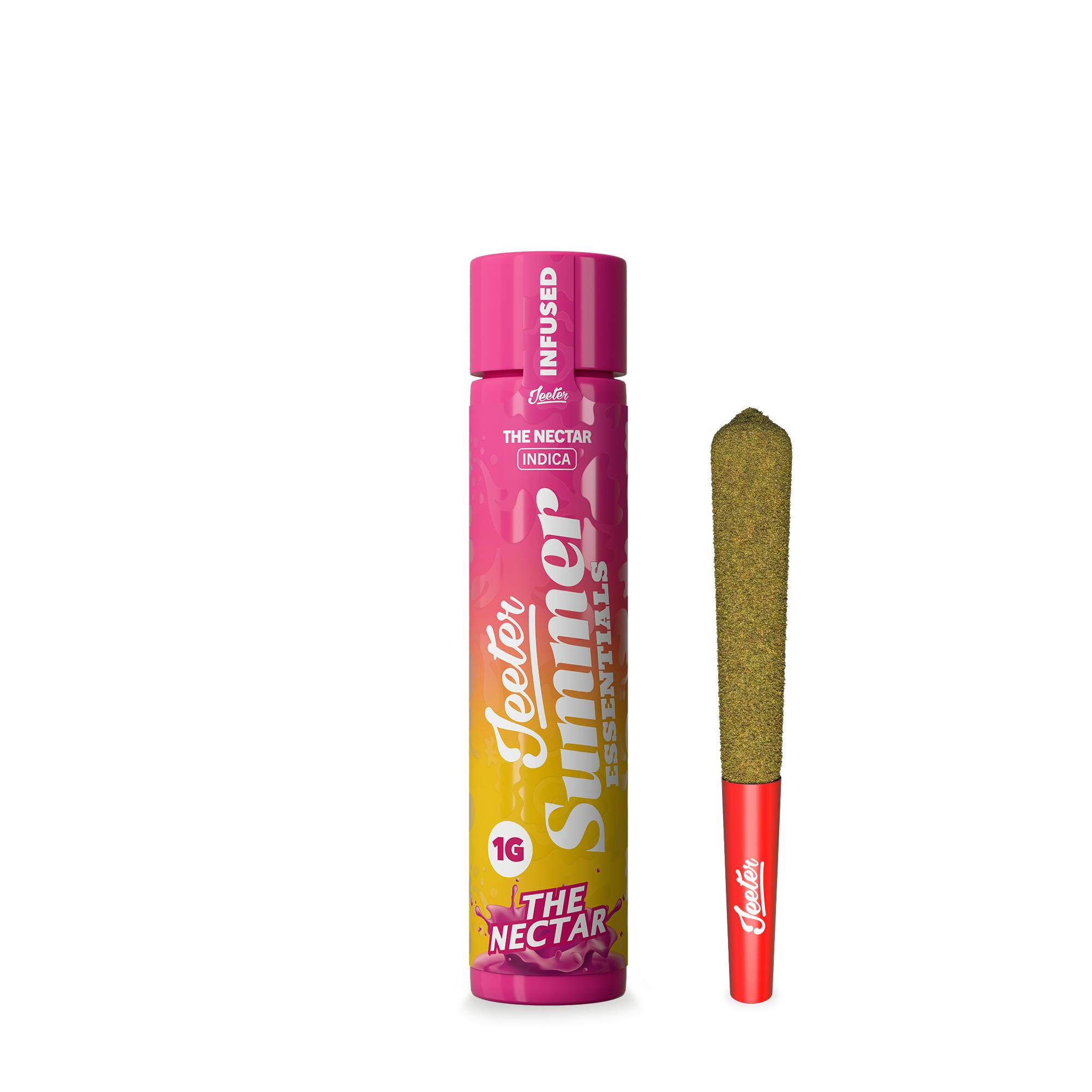
THC 35.99%Indica
JeeterJeeter The Nectar Infused W/ Liquid Diamonds, Rosin, Dusted In Kief Preroll - Indica · 1g
$20.35
$23after tax

weeddispensarynearme.com
You must be 21 years or older to enter. By entering, you confirm you’re of legal age in your state to purchase cannabis.
For use only by adults 21+ • Keep out of reach of children
2 live products in stock
Quick answer · What is the The Nectar cannabis strain?
The Nectar is a heavy-leaning indica whose name earns its keep — thick, resinous buds carry a sweetness that reads like ripe stone fruit draped over dark earth. Bred for depth rather than novelty, it settles into the body with a quiet authority that rewards patience. For those who appreciate an evening strain with genuine character, The Nectar occupies a considered place in any well-curated flower selection.
$23after tax
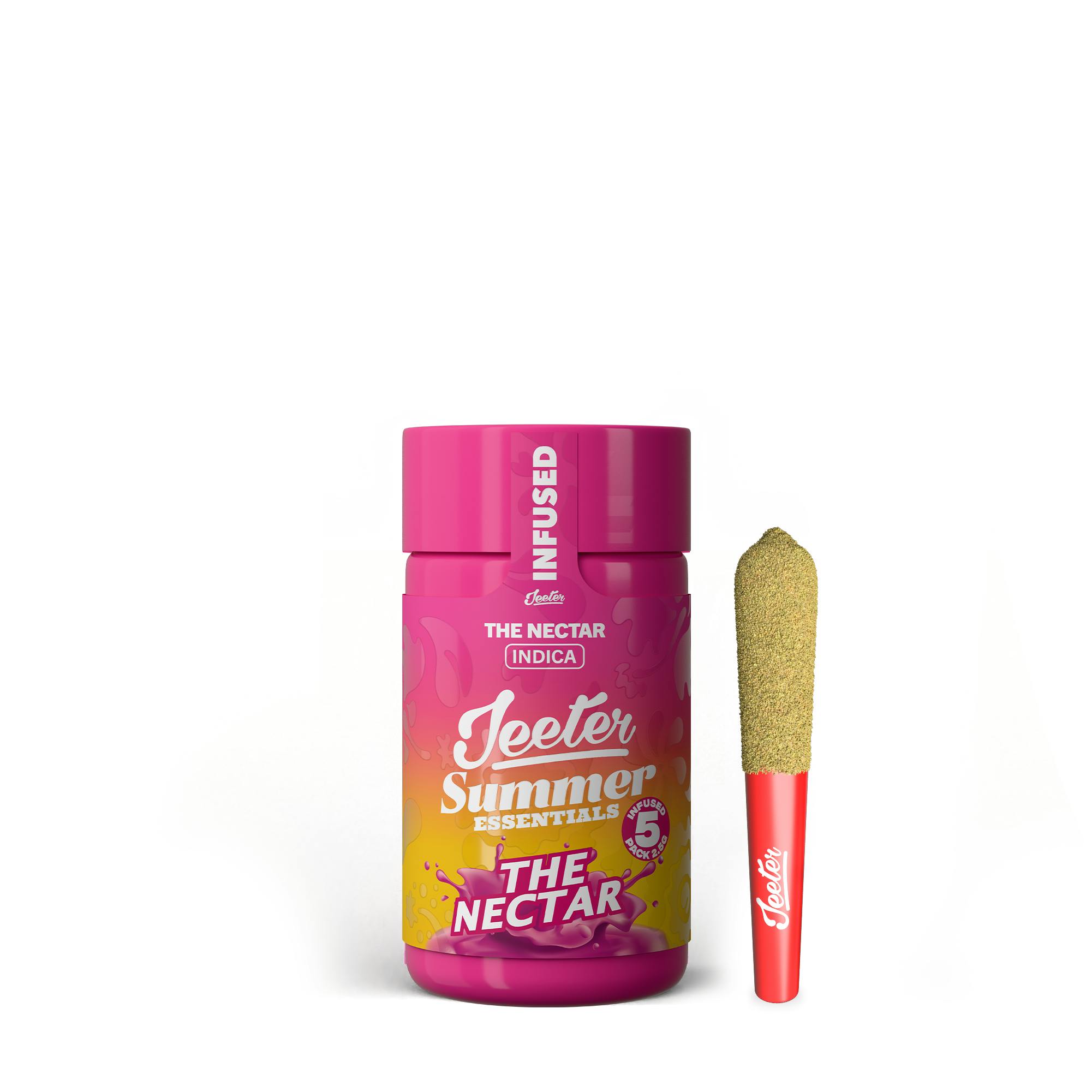
$45after tax
About The Nectar
The Nectar's precise genetic lineage is not comprehensively documented in major public databases, and the breeder has not formally published a verified parentage certificate. What circulates in cultivator communities points to a cross rooted in classic indica heritage — likely drawing from OG Kush-adjacent genetics and a resin-forward Afghani or Kush landrace influence, though this remains debated in the absence of official breeder disclosure. Some phenotype reports suggest a possible Northern Lights contribution, which would account for the strain's notable structural density and heavy trichome production. The strain began appearing in Pacific Northwest markets and select legacy-era California dispensaries in the mid-2010s, gaining quiet traction among connoisseurs who prioritized resin quality and body-forward character over headline THC figures. It never achieved the mass-market saturation of contemporaries like Gorilla Glue or Wedding Cake, which arguably preserved its reputation as a cultivator's strain — grown carefully in small batches rather than scaled aggressively. No widely recognized genetic siblings have been formally documented under the The Nectar name. Several growers have selected distinct phenotypes — some leaning toward a sweeter, more floral expression and others toward a deeper, more petroleum-laced earthiness — but these remain informal selections rather than named cultivars. As with many craft-era indicas, the provenance rewards further investigation as record-keeping in the industry matures.
The Nectar follows a gradual, deliberate onset arc — expect the first signals of effect to arrive between five and fifteen minutes after inhalation, beginning not with a sharp cerebral lift but with a softening around the temples and shoulders. This initial phase is gentle enough to allow for conversation and casual activity, and carries a mild warmth that many users describe as a quiet clearing of mental background noise without the energetic spike associated with sativa-dominant varieties. The peak experience tilts decisively toward the physical. A pronounced body effect settles in during the second half of the first hour, characterized by relaxed musculature and a comfortable heaviness that makes movement feel optional rather than appealing. Myrcene, typically a leading terpene in heavy indica profiles, is associated in cannabis science literature with sedative and muscle-relaxant qualities — effects that align closely with what The Nectar delivers at its peak. Caryophyllene's presence adds a subtle grounding warmth, contributing to what many describe as a couch-friendly but not incapacitated state. Duration tends to run long by flower standards — two to three hours of meaningful effect is common, with a gentle comedown that tapers into drowsiness rather than cutting off abruptly. The transition into sleep, for those who use it as an evening cap, is reported as smooth and unhurried. Newer cannabis consumers should approach with particular care, practicing a start-low, go-slow method given the strain's well-established potency ceiling.
The aromatic profile of The Nectar is built around myrcene as the presumed dominant terpene — delivering the characteristic ripe mango, tropical fruit, and musky earthiness that defines many heritage indica expressions. On first opening a well-cured batch, the sweetness is immediate and almost confectionary, but it quickly resolves into a more complex middle note of damp soil and cedar that grounds the sweetness and prevents it from reading as cloying. Caryophyllene contributes a secondary layer of spice — faintly peppery on the nose, more apparent on exhale — that adds structural backbone to the profile. Its interaction with myrcene creates the classic indica duality of sweet fruit over dark earth, a combination that has anchored the category since the original Kush varieties made their way west. Linalool, if present as some phenotype reports suggest, adds a quiet floral note — closer to lavender soap than perfume — that surfaces most clearly when the bud is broken and fresh terpenes are released. On the palate, The Nectar smokes with notable smoothness when properly cured, with the sweetness of the nose translating into a full, rounded smoke character that sits comfortably on the tongue. The mid-palate delivers stone fruit — peach and plum are the most commonly referenced reference points — while the finish carries a lingering spiced earthiness. Vapor at lower temperatures preserves the floral and fruit notes with greater fidelity, making a temperature-controlled device a fitting companion for those who want to fully appreciate the terpene complexity.
The Nectar presents as a classically structured indica — buds are compact and tightly wound, with a density that suggests significant resin production beneath a surface that already reads as generously frosted. The trichome coverage is a defining visual characteristic: a thick, almost uniform layer of glandular trichomes gives the flower a pale, silvery shimmer that catches light in a way that signals careful cultivation and a complete flush before harvest. The color palette sits in the deep green range, with certain phenotypes developing purple undertones in the calyxes when finished in cooler temperatures — a presentation that has become associated with premium craft batches. Pistils range from amber to a burnt orange, winding tightly through the bud structure and providing contrast against the resin-laden surface. The calyx structure is plump and well-filled, contributing to the overall impression of a flower grown with patience and attention to finishing conditions. Hand-trimmed examples show the architecture most clearly, with sugar leaves left close and frosty rather than stripped.
The Nectar performs well in controlled indoor environments where temperature and humidity can be managed through the flowering cycle — a quality that reflects its likely Kush and Afghani heritage, strains that evolved in arid, mountainous climates where environmental consistency was narrow. Indoor cultivators working with this strain report a flowering window in the range of eight to nine weeks, with yields that reward patient canopy management and strong lighting rather than maximizing plant count. Outdoor cultivation is possible in temperate climates with a long, dry autumn, though the dense bud structure that makes The Nectar visually striking also makes it susceptible to moisture-related issues if humidity climbs late in the season. Growers who have worked with the strain note that it responds well to low-stress training techniques during vegetative growth, which opens the canopy and supports more even trichome development across the flower sites. For the cultivator-curious dispensary shopper, The Nectar represents a moderately experienced grower's project — rewarding in quality of output, but not the most forgiving first-timer's choice given its sensitivity to finishing conditions. The resin production, when conditions are optimized, is among the more visually impressive characteristics of the cultivar.
The Nectar is unambiguously an evening strain — its body-forward character and long, tapering duration make it best suited to hours when productivity demands have quieted and the agenda is self-directed. A solo evening at home represents its most natural context: reading something unhurried, listening to an album from beginning to end, or allowing a long film to unfold without distraction. The myrcene-forward terpene profile, with its grounding and relaxing associations, pairs particularly well with music that rewards attentive listening — darker jazz recordings, ambient electronic work, or any genre where texture and space are compositional elements. At the table, The Nectar's stone fruit and spiced earth flavor profile finds natural companionship with foods that echo its sweetness and depth: aged cheeses with caramel or floral notes, charcuterie with dried fruit accoutrements, or a slow-braised dish where sweetness has been built into the foundation of the sauce. It is less suited to social gatherings where wit and rapid conversation are expected, and more at home in quieter company — a small group winding down a dinner rather than opening one. For those approaching the end of a physically demanding week, the strain's body effect offers a considered and deliberate form of rest.
Granddaddy Purple
Fans of The Nectar's deep body relaxation and sweet, fruit-forward aroma will recognize a familiar comfort in Granddaddy Purple's grape and berry profile and equally sedative indica character.
Northern Lights
One of the foundational indicas that likely informed The Nectar's lineage, Northern Lights offers the same resin-heavy density, earthy sweetness, and long-duration physical effect that defines the experience.
Bubba Kush
Bubba Kush shares The Nectar's coffee-tinged earthiness, dense bud structure, and pronounced body effect, making it a natural reference point for consumers drawn to classic indica depth.
Hindu Kush
As a pure landrace indica with pronounced resin production and a similarly earthy, sweet profile, Hindu Kush offers a slightly simpler but thematically aligned experience for those who appreciate The Nectar's heritage character.
9 Pound Hammer
Sharing the grape, lime, and sweet earth terpene character alongside a comparably heavy sedative arc, 9 Pound Hammer appeals to the same consumer who reaches for The Nectar at the end of a long evening.
The Nectar is classified as an indica-dominant strain. Its effects profile — a gradual, body-forward experience with a long, sedative arc and physical heaviness at peak — aligns closely with traditional indica characteristics. The bud structure, dense and heavily frosted with a compact calyx formation, further reflects its indica heritage. It is not considered a hybrid leaning sativa in any widely circulated phenotype report.
The Nectar delivers a palate of ripe stone fruit — peach and plum are the most commonly referenced notes — layered over a foundation of damp earth and cedar. A secondary spiced quality, attributable to caryophyllene, emerges on the exhale and lingers into the finish. Some phenotypes express a quiet floral nuance on the mid-palate. The smoke is characteristically smooth when properly cured, making the flavor experience as notable as the effect.
The Nectar produces a gradual onset with initial mild mental softening, followed by a pronounced body effect at peak — relaxed musculature, physical heaviness, and a sense of settled calm. The experience tends to run two to three hours in duration, with a gentle transition toward drowsiness at the comedown. It is considered an evening or late-night strain, best suited to low-demand, restful contexts rather than active or social occasions.
Consumers who appreciate The Nectar typically also gravitate toward Granddaddy Purple for its shared fruit-forward sweetness and deep body sedation, Northern Lights for its foundational indica resin density, Bubba Kush for its earthy depth and comparable physical weight, and 9 Pound Hammer for its heavy, tapering indica arc. Hindu Kush serves as a useful landrace reference point for understanding the category The Nectar occupies.
The Nectar is best approached with some prior cannabis experience. Its potency ceiling is well-documented within the cultivator community, and the body-heavy, long-duration effect profile can feel overwhelming for those unaccustomed to strong indica expressions. Beginners who choose to explore it are strongly encouraged to follow a start-low, go-slow approach — beginning with a small amount, waiting a full fifteen minutes to assess the effect before considering any additional consumption.
Myrcene is widely regarded as the lead terpene in The Nectar, contributing its signature ripe fruit and musky earth aroma as well as its association with the strain's relaxing, body-forward character. Caryophyllene follows as a notable secondary terpene, adding spice on the nose and warmth on the exhale. Linalool has been reported in select phenotypes, introducing a quiet floral dimension. This terpene triad is consistent with classic indica expressions of Kush and Afghani heritage.
The Nectar is purpose-built for evening and nighttime use. Its sedative body arc, prolonged duration, and gentle fade into drowsiness make daytime or morning consumption impractical for most consumers — the physical heaviness at peak would interfere with nearly any productive or social obligation. The ideal window is the final two to three hours of the evening, when the session can run its full course without interruption.
The Nectar's full genetic lineage has not been formally disclosed by a named breeder, and the parentage circulating in cannabis communities — often referencing OG Kush or Afghani Kush lineage — remains unverified by primary source documentation. The strain gained recognition in Pacific Northwest and legacy California markets during the mid-2010s, valued for its resin quality and body-forward character. Its origins reflect the craft-era indica tradition of prioritizing effect depth over marketing pedigree.
Related strains
Pick your store
We'll show pricing, deals, and delivery zones for the store you pick. You can switch any time from the header.