
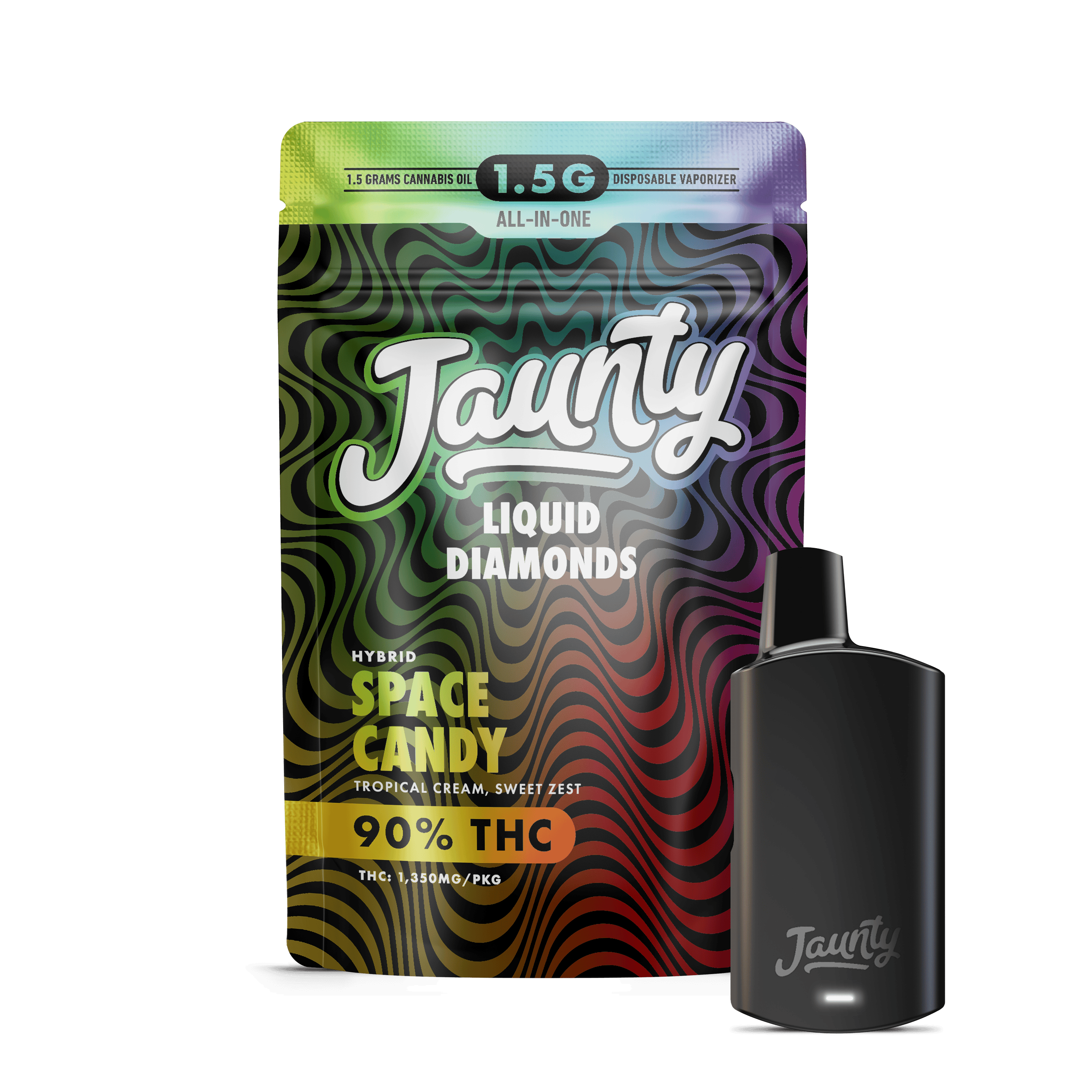
Hybrid
All strains Space Candy
1 live products in stock
Quick answer · What is the Space Candy cannabis strain?
Space Candy arrives like a slow-burning comet — sweet, fruity, and unhurried in its orbit. This well-balanced hybrid carries the genetic legacy of two celebrated parents into a smoke that feels at once grounded and gently elevated. The aroma leans candy-sweet with an herbal undercurrent, and the experience tends toward a clear-headed warmth that neither overwhelms nor understates. For the discerning New Yorker seeking an evening companion that respects the pace of a quiet night, Space Candy earns its place on the shelf.
Shop Space Candy · 1 of 1 live products
About Space Candy
Everything to know about Space Candy.
Lineage & origin
Space Candy is a hybrid strain bred by TGA Subcool Seeds, the Oregon-based collective founded by the late cannabis cultivator and writer Subcool, who became a defining figure in the boutique breeding movement of the 2000s. The strain is a cross of Space Queen and Cotton Candy, two strains with their own storied histories. Space Queen itself is a cross of Romulan and Cinderella 99, blending indica density with the bright, cerebral qualities of the C99 lineage developed by Mr. Soul of Brothers Grimm Seeds in the late 1990s. Cotton Candy, in this context, is understood to be Subcool's own in-house selection that leaned toward sweet, fruit-forward terpene profiles. TGA Subcool Seeds released Space Candy as part of a generation of boutique hybrids that prioritized terpene complexity and phenotypic expression over raw potency metrics — a philosophy Subcool documented extensively in cannabis publications during his lifetime. The strain became a touchstone of the Pacific Northwest craft scene and has since been widely replicated by other breeders, meaning phenotypic variation is well-documented in community circles. Collectors and cultivators have noted both more sativa-expressive and more indica-leaning phenotypes, though the classic representation leans toward balanced hybrid territory. Its lineage siblings within the TGA catalog include Jilly Bean and Vortex, strains that share the Space Queen parent and a similarly fruit-forward character.
Effects
Space Candy typically announces itself within five to ten minutes of inhalation, beginning with a gentle cerebral lift that sharpens focus without inducing the racing-thought quality associated with more aggressively sativa-forward cultivars. This onset has a quality that experienced consumers often describe as clarifying — a mild brightening of the mental environment rather than a full cognitive departure. The mood-elevating arc is smooth, which makes the transition into its peak feel natural rather than abrupt. At its peak, Space Candy holds a balanced posture: the mind remains engaged and conversational while the body settles into a mild, functional ease. This is not a sedating cultivar under typical consumption patterns; the body component reads more as a relaxation of chronic tension than any pull toward sleep. The influence of myrcene and caryophyllene, both well-represented in this cultivar's terpene profile, likely contributes to this body warmth without heaviness. The duration of the experience tends to run moderate — roughly two to three hours for most consumers at a measured pace — with a comedown that is gentle rather than abrupt. There is rarely a sharp drop in mood; the return to baseline is gradual. Those with lower tolerance should approach with care, as the sweet, approachable flavor can encourage a consumption pace that outruns intention. As with any cannabis product, starting with a small amount and allowing adequate time before reassessing is always the prudent approach.
Aroma, flavor & terpenes
The aromatic profile of Space Candy is one of its most immediately distinctive qualities. On the nose, the dominant character is a ripe, candy-sweet fruitiness — think tropical hard candy with a faint undercurrent of grape and berry. This sweetness is not artificial or cloying; it carries a natural, almost botanical richness that suggests the terpene complexity beneath it. Myrcene, which typically registers as the dominant terpene in this cultivar, contributes an earthy, musky base note that grounds the fruit and prevents the profile from reading as one-dimensional. Terpinolene, frequently identified as a secondary terpene in Space Candy phenotypes, adds a floral and slightly piney brightness that lifts the top notes and gives the aroma its effervescent quality — a characteristic it shares with its Cinderella 99 ancestry. Caryophyllene introduces a subtle spice on the back end, a faint pepper that appears more on exhalation than on the initial inhale. Pinene may contribute a faint herbal freshness that keeps the overall profile from tilting fully into confection territory. On the palate, Space Candy smokes or vaporizes with a smoothness that suits its name. Flower consumed at appropriate temperature reveals the fruit-forward character on the inhale, with the spice and earth notes emerging more fully on the exhale. The finish is clean and moderately sweet, without the harshness that can accompany high-myrcene cultivars when combusted at elevated temperatures. Vaporizing at lower settings tends to preserve the more delicate floral and fruit esters with particular fidelity.
Appearance
Space Candy produces buds that reflect its hybrid constitution: they are neither the dense, tightly compressed spheres characteristic of heavy indica lineages nor the airy, elongated structures associated with sativa-dominant varieties. The calyxes cluster into a medium-dense formation that holds its shape well when cured correctly. The color palette tends toward a vivid forest green, often accented by notes of lighter sage or lime green depending on the phenotype and growing conditions. Pistils are typically a warm amber to burnt orange — a characteristic inherited from its Space Queen parentage — and they weave visibly through the bud structure in a way that contributes to the strain's visual appeal. Trichome coverage is generous, giving well-grown examples a frosted, almost iridescent quality under direct light that signals the resin density within. The overall impression of a properly cultivated and cured Space Candy bud is one of careful craftsmanship: vivid, aromatic, and structurally cohesive without appearing artificially manicured.
Growing notes
Space Candy is considered a moderately accessible cultivar for home growers with some prior experience, though its TGA Subcool Seeds origins mean that authentic, stable seed stock has become more difficult to source since the collective's operational changes following Subcool's passing in 2020. Where genuine genetics are available, the plant tends to perform well both indoors and in warm outdoor climates that mirror the temperate Pacific Northwest conditions it was developed in. Indoors, Space Candy typically flowers in approximately eight to nine weeks, producing moderate to above-average yields when given adequate canopy space and proper training techniques such as low-stress training or light topping. Outdoor harvests in the Northern Hemisphere generally fall in early to mid-October. The plant tends toward a medium height, making it manageable in confined indoor environments. It is noted for expressing strong terpene development in its final weeks of flowering, making careful environmental control during that window — particularly temperature and humidity management — worthwhile for those seeking to preserve its characteristic aromatic complexity. Phenotypic variation within seed batches is well-documented, so growers cultivating from seed should be prepared to identify and select for the desired traits.
When it's best enjoyed
Space Candy occupies a particularly useful position in the day — neither a morning cultivar that demands full cognitive engagement nor an evening strain that signals the end of activity. It tends to find its best expression in the transitional hours: late afternoon light, the gap between work and dinner, or the comfortable drift of an unhurried weekend. It is the kind of cultivar that makes a solitary creative pursuit feel more permeable — writing, sketching, or moving through a playlist with deliberate attention. For those who enjoy pairing cannabis with complementary sensory experiences, Space Candy's fruit-forward, myrcene-rich profile suggests an affinity with tropical or stone-fruit flavors. A charcuterie arrangement built around mango, fig, or ripe peach would complement rather than compete with its aromatic register. Musically, the cultivar's balanced, unhurried quality lends itself to mid-tempo soul or ambient electronic compositions — something with texture and warmth but without urgency. It is equally at home as a quiet companion for a solo evening as it is in a small, unhurried social gathering where conversation moves at its own pace.
If you like Space Candy, also explore
Jilly Bean
A fellow TGA Subcool creation sharing the Space Queen parent, Jilly Bean offers the same fruit-forward brightness and balanced hybrid energy that Space Candy fans appreciate, with a slightly more citrus-dominant terpene expression.
Cinderella 99
As a grandparent strain of Space Candy through Space Queen, Cinderella 99 delivers a comparable cerebral lift with tropical and fruity aromatics, appealing to those who want a slightly more sativa-leaning version of the same terpene lineage.
Vortex
Another TGA Subcool hybrid with Space Queen ancestry, Vortex shares the sweet, tropical character and clear-headed functional quality that distinguishes Space Candy among fruit-forward hybrids.
Zkittlez
For consumers drawn primarily to Space Candy's candy-sweet, multi-fruit aromatic profile, Zkittlez offers a similarly indulgent nose with a calming, body-oriented complement that appeals to the same flavor-first sensibility.
Blue Dream
Fans of Space Candy's balanced onset and moderate, functional effect arc will find familiar territory in Blue Dream, which similarly threads the line between cerebral uplift and physical ease without committing fully to either end of the spectrum.
Common questions
Is Space Candy indica or sativa?+
Space Candy is a balanced hybrid, bred from Space Queen and Cotton Candy by TGA Subcool Seeds. It does not lean decisively toward either indica or sativa expression in its classic phenotype. Most consumers report a profile that combines a mild cerebral clarity with a relaxed body quality — neither sedating nor overstimulating — which reflects its hybrid heritage well. Phenotypic variation does exist, so individual experiences may tilt slightly in one direction.
What does Space Candy taste like?+
Space Candy delivers a sweet, fruit-forward flavor with notes of tropical candy, ripe berry, and a faint grape undertone. On the exhale, a mild earthiness and subtle pepper spice — attributable to myrcene and caryophyllene respectively — provide balance. The smoke is generally smooth and clean, with the sweet character more prominent on the inhale. Vaporizing at lower temperatures tends to reveal the more delicate floral and fruit ester notes with greater clarity.
What are the typical effects of Space Candy?+
Space Candy typically produces a gentle, mood-brightening onset followed by a balanced peak that keeps the mind engaged while allowing the body to settle into mild ease. The experience is generally described as functional and sociable rather than sedating. Duration tends to run two to three hours at a measured pace, with a gradual, unabrupt comedown. Those new to cannabis or with lower tolerance should begin with a small amount and allow adequate time before reassessing.
What strains are similar to Space Candy?+
Consumers who enjoy Space Candy often appreciate Jilly Bean and Vortex, two other TGA Subcool hybrids that share the Space Queen parentage and a fruit-forward terpene profile. Cinderella 99 appeals to those drawn to the cerebral, tropical side of Space Candy. For the flavor-first consumer, Zkittlez offers a comparable sweet aromatic experience. Blue Dream is a reliable parallel for those who value its balanced, functional hybrid effect arc above all.
Is Space Candy good for beginners?+
Space Candy can be approachable for adults new to cannabis, though its appealing sweetness and smooth smoke may encourage a faster consumption pace than is advisable. The balanced hybrid profile means it is less likely to produce the acute anxiety associated with strongly sativa-dominant cultivars or the heavy sedation of dense indicas. That said, individual responses to cannabis vary considerably. As with any cultivar, starting low and going slow is always the appropriate first approach for any consumer.
What are the dominant terpenes in Space Candy?+
Myrcene is widely identified as the dominant terpene in Space Candy, contributing its characteristic earthy, musky base and likely playing a role in the cultivar's physical ease. Terpinolene is a well-documented secondary terpene, adding the floral and piney brightness that gives the aroma its lift. Caryophyllene appears as a tertiary note, introducing a subtle spice on the exhale. Pinene may also be present in certain phenotypes, contributing a faint herbal freshness to the overall profile.
Who bred Space Candy and when was it released?+
Space Candy was bred by TGA Subcool Seeds, the boutique collective founded by cannabis cultivator and writer Subcool, who was a prominent figure in the Pacific Northwest craft breeding scene of the 2000s and 2010s. The strain emerged as part of TGA's fruit-forward hybrid catalog alongside related cultivars such as Jilly Bean and Vortex. An exact release year is not consistently documented in public sources, but its peak prominence falls within the mid-to-late 2000s craft cannabis era.
Does Space Candy have a strong smell?+
Space Candy carries a notably expressive aroma — sweet, fruity, and moderately pungent. Well-cured flower announces itself at close range with tropical candy and berry notes underscored by earthy myrcene depth. It is not the most aggressively aromatic cultivar in the hybrid category, but it is far from discreet. Those who prefer subtler-smelling cannabis may find its terpene expression more assertive than expected given its gentle effect profile.
Related strains