THC 76.03%·CBD 0.19%Hybrid
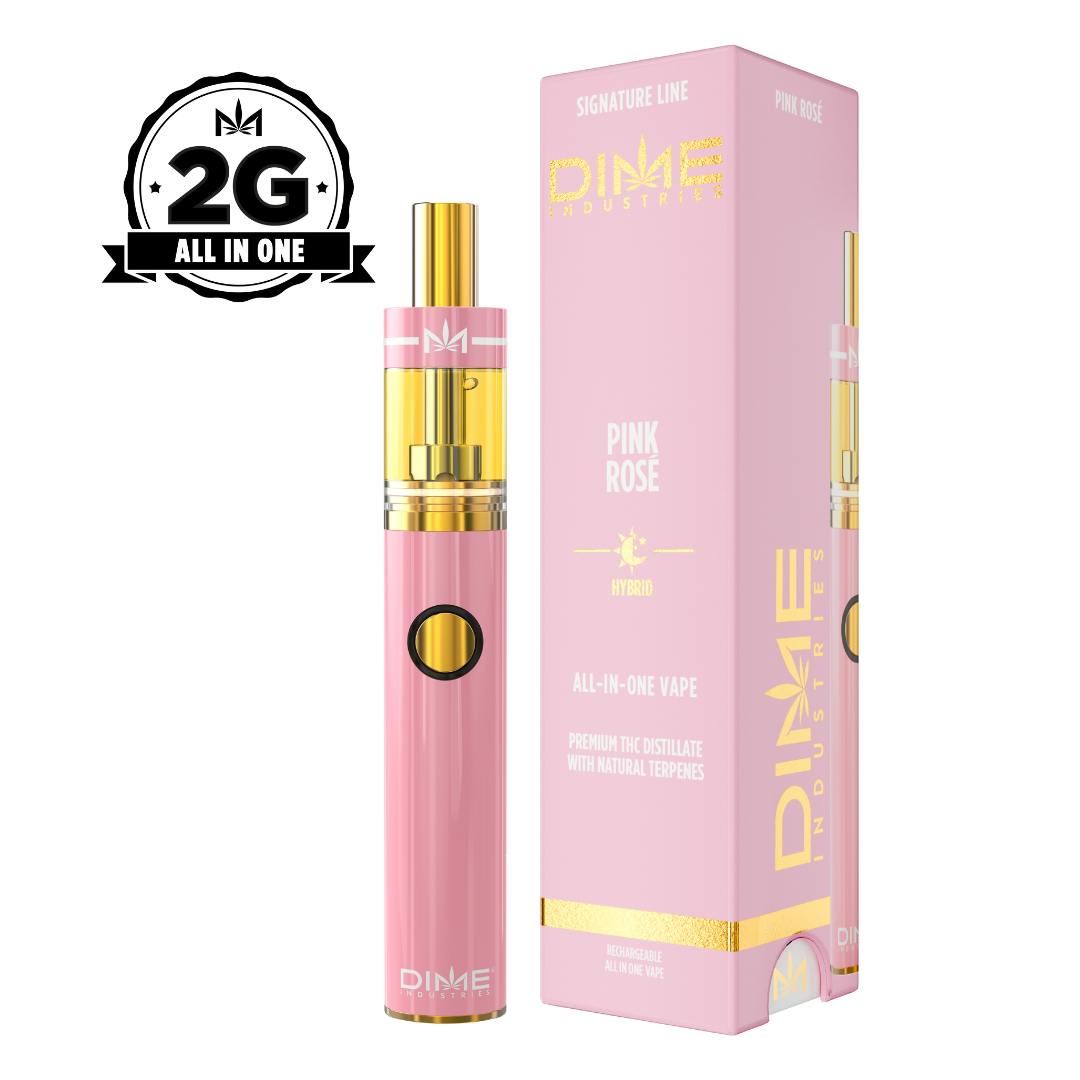
Dime IndustriesPink Rosé Signature Line All In One | 2g · 2g
$79.65
$90after tax

weeddispensarynearme.com
You must be 21 years or older to enter. By entering, you confirm you’re of legal age in your state to purchase cannabis.
For use only by adults 21+ • Keep out of reach of children
1 live products in stock
Quick answer · What is the Pink Rosé cannabis strain?
Pink Rosé arrives like a warm afternoon in late summer — unhurried, aromatic, and quietly luminous. This hybrid carries the gentle blush of its parentage in both name and character, offering a balanced interplay of floral sweetness and grounded ease. Cultivated for those who appreciate nuance over intensity, it is a strain that rewards patience, inviting the consumer to slow down and inhabit the moment fully.
$90after tax
About Pink Rosé
Pink Rosé is a hybrid strain whose precise lineage has not been uniformly confirmed across public cannabis databases, and the breeder of record varies depending on the source consulted. The most widely circulated accounts suggest a genetic foundation rooted in Pink Kush — a noted indica-dominant cultivar celebrated for its floral, vanilla-touched profile — crossed with a Gelato-adjacent or OG-influenced variety, lending Pink Rosé its characteristic balance of physical warmth and mental clarity. Some phenotype discussions reference possible ties to the broader "Pink" family of cultivars, which includes Pink OG and Pink Cookies, all sharing an affinity for sweet, berry-adjacent terpene expressions. The "Pink" lineage itself traces back through the BC (British Columbia) cannabis scene, where Pink Kush was developed over decades of careful selection and became a cornerstone cultivar for West Coast growers. Pink Rosé inherits that legacy of deliberate cultivation and refined sensory expression. It emerged into broader commercial visibility during the mid-2010s expansion of the legal cannabis market in North America, arriving at a moment when consumers were developing increasingly sophisticated palates. Because the breeder has not publicly and definitively named all parent strains across all expressions of this cultivar, shoppers may encounter slight variation between batches or producers. What remains consistent is a recognizable aromatic signature and a hybrid effect profile that has earned Pink Rosé a devoted following among those who seek balance rather than extremes.
Pink Rosé tends to open with a gentle cerebral lift — a lightening of mood that arrives within ten to fifteen minutes of consumption and carries a quality of soft focus rather than sharp stimulation. The onset is rarely abrupt; instead, it builds incrementally, offering the consumer time to settle into the experience. This measured quality makes the early phase well-suited to creative contemplation or unhurried conversation, as mental chatter tends to quiet without the mind going entirely still. As the experience deepens into its peak — typically thirty to sixty minutes in — the physical dimension becomes more present. A mild, even relaxation spreads through the body, grounding the earlier mental lift without fully sedating it. This is where the indica heritage of Pink Kush asserts itself, contributing a sense of physical ease that complements rather than overwhelms the sativa-influenced clarity. The dominant terpenes, including myrcene and linalool, are associated in cannabis literature with calming and muscle-relaxing qualities, which aligns with the typical body character consumers report. The comedown is gradual and gentle. Sessions lasting ninety minutes to two hours commonly conclude with a settled, restful feeling rather than an abrupt drop. New consumers are encouraged to approach Pink Rosé with a start-low, go-slow mindset, as the cumulative effect can be more pronounced than the initial onset suggests.
The aromatic profile of Pink Rosé is anchored by myrcene, the most prevalent terpene across the broader Pink Kush family. Myrcene contributes the strain's foundational earthiness — a soft, herbaceous base note that reads almost like fresh soil after rain — while simultaneously lending the characteristic sedative undertone associated with indica-leaning cultivars. Layered above this is a notable floral quality, largely attributable to linalool, which introduces a lavender-adjacent delicacy that elevates the overall bouquet toward something closer to a perfumer's composition than a typical cannabis aroma. Secondary terpene contributions from caryophyllene add a subtle spice — faintly peppery, slightly woody — that prevents the sweetness from becoming cloying. Where terpinolene appears in certain phenotypes, it adds a fresh, almost citrus-floral lift that sharpens the top notes and gives the strain its signature brightness. Some expressions also carry a light berry or rose-water quality that appears to be the result of the combined terpene matrix rather than any single compound. On the palate, Pink Rosé delivers smoothly in both combusted and vaporized forms. The inhale presents the floral sweetness most prominently, with a creamy mid-note that recalls the Gelato lineage often cited in its parentage. The exhale is where spice and earth arrive, leaving a clean, lightly herbal finish. Vapor consumption tends to amplify the linalool-driven florals, making it the preferred method for those drawn primarily to the aromatic dimension of the experience.
Pink Rosé presents with the kind of visual refinement that reflects careful cultivation and thorough curing. The buds are typically medium to moderately dense — neither the tight, compressed nuggets of a pure indica nor the airy, elongated structure of a pure sativa — sitting comfortably in the hybrid middle ground. Trichome coverage is generous, lending each bud a frosted, slightly luminous quality under direct light that speaks to its Pink Kush heritage. The color palette is where the strain earns its name. Deep forest greens form the structural backdrop, threaded through with occasional purple or lavender undertones in well-grown specimens, particularly those finished in cooler temperatures. Pistils run a warm amber to pale pink, clustered in loose arrangements across the calyxes and contributing the blush-toned visual character that distinguishes this cultivar from its relatives. When properly harvested and dried, the surface texture has a slight velvety quality before breaking, and the interior reveals a bright, resinous core.
Pink Rosé is considered a moderately challenging cultivar for home growers, requiring attentive environmental management to express its full terpene and color potential. Indoors, it performs well under controlled conditions with flowering times generally reported in the range of eight to nine weeks. Indoor yields are moderate, rewarding growers who invest in canopy management and humidity control during the flowering phase, as the dense bud structure can create conditions favorable to moisture-related issues if airflow is insufficient. Outdoors, Pink Rosé thrives in temperate to warm climates with low humidity during the final weeks before harvest — conditions that also tend to encourage the purple and lavender pigmentation in the buds. In markets like New York, outdoor cultivation would typically align with a late September to mid-October harvest window, assuming a spring planting. The strain responds well to training techniques and benefits from generous feeding schedules, particularly during the stretch phase. Cultivators curious about this strain should understand that the visual qualities that make it shelf-appealing — trichome density, pistil color — are largely dependent on finishing conditions, making those final two weeks the most consequential period of the grow.
Pink Rosé is a strain for the in-between hours — that transitional zone between the demands of the day and the full release of evening. It fits most naturally into late afternoon or early evening settings, where its balanced profile can serve as a soft pivot point rather than an abrupt gear change. Solo, it supports creative work of a reflective rather than generative variety: editing, sketching, rereading, or simply sitting with music and letting the mind make its own associations. In a social context, Pink Rosé suits small gatherings characterized by genuine conversation rather than high stimulation. Its gentle sociability without excessive cerebral acceleration makes it well-suited to a dinner gathering where the goal is presence and ease. For food pairings, the floral and spice terpene profile finds a natural complement in lighter Mediterranean fare — fresh cheeses, stone fruit, mild herbs — or in a dry sparkling wine served alongside. Musically, the strain pairs well with ambient or neo-soul compositions: artists whose work rewards attentive listening without demanding it. Think the unhurried pace of a long vinyl side on a Sunday afternoon.
Pink Kush
As the most commonly cited parent strain, Pink Kush shares the floral, vanilla-touched sweetness and physically grounding warmth that define Pink Rosé's core character.
Gelato
Fans of Gelato will recognize the creamy, dessert-adjacent mid-palate and balanced hybrid effect arc that appears in Pink Rosé's Gelato-influenced lineage.
Pink Cookies (Wedding Cake)
This Pink-family adjacent cultivar shares the dense trichome expression, sweet-spice aroma, and relaxed-but-present hybrid effect that Pink Rosé consumers tend to appreciate.
Runtz
Runtz offers a similarly refined sweetness, smooth smoke character, and even-keeled hybrid balance that appeals to the same consumer profile drawn to Pink Rosé's measured sensory experience.
Papaya
Papaya's tropical-floral terpene profile and body-forward relaxation with maintained mental clarity make it a natural recommendation for those who enjoy Pink Rosé's grounded ease.
Pink Rosé is a hybrid, drawing from both indica and sativa heritage. Its Pink Kush lineage contributes indica-leaning physical relaxation, while the sativa-influenced genetics in its cross bring a lighter, mood-lifting mental quality. The result sits comfortably in balanced hybrid territory, leaning slightly toward the indica side in its later-phase body effects without becoming fully sedating for most consumers.
Pink Rosé presents a floral, lightly creamy flavor profile anchored by sweet top notes and a mild spice on the exhale. The inhale is soft and fragrant — rose water and fresh herb — while the finish carries a gentle earthiness and faint pepper note from caryophyllene. In vapor form, the floral dimension is most pronounced; combustion brings the earthier, spiced qualities into sharper relief.
Consumers typically describe Pink Rosé as producing a gradual mood lift followed by a spreading physical ease — a combination that feels balanced and unhurried rather than abrupt. The cerebral phase is characterized by soft focus and gentle sociability, while the body component grows more present over time, producing a settled, relaxed quality. Most users report a smooth, restful comedown. As with any cannabis product, starting with a modest amount is advisable.
Consumers drawn to Pink Rosé often enjoy Pink Kush for its shared floral sweetness and physical warmth, Gelato for its creamy flavor profile and balanced hybrid arc, and Runtz for its refined sweetness and even-keeled character. Pink Cookies (Wedding Cake) also shares the trichome-rich, spice-and-sweet profile that defines the broader Pink family of cultivars.
Pink Rosé can be approachable for new consumers due to its gradual onset and measured effect profile, but its cumulative body relaxation means the full experience can be more substantial than the initial onset suggests. New consumers are encouraged to follow a start-low, go-slow approach, allowing ample time between doses to assess the full effect before continuing. A calm, comfortable setting is advisable for a first session.
The dominant terpenes in Pink Rosé are typically myrcene, linalool, and caryophyllene. Myrcene contributes earthy, herbaceous base notes and is associated with the physically calming qualities in the broader Pink Kush lineage. Linalool adds the strain's signature floral, lavender-adjacent character. Caryophyllene introduces a mild spice and woodiness that balances the sweetness and rounds out the overall terpene profile.
Pink Rosé is best suited to late afternoon or early evening use, when its balanced profile can ease the transition between an active day and a restful evening without fully sedating. Its moderate cerebral lift makes early morning use less intuitive, while its physical relaxation component makes it less ideal for high-demand daytime tasks. It occupies that unhurried in-between zone where reflection, conversation, or creative leisure feel most natural.
Pink Rosé carries a distinctive and moderately expressive aroma that is floral and sweet at the fore, with earthier, spiced undertones beneath. It is not an aggressive or pungent cultivar in the way of some fuel-forward or skunk-dominant strains, but its presence is notable — particularly when the buds are broken apart, releasing the linalool-driven floral notes and the myrcene earthiness in full. Proper storage in an airtight container is recommended to preserve its aromatic complexity.
Related strains
Pick your store
We'll show pricing, deals, and delivery zones for the store you pick. You can switch any time from the header.