
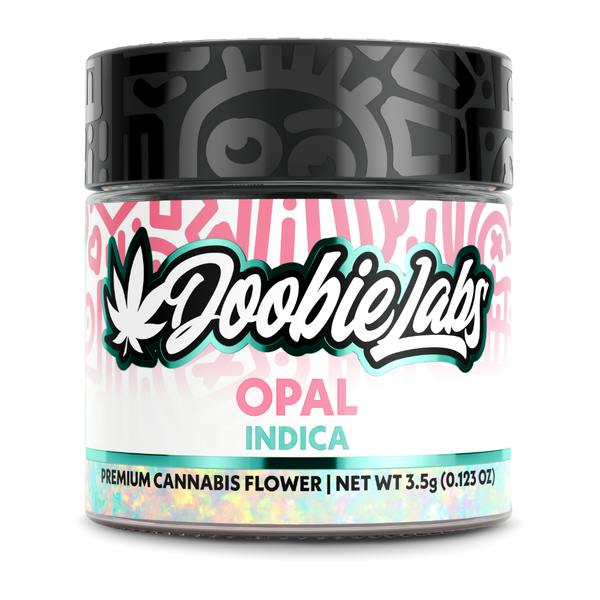
Indica
All strains Opal
1 live products in stock
Quick answer · What is the Opal cannabis strain?
Opal is a quietly luminous indica whose name is earned by the iridescent frost blanketing each compact, resin-heavy bud. Where many heavy indicas announce themselves bluntly, Opal arrives with a certain grace — a slow, enveloping warmth that settles over the body while leaving the mind clear enough to appreciate the stillness it creates. Earthy pine and subtle citrus notes round out a sensory profile that rewards the unhurried consumer.
Shop Opal · 1 of 1 live products
About Opal
Everything to know about Opal.
Lineage & origin
Opal's genetic lineage carries some degree of ambiguity in public cannabis literature, as the breeder has not extensively publicized a fully documented parentage. The strain is most consistently attributed to Ethos Genetics, a Colorado-based seed company known for methodical, phenotype-driven breeding programs that have produced widely respected cultivars including Mandarin Cookies and Mandarin Sunset. Based on available community documentation, Opal is understood to descend from a cross of Appalachia and White Fire OG (also known as WiFi OG), though this lineage remains partially contested across databases such as Leafly and Seedfinder. Appalachia itself is a sativa-leaning hybrid born from Green Crack and Tres Dawg, lending Opal a clear-headed genetic thread that tempers its indica-dominant weight. White Fire OG, a cross of The White and Fire OG bred by OG Raskal Seeds, contributes the dense trichome architecture, fuel-tinged earthiness, and pronounced resin production for which it is celebrated. Together, these two parent lines account for Opal's paradoxically lucid body effect and its above-average coating of crystal trichomes. Ethos Genetics released Opal as part of a broader catalog of selections aimed at the connoisseur market — cultivators seeking both aesthetic excellence and refined effect profiles. Its position within the Ethos family situates it alongside phenotype siblings that share White Fire OG's structural density and Appalachia's grounding mental clarity, making it a well-rounded expression of modern indica breeding.
Effects
Opal's onset arrives with measured patience, typically manifesting within five to fifteen minutes of inhalation. The initial wave is gently cerebral — a mild brightening of focus that, rather than stimulating activity, tends to quiet the mental background noise that accumulates across a full day. This introductory clarity is brief but distinct, giving way to the strain's more characteristic indica expression within the first twenty minutes. At its peak, Opal is defined by a comprehensive physical ease that works from the shoulders downward. Muscle tension releases gradually, and a pervasive sense of physical comfort settles in without the sharp sedation that more aggressive indicas can impose. This body-forward character is consistent with its elevated myrcene content — myrcene is widely documented as contributing to the deeply relaxing, muscle-softening quality common to indica-dominant cultivars. Caryophyllene adds a subtle grounding dimension to the experience, and the modest limonene presence sustains just enough mood elevation to prevent the effect from reading as purely soporific. Duration typically spans two to three hours at measured consumption levels, with the comedown unfolding smoothly. Evening use tends to transition naturally into restfulness, though afternoon consumers at lower doses may find the sedative arc gentler than anticipated. As always, starting low and proceeding slowly is the appropriate orientation, particularly for those newer to high-resin indica cultivars.
Aroma, flavor & terpenes
The aromatic profile of Opal is rooted in a terpene composition that leans heavily on myrcene, with meaningful contributions from caryophyllene, limonene, and pinene — a quartet that creates a scent profile equal parts forest floor and citrus rind. On the initial encounter, the nose receives an earthy, herbal impression reminiscent of damp soil and crushed pine needles, a quality directly attributable to myrcene and pinene working in concert. Pinene's role here is worth noting: beyond its piney sharpness, it is associated in emerging research with potential alertness-sustaining properties, which may partly explain Opal's tendency to maintain some mental clarity despite its indica weight. Secondary to the earth-and-pine foundation, limonene delivers a fresh citrus lift — subtle rather than assertive — that adds brightness and prevents the aroma from reading as purely dank. Caryophyllene, a sesquiterpene that binds to CB2 receptors, rounds out the bouquet with a faint spice and wood character, lending the overall scent a certain warmth and depth. On the palate, Opal smokes with notable smoothness relative to its resin density. A vaporizer particularly rewards the flavor-curious consumer: the first draws reveal sweet pine and mild lemon zest, transitioning through the session into a richer, earthier finish with a faint peppery exhale attributable to caryophyllene. The smoke remains clean without harshness, and the aftertaste lingers agreeably — herbal, slightly sweet, grounded.
Appearance
Opal presents as a classically structured indica bud — compact, rounded, and notably dense in hand, with a heft that belies the bud's modest exterior dimensions. The calyxes stack tightly, forming a cohesive architecture that growers and consumers familiar with White Fire OG genetics will recognize immediately. Coloration runs across a palette of deep forest green with occasional hints of olive and muted purple, the latter emerging more prominently in phenotypes exposed to cooler temperatures during the late flowering stage. The pistils are a warm amber-orange, threading visibly through the tight green mass and providing a pleasing contrast against the bud's frosty exterior. Trichome density is among Opal's most immediate distinguishing characteristics: the entire surface of a well-cultivated specimen is blanketed in a thick, milky-to-amber layer of capitate-stalked trichomes that give the bud its namesake iridescence under direct light. When handled gently, the resin transfer to the fingers is immediate, signaling the cultivar's potency without any chemical analysis required.
Growing notes
Opal performs well in both indoor and outdoor cultivation environments, though its preference for controlled conditions makes it particularly amenable to indoor grow setups where temperature, humidity, and light cycles can be dialed in precisely. Indoors, the strain follows a flowering window of approximately eight to nine weeks — consistent with most White Fire OG derivatives — and produces yields that reward attentive growers who train canopies using methods such as low-stress training or screen-of-green setups to maximize light penetration across its dense, compact structure. Outdoor cultivation is viable in temperate climates with reliably warm, dry late-summer conditions; Opal's indica structure makes it susceptible to moisture-related issues such as botrytis if air circulation is insufficient during the dense bud's final swell. Growers cultivating for trichome quality — as many Ethos Genetics selections reward — are advised to monitor late-stage resin development carefully before harvest. Overall, Opal sits at a moderate difficulty level: accessible enough for an intermediate home cultivator, but expressive enough in its resin production to merit the care and attention that an experienced grower brings.
When it's best enjoyed
Opal belongs to the evening hours, or to those unhurried weekend afternoons when the agenda deliberately contains very little. Its combination of physical ease and preserved mental composure makes it well suited to solitary unwinding — reading, listening to music at deliberate volume, or simply watching the light change in a room without feeling the pull toward sleep too early. Unlike more sedating indicas that foreclose engagement, Opal permits a degree of passive absorption that suits contemplative activities. For the dinner-table setting, Opal's earthy pine and citrus terpene profile pairs thoughtfully with cuisine that shares that aromatic register — roasted root vegetables, herb-forward preparations, or a well-aged hard cheese served simply. On the musical side, the strain's grounding yet not fully sedating arc suits recordings that reward attentive listening: sparse jazz, ambient electronic works, or acoustic guitar in an intimate register. Those returning from a long hike or an extended session at a spa will find that Opal extends the physical ease already present, making it a natural companion for the hours of conscious rest that follow genuine physical exertion.
If you like Opal, also explore
White Fire OG (WiFi OG)
As a parent strain, White Fire OG shares Opal's resin density, earthy-fuel terpene character, and paradoxically clear-headed body effect, making the transition between the two immediately intuitive.
Appalachia
The other parent in Opal's lineage, Appalachia offers a comparable balance of mental clarity and physical relaxation for consumers who prefer a slightly more sativa-leaning tilt to the same effect family.
The White
Fans drawn to Opal's exceptional trichome production and clean, understated flavor profile will find a natural kinship with The White, which similarly emphasizes resin quality and a smooth, neutral taste.
Mandarin Cookies
A fellow Ethos Genetics cultivar, Mandarin Cookies shares Opal's precise breeding pedigree and appeals to consumers who appreciate the house style of polished effects and aromatic complexity.
Bubba Kush
For the consumer who values Opal's deep body relaxation and earthy, slightly sweet palate, Bubba Kush offers a comparable evening-oriented experience with its own well-established indica comfort profile.
Common questions
Is Opal indica or sativa?+
Opal is classified as an indica-dominant hybrid. Its lineage — tracing back to Appalachia and White Fire OG through Ethos Genetics — accounts for a primarily body-forward, physically relaxing effect profile. That said, the sativa genetics present in Appalachia contribute a degree of mental clarity that distinguishes Opal from more fully sedating pure indicas. Consumers can expect a grounded, calm experience without complete cognitive shutdown.
What does Opal taste like?+
Opal's flavor profile centers on earthy pine and mild citrus, with a subtle peppery finish on the exhale. The dominant terpenes — myrcene, pinene, and limonene — translate directly to the palate as a smooth, herbal-sweet smoke with fresh lemon zest on the draw and a faintly spiced, woody aftertaste from caryophyllene. Vapor production rewards the terpene-attentive consumer particularly well, preserving the layered citrus-and-earth character more cleanly than combustion.
What are the typical effects of Opal?+
Opal typically produces a two-phase experience: a brief, gently clarifying mental onset followed by a pronounced, sustained body relaxation that settles across muscle groups without heavy sedation. Peak effects are calm and physically comfortable, making the strain well suited to rest and passive leisure. The comedown is gradual, often easing naturally into drowsiness in the late evening. Those new to indica-dominant cultivars are encouraged to start with a conservative amount and allow adequate time between doses.
What strains are similar to Opal?+
Consumers who enjoy Opal frequently gravitate toward its parent strains — White Fire OG and Appalachia — as well as other Ethos Genetics cultivars such as Mandarin Cookies. The White, a grandparent strain contributing to Opal's trichome architecture, is another natural companion. For those drawn primarily to the body-relaxation dimension, Bubba Kush offers a comparably grounding evening profile with its own earthy, classic indica character.
Is Opal good for beginners?+
Opal can be approachable for adults new to cannabis, provided they respect the starting-low principle. Its effect arc is smooth and the mental component is less disorienting than more sativa-forward cultivars, which some beginners find easier to navigate. However, Opal's notable resin density signals a cultivar of meaningful potency. First-time consumers should start with a single, modest inhalation, wait a full fifteen minutes to assess the onset, and proceed from there according to personal comfort.
What are the dominant terpenes in Opal?+
Opal's terpene profile is led by myrcene, which contributes the earthy, herbal base aroma and is closely associated with the physically relaxing quality of indica-dominant cultivars. Caryophyllene adds a spiced, woody dimension and is notable as the only common terpene known to interact with endocannabinoid receptors. Limonene provides a fresh citrus lift, while pinene delivers the characteristic sharp, clean pine note. Together, these four terpenes account for Opal's layered, forest-floor-and-citrus aromatic identity.
Who bred Opal and when was it released?+
Opal is attributed to Ethos Genetics, a Colorado-based seed company recognized for data-driven, phenotype-selection-focused breeding. Ethos built its reputation on cultivars such as Mandarin Cookies and Mandarin Sunset. The precise release year of Opal has not been extensively documented in public cannabis literature, though it entered the connoisseur market as part of Ethos's ongoing catalog expansion during the mid-to-late 2010s era of premium genetics development.
What is the best time of day to consume Opal?+
Given its indica-dominant effect arc — physical ease, measured calm, and a natural drift toward restfulness at the comedown — Opal is most at home in the late afternoon or evening. It suits the hours after obligations are settled: post-work decompression, quiet dinners, or deliberate rest. Some consumers at lower doses find it manageable during slower daytime moments, but its overall character is weighted toward unwinding rather than activating, making evening the most natural fit.
Related strains