
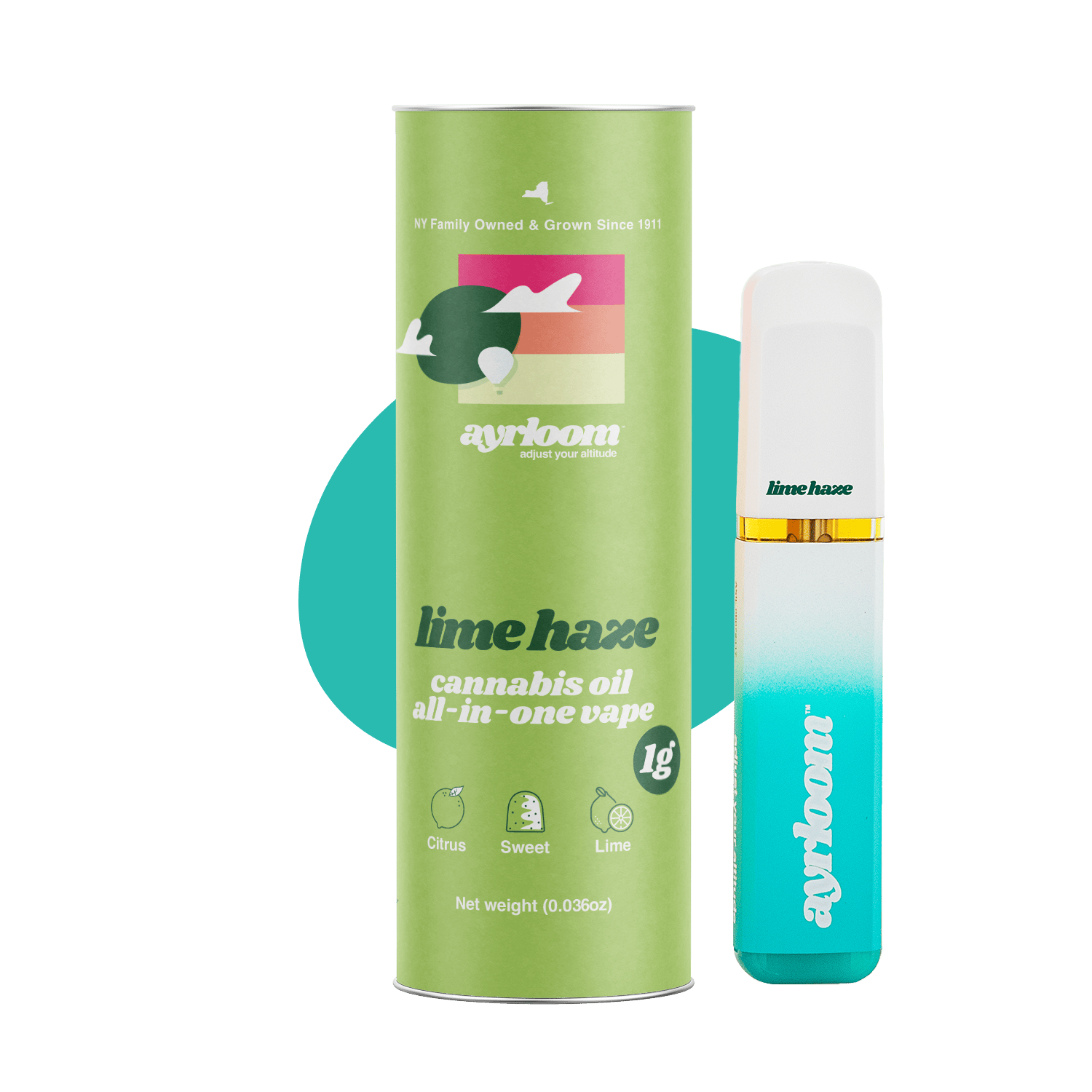
Hybrid
All strains Lime Haze
1 live products in stock
Quick answer · What is the Lime Haze cannabis strain?
Lime Haze arrives like a slice of citrus pressed between the pages of a sun-drenched afternoon — bright, articulate, and quietly electric. Its name telegraphs the experience faithfully: a sharp, verdant lime note underpinned by the classic hazy sweetness that traces its roots to some of cannabis's most storied equatorial genetics. For those who prize mental clarity over sedation, Lime Haze occupies a rare and rewarding space on the sativa spectrum.
Shop Lime Haze · 1 of 1 live products
About Lime Haze
Everything to know about Lime Haze.
Lineage & origin
Lime Haze is generally understood to be a cross of Lemon Haze and a Haze-family cultivar, with some sources pointing to a more specific pairing of Super Lemon Haze and Original Haze or a closely related Haze phenotype. The precise breeder of the most widely circulated Lime Haze phenotype has not been definitively confirmed in public documentation, meaning that, as with many Haze-adjacent cultivars, regional variations and seed-company interpretations have quietly proliferated over the years. What is consistent across most phenotypic expressions is the strong influence of Original Haze — itself a complex landrace-derived hybrid, thought to involve Colombian, Mexican, Thai, and South Indian genetics cultivated and refined in California during the 1960s and 1970s. Lemon Haze, one of the likely parent strains, is itself a cross of Lemon Skunk and Silver Haze, and became widely recognized in the mid-2000s for its bright citrus terpene profile and cerebral, uplifting character. Super Lemon Haze, a Green House Seeds creation that won back-to-back High Times Cannabis Cup titles in 2008 and 2009, is a related expression that has influenced many subsequent lemon-forward sativa hybrids. Lime Haze inherits the lofty, mentally expansive quality common to the broader Haze family while distinguishing itself through a more lime-forward, green-citrus terpene expression rather than the sweeter lemon character of its closest relatives. It belongs to a loose genetic lineage that includes Jack Herer, Amnesia Haze, and Super Silver Haze — cultivars that collectively defined the modern sativa archetype for a generation of enthusiasts.
Effects
Lime Haze is consistently characterized by a swift, clean onset that typically manifests within a few minutes of inhalation. The initial impression is cerebral — a gentle brightening of attention that many describe as a sharpening of focus rather than an overwhelming rush. Thoughts tend to move with greater fluency; conversation feels easier, creative associations surface with less friction, and a general sense of lightness settles in without the disorienting edge that some high-potency sativas can carry. As the experience deepens into its peak — generally reached somewhere between twenty and forty-five minutes in — the cerebral quality becomes more textured. Some users note a mild visual brightness, a heightened sensitivity to music, and an increased appetite for social interaction or collaborative work. The body remains largely present and mobile, with little of the physical heaviness associated with indica-dominant cultivars. This balance makes Lime Haze well-suited to daytime use, where sedation would be counterproductive. The comedown is characteristically gentle for a sativa of this lineage. Duration typically ranges from two to three hours depending on individual tolerance and consumption method, with a gradual easing rather than an abrupt drop. Terpene science supports these observations: the high limonene content associated with lime-forward cultivars has been studied for its potential mood-elevating associations, while terpinolene — common in Haze genetics — correlates with the uplifting, slightly euphoric quality that defines the Haze family. As always, those new to cannabis or to sativa-dominant cultivars are encouraged to start with a modest amount and allow adequate time between sessions.
Aroma, flavor & terpenes
The aromatic profile of Lime Haze opens with an immediate and assertive burst of fresh lime zest — the kind that is more green and slightly bitter than sweet, closer to the white pith of a Key lime than a sugared citrus drink. This dominant note is attributable primarily to high concentrations of limonene, the monocyclic monoterpene responsible for the bright citrus character found throughout the lemon-haze family and many sativa-leaning cultivars. Limonene's aroma contribution in Lime Haze skews distinctly toward the cooler, more herbal end of the citrus spectrum compared to its sibling strains. Beneath the citrus topline, terpinolene adds a complex herbal-floral dimension — slightly piney, faintly sweet, and reminiscent of fresh herbs such as tarragon or a distant wildflower. Terpinolene is a hallmark terpene of Haze-family genetics and plays a meaningful role in shaping the cultivar's characteristic airy, almost perfumed quality. Myrcene, present in moderate quantities as it is in most cannabis cultivars, contributes an underlying earthiness and a subtle tropical sweetness that softens the sharpness of the lime note and rounds the profile. On the palate — whether consumed via dry herb vaporizer or traditional combustion — Lime Haze delivers its citrus promise with reasonable fidelity. The inhale is clean and slightly tangy, with a fresh herbal quality on the mid-palate. The exhale carries a light, almost mentholated coolness alongside the lime character, finishing with a mild earthiness. At lower vaporization temperatures, the terpene complexity is more fully expressed, making that consumption method particularly rewarding for those interested in the aromatic nuance of this cultivar.
Appearance
Lime Haze exhibits the structural hallmarks common to sativa-dominant Haze derivatives: buds tend toward the elongated and somewhat airy side, with a loose, spear-like formation rather than the dense, compact structure associated with indica-dominant cultivars. Calyxes are characteristically small and stack in open, finger-like clusters along extended internodes — a direct inheritance from the Original Haze phenotype that prioritized light penetration over density. The color palette is predominantly a medium to slightly lighter green, often with subtle yellowish-green highlights that echo the strain's lime-forward identity. Pistils are typically a warm amber to burnt orange, curling loosely around the bud structure and providing a gentle chromatic contrast to the green canopy. Trichome coverage, while perhaps less visually dramatic than that of some modern hybrid cultivars, is consistent and fine-grained across the calyxes and sugar leaves — contributing a frosty, slightly resinous sheen that catches light with a quiet luminosity. Well-cultivated specimens carry a modest but unmistakable stickiness upon handling.
Growing notes
Lime Haze, like most Haze-family cultivars, presents a moderate to demanding cultivation profile that rewards patience and attentive environmental management. Indoor growing is feasible but requires meaningful vertical space, as the characteristically stretchy sativa growth pattern can see plants double or more in height during the flowering stretch. Indoor flowering time typically falls in the range of ten to twelve weeks — longer than most hybrid cultivars — reflecting the equatorial landrace genetics deep in its heritage. Outdoor cultivation in warm, Mediterranean-style climates is where Haze genetics have historically thrived. In New York's climate, outdoor growing is possible during the warmer months, though growers should account for the late harvest window — often extending into mid to late October — and the associated risk of early autumn humidity. Yields are typically moderate indoors and can be generous outdoors given adequate sun exposure and a long growing season. The extended flowering time and spatial demands place Lime Haze in the intermediate to advanced category for home cultivators, making it a more natural fit for experienced growers comfortable with sativa management techniques such as low-stress training and careful light scheduling.
When it's best enjoyed
Lime Haze occupies a particular niche as a companion to creative and social endeavors that unfold in daylight or the early evening — moments that call for engagement rather than retreat. It suits the solo writer settling into a long session with a specific problem to work through, or the group of friends gathering before a gallery opening or live music event where conversation and sensory attentiveness are both welcome. Given the lime-forward, herbal terpene profile, this cultivar pairs with notable coherence alongside lighter culinary experiences: a ceviche bright with lime and fresh herb, a glass of mineral-driven white wine such as a Grüner Veltliner or an unoaked Sauvignon Blanc, or a sparkling water with a pressed citrus garnish. Musically, the Haze-family's expansive, slightly euphoric character finds a natural partner in ambient electronic music with significant textural depth — Brian Eno's quieter works, early Four Tet, or the measured complexity of post-bop jazz. The cultivar is less suited to the deeply meditative solo evening and more aligned with the kind of purposeful, alert ease that characterizes a productive creative afternoon.
If you like Lime Haze, also explore
Super Lemon Haze
A closely related Haze-family cultivar with a similarly bright citrus terpene profile and uplifting cerebral character, making the transition between the two feel intuitive for fans of either.
Lemon Haze
Shares the limonene-forward, Haze-derived lineage with Lime Haze, offering a sweeter lemon expression for those who enjoy the same sativa arc with a slightly softer citrus edge.
Amnesia Haze
Another Haze-family descendant with a strong cerebral onset and complex terpene profile that will resonate with Lime Haze enthusiasts seeking a longer, more expansive experience.
Jack Herer
A legendary sativa-dominant hybrid that shares the piney-herbal terpene dimension and clear-headed, creative focus that defines the best expressions of Lime Haze.
Green Crack
For those drawn to Lime Haze's daytime energy and citrus brightness, Green Crack offers a similarly alert, focused sativa experience with its own distinct tangy fruit profile.
Common questions
Is Lime Haze indica or sativa?+
Lime Haze is a sativa-dominant cultivar rooted in Haze-family genetics, which trace back to equatorial landraces from Colombia, Mexico, Thailand, and South India. Its effects reflect that heritage: expect a clear-headed, uplifting, and mentally engaged experience rather than physical heaviness or sedation. It is generally considered a daytime cultivar best suited to hours when alertness and engagement are desirable.
What does Lime Haze taste like?+
The flavor profile of Lime Haze centers on fresh lime zest — green, slightly bitter, and citrus-forward rather than sweet. On the inhale, there is a clean, tangy quality with a herbal mid-palate note reminiscent of tarragon or fresh garden herbs. The exhale carries a mild earthiness and a faint mentholated coolness. Consuming via a dry herb vaporizer tends to preserve the terpene complexity most faithfully.
What are the typical effects of Lime Haze?+
Lime Haze typically produces a swift cerebral onset characterized by a brightening of focus and a sense of mental fluency. Social ease, creative engagement, and a general uplift in mood are commonly reported at the peak. The body remains active and present rather than sedated. Duration generally runs two to three hours depending on individual tolerance, with a gradual, gentle comedown. Those new to sativa cultivars should begin with a modest amount.
What strains are similar to Lime Haze?+
Cultivars that share Lime Haze's citrus-forward terpene profile and cerebral sativa character include Super Lemon Haze, Lemon Haze, and Amnesia Haze — all members of the broader Haze family. Jack Herer offers a comparable clear-headed focus with more pine and spice, while Green Crack provides a similarly energetic daytime experience with a distinct tropical-citrus edge. Any of these represent a logical next step for the Lime Haze enthusiast.
Is Lime Haze good for beginners?+
Lime Haze can be approachable for beginners who are specifically drawn to sativa-dominant effects and daytime use, but its Haze lineage means the cerebral intensity can feel pronounced at higher amounts. The standard guidance applies: start with a small amount, allow ample time to assess the full onset — which can take up to forty-five minutes — before considering more. Those sensitive to anxiety or mental stimulation from cannabis may prefer a more balanced hybrid as a starting point.
What are the dominant terpenes in Lime Haze?+
Lime Haze is typically rich in limonene, which drives the bright citrus-lime aroma and is associated in research with mood-elevating qualities. Terpinolene, a hallmark of Haze-family genetics, contributes a herbal, faintly floral, and piney complexity. Myrcene rounds the profile with earthiness and a subtle tropical note. Secondary contributions from ocimene and pinene may also appear depending on the specific phenotype and growing conditions.
How long does the Lime Haze experience typically last?+
Most users report a Lime Haze experience lasting between two and three hours when consumed via inhalation, with the peak cerebral quality arriving roughly twenty to forty-five minutes after onset. The comedown is characteristically gradual for a sativa of this lineage. Individual factors including tolerance, metabolism, and the amount consumed will influence duration meaningfully, so those with less experience should account for additional time before engaging in activities requiring full concentration.
When is the best time of day to consume Lime Haze?+
Given its sativa-dominant character and Haze-family heritage, Lime Haze is best positioned as a morning or early-to-mid afternoon cultivar. It is well-suited to creative sessions, social gatherings, or outdoor activities where mental engagement and physical mobility are both welcome. Consuming late in the evening may interfere with the ability to wind down, particularly for those who find sativa-dominant cultivars stimulating relative to their typical baseline.
Related strains