
Hybrid
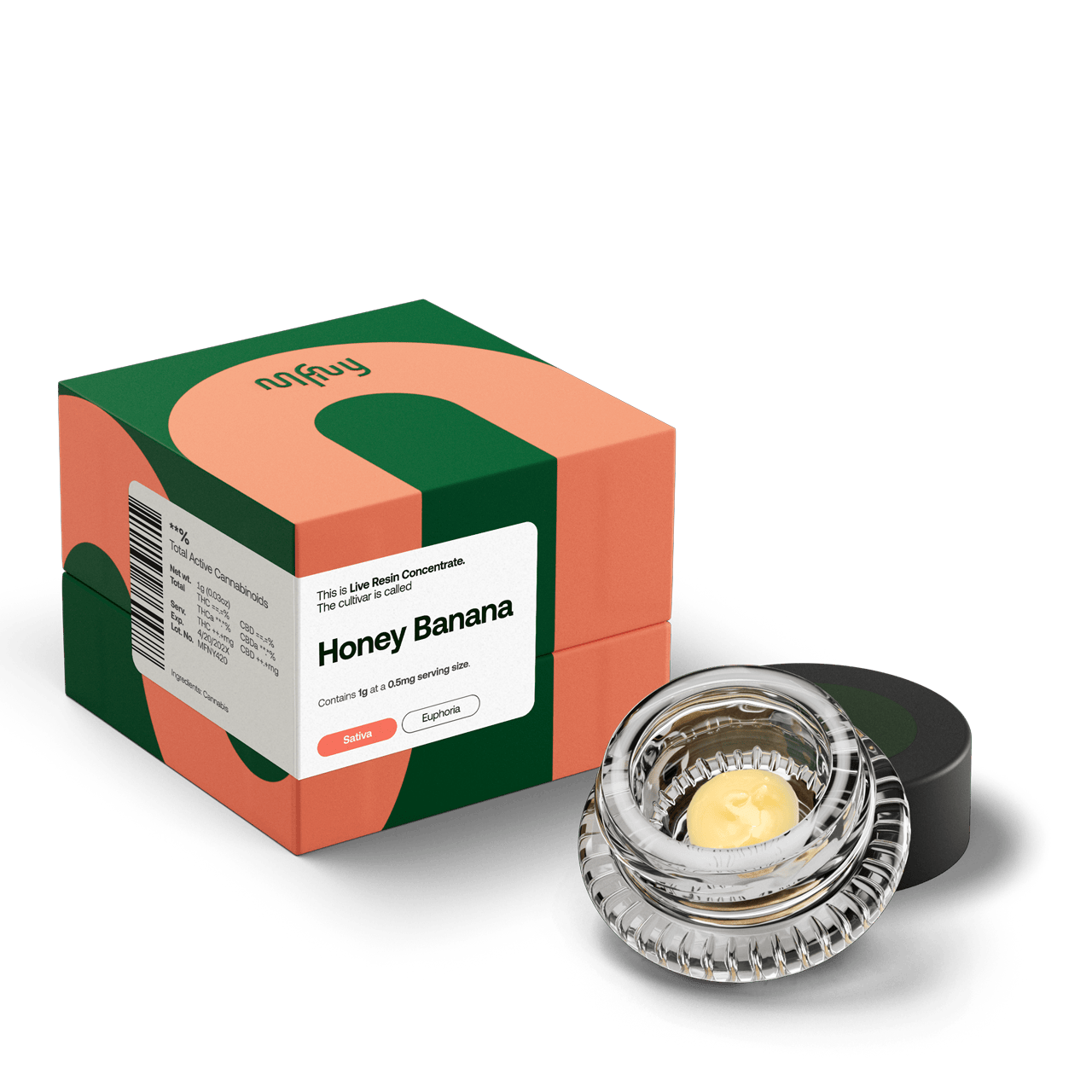
All strains Honey Banana
5 live products in stock
Quick answer · What is the Honey Banana cannabis strain?
Honey Banana arrives like a slow, golden afternoon — its name a precise description of the experience waiting inside. A thoughtfully bred hybrid carrying unmistakable tropical sweetness and a grounded, unhurried warmth, it occupies the rare space between social ease and contemplative drift. The bud itself is a small spectacle of color and resin, drawing the eye before it ever reaches the nose. For those who prefer their cannabis the way they prefer a well-composed dessert wine — layered, unhurried, and deeply satisfying — Honey Banana rewards patience.
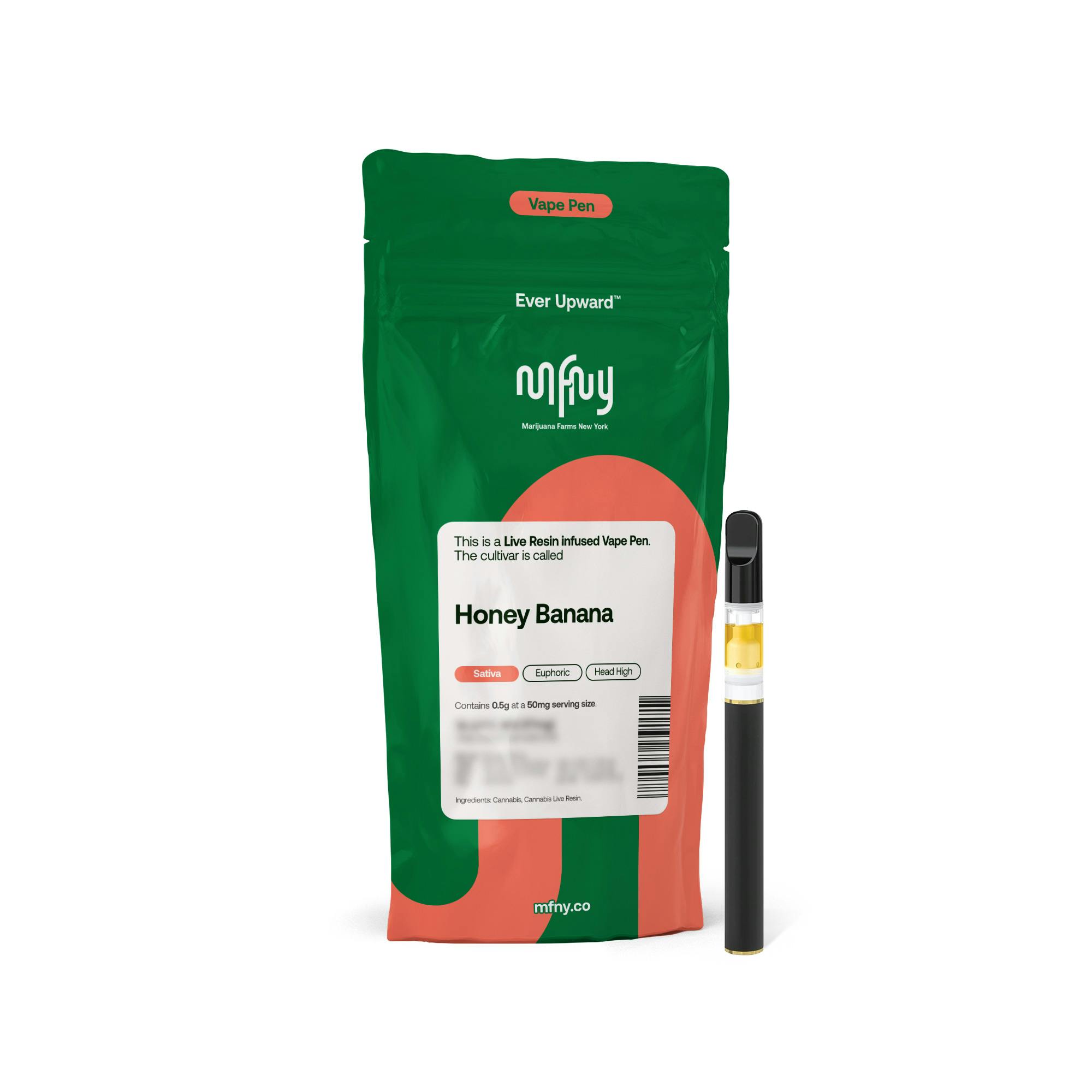
Shop Honey Banana · 5 of 5 live products
About Honey Banana
Everything to know about Honey Banana.
Lineage & origin
Honey Banana is a hybrid strain attributed to Symbiotic Genetics, a California-based breeding operation known for producing resin-forward, terpene-rich cultivars with distinctive aromatic profiles. The lineage is generally documented as a cross between Strawberry Banana and Honey Boo Boo, though some sources present slight variations on this parentage. Strawberry Banana — itself a collaboration between DNA Genetics and Serious Seeds, crossing Banana Kush with a Strawberry phenotype of Bubble Gum — contributes pronounced fruit-forward aromatics, elevated myrcene expression, and a reliably sedating undercurrent. Honey Boo Boo, a lesser-publicized Symbiotic Genetics cultivar, brings additional resin density and a sweetened, almost confectionery quality to the cross. The strain emerged during the mid-to-late 2010s, a period when craft breeders were increasingly chasing not just potency but aromatic complexity and terpene specificity. Honey Banana became a quiet standout in that era — sought after by concentrate producers for its generous trichome output and by flower connoisseurs for the clarity and depth of its scent profile. It did not generate the broad commercial visibility of some contemporaries, which has contributed to its reputation as something of a cultivator's cultivar: passed between dedicated growers and known best by those who seek it deliberately. No widely documented sibling phenotypes have emerged in public databases, though individual growers have reported notable phenotypic variation in color expression and resin development.
Effects
The onset of Honey Banana is measured and deliberate, typically arriving within five to ten minutes when smoked or vaped, with a gentle cerebral brightening that does not announce itself with urgency. The initial phase tends toward a mild elevation of mood and a softening of mental friction — thoughts become more associative and less linear, which many users find conducive to creative or reflective activity. This is not a strain that pins the mind to a single track; it opens peripheral awareness without producing the restless, racing quality associated with more sativa-dominant expressions. As the experience deepens through the peak — generally between thirty minutes and an hour in — a body warmth begins to establish itself in the shoulders and limbs. This physical dimension is where Strawberry Banana's indica-leaning heritage asserts itself most clearly. The body sensation is weighted but not immobilizing at moderate quantities, functioning more as a grounding presence beneath the mental ease. The dominant terpene myrcene is understood in the scientific literature to contribute to this sedating, muscle-relaxing quality, while limonene is associated with the mood-elevated, socially comfortable character of the earlier phase. The comedown is notably gentle. Honey Banana does not tend to drop users into abrupt fatigue; rather, it eases gradually toward a relaxed, sleepy contentment over two to three hours total. New consumers should apply standard start-low, go-slow principles — the potency can be deceptive given the smooth, pleasurable onset.
Aroma, flavor & terpenes
The aroma of Honey Banana is its most immediately striking feature and the most literal fulfillment of its name. On first encounter, the nose registers ripe banana and tropical stone fruit — a warm, almost fermented sweetness that is unmistakably myrcene-forward. Myrcene, the most commonly occurring terpene in cannabis, is responsible for that earthy, fruity, faintly musky base note that makes this strain smell, in its finest expressions, like a bowl of just-turned tropical fruit left in warm sun. It establishes the aromatic foundation over which the other terpenes layer. Caryophyllene — a sesquiterpene that also occurs in black pepper, cloves, and hops — introduces a subtle spice and depth that prevents the sweetness from becoming one-dimensional. It functions as a low aromatic anchor, adding a faint peppery exhale that becomes more perceptible in the vapor than in the raw flower. Limonene, where present, contributes a bright citrus top note that lifts the profile and adds a light zestiness, while traces of linalool — associated with floral, lavender-adjacent softness — can sometimes be detected in well-cured specimens, adding a gentle roundness to the finish. On the palate, Honey Banana smokes with a density and sweetness that coats the tongue without becoming cloying. The inhale carries the tropical fruit character prominently; the exhale opens into a warm, honeyed finish with a mild spice. Vapor expression tends to be cleaner and more nuanced than combustion, amplifying the citrus and floral secondary notes.
Appearance
Honey Banana produces buds that tend toward medium density — not the compressed, blocky structure of a heavy indica, nor the loose, airy architecture of a pure sativa expression, but something considered and proportionate in between. The calyxes are rounded and well-formed, stacking in a way that gives the flower a slightly elongated, tapered silhouette in its better-grown expressions. The color palette is one of the strain's genuine visual pleasures. A base of deep, sage-tinged green is frequently interrupted by flashes of purple and violet — a phenotypic expression that can become quite pronounced under cooler nighttime temperatures during the final weeks of flowering. Pistils tend toward burnt orange and amber, providing warm contrast against the cooler greens and purples. Trichome coverage is generous and consistent across the surface of the bud, giving the flower a frosted, almost luminous quality under direct light — a characteristic that made it attractive to the concentrate market and that signals the resinous density cultivated into the line by Symbiotic Genetics.
Growing notes
Honey Banana is considered moderately challenging to cultivate, making it better suited to growers with at least one or two previous cycles of experience rather than absolute beginners. It performs well both indoors and in controlled outdoor environments, though indoor cultivation under precise temperature management tends to unlock its full terpene expression and the vivid purple coloring that has become one of its visual signatures. Flowering time is typically documented between eight and nine weeks, placing it within a reasonable range for indoor production. Yield reports are moderate rather than abundant — Honey Banana is not bred for volume, and attempting to push production through aggressive feeding can compromise terpene development. Indoor growers report that a modest temperature drop during the final two weeks of flowering reliably intensifies the purple and violet pigmentation. Outdoors, it performs best in a warm, Mediterranean-style climate with low late-season humidity to protect the resin-dense flowers from mold pressure. The strain's relatively compact stature makes it manageable in confined indoor spaces, and it responds well to light-defoliation and low-stress training techniques.
When it's best enjoyed
Honey Banana occupies that productive middle territory between stimulation and ease, making it a particularly well-suited companion for the late afternoon or early evening — the hours when the work of the day has concluded but full disengagement feels premature. Its cerebral openness makes solo creative pursuits genuinely pleasurable: writing, drawing, listening to music with focused attention, or moving through a photography archive are all activities that align naturally with the strain's effect character. For social settings, it functions well in small, unhurried gatherings where conversation is the point rather than spectacle. The body warmth it introduces over time pairs naturally with a long, leisurely dinner. On the table, Honey Banana's tropical, spiced terpene profile finds an elegant match in Southeast Asian cuisine — a Thai green curry, ripe mango sticky rice, or a spread of Vietnamese summer rolls all echo the strain's myrcene-and-caryophyllene aromatic structure in a way that heightens both experiences. Musically, the strain seems to find its best pairing in something warm and textured: jazz with a modal drift, Afrobeat, or contemporary R&B that rewards close listening. It is not a strain for urgency — it is a strain for savoring.
If you like Honey Banana, also explore
Strawberry Banana
As a direct parent of Honey Banana, Strawberry Banana shares the same tropical fruit-forward terpene profile and relaxing indica-leaning body effect, making it the most natural adjacent choice for fans of either strain.
Banana OG
Banana OG delivers a similarly rich, ripe-banana aromatic character with a deeply relaxing physical presence, appealing to those drawn to Honey Banana's warm, myrcene-dominant sweetness.
Mimosa
Mimosa offers a comparable mood-elevating, socially comfortable experience with tropical and citrus aromatics that will feel familiar to those who appreciate Honey Banana's limonene-brightened profile.
Wedding Cake
Wedding Cake shares Honey Banana's dense trichome coverage, sweet confectionery aroma, and the balanced cerebral-then-body effect arc that defines well-bred hybrid cannabis.
Zkittlez
Zkittlez appeals to the same palate that gravitates toward Honey Banana — fruit-expressive, terpene-rich, and capable of delivering a grounded, full-body ease beneath a pleasant mental lift.
Common questions
Is Honey Banana indica or sativa?+
Honey Banana is a hybrid, bred by Symbiotic Genetics from Strawberry Banana and Honey Boo Boo. It leans slightly toward indica in its physical effect character — particularly in the grounding body warmth that develops through the peak experience — while retaining enough cerebral openness in the onset phase to function comfortably in creative or social contexts. It is not strongly dominant in either direction.
What does Honey Banana taste like?+
The flavor closely mirrors the aroma: ripe banana and tropical fruit on the inhale, transitioning to a warm, honeyed sweetness with a mild spice on the exhale. Caryophyllene introduces a subtle peppery depth that keeps the profile from reading as purely sweet. In vapor, secondary citrus and faint floral notes become more discernible. The overall palate impression is rich, smooth, and distinctly dessert-like without being overwhelming.
What are the typical effects of Honey Banana?+
Onset is typically calm and cerebral — a gentle mood elevation and mental softening that arrives within ten minutes. This gives way to an increasingly physical warmth in the body through the peak, which most users find relaxing rather than sedating at moderate quantities. The full experience spans roughly two to three hours, with a smooth, sleepy comedown. Those new to cannabis or to this strain are encouraged to start low and go slow.
What strains are similar to Honey Banana?+
Strawberry Banana — a direct parent — is the closest parallel in both aroma and effect. Banana OG shares the ripe-fruit myrcene character. Mimosa and Zkittlez appeal to the same palate: tropical, terpene-expressive, and balanced in their hybrid effects. Wedding Cake is a suitable recommendation for those drawn to Honey Banana's dense trichome coverage and sweet, rounded flavor profile.
Is Honey Banana good for beginners?+
Honey Banana can be accessible to newer consumers, but its potency warrants caution. The smooth, pleasurable onset can encourage overconsumption before the full effect has established itself, which is a common pattern with sweeter, well-cured flower. The standard guidance applies: begin with a small amount, wait a full fifteen to twenty minutes before reassessing, and choose a comfortable, familiar environment. It is not among the more challenging strains, but it merits respect.
What are the dominant terpenes in Honey Banana?+
Myrcene is the dominant terpene, responsible for the ripe fruit and earthy base note and contributing to the strain's relaxing body character. Caryophyllene provides a spiced, peppery counterpoint and depth. Limonene is documented as a secondary terpene in many phenotypes, adding a citrus brightness and mood-elevating quality. Linalool — floral, soft — can appear in well-cured cuts, adding aromatic roundness to the finish.
Who bred Honey Banana and where does it come from?+
Honey Banana is attributed to Symbiotic Genetics, a California-based breeding operation that gained recognition in the craft cannabis community during the mid-to-late 2010s for producing high-resin, terpene-forward cultivars. The cross pairs Strawberry Banana — itself a DNA Genetics and Serious Seeds collaboration — with Honey Boo Boo, a lesser-publicized Symbiotic Genetics cultivar. The strain did not achieve broad mainstream visibility but developed a dedicated following among concentrate producers and flower connoisseurs.
Does Honey Banana have purple in it?+
Yes — purple and violet pigmentation is one of Honey Banana's well-documented visual characteristics. The coloring is a phenotypic expression influenced by anthocyanin pigments in the plant's genetics, which become more pronounced under cooler nighttime temperatures during the final weeks of flowering. Not every cut or batch will display equal color intensity, as expression depends on growing conditions, but vivid purple flashes against a green base are considered a hallmark of a well-grown example.
Related strains