On sale· 25% OFF
THC 87.91%·CBD 0.17%Hybrid
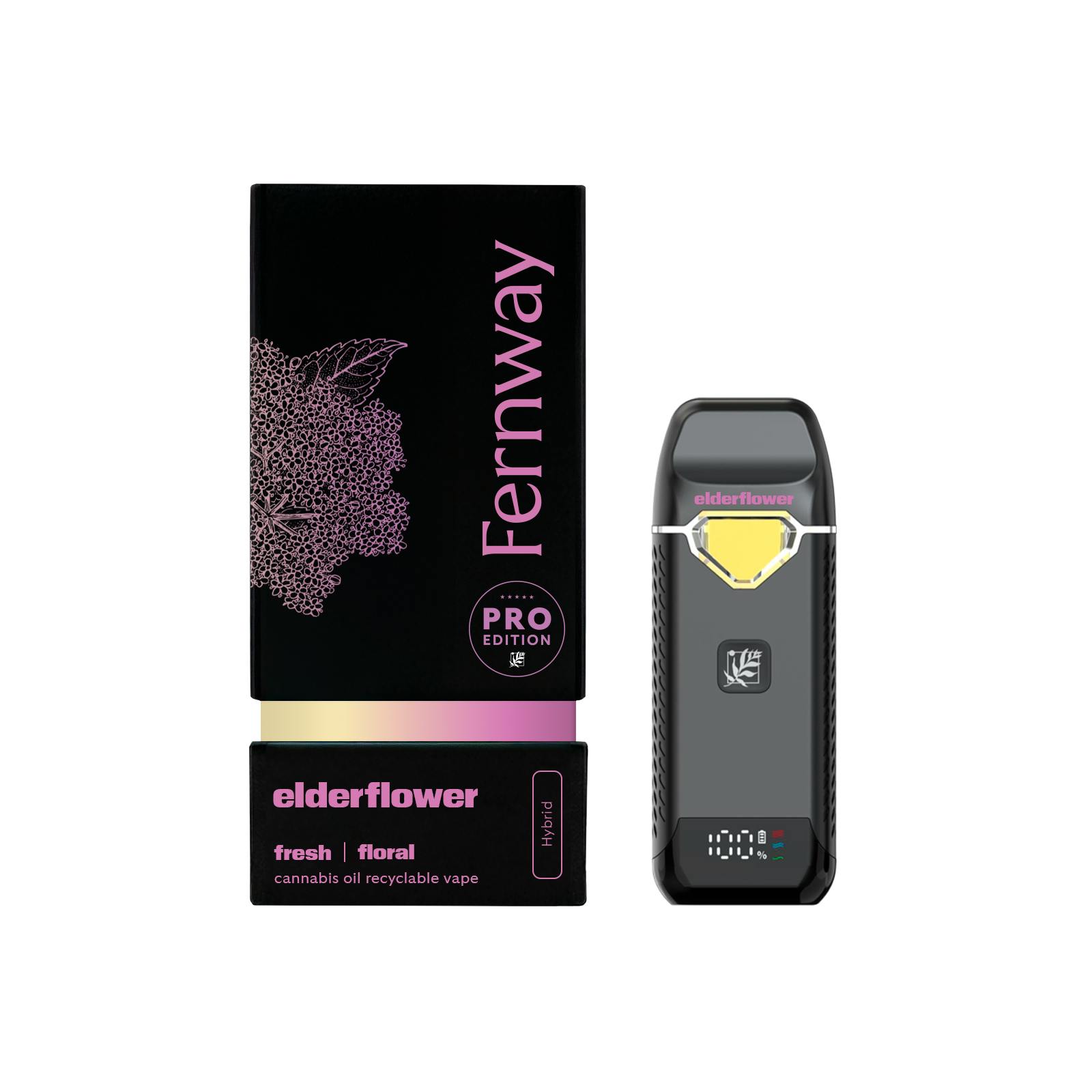
FernwayFernway Elderflower Traveler Pro Vape - Hybrid · 2g
$62.39$83.19
$73after tax

weeddispensarynearme.com
You must be 21 years or older to enter. By entering, you confirm you’re of legal age in your state to purchase cannabis.
For use only by adults 21+ • Keep out of reach of children
2 live products in stock
Quick answer · What is the Elderflower cannabis strain?
Elderflower is a refined hybrid that lives up to its botanical name — delicate, flora-forward, and quietly complex. Its gentle equilibrium between cerebral lift and physical ease makes it a natural companion for unhurried afternoons and thoughtful conversation. With a terpene signature that leans into floral and citrus registers, this strain rewards those who approach cannabis the way a sommelier approaches an unfamiliar wine: with patience, attention, and an appetite for nuance.
$73after tax
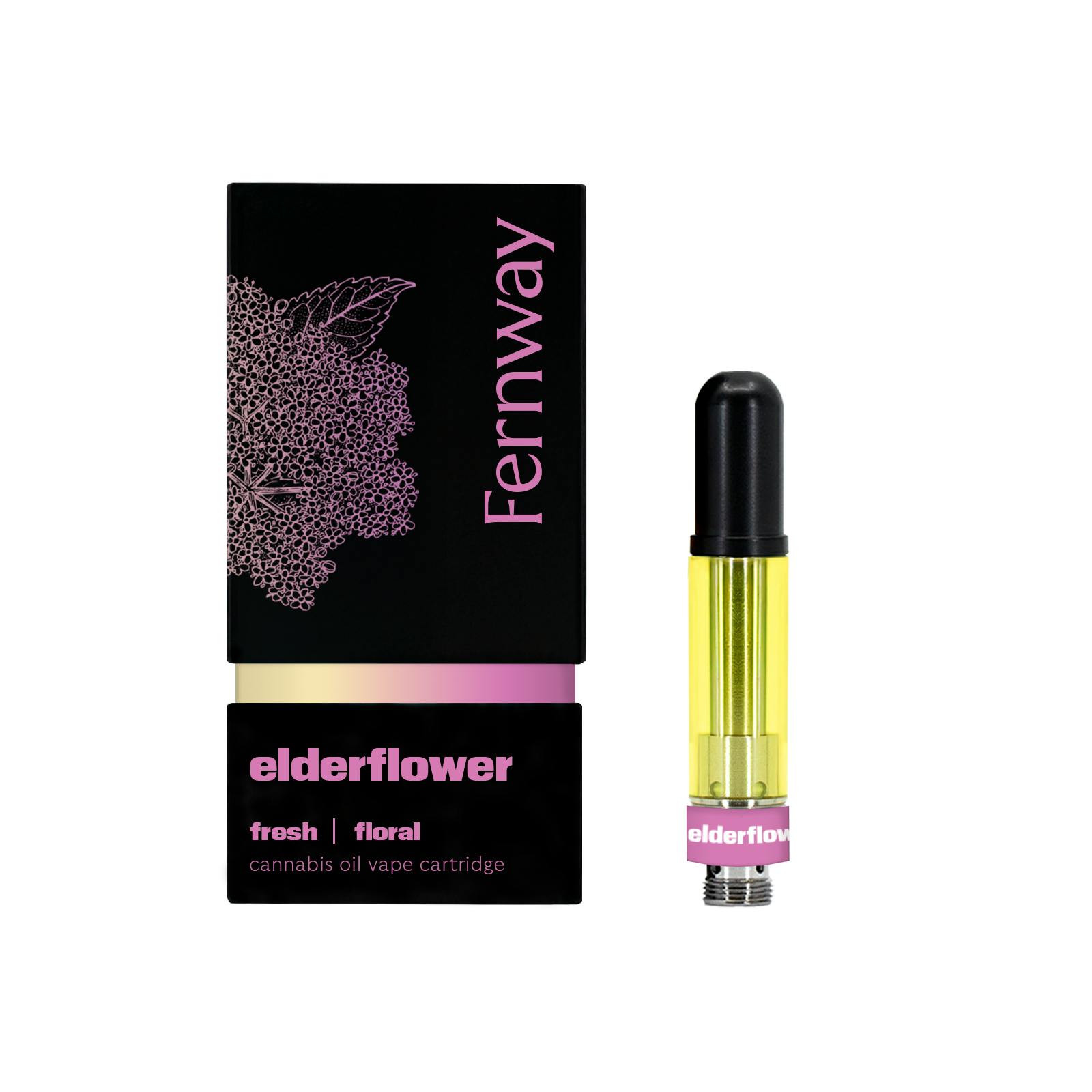
$42after tax
About Elderflower
Elderflower's precise genetic lineage is not fully disclosed in the public domain, and the breeder has not formally published the parent strains. What is documented across community sources and cultivator notes is that Elderflower is widely understood to carry genetics rooted in floral-dominant hybrid stock, with strong circumstantial evidence pointing toward a cross involving Skunk-adjacent or Haze-derived parentage on one side and a resin-rich indica-leaning contributor on the other. This combination would explain its balanced hybrid expression and the pronounced floral aromatic character that sets it apart from more fruit-forward contemporaries. The strain began appearing with regularity in craft cannabis markets during the mid-2010s, a period when breeders increasingly sought to distinguish their work through terpene complexity rather than raw potency alone. Elderflower found an audience among consumers who appreciated strains like Blue Dream or Lavender for their aromatic personality, and it earned a quiet but loyal following in premium boutique channels. No widely documented phenotype variations or named siblings have been formally catalogued in major public strain databases as of this writing, though small-batch cultivators have noted that phenotypic expression can shift meaningfully depending on growing conditions — some runs expressing more toward citrus, others leaning deeper into floral and herbal territory. This variability adds a layer of discovery to the Elderflower experience that seasoned consumers tend to find appealing rather than inconsistent.
Elderflower's onset is typically described as measured and welcoming — neither abrupt nor delayed. Most consumers report the first signals arriving within five to fifteen minutes of inhalation: a mild brightening behind the eyes, a gentle softening of mental chatter, and an overall sense of ease settling across the shoulders and upper back. The experience does not announce itself loudly, which is part of its appeal to those who find more aggressive sativas overstimulating. At its peak, the experience occupies a comfortable middle ground. Cerebral engagement is present — thoughts feel fluid and associative rather than racing — while the body carries a light, permissive relaxation that does not shade into sedation under moderate consumption. This dual-register quality is consistent with what one would expect from a hybrid with balanced cannabinoid expression and a terpene profile in which linalool and myrcene temper the uplifting qualities of limonene and terpinolene. Duration tends to be moderate, typically running ninety minutes to two and a half hours depending on individual tolerance and consumption method. The comedown is characteristically smooth — the heightened clarity recedes gradually rather than dropping off, leaving most consumers in a settled, content baseline. Because the effects arc gently in both directions, Elderflower is often cited as a strain suited to those who prefer a cannabis experience that integrates into an activity rather than overtaking it. The familiar guidance of starting with a small amount and waiting before consuming more applies here as with any cultivar.
The aroma of Elderflower is its most immediately distinctive attribute. At the forefront sits a delicate floral note — clean, slightly honeyed, and reminiscent of the elder blossom the strain takes its name from — underpinned by what most observers identify as linalool, the same terpene prominent in lavender and fine bergamot. Linalool contributes not only the floral aromatic register but also a subtle soothing quality that shapes the overall character of the experience. Secondary terpene contributions add dimension without disrupting the floral core. Myrcene brings an herbal, faintly earthy undertone that grounds the profile and contributes to the mild physical ease associated with this strain. Limonene — likely present in moderate concentrations — threads a quiet citrus brightness through the mid-note, lifting the aroma just enough to keep it from reading as heavy or overly sweet. Terpinolene, when present, adds a faint piney or even slightly floral-herby quality that harmonizes naturally with the elder blossom character. On the palate, Elderflower is smooth and unhurried. Inhalation through a clean dry-herb vaporizer best preserves the layered terpene expression: the floral note arrives first, followed by the faint citrus brightness, with the earthier myrcene base becoming more apparent on the exhale. Combustion delivers a comparable but slightly more muted version of the same profile, with an added warmth on the throat. The finish is clean and faintly sweet, without the heavy resinous coating associated with more intensely terpene-loaded cultivars.
Elderflower's buds display a structure that reflects its hybrid nature: moderately dense calyxes that stop short of the tight, almost sculptural compression seen in heavy indica-dominant cultivars, while avoiding the loose, wispy architecture of pure sativa expressions. The result is a well-formed, substantial bud with enough visual presence to register as premium at a glance. The color palette tends toward mid to deep green, with variations that can include soft sage and occasional pale yellow-green highlights depending on the growing environment and the maturity at harvest. Pistils are typically a warm amber to pale orange, arcing across the surface in a manner that contributes visual warmth to what is otherwise a cool-toned bud. Trichome coverage is generous without being extraordinary — a fine, even frost that catches light and signals respectable resin production. Under magnification, trichome heads appear full and well-developed on quality specimens.
Elderflower is considered an intermediate-level cultivar — approachable for experienced home growers but perhaps less forgiving than purely beginner-oriented strains. Its hybrid structure suggests adaptability to both indoor and outdoor environments, though indoor cultivation under controlled conditions tends to allow the floral terpene profile to express most completely, as humidity fluctuations and environmental stressors can suppress delicate aromatic compounds. Indoor flowering time is generally estimated at eight to nine weeks, placing it in a range consistent with balanced hybrid genetics. Indoor yields are reported as moderate — rewarding for the quality of the finished product, though not the highest-volume performer available to cultivators working with limited canopy space. Outdoors, the plant benefits from a temperate climate with warm days and cool — but not cold — nights in the final weeks of flowering, as this temperature differential is understood to encourage trichome and terpene development. The plant's structure is said to respond well to low-stress training techniques. Shoppers curious about cultivation origins should look for locally grown, craft-sourced Elderflower to capture the terpene expression at its most complete.
Elderflower is a strain for the unhurried moment — one that asks something in return for what it offers. Its gentle, dual-register effect profile makes it particularly well suited to solo creative work that requires sustained but relaxed focus: writing, sketching, or working through a playlist with the intent to actually hear each track rather than simply have music on in the background. The floral-citrus terpene profile complements activities that already exist in a sensory register — a slow walk through a botanical garden, a Sunday afternoon in a sun-filled apartment, a session of reading that has nowhere to be. For food pairings, the strain's linalool-and-limonene character finds a natural counterpart in light, floral-influenced cuisine: a goat cheese and honey crostini, Earl Grey shortbread, or a sparkling water infused with cucumber and elderflower cordial. In terms of music, the experience tends to favor artists who operate in measured, textured spaces — think Brian Eno's ambient work, Nils Frahm's piano recordings, or the more restrained end of jazz. For social settings, Elderflower works well in small, comfortable gatherings where conversation is the main event rather than a backdrop to something louder.
Lavender
Fans of Lavender's linalool-forward floral profile and balanced body-mind effect will find Elderflower occupies a very similar aromatic and experiential territory, with a slightly brighter citrus mid-note.
Blue Dream
Blue Dream's well-documented reputation for gentle cerebral lift paired with full-body ease makes it a natural reference point for Elderflower consumers who appreciate a smooth, sociable hybrid that does not push too hard in either direction.
Amnesia Haze
Those drawn to Elderflower's terpinolene and limonene brightness may find Amnesia Haze's uplifting, complex terpene architecture familiar, though Amnesia Haze runs considerably more sativa-forward in its effect character.
Lifter (hemp-derived, or craft THC phenotype)
Lifter's floral-citrus terpene signature and easygoing, functional effect profile share meaningful overlap with Elderflower for consumers who prioritize aromatic elegance over intensity.
Strawberry Cough
Strawberry Cough's reputation for a smooth, uplifting experience with a distinctive and pleasing aromatic presence makes it an approachable recommendation for Elderflower enthusiasts seeking something slightly fruitier but equally refined.
Elderflower is classified as a hybrid, meaning it carries characteristics associated with both indica and sativa genetics. In practice, its effect profile leans toward balanced — offering a degree of cerebral engagement without the intensity associated with strong sativas, and a light physical ease that falls well short of the deep sedation linked to heavy indica cultivars. Most consumers describe the experience as versatile rather than strongly directional.
Elderflower's flavor profile is delicate and floral at the forefront, with a faint honeyed sweetness that reflects its terpene composition — linalool in particular drives the characteristic elder blossom note. A quiet citrus brightness, likely from limonene, lifts the mid-palate, while myrcene contributes a mild herbal earthiness on the exhale. The overall impression is clean and understated, finishing without heaviness or an overly resinous aftertaste.
Elderflower typically produces a measured onset — a gentle brightening of mood and cognition followed by a light, permissive physical ease. The experience is balanced rather than pushing aggressively toward either stimulation or sedation. Most consumers find it conducive to relaxed focus, easy social interaction, or quiet creative activity. The comedown is generally smooth. As with any cannabis cultivar, individual response varies, and starting with a small amount is always the sensible approach.
Consumers who enjoy Elderflower's floral terpene character and balanced hybrid experience often find common ground with Lavender, Blue Dream, and Strawberry Cough — each sharing some combination of aromatic elegance, smooth onset, and a functional, middle-ground effect profile. Amnesia Haze appeals to those drawn to Elderflower's brighter, more citrus-forward moments. Any of these strains serves as a useful comparative reference when exploring what this cultivar offers.
Elderflower's balanced, measured effect profile makes it a reasonable choice for adults with some prior cannabis experience who are still calibrating their tolerance. Its onset is not abrupt, and the experience arc is gentle rather than overwhelming. That said, no strain is universally appropriate for first-time consumers, and the standard recommendation applies: begin with a small amount, allow adequate time to assess the full effect before consuming more, and choose a comfortable, familiar setting.
Linalool is widely identified as the defining terpene in Elderflower, contributing the floral, faintly honeyed aromatic character the strain is known for. Myrcene appears as a grounding secondary terpene, adding herbal earthiness and contributing to the mild physical ease of the experience. Limonene provides a quieter citrus brightness in the mid-note. Terpinolene may also be present in some phenotypes, adding a subtle piney or herby dimension that harmonizes with the overall floral profile.
Elderflower's balanced, non-sedating effect profile makes it well suited to daytime or early evening consumption. Its gentle cerebral engagement supports creative or social activities without the stimulation that can make sleep difficult, while its mild physical ease does not typically tip into the couch-bound heaviness associated with evening or nighttime indica-dominant strains. Many consumers find it particularly pleasant in the late afternoon — that specific, quiet interval between the commitments of the day and the unstructured hours of evening.
A clean dry-herb vaporizer set to a low-to-mid temperature range — generally between 340 and 380 degrees Fahrenheit — is widely regarded as the most effective method for preserving and experiencing Elderflower's delicate terpene profile. Lower temperatures allow linalool and limonene to express fully before the higher-boiling myrcene and caryophyllene compounds become dominant. Combustion remains a valid option and delivers a comparable aromatic experience, though some of the more volatile floral top notes may be muted.
Related strains
Pick your store
We'll show pricing, deals, and delivery zones for the store you pick. You can switch any time from the header.