THC 0.19%·CBD 0.19%Indica
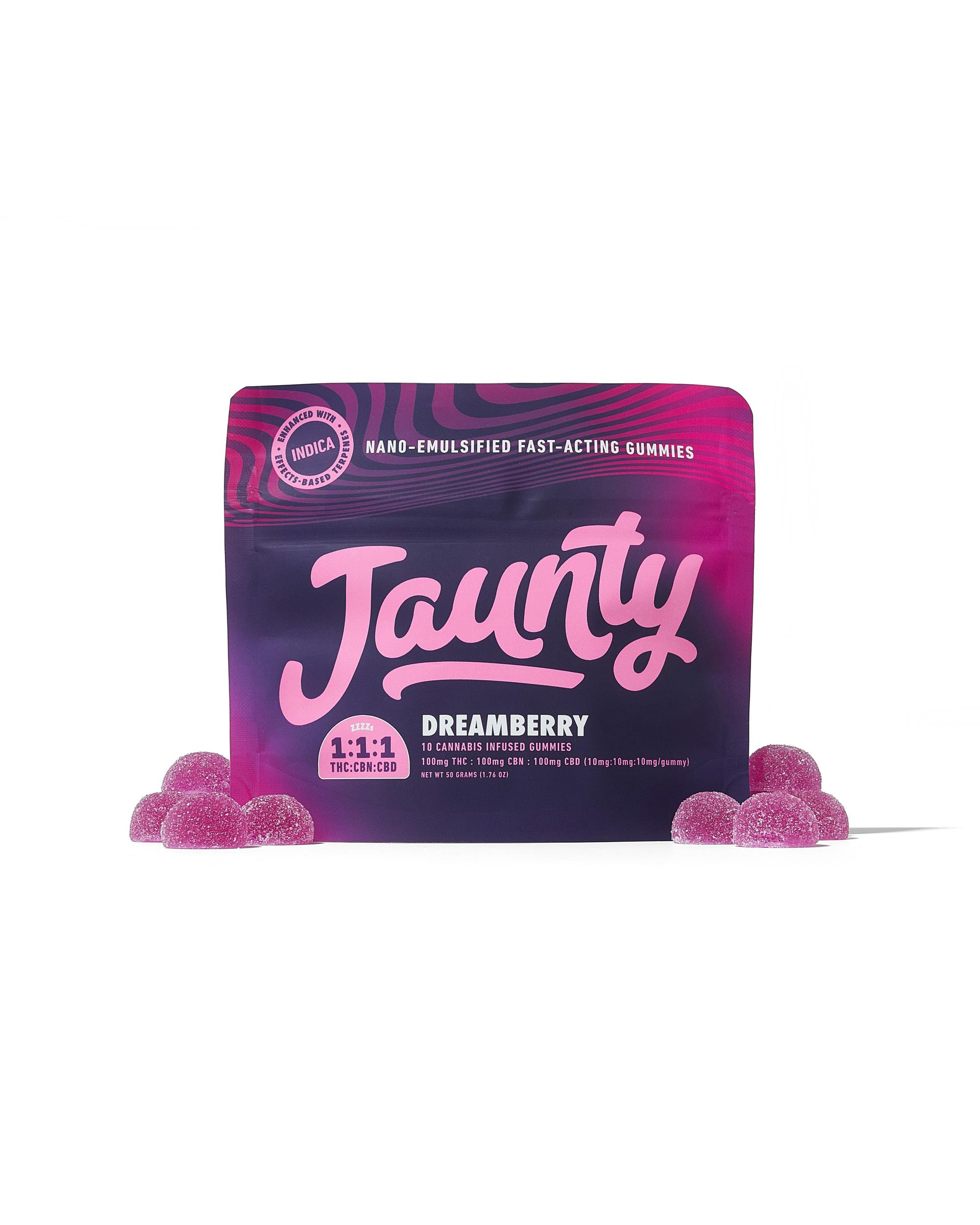
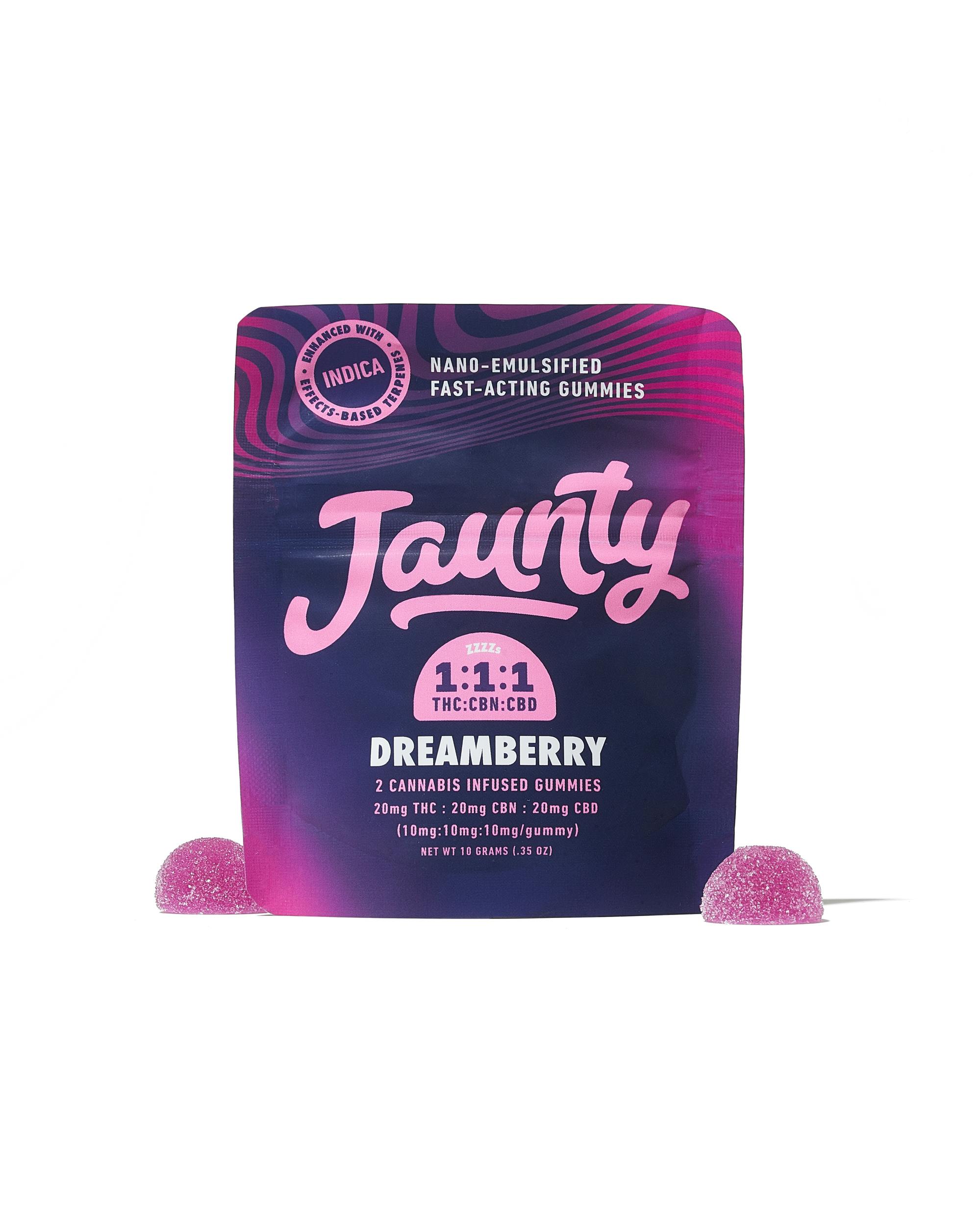
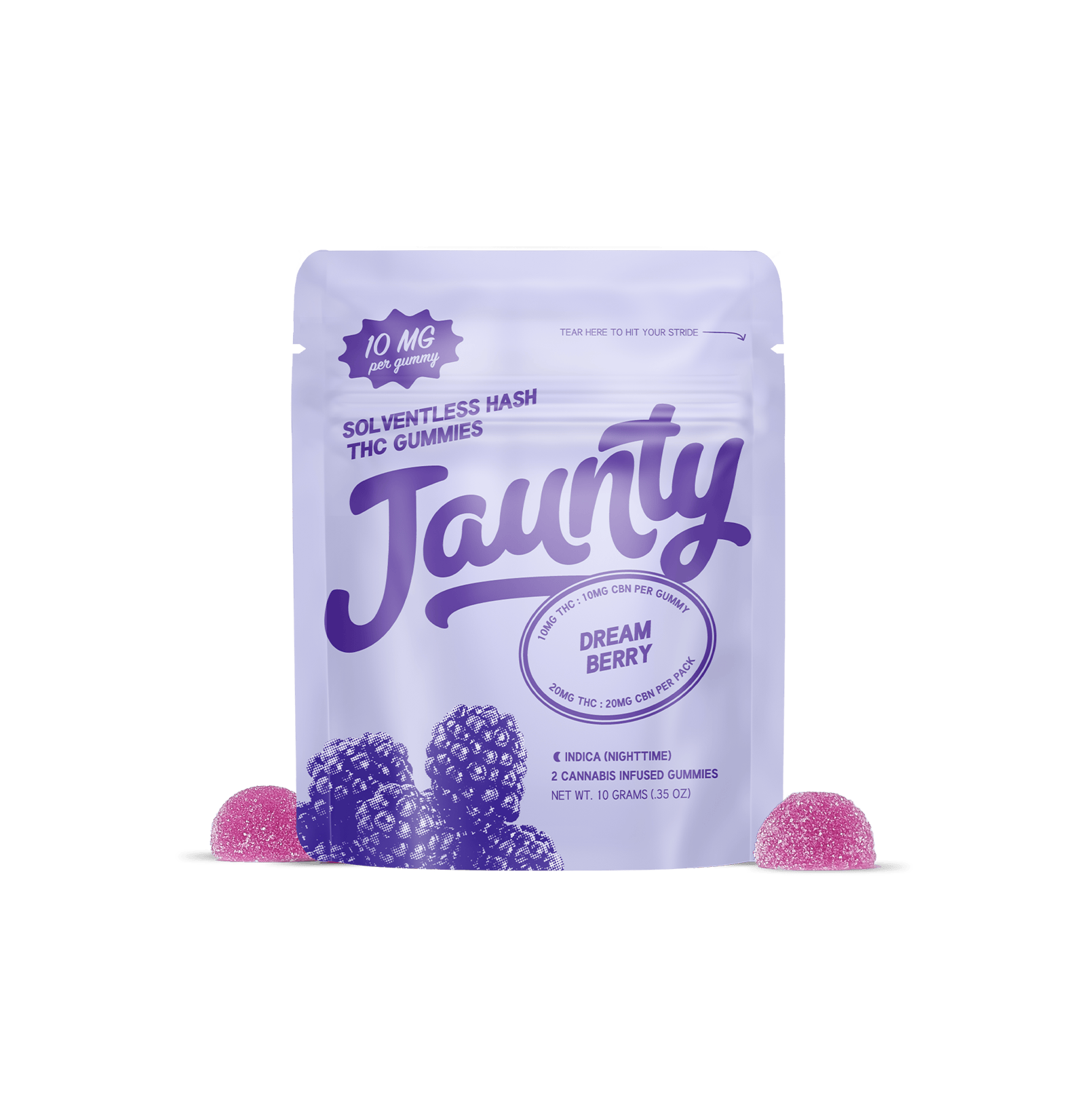
JauntyDreamberry Gummies | 1:1:1 | THC:CBD:CBN |100mg | 10pk · .1g
$24.00
$27after tax

weeddispensarynearme.com
You must be 21 years or older to enter. By entering, you confirm you’re of legal age in your state to purchase cannabis.
For use only by adults 21+ • Keep out of reach of children
4 live products in stock
Quick answer · What is the Dreamberry cannabis strain?
Dreamberry arrives like a quiet evening that gradually deepens into something richer — a full-bodied indica whose berry-forward aroma and unhurried, sedating character make it a natural companion for the city's rare moments of stillness. Bred from well-regarded indica lineage, it carries the kind of cultivated gentleness that rewards patience, offering a measured descent into ease that feels less like a departure and more like a long exhale.
$27after tax
$6after tax

About Dreamberry
Dreamberry is generally attributed to a cross between Blueberry and Blue Dream, though some sources suggest the involvement of additional indica-dominant genetics that have not been publicly confirmed by any single originating breeder. Blueberry itself is a foundational American indica cultivar developed by DJ Short in the late 1970s and early 1980s, widely recognized for its stable fruity terpene profile and its role as a parent to dozens of influential cultivars across subsequent decades. Blue Dream, a sativa-dominant hybrid itself born from Blueberry and Haze genetics, lends a certain aromatic brightness and mild cerebral lift that tempers Dreamberry's otherwise deep indica lean. The cross as a recognized commercial entity appears most prominently in West Coast seed catalogs and dispensary menus from the mid-2010s onward, though its precise debut year and the original breeder remain subjects of mild debate within hobbyist and trade communities. No single seed company has staked a definitive, widely-accepted claim to the Dreamberry name with documented documentation, which is not unusual for second-generation crosses developed during the rapid commercial expansion of the California market. Genetic siblings and close phenotypic cousins include Blue Cookies, Berry White, and various Blueberry-derived hybrids that share the same soft, fruit-driven terpene architecture. The strain sits comfortably within the broader 'blue family' of cultivars, a lineage distinguished by anthocyanin expression, floral-fruity terpenes, and reliably sedating effects.
The onset of Dreamberry tends to arrive within five to fifteen minutes of inhalation, beginning as a mild pressure behind the eyes and a gentle warmth that spreads across the temples and jaw. Unlike some faster-acting indicas that arrive abruptly, Dreamberry's opening notes are measured — a soft cerebral quieting that edges away mental noise without imposing a dramatic shift in perception. For many consumers, this initial phase feels sociable enough to allow for easy conversation or light creative engagement. As the experience deepens toward its peak — typically reached between thirty and sixty minutes in — the body component becomes more pronounced. A characteristic heaviness settles into the limbs and shoulders, consistent with the myrcene-forward terpene profile that Dreamberry inherits from its Blueberry parentage. Myrcene is well-documented in pharmacological literature as contributing to sedating, muscle-relaxing qualities, and its prominence here aligns with the strain's indica-dominant character. The cerebral element does not vanish entirely but recedes gradually, leaving a calm, unhurried mental state. The comedown is gentle and gradual rather than abrupt, making the overall arc feel smooth. Sessions of moderate length — roughly two to three hours for most consumers — tend to conclude with a natural inclination toward rest. Given the sedating trajectory, this strain calls for a 'start low, go slow' approach, particularly for those newer to indica-dominant cultivars.
The aromatic profile of Dreamberry is anchored by myrcene, the most abundant terpene in the cannabis plant and one closely associated with ripe stone fruit, musky earth, and a faint herbal sweetness. On first encounter, the nose catches a burst of mixed berry — blueberry and blackberry most prominently — followed by a deeper, almost jam-like quality that suggests fruit left to warm in sunlight. This layered sweetness is a direct inheritance from the Blueberry parent, which has long been celebrated for among the most consistent fruit-forward terpene expressions in classical American cannabis genetics. Caryophyllene, a secondary terpene here, introduces a faint spicy woodiness that keeps the sweetness from feeling one-dimensional. It contributes a mild pepper note on the exhale and is the only terpene known to interact with the body's endocannabinoid system via CB2 receptors, lending a subtle grounding quality to the overall effect. Linalool, present in smaller concentrations, adds a floral lavender undertone that softens the transition between the berry top notes and the earthier base. On the palate, the smoke is notably smooth — particularly when consumed at lower temperatures through a quality vaporizer — with the berry and floral notes remaining faithful to the nose. The finish is gently earthy with a lingering sweetness, and there is very little harshness even on longer draws. Vapor sessions tend to amplify the linalool and myrcene character, bringing the floral and fruit elements into cleaner relief.
Dreamberry's buds tend toward a dense, compact structure characteristic of its indica-dominant architecture — tightly wound calyxes that stack closely along short, sturdy internodes. The overall form is chunky and well-formed rather than elongated, with a satisfying heft that reflects careful cultivation and adequate finishing time. The color palette is one of Dreamberry's more visually distinctive qualities. When grown in conditions that allow mild temperature drops during the final weeks of flower — a technique that encourages anthocyanin expression — the buds can display deep purple and indigo undertones woven through a base of forest green. Rust-orange pistils curl outward in moderate density, providing contrast against the cooler tones beneath. The trichome coverage is generous, lending a frosted, almost silvery cast to the exterior that speaks to a well-expressed cannabinoid and terpene profile. Under direct light, the resin heads catch and scatter the spectrum in a way that signals quality without theatrics.
Dreamberry is considered a moderately approachable cultivar for those with some prior indoor growing experience, though its dense bud structure warrants careful attention to airflow and humidity management during the final flowering weeks to guard against moisture-related issues. Indoors, flowering typically concludes between eight and nine weeks, and the plant rewards low-stress training techniques that open the canopy and allow light penetration to lower bud sites. Yields are described as moderate to generous in most hobbyist and commercial reports, though specific numbers vary considerably with environment and technique. Outdoors, Dreamberry prefers a temperate to mildly cool climate — conditions that also encourage the anthocyanin pigmentation that contributes to its visual appeal. Harvest in outdoor settings typically falls in early to mid-October in Northern Hemisphere gardens. The cultivar has a natural tendency toward compactness, making it manageable in smaller grow footprints. For the cultivator-curious shopper, Dreamberry represents an aesthetically rewarding grow: the combination of purple phenotype expression, heavy trichome development, and aromatic richness makes the final product visually and olfactorily satisfying at harvest.
Dreamberry is perhaps best understood as an evening strain — one suited to the deliberate winding-down that New York's pace so rarely allows. Its measured, body-forward arc makes it a fitting companion for the hour after a long week concludes: a quiet apartment, a record turning on the turntable, and no particular obligation waiting on the other side. The linalool and myrcene combination lends itself naturally to a context of intentional decompression rather than stimulated social engagement. For food pairings, Dreamberry's berry-and-earth terpene profile aligns well with dark chocolate, aged cheeses with fruity rinds such as an affinage brie, or a simple charcuterie arrangement — flavors that echo and amplify rather than compete with the strain's aromatic register. Musically, the experience pairs intuitively with something unhurried and layered: ambient soul, late-period jazz, or a low-tempo electronic record that rewards passive listening. Solo sessions centered on light reading or gentle creative reflection suit this cultivar well. It is less well-matched to high-energy social settings or tasks that require sustained analytical focus.
Blueberry
As Dreamberry's foundational parent, Blueberry shares the same fruit-forward terpene signature and deeply sedating indica body effect, making it the most natural companion for fans of the Dreamberry experience.
Berry White
A cross of Blueberry and White Widow, Berry White offers a similarly creamy, berry-rich aroma with a relaxed, full-body effect arc that appeals to the same evening-use sensibility.
Granddaddy Purple
GDP shares the anthocyanin-driven purple coloration, sweet grape-and-berry aroma, and heavy myrcene-forward sedation that define Dreamberry's character, making it an intuitive next step for indica enthusiasts.
Blue Cheese
Borrowing Blueberry genetics and pairing them with a savory, earthy depth, Blue Cheese offers indica fans a similar relaxation profile with a more complex, contrasting aromatic character.
Purple Punch
Purple Punch's grape candy sweetness, dense bud structure, and deeply calming body effect share considerable common ground with Dreamberry's profile and appeal strongly to the same type of consumer.
Dreamberry is an indica-dominant hybrid, generally understood to lean heavily toward its Blueberry parentage in both effect and structure. While its Blue Dream genetics introduce a mild cerebral quality early in the experience, the overall arc is defined by body relaxation and a gradual, sedating quality consistent with classic indica cultivars. It is typically categorized as an evening-use strain for that reason.
Dreamberry delivers a smooth, fruit-forward flavor profile anchored by ripe blueberry and mixed berry notes, with a jam-like sweetness that comes through clearly on the inhale. The exhale introduces a mild spice and earthy finish from the caryophyllene terpene, and a faint floral quality from linalool lingers at the tail. The smoke is generally smooth and relatively easy on the palate, particularly at moderate temperatures.
Dreamberry typically opens with a gentle cerebral quieting and a warm physical ease that settles progressively into the body over the first thirty to sixty minutes. At its peak, the effect is calming and physically weighted — conducive to rest, passive creativity, or unhurried social interaction. The comedown is gradual, and the overall session tends to conclude with a natural drift toward sleep or deep relaxation, making it best suited to evening use.
Consumers drawn to Dreamberry's berry-forward aroma and sedating indica profile tend to also appreciate Blueberry, Berry White, Granddaddy Purple, Blue Cheese, and Purple Punch. Each of these shares one or more defining qualities with Dreamberry — whether that is the fruity terpene architecture, the anthocyanin-driven color expression, or the myrcene-forward relaxation effect — though each also brings its own distinct character to the experience.
Dreamberry can be suitable for adults new to cannabis who have an interest in indica-dominant cultivars, provided the standard 'start low, go slow' principle is followed. Its sedating body effect and moderately potent character mean that consuming more than a small initial amount before gauging one's response can lead to an experience that feels overwhelming. Beginning with a single modest inhalation and allowing thirty minutes before reassessing is a sensible approach.
Dreamberry's dominant terpene is myrcene, which accounts for its characteristic ripe-fruit, musky earthiness and contributes significantly to its sedating body quality. Caryophyllene is a notable secondary terpene, adding a spicy, woody dimension and a mild grounding character. Linalool appears in smaller concentrations and introduces a floral, lavender-adjacent softness that rounds out the profile. Together, these three terpenes define the strain's signature aromatic and experiential identity.
Given its indica-dominant sedation arc and the prominent myrcene content that contributes to physical heaviness, Dreamberry is most naturally suited to the evening hours. It is not well-matched to tasks requiring focus, productivity, or alertness. Many consumers find it most rewarding in the two to three hours before sleep, or during any quiet, unscheduled evening block where full relaxation is the intended outcome rather than a side effect.
Dreamberry can express vivid purple and deep indigo hues in the bud, a trait inherited from its Blueberry parentage and driven by anthocyanin pigments that activate in cooler growing temperatures. Not every batch will display prominent purple coloration — this depends heavily on the cultivation environment and whether the grower has allowed temperature drops during the late flowering stage. When the phenotype does express fully, it is among the strain's more visually compelling characteristics.
Related strains
Pick your store
We'll show pricing, deals, and delivery zones for the store you pick. You can switch any time from the header.