THC 80.03%·CBD 0.5%Indica
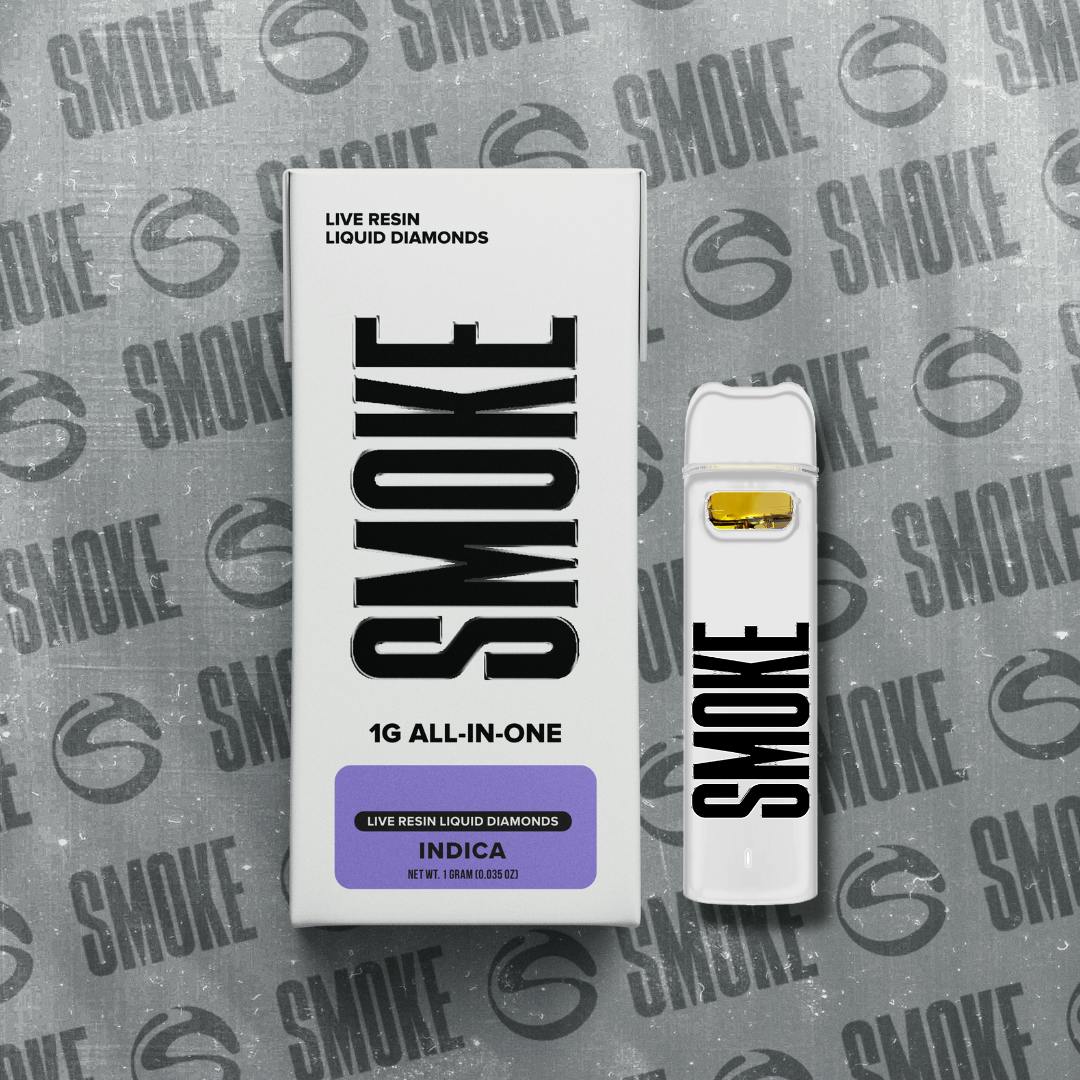
Smoke OilSmoke Vanilla Frost Live Resin Liquid Diamonds AIO Disposable · 1g
$39.69
$45after tax

weeddispensarynearme.com
You must be 21 years or older to enter. By entering, you confirm you’re of legal age in your state to purchase cannabis.
For use only by adults 21+ • Keep out of reach of children
1 live products in stock
Quick answer · What is the Vanilla Frost cannabis strain?
Vanilla Frost arrives like the first cool evening of autumn — unhurried, enveloping, and quietly opulent. An indica-leaning cultivar defined by its creamy sweetness and a trichome coverage so dense it reads almost silver under the right light, this strain appeals to those who prefer their evenings deliberate. From the initial exhale through to the long, restful finish, Vanilla Frost is a study in composed indulgence.
$45after tax
About Vanilla Frost
Vanilla Frost is generally understood to descend from a cross of White Widow and a vanilla-forward phenotype, though specific breeder attribution and the precise secondary parent are not uniformly documented across public cannabis sources — some databases list a connection to Vanilla Kush or related OG-adjacent genetics, while others point toward a distinct Northern Lights influence. The White Widow heritage is the most consistently cited element: that iconic Dutch classic, itself a cross of a Brazilian sativa landrace and a South Indian indica first popularized by Green House Seeds in the mid-1990s, contributes the hallmark resin production and structural density that Vanilla Frost so visibly inherits. The 'Frost' naming convention places this cultivar in a loose family of trichome-heavy varieties — a lineage aesthetic rather than a formal genetic category — that includes strains such as White Frost and Crystal. Where Vanilla Frost distinguishes itself is in the pronounced dessert-like sweetness layered over that classic resinous base, a trait more consistent with Vanilla Kush (Barney's Farm) influence than with Northern Lights alone. Because the breeder of record has not been uniformly established in public documentation, growers and retailers sometimes encounter slight phenotypic variation between sourced cuts, ranging in sweetness intensity and body weight. What remains consistent is the indica-dominant character and the striking visual calling card of its frost-white trichome mantle.
The onset of Vanilla Frost tends to arrive within five to fifteen minutes when smoked or vaped, beginning as a soft pressure behind the eyes and a gentle easing of muscular tension in the shoulders and neck — a signature of its indica lineage and its likely myrcene and linalool terpene profile. The initial wave is calming rather than sedating outright, carrying just enough cerebral warmth to make conversation feel fluid without tipping into anxiety or racing thought. At its peak, the experience deepens into the body. The limbs grow pleasantly heavy, and a sense of settled ease takes hold that many consumers describe as weighted without being immobilizing — at least at moderate consumption. Caryophyllene's interaction with CB2 receptors may contribute to this notable physical ease, a relationship that is reasonably well supported in existing cannabinoid-terpene research. For those who consume more generously, the sedative arc becomes more pronounced, and the strain earns its indica designation fully in the later stages. The comedown is gradual and generally gentle, tapering into drowsiness rather than arriving abruptly. Total duration for most consumers sits between two and three hours, with the deepest body effects concentrated in the first ninety minutes. As with all potent indica-leaning cultivars, newcomers are well served by the principle of starting low and proceeding slowly, allowing the full arc of the experience to unfold before re-dosing.
The aromatic profile of Vanilla Frost opens with a warm, almost bakery-like sweetness that is immediately recognizable as its defining characteristic. Linalool — a terpene shared with lavender and many culinary spices — is the likely architect of this creamy, floral sweetness, layering a softness over the profile that prevents it from reading as sharp or synthetic. Beneath this sits myrcene, the most abundant terpene in many indica varieties, which grounds the nose in an earthy, faintly herbal base reminiscent of ripe stone fruit. Secondary notes arrive with greater scrutiny: a whisper of pine, likely from alpha-pinene, adds just enough brightness to keep the aroma from becoming cloying, while caryophyllene introduces a mild, dry spice on the finish — think a light dusting of white pepper over a vanilla custard. Some phenotypes carry a subtle diesel or fuel note in the background, a nod to the possible OG influence in certain genetic lineages, though this is not universally present across all sourced cuts. On the palate, the smoke is notably smooth — creamy in texture on the inhale, with the vanilla-forward sweetness most present mid-draw. The exhale carries a soft, earthy warmth with the spice note becoming slightly more pronounced. Vapor at lower temperatures tends to highlight the floral and sweet top notes most faithfully, making a temperature-controlled device a particularly thoughtful pairing for this cultivar.
Vanilla Frost earns its name visually before it earns it aromatically. The buds are dense and tightly packed in the manner characteristic of indica-dominant genetics — compact, rounded calyxes that hold their structure well and suggest a respectable cure. What immediately distinguishes the cultivar, however, is the trichome coverage: a near-continuous blanket of capitate-stalked glandular trichomes that renders the surface almost luminous, the green of the underlying leaf visible only in degrees beneath a silver-white frost. The base coloration ranges from a medium forest green to deeper olive tones, occasionally punctuated by faint purple hues in the leaf margins when plants have been exposed to cooler temperatures during the final weeks of flowering. Pistils tend toward a warm amber or rust orange at full maturity, providing a pleasing contrast against the pale trichome field. Overall, the visual impression is one of quality and density — a bud that looks precisely as substantial as it will ultimately feel.
Vanilla Frost is reported to behave as a moderately demanding cultivar — more forgiving than some exotic or finicky genetics, but rewarding of attentive technique. Indoor cultivation is generally preferred, as it allows precise control of humidity and temperature during the final weeks of flowering when trichome production is at its most active and the risk of mold in dense buds is highest. Flowering time typically falls in the eight-to-nine-week range, consistent with its indica-dominant character. Indoor yields are considered moderate to generous when cultivation conditions are well managed, with the plant responding positively to low-stress training techniques that open the canopy and improve light penetration to lower bud sites. Outdoor growing is viable in temperate climates with a long, dry autumn, though the dense bud structure demands close attention to airflow and moisture management. The plant tends toward a compact, bushy silhouette — a practical advantage for cultivators working with limited vertical space. For the cultivator-curious consumer, it is worth noting that Vanilla Frost's visual appeal at harvest — that signature trichome density — is highly dependent on the quality of the final flush and dry-cure process.
Vanilla Frost is most at home in the hours between late afternoon and late evening, when the pace of the day has already begun to slow and there is no pressing obligation ahead. It is a solo strain as much as a shared one — equally suited to a quiet apartment evening with a record and a good book as to a small, familiar gathering where the conversation has nowhere it urgently needs to go. Given the creamy, vanilla-forward terpene character, it pairs with particular elegance alongside foods in the same flavor register: a mild aged cheese, a pot of chamomile or rooibos tea, or a simple dark chocolate with a high cocoa content that echoes the earthy undertow in the strain's finish. Musically, the settled, weighted quality of the peak experience invites slower tempos — acoustic jazz, ambient electronic, or low-key soul make fitting companions. Post-yoga, post-long walk, or simply post-week: Vanilla Frost is a strain that asks nothing of you, and offers quiet generosity in return.
Vanilla Kush
Shares the hallmark creamy vanilla sweetness and indica body-weight that defines Vanilla Frost, making it a natural next exploration for fans of dessert-profile indicas.
White Widow
As the most commonly cited parent strain, White Widow offers a similar trichome-dense appearance and balanced resinous quality, though with a slightly more cerebral edge.
Northern Lights
A foundational indica whose deep physical ease and earthy-sweet profile closely mirrors the settled, body-forward experience Vanilla Frost delivers in its peak and comedown phases.
Granddaddy Purple
For consumers drawn to Vanilla Frost's weighted, evening-appropriate sedation and sweet aromatic character, GDP offers a similarly luxurious indica experience with added grape and berry top notes.
Girl Scout Cookies
Shares the dessert-forward aromatic DNA and a comparably smooth, enveloping body effect, appealing to those who appreciate a refined sweet profile alongside significant physical depth.
Vanilla Frost is an indica-dominant strain. Its genetic lineage, most commonly traced to White Widow and a vanilla-forward secondary parent, produces the compact bud structure, heavy trichome coverage, and body-centered effect profile associated with indica-leaning cultivars. Consumers should expect the experience to favor physical ease and evening-appropriate relaxation over the energetic, cerebral qualities more typical of sativa-dominant varieties.
The flavor profile is defined by a smooth, creamy sweetness with clear vanilla and light floral notes — attributed largely to linalool and myrcene in its terpene profile. On the exhale, a gentle earthiness and mild white-pepper spice emerge, likely from caryophyllene. The smoke is notably smooth in texture. Some phenotypes carry a faint herbal or piney brightness on the finish, which keeps the overall palate from reading as one-dimensional.
Vanilla Frost typically produces a gradual onset of physical relaxation beginning in the shoulders and moving through the body, accompanied by a warm, mildly euphoric mental state. The peak experience is body-forward — settled and weighted — with the cerebral component remaining present but calm. Duration generally falls between two and three hours. The comedown is soft and often transitions naturally toward drowsiness, making it best suited for evening use.
Consumers who enjoy Vanilla Frost often appreciate Vanilla Kush for its comparable dessert-sweet profile, Northern Lights for its foundational indica ease, and White Widow for its shared genetic heritage and trichome-rich character. Granddaddy Purple and Girl Scout Cookies also offer meaningful overlap for those drawn to Vanilla Frost's combination of sweet aromatics and a deeply physical, evening-appropriate effect arc.
Vanilla Frost can be approachable for adult-use consumers new to cannabis, provided a conservative, start-low-go-slow approach is observed. The indica-dominant profile means the physical effects can become pronounced relatively quickly, and those unaccustomed to body-heavy sedation may find the experience more intense than anticipated at higher consumption levels. A single, small serving in a comfortable setting is a sensible starting point for those newer to this cultivar or to cannabis generally.
The dominant terpenes associated with Vanilla Frost are linalool, myrcene, and caryophyllene. Linalool contributes the signature creamy, floral vanilla sweetness; myrcene provides an earthy, herbal base and is associated with the sedating, body-heavy quality of many indica strains; caryophyllene adds a dry spice note on the finish and is the only terpene known to interact directly with CB2 receptors in the endocannabinoid system. Alpha-pinene may also be present as a secondary terpene in some phenotypes.
Given its indica-dominant character and the notable physical weight of its peak effects, Vanilla Frost is most suited to late afternoon or evening consumption — ideally when the day's obligations have concluded. Its gradual, enveloping effect arc and natural transition toward drowsiness make it a poor choice for mornings or moments requiring sustained focus, mobility, or complex decision-making. It is best appreciated when the environment is comfortable and the timeline is open.
Vanilla Frost is considered exceptional in trichome density, a trait widely attributed to its White Widow lineage — itself one of the most resin-prolific strains in the Dutch breeding canon. The coverage is dense enough to give finished buds a silvery, frosted appearance that visually distinguishes the cultivar. This trichome abundance is also a reliable indicator of a rich terpene and cannabinoid profile, and it is a key reason the strain is valued by those attentive to craft-quality flower.
Related strains
Pick your store
We'll show pricing, deals, and delivery zones for the store you pick. You can switch any time from the header.