THC 0.17%ONE_TO_ONE
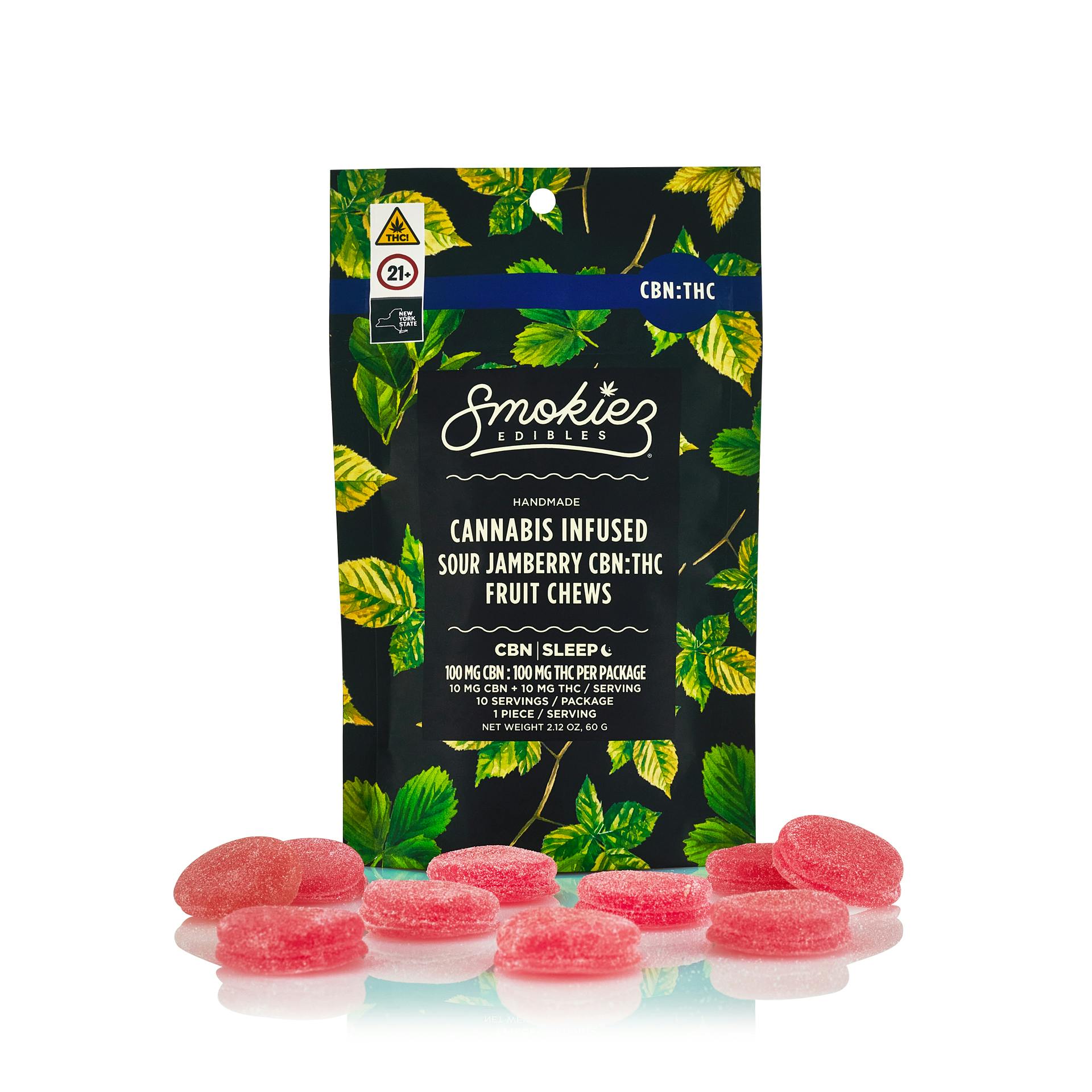
Smokiez EdiblesCBN:THC 1:1 Sour Jamberry 100mg CBN:100mg THC Fruit Chews · .1g
$23.00
$26after tax
weeddispensarynearme.com
You must be 21 years or older to enter. By entering, you confirm you’re of legal age in your state to purchase cannabis.
For use only by adults 21+ • Keep out of reach of children
1 live products in stock
Quick answer · What is the Sour Jamberry cannabis strain?
Sour Jamberry arrives with the quiet confidence of a well-worn leather armchair — tart berry aromatics layered over an earthy, fuel-tinged base, and a body-forward experience that settles in like a slow, deliberate exhale. This indica-leaning cultivar earns its place on a discerning shelf through a flavor profile that balances bright, fruit-forward top notes against a dank, grounding finish, making it a compelling choice for evenings that call for genuine stillness.
$26after tax
About Sour Jamberry
Sour Jamberry is a relatively recent indica-dominant cultivar whose precise lineage has not been exhaustively documented in major public databases, and the originating breeder has not made an official public statement confirming the full parentage. Community consensus and available breeder notes suggest the strain draws from Sour genetics — most likely descending from the Sour Diesel or East Coast Sour family — crossed with a berry-forward indica line, possibly in the vein of Blueberry or Jamberry-adjacent stock. The 'Sour' side of the family tree carries its own storied history: Sour Diesel, itself a product of the early-1990s New York and New England underground scene, contributed lasting influence through its sharp, fuel-forward terpene character and energizing cerebral onset. The berry parent tempers that heritage considerably, pulling the expression toward warmer, more sedative territory consistent with classic indica breeding from the Hindu Kush lineage that informs much of the Blueberry canon. The 'Jamberry' designation may reference both its flavor profile and a specific pheno selection emphasized during cultivation. Until the originating breeder formally documents the cross, the lineage should be treated as partially inferred. No widely recognized genetic siblings or distinct named phenotypes have been confirmed in the public record as of this writing.
Sour Jamberry's experience tends to unfold in a measured, unhurried fashion characteristic of well-grown indica-dominant cultivars. Onset typically arrives within five to fifteen minutes when inhaled — a gentle pressure behind the eyes and a loosening of tension across the shoulders that signals the beginning of a body-centric session. The cerebral component is present but secondary: a mild, diffuse uplift that softens the edges of rumination without producing the forward-facing, task-oriented clarity associated with sativa-leaning strains. The peak character is decidedly physical. Myrcene, the dominant terpene in most indica-leaning profiles, is associated in general pharmacological literature with sedation and muscle relaxation, and Sour Jamberry's profile appears to lean into that tendency. Caryophyllene, when present, contributes a secondary layer of ease that complements rather than accelerates the body sensation. Duration for most consumers tends to fall in the one-and-a-half to two-and-a-half-hour range, with a gentle tapering rather than an abrupt conclusion. The comedown is notably soft — a gradual return toward baseline that, for many, transitions naturally into restful sleep. Those new to cannabis or to indica-forward cultivars are well advised to follow a start-low, go-slow approach, as the body effect can deepen noticeably with larger servings.
The aromatic signature of Sour Jamberry opens with a pronounced tartness — a bright, slightly acidic berry note reminiscent of blackberry preserves or a well-ripened boysenberry — that gives way almost immediately to a dank, earthy undercurrent. This interplay is characteristic of a terpene profile anchored by myrcene, whose musky, herbal qualities form the olfactory foundation, with secondary contributions from caryophyllene lending a faint spice and pepper warmth that keeps the sweetness from reading as one-dimensional. Where the 'Sour' lineage asserts itself most clearly is in a subtle fuel undertone — not the aggressive diesel of its probable parent, but a muted, almost vinous petrol note that adds complexity and depth to what might otherwise be a straightforwardly fruit-forward cultivar. On the palate, the smoke is smooth at low temperatures and becomes denser with heat, with the berry and jam character most vivid on the inhale. The exhale carries more of the earthy, fuel-adjacent finish, lingering pleasantly on the back of the palate. Vapor production amplifies the fruit notes considerably, rewarding those who prefer lower-temperature extraction. Terpinolene, if present in supporting quantities, may contribute a faint floral lift that rounds the nose without dominating it. The overall aromatic impression is of something simultaneously wild and cultivated — a jarred preserve made from foraged fruit.
Sour Jamberry presents dense, well-structured buds consistent with its indica heritage — compact calyxes that stack tightly and resist easy separation, suggesting a flowering structure built for resin retention rather than visual drama. The color palette skews toward deep, saturated greens with occasional blue-green undertones that can deepen further under cool late-flowering temperatures. Rust-colored to amber pistils weave through the canopy in generous quantity, a visual cue to full maturity and careful harvest timing. Trichome coverage is substantial: a milky-to-amber dusting that gives well-cured flower a frosted, almost matte quality under direct light rather than the glassy sparkle of strains selected primarily for visual appeal. The overall impression is of a working cultivar — one whose beauty is functional, expressed through resin density and structural integrity rather than ornamental novelty.
Sour Jamberry's indica-dominant structure suggests a cultivation profile suited to controlled indoor environments, where humidity and temperature can be managed during the critical late-flowering period when dense bud structure increases susceptibility to botrytis and mold. Flowering time is estimated in the 56-to-63-day range (eight to nine weeks) based on its presumed parentage, though cultivator-specific data remains limited in public databases. Indoor yields are expected to be moderate to generous given the compact, resinous bud structure. Outdoor cultivation is viable in temperate climates with a reliable late-summer dry period — the Pacific Northwest or Mediterranean-adjacent zones translate well. Difficulty is considered intermediate: the strain is unlikely to challenge an experienced home cultivator, but the dense canopy benefits from deliberate low-stress training and adequate airflow to protect against moisture-related issues. Harvest timing is consequential with this profile; allowing trichomes to amber fully before harvest will amplify the sedative, body-forward character the strain is known for.
Sour Jamberry is an evening cultivar in the most considered sense — not a strain that demands the couch, but one that makes the couch feel like the only reasonable destination. It suits the hours after the day's obligations have concluded and before sleep becomes the agenda: a quiet dinner at home, a long bath, or an unhurried read. The tart berry aroma profile pairs naturally with foods that share its fruit-forward, slightly acidic character — a cheese board anchored by aged gouda or a sharp bleu, accompanied by fresh blackberries or a fig preserve, would harmonize rather than compete. For music, the slow, resonant tempos of artists like Nils Frahm or late-period Bill Evans complement the strain's unhurried body effect without demanding active attention. Solo contemplation is where Sour Jamberry performs most consistently — it is not antisocial, but its sedative arc makes extended conversation a secondary priority. For those who find the evening hours an opportunity for journaling, light stretching, or simply inhabiting physical stillness with intention, this cultivar offers a dependable, flavorful companion.
Blueberry
Fans of Blueberry's sweet, fruit-forward indica profile and relaxing body-dominant effect will find Sour Jamberry a natural progression that adds tart complexity and a fuel-edged depth.
Blue Cheese
Blue Cheese shares the berry-meets-earthy dankness character and indica sedation arc, making it a logical companion for those drawn to Sour Jamberry's layered aromatic profile.
Blackberry Kush
Blackberry Kush offers a similarly dense, resinous bud structure and dark berry flavor with a grounding body effect that parallels Sour Jamberry's evening-oriented experience.
Sour Kush
Consumers who appreciate the tension between sour, fuel-forward top notes and a deeply relaxing indica body will recognize familiar qualities in both Sour Kush and Sour Jamberry.
Purple Punch
Purple Punch's dessert-like berry sweetness and pronounced physical sedation make it a complementary choice for those who enjoy Sour Jamberry's fruit-indica character but prefer a warmer, less tart expression.
Sour Jamberry is an indica-dominant cultivar. Its bud structure, terpene profile, and typical effect arc all align with indica-leaning genetics — prioritizing body relaxation, physical ease, and a gradual, grounding experience over the cerebral, energizing qualities more commonly associated with sativa-dominant strains. It is well suited to evening use rather than daytime activity.
Sour Jamberry delivers a tart, berry-forward flavor on the inhale — think blackberry or boysenberry with a slightly acidic, jam-like quality. The exhale shifts toward earthier, dank territory with a subtle fuel undertone inherited from its probable Sour-family lineage. The overall palate impression is of something simultaneously fruity and grounded, neither cloying nor aggressively pungent.
Consumers typically describe a body-centric experience that begins with a release of muscular tension and a mild, unfocused mental ease. The onset window runs roughly five to fifteen minutes when inhaled. The peak effect is physically relaxing without being overwhelmingly sedative at moderate servings, though larger quantities tend to deepen toward full-body heaviness. Duration is generally one and a half to two and a half hours.
Strains that share Sour Jamberry's berry-indica character include Blueberry, Blackberry Kush, and Purple Punch for the fruit-forward sedation profile. Those drawn to the sour, fuel-tinged complexity may also appreciate Blue Cheese or Sour Kush. Each offers a slightly different balance between the tart, bright top notes and the earthy, grounding base that defines Sour Jamberry's identity.
Sour Jamberry can be approachable for newer consumers who prefer indica-leaning effects, but its body-forward sedation warrants a careful, start-low, go-slow approach. The depth of physical relaxation can intensify meaningfully with larger servings, which may feel overwhelming for those unaccustomed to indica-dominant cultivars. Beginning with a small amount and allowing adequate time before re-dosing is strongly advisable.
Based on its probable lineage and reported aromatic profile, myrcene is the presumed dominant terpene — contributing the musky, herbal earthiness and body-relaxation character. Caryophyllene likely serves a secondary role, adding a mild spice and warmth. Supporting terpenes may include terpinolene, which contributes faint floral lift, and trace elements consistent with the Sour family's fuel-adjacent aromatic signature.
Sour Jamberry is best positioned as an evening or late-afternoon cultivar. Its indica-dominant effect arc — beginning with physical ease and progressing toward deeper relaxation — suits the hours after daytime obligations have concluded. It is not ideally matched to tasks requiring sustained focus, coordination, or social energy, but pairs well with quiet, restorative activities and low-demand leisure.
Sour Jamberry's terpene-rich, fruit-forward profile is particularly well expressed through low-temperature vaporization, which preserves delicate aromatic compounds that higher heat can diminish. Flower consumption via glass or clean-burning paper also delivers the full aromatic character. Regardless of method, moderate serving sizes allow the flavor complexity and effect arc to unfold at their own pace without overwhelming onset.
Pick your store
We'll show pricing, deals, and delivery zones for the store you pick. You can switch any time from the header.