
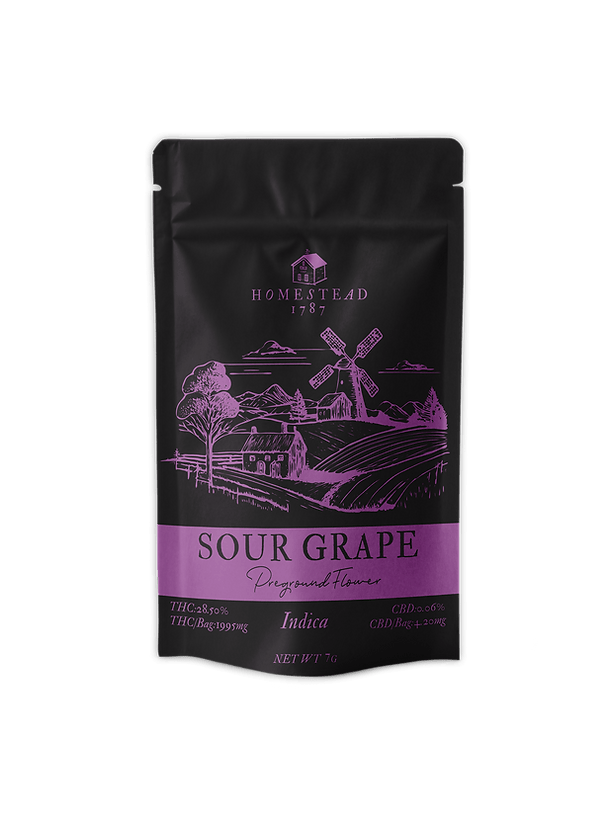
Indica
All strains Sour Grape
2 live products in stock
Quick answer · What is the Sour Grape cannabis strain?
Sour Grape arrives as a study in contrasts — the bright, tangy exhale of a ripe Concord grape balanced against an earthy, fuel-tinged depth that anchors the experience firmly in indica territory. A cross of two storied parents, this strain rewards patient connoisseurs who appreciate complexity over blunt force. Its dense, resin-laden buds and layered terpene profile make it a quiet standout on any well-curated shelf.
Shop Sour Grape · 2 of 2 live products
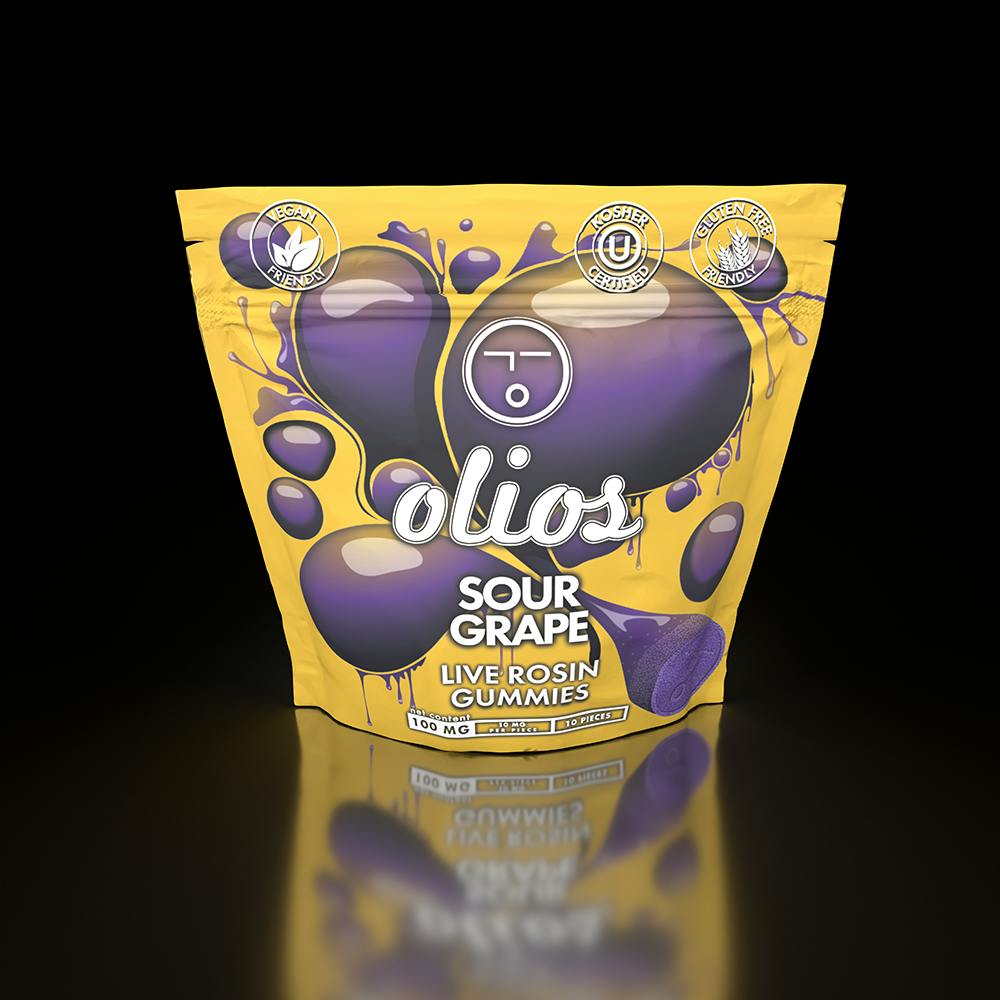
About Sour Grape
Everything to know about Sour Grape.
Lineage & origin
Sour Grape is widely attributed to DNA Genetics, the Amsterdam-founded, California-influenced seed company responsible for a number of resin-heavy, flavor-forward cultivars that gained recognition throughout the 2010s. The strain is generally understood to be a cross of Sour Diesel and Granddaddy Purple (GDP), two of the most recognizable names in American cannabis culture. Sour Diesel, itself a phenotype believed to descend from Chemdawg 91 and Super Skunk (with Massachusetts Super Skunk and DNL also cited in some accounts), contributed its signature acrid, fuel-driven aromatic character and its tendency toward an energetic initial onset. Granddaddy Purple, bred by Ken Estes in the Bay Area around 2003 from Purple Urkle and Big Bud, brought the deep berry and grape sweetness, the heavy body influence, and the visually striking pigmentation that Sour Grape often inherits. The marriage of these two lineages was an attempt to soften Sour Diesel's sometimes-unrelenting cerebral edge with GDP's sedative, full-body warmth. The result leaned indica in its overall classification. Sour Grape has not produced widely documented genetic siblings under the same breeder's program, though numerous independent cultivators have worked with similar parent combinations. Its popularity peaked during the mid-2010s craft cannabis movement on the West Coast before finding audiences in legal markets across the country.
Effects
Sour Grape typically opens with a mild cerebral brightening in the first ten to twenty minutes — a gentle lift in mood and a subtle sharpening of sensory awareness that reflects its Sour Diesel parentage. This initial phase rarely reaches the anxious velocity associated with pure sativa or diesel-forward cultivars; instead, it feels measured and pleasant, setting the stage for the indica influence that gradually follows. As the session progresses into the twenty-to-forty-minute window, the body begins to register a warm, spreading relaxation that moves from the shoulders downward. This is where the Granddaddy Purple genetics assert themselves, introducing a heavier, more enveloping physical quality that distinguishes Sour Grape from lighter hybrid offerings. The peak tends to be balanced — enough mental ease to allow for quiet conversation or calm creative thought, but with sufficient physical weight to discourage strenuous activity. Myrcene, the dominant terpene in many verified cuts, is associated in the scientific literature with sedative and muscle-relaxant properties, which aligns with the body-forward character of the experience. The comedown is typically gradual and gentle, easing into a restful state that many consumers find conducive to an unhurried evening. Duration generally falls in the two-to-three hour range for moderate consumption. As with any cannabis product, individual response varies, and those newer to cannabis are encouraged to start low and go slow.
Aroma, flavor & terpenes
The aromatic profile of Sour Grape is one of its most distinguishing qualities, presenting a layered olfactory experience that shifts with temperature and time. On the initial approach, the dominant note is a tart, Concord grape sweetness — unmistakably fruity but never cloying, underpinned by a faint fuel or diesel undertone inherited directly from its Sour Diesel lineage. Myrcene, typically the most prominent terpene in this cultivar, contributes an earthy, slightly musky base that gives the sweetness ballast and keeps the overall impression grounded rather than candy-like. Caryophyllene adds a subtle spiced, almost peppery complexity in the mid-register, contributing both aroma depth and its well-documented interaction with CB2 receptors, which may account for part of the strain's body-easing character. Secondary terpenes frequently identified in Sour Grape include pinene, which lends a faint herbal or green-wood freshness that cuts through the heavier fruit and fuel notes, and humulene, which introduces an understated hop-like earthiness. On the palate, the smoke or vapor character tends to be smooth for an indica of this density — the inhale carries the grape sweetness forward, while the exhale reveals the diesel and spice. The finish is clean with a faint berry aftertaste that lingers pleasantly. Vaporized at moderate temperatures, the terpene complexity is most fully expressed, preserving the interplay between the sweet, the earthy, and the fuel-tinged notes that define this cultivar.
Appearance
Sour Grape produces buds that reflect its indica-dominant structure — compact, dense, and heavy for their size, with a tightly wound calyx arrangement that speaks to its Granddaddy Purple heritage. The color palette is one of its most visually compelling attributes: deep forest greens and occasional purple-to-violet hues surface in the leaves and calyxes, particularly in phenotypes that experienced cooler temperatures during the late flowering phase, which encourages anthocyanin expression drawn from the GDP side of the lineage. Rust-orange pistils wind through the bud structure in moderate density, providing warm contrast against the cooler green and purple tones. Trichome coverage is generous — a fine, almost powdery layer of milky-white glandular trichomes blankets the surface and extends onto the adjacent sugar leaves, giving well-cured examples a frosted, luminous appearance under direct light. The overall impression is of a carefully cultivated, visually distinguished indica with a presence on the shelf that invites closer inspection.
Growing notes
Sour Grape is considered a moderately challenging cultivar for home growers, requiring attentive environmental management to express its full genetic potential. It performs reliably both indoors and in greenhouse settings, where temperature and humidity can be carefully controlled, and responds well to techniques such as low-stress training and selective defoliation to improve light penetration into its dense canopy. Flowering time is typically in the range of eight to nine weeks when grown indoors under standard photoperiod conditions, which places it within the normal range for indica-dominant cultivars of this complexity. Indoor yields are moderate to good under dialed-in conditions; outdoor cultivation is possible in warm, Mediterranean-style climates with a long growing season, where harvest generally falls in mid-to-late October in the Northern Hemisphere. The purple coloration that makes Sour Grape visually distinctive can be encouraged by introducing a modest temperature differential between day and night during the final two weeks of flowering. Those exploring cannabis cultivation from a curatorial perspective will find that the strain rewards precision and patience with a finished product that is both aesthetically striking and aromatically rich.
When it's best enjoyed
Sour Grape is best understood as a late-afternoon or evening companion — a strain suited to the transition between the activity of the day and the deliberate quietude of the night. Its initial mood-brightening quality makes it approachable before or during an unhurried dinner among close friends, where conversation flows easily and the appetite-stimulating associations of myrcene and caryophyllene may find natural expression. It is equally well-suited to solo time: a long record played from start to finish, a novel opened without urgency, or the quiet ritual of preparing a meal from scratch. For those drawn to culinary pairings, Sour Grape's grape-and-diesel aromatic profile finds an interesting counterpart in aged cheeses, charcuterie, or a dark-fruit reduction — the earthy terpene base complementing savory and umami notes without competition. Musically, the strain's indica warmth and nuanced complexity align well with something unhurried and textured: soul, jazz, or ambient electronic music. It is less a strain for high-intensity social settings and more one for intimate, sensory-attentive experiences where the subtleties of the terpene profile and the gradual body effect can be properly noticed and appreciated.
If you like Sour Grape, also explore
Granddaddy Purple
As a direct parent of Sour Grape, GDP shares the deep berry-grape sweetness and sedative body warmth that define the indica character of this cultivar, making it the most natural point of comparison for fans drawn to those qualities.
Grape Ape
Bred from Mendocino Purps, Skunk, and Afghani, Grape Ape delivers a similarly pronounced grape aroma and heavy indica relaxation, appealing to the same consumer who values fruit-forward terpene profiles grounded in earthy, body-focused effects.
Sour OG
For those who appreciate Sour Grape's Sour Diesel lineage and the cerebral-to-body arc of a well-balanced hybrid, Sour OG offers a comparable diesel-meets-indica experience with a slightly more even cerebral-physical split.
Purple Punch
Purple Punch shares the dessert-fruit aromatic register and deeply relaxing body effect that characterize Sour Grape's indica side, making it a compelling alternative for consumers who prioritize sweetness and physical ease.
GDP x Chemdawg
Crosses of Granddaddy Purple with fuel-driven genetics occupy the same flavor and effect space as Sour Grape, and any shopper drawn to the grape-and-diesel tension of this strain will find familiar ground in GDP-Chemdawg combinations.
Common questions
Is Sour Grape indica or sativa?+
Sour Grape is classified as an indica-dominant hybrid. It is generally attributed to a cross of Sour Diesel and Granddaddy Purple, two parent strains that sit at opposite ends of the sativa-indica spectrum. The overall experience leans toward the indica side — body-forward and relaxing — though an initial, mild cerebral lift from the Sour Diesel lineage is typically present at onset.
What does Sour Grape taste like?+
Sour Grape presents a layered palate that leads with tart Concord grape sweetness and transitions into earthy, fuel-tinged undertones on the exhale. Secondary notes of spice and faint herbal freshness from caryophyllene and pinene add complexity. The finish is clean with a lingering berry quality. Vapor tends to express the terpene nuance most fully, while the smoke character is smooth for a dense indica bud.
What are the typical effects of Sour Grape?+
Consumers generally report a mild mood-brightening onset in the first ten to twenty minutes, followed by a gradual, warm body relaxation that deepens over the course of the session. The overall character is calm and grounding — conducive to quiet socializing, creative reflection, or simply unwinding. The experience tends toward restfulness as the session progresses. As always, individual response varies; those new to cannabis should start low and go slow.
What are the dominant terpenes in Sour Grape?+
Myrcene is typically the dominant terpene in Sour Grape, contributing the earthy, musky base and influencing the body-heavy, relaxing character of the strain. Caryophyllene follows, adding spiced depth and interacting with CB2 receptors. Pinene and humulene appear as secondary terpenes, lending herbal freshness and an understated earthiness respectively. This combination supports both the grape-and-fuel aromatic profile and the sedative physical quality.
What strains are similar to Sour Grape?+
Consumers who enjoy Sour Grape often find common ground with Granddaddy Purple, which shares its berry sweetness and sedative body weight as a direct parent. Grape Ape offers a comparable fruit-forward, indica-dominant experience. Sour OG appeals to those drawn to the diesel lineage side of Sour Grape. Purple Punch is a strong recommendation for those prioritizing sweetness and deep relaxation above all else.
Is Sour Grape good for beginners?+
Sour Grape can be approachable for beginners given its gradual, measured onset and the absence of the sometimes-jarring cerebral intensity found in pure sativa or heavy Sour Diesel expressions. That said, the indica body weight can be pronounced at higher quantities. New cannabis consumers are encouraged to start with a very modest amount, allow ample time to gauge the full effect before continuing, and choose a comfortable, familiar setting.
Who bred Sour Grape and what are its parent strains?+
Sour Grape is widely attributed to DNA Genetics, an Amsterdam-rooted seed company with strong California influences. The strain is generally documented as a cross of Sour Diesel and Granddaddy Purple. Sour Diesel contributes the fuel-driven aroma and initial cerebral quality, while Granddaddy Purple — bred by Ken Estes in the Bay Area around 2003 — brings the grape sweetness, purple pigmentation, and indica body effect that define much of Sour Grape's character.
When is the best time of day to enjoy Sour Grape?+
Given its indica-dominant arc — a mild cerebral opener that settles into deeper body relaxation — Sour Grape is generally best suited to late afternoon or evening use. It pairs well with unhurried activities: a quiet dinner, an extended listening session, or the slow close of a long day. Its body-forward effects make it less practical for mornings or moments requiring sustained physical or cognitive output.
Related strains