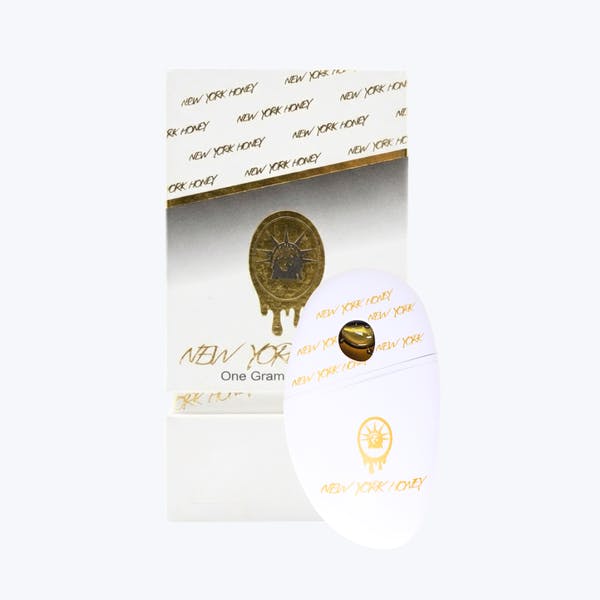
THC 80.8%Indica-Hybrid
New York HoneyNY Honey Cured Resin Stone - Purple Cream · 1g
$50.44
$57after tax

weeddispensarynearme.com
You must be 21 years or older to enter. By entering, you confirm you’re of legal age in your state to purchase cannabis.
For use only by adults 21+ • Keep out of reach of children
1 live products in stock
Quick answer · What is the Purple Cream cannabis strain?
Purple Cream is an indica-leaning hybrid that earns its name twice over — in the deep violet hues that wash across its dense calyxes and in the smooth, dessert-like sweetness that lingers on the exhale. Unhurried and enveloping, it is the kind of cultivar that rewards patience, settling into the body with a quiet authority that suits the late evening rather than the morning commute. A strain for those who treat rest as seriously as any other pursuit.
$57after tax
About Purple Cream
Purple Cream's precise lineage is not universally agreed upon in public cannabis databases, and the breeder has not issued a definitive, widely cited origin statement. The most commonly referenced parentage points to a cross between Purple Punch and Cookies and Cream, two cultivars that each carried considerable cultural weight in the mid-to-late 2010s California cannabis scene. Purple Punch, itself the product of Larry OG and Granddaddy Purple, contributed the grape-forward terpene profile and the sedative body character that defined a generation of indica-leaning hybrids. Cookies and Cream — a Starfighter and Girl Scout Cookies phenotype cross that won the 2014 Denver Cannabis Cup for hybrid flower — brought creaminess, a vanilla-adjacent sweetness, and a more cerebral, euphoric opening to the experience. Together, the pairing was designed to deliver a dessert-tier sensory package alongside the full-body relaxation that consumers associated with the Granddaddy Purple lineage. Some phenotypes circulating under the Purple Cream name may reflect slightly different parent selections, and shoppers who encounter variability between batches should understand that phenotypic expression within this lineage can shift meaningfully depending on the growing environment and the specific seed or clone stock used by the cultivator. The strain did not emerge from a single defining cultural moment in the way that OG Kush or Blue Dream did, but it has built a quiet, loyal following among consumers who prize smooth flavor and a predictable, comfortable wind-down.
The onset of Purple Cream tends to arrive within five to fifteen minutes of inhalation, beginning as a mild pressure behind the eyes and a gentle loosening across the shoulders — hallmarks of the myrcene-forward, indica-leaning cannabinoid profile it inherits from the Purple Punch side of its genetics. The opening is not aggressively sedating; there is a brief moment of warm mental ease, sometimes described as a quiet, contented clarity, before the body component begins to deepen. At its peak, the experience shifts toward a pronounced physical heaviness that is more enveloping than immobilizing. The limbs feel unhurried, the jaw releases tension, and the mind settles into a low-frequency pleasantness that makes sustained concentration on complex tasks difficult but does not typically produce anxiety or racing thoughts. This is the caryophyllene and myrcene working in concert — caryophyllene's documented CB2 receptor engagement lending a subtle analgesic character to the physical ease, while myrcene amplifies the sedative quality of the broader cannabinoid profile. Duration for most consumers falls in the two-to-three-hour range, with the peak body effect lasting roughly sixty to ninety minutes before softening into a gentle, drowsy comedown. That final phase is where Purple Cream distinguishes itself: the transition toward sleep, when it comes, is gradual rather than abrupt. Newcomers to cannabis or those with lower tolerance are encouraged to follow a start-low, go-slow approach, as the cumulative weight of the indica character can intensify significantly with larger consumption.
The aroma of Purple Cream is defined primarily by myrcene, the most abundant terpene across its documented phenotypes. Myrcene presents here not as the sharp, herbal earthiness it can express in some cultivars, but rather as a ripe, almost musky fruitiness — think crushed dark berries left to warm slightly in afternoon light. Beneath that dominant note, linalool contributes a subtle floral lift, softening what might otherwise be a purely heavy olfactory profile into something with more dimension and approachability. Caryophyllene adds a trace of warm spice — not the sharp pepper of a high-caryophyllene cultivar, but a background note that keeps the sweetness from becoming cloying. Some phenotypes also express detectable ocimene, which can introduce a faint, almost creamy herbaceous quality reminiscent of fresh basil or sweet anise, and this is likely where the "cream" in the name finds its aromatic justification alongside the inherited Cookies and Cream genetics. On the palate, Purple Cream delivers with consistency. The smoke or vapor opens with a soft grape and berry sweetness on the front of the tongue, transitions through a mild vanilla-cream mid-note that is the most distinctive characteristic of this cultivar, and finishes with a gentle earthy warmth on the exhale. The smoke is notably smooth when cured well, with little harshness even at moderate temperatures. Vaporizing at lower temperatures — around 170 to 185 degrees Celsius — tends to emphasize the floral and fruit terpene layers before the heavier, earthier compounds volatilize.
Purple Cream presents as a visually compelling cultivar, particularly when grown under conditions that encourage full anthocyanin expression. The buds are dense and tightly packed, consistent with the indica-dominant structure inherited from the Purple Punch lineage — calyxes stack closely, producing a chunky, almost rounded bud architecture rather than the elongated, spear-shaped structure common to sativa-leaning cultivars. The color palette is one of the strain's most recognizable features: deep forest greens are interrupted by broad sweeps of violet, lavender, and occasionally near-burgundy, depending on the temperature differential the plant experienced during its final weeks of flowering. Pistils tend toward a warm russet or burnt orange, providing contrast against the cooler purple and green backdrop. Trichome coverage is generous and even, giving the surface a frosted, almost powdery appearance under direct light that speaks to the Cookies-lineage ancestry. Well-cured specimens hold their color well and feel slightly sticky to the touch without being gummy.
Purple Cream is considered a moderately demanding cultivar for home growers, presenting challenges that are manageable for those with some prior experience but that may frustrate complete beginners. The plant expresses a natural tendency toward dense foliage, which means that canopy management — whether through low-stress training, defoliation, or the Screen of Green (SCROG) method — is important for ensuring adequate airflow and light penetration to lower bud sites. Indoors, flowering typically concludes in eight to nine weeks, with cultivators reporting yields in the moderate-to-generous range under optimized lighting and nutrient conditions. Outdoors, the plant performs well in temperate climates with warm days and cooler nights during the final weeks of the season — those nighttime temperature drops are what trigger the anthocyanin expression responsible for the deep purple coloration the strain is named for. In warmer, consistently mild climates, the purple tones may be less pronounced. The strain shows reasonable resistance to common molds and pests but benefits from attentive humidity monitoring during the dense bud development phase. Harvest outdoors typically falls in early to mid-October in the Northern Hemisphere.
Purple Cream is, without qualification, an evening cultivar — and a particularly good companion for the hours between dinner and sleep, when the goal is decompression rather than productivity. Its most natural setting is a quiet apartment after a demanding week: low lighting, no agenda, and the intention to simply be still for a few hours. Solo consumption suits it well, as the deepening body effect can make sustained social conversation feel like more effort than it is worth past the ninety-minute mark. For food pairings, the strain's grape, vanilla, and earthy berry terpene profile harmonizes naturally with aged cheeses — particularly a well-developed brie or a creamy gorgonzola — and with dark chocolate whose cocoa percentage is high enough to complement rather than compete with the sweetness. On the musical side, the experience pairs well with slow, textured recordings: Miles Davis's "Kind of Blue," or the more unhurried passages of Bon Iver's catalog, where the space between notes is as deliberate as the notes themselves. For the physically active, Purple Cream finds its best use as a post-activity recovery companion — the hour after a long run or a sauna session, when the body is already receptive to release.
Purple Punch
As one of Purple Cream's likely parent strains, Purple Punch shares the grape-forward terpene profile and deeply relaxing body effect, making it a natural companion for fans who want the indica character with a slightly simpler flavor profile.
Cookies and Cream
The other pillar of Purple Cream's lineage, Cookies and Cream delivers the same vanilla-cream sweetness and euphoric opening, appealing to consumers who enjoy Purple Cream's dessert-tier palate but prefer a slightly more cerebral experience.
Granddaddy Purple
A foundational influence through the Purple Punch lineage, Granddaddy Purple offers the same deep violet aesthetics and sedative body weight for consumers who appreciate Purple Cream's wind-down character in a more classically established form.
Wedding Cake
Sharing Cookies lineage and a similarly rich, sweet flavor profile, Wedding Cake appeals to Purple Cream enthusiasts who enjoy the dessert-forward palate but want a slightly more balanced, less heavily sedating experience.
Gelato
Gelato's creamy sweetness and moderate body relaxation draw from overlapping genetic territory, and consumers who appreciate Purple Cream's smooth exhale and gentle euphoria often find Gelato a satisfying daytime-appropriate counterpart.
Purple Cream is an indica-leaning hybrid. Its lineage — most commonly attributed to a cross of Purple Punch and Cookies and Cream — skews decidedly toward the indica side of the spectrum, producing the characteristic body-heavy relaxation, dense bud structure, and deeply sedating comedown associated with indica-dominant cultivars. There is a modest cerebral opening in the early stages of the experience, but the overall arc moves steadily toward physical ease and rest.
Purple Cream delivers a distinctly dessert-forward flavor profile. On the inhale, a soft grape and dark-berry sweetness is the first thing to register on the palate, followed by a smooth vanilla-cream mid-note that is the cultivar's most defining characteristic. The exhale carries a gentle earthiness that grounds what might otherwise be an overly sweet experience. The smoke or vapor is notably smooth when the flower is well-cured, with minimal harshness at moderate temperatures.
The experience typically begins with a warm, gentle mental ease within five to fifteen minutes of inhalation, before deepening into a pronounced full-body relaxation that makes Purple Cream best suited to evening use. At peak effect, the body feels unhurried and heavy without being uncomfortably locked in place. The comedown is gradual and often transitions naturally toward sleep. Consumers new to indica-leaning cultivars should approach with a start-low, go-slow mindset, as the sedative quality can intensify with larger amounts.
Consumers who enjoy Purple Cream often gravitate toward its parent strains — Purple Punch for the grape-forward indica character, and Cookies and Cream for the vanilla sweetness and euphoric onset. Granddaddy Purple, a foundational ancestor through the Purple Punch lineage, offers a comparable sedative profile. Wedding Cake and Gelato share the dessert-tier flavor palette and Cookies lineage, providing familiar territory for Purple Cream enthusiasts who want to explore adjacent cultivars.
Purple Cream can be approachable for beginners who are specifically seeking a relaxing, evening-oriented experience — but its indica-leaning potency warrants careful attention to dosing. The body-heavy character can intensify meaningfully with larger consumption, which may feel overwhelming for those unaccustomed to this type of cultivar. A start-low, go-slow approach is particularly relevant here: beginning with a small amount and allowing the full onset window to pass before consuming more is the most prudent path for newer consumers.
Myrcene is the most prominent terpene in Purple Cream's documented phenotypes, contributing the ripe, musky fruitiness and amplifying the sedative quality of the cannabinoid profile. Caryophyllene follows, adding a trace of warm spice and engaging the body's CB2 receptors for additional physical ease. Linalool introduces a soft floral dimension that keeps the aroma from feeling heavy, while ocimene — present in select phenotypes — contributes a subtle creamy herbaceousness that aligns with the strain's name and flavor identity.
Purple Cream is firmly an evening and nighttime cultivar. Its sedative body effect and gradual drift toward drowsiness make daytime use impractical for most consumers who need to remain engaged or mobile. The strain finds its most natural place in the hours between dinner and sleep — a period of intentional decompression. Pairing it with a low-demand activity such as listening to music, watching a film, or a quiet meal is far more aligned with what the cultivar actually delivers than attempting to use it before any task requiring focus or sustained social interaction.
Well-grown Purple Cream specimens do display significant purple coloration, ranging from lavender to deep violet and occasionally near-burgundy depending on cultivation conditions. This color expression is driven by anthocyanins — pigment compounds activated when the plant experiences cooler nighttime temperatures during the final weeks of flowering. The trait is inherited from the Granddaddy Purple ancestry in the Purple Punch lineage. In consistently warm growing environments, the purple tones may be less pronounced, as anthocyanin expression requires that temperature differential to fully develop.
Related strains
Pick your store
We'll show pricing, deals, and delivery zones for the store you pick. You can switch any time from the header.