
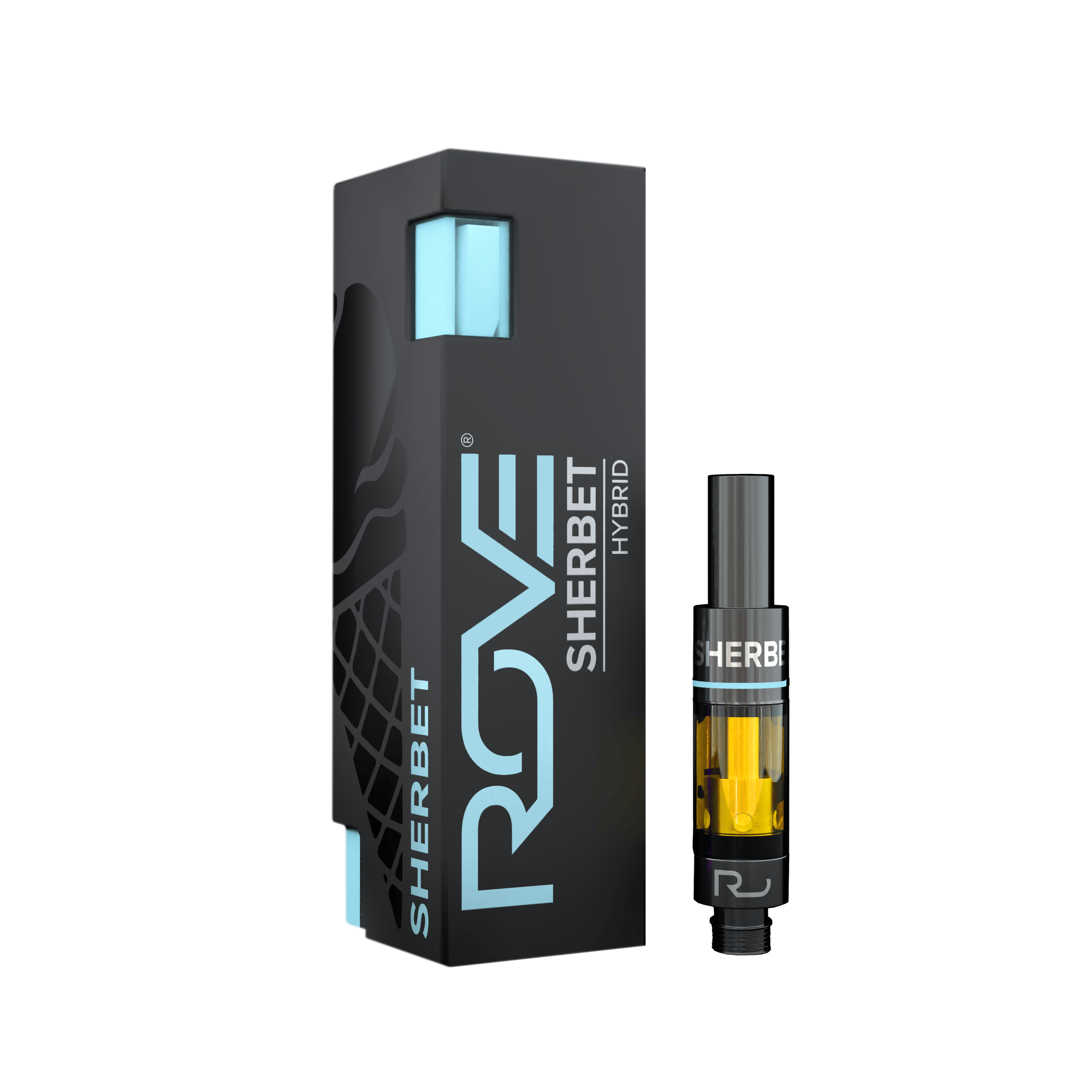
Indica-Hybrid
All strains Sherbet
4 live products in stock
Quick answer · What is the Sherbet cannabis strain?
Sherbet — sometimes called Sunset Sherbet — arrives with the quiet confidence of a well-composed dessert: layered, unhurried, and subtly complex. Born from the legendary GSC lineage, this indica-leaning hybrid offers a warm, enveloping body sensation anchored by a terpene profile that reads as equal parts candy shop and citrus grove. It is a strain that rewards patience, inviting the consumer to settle in rather than chase the experience.
Shop Sherbet · 4 of 4 live products
THC 42.21%Sativa
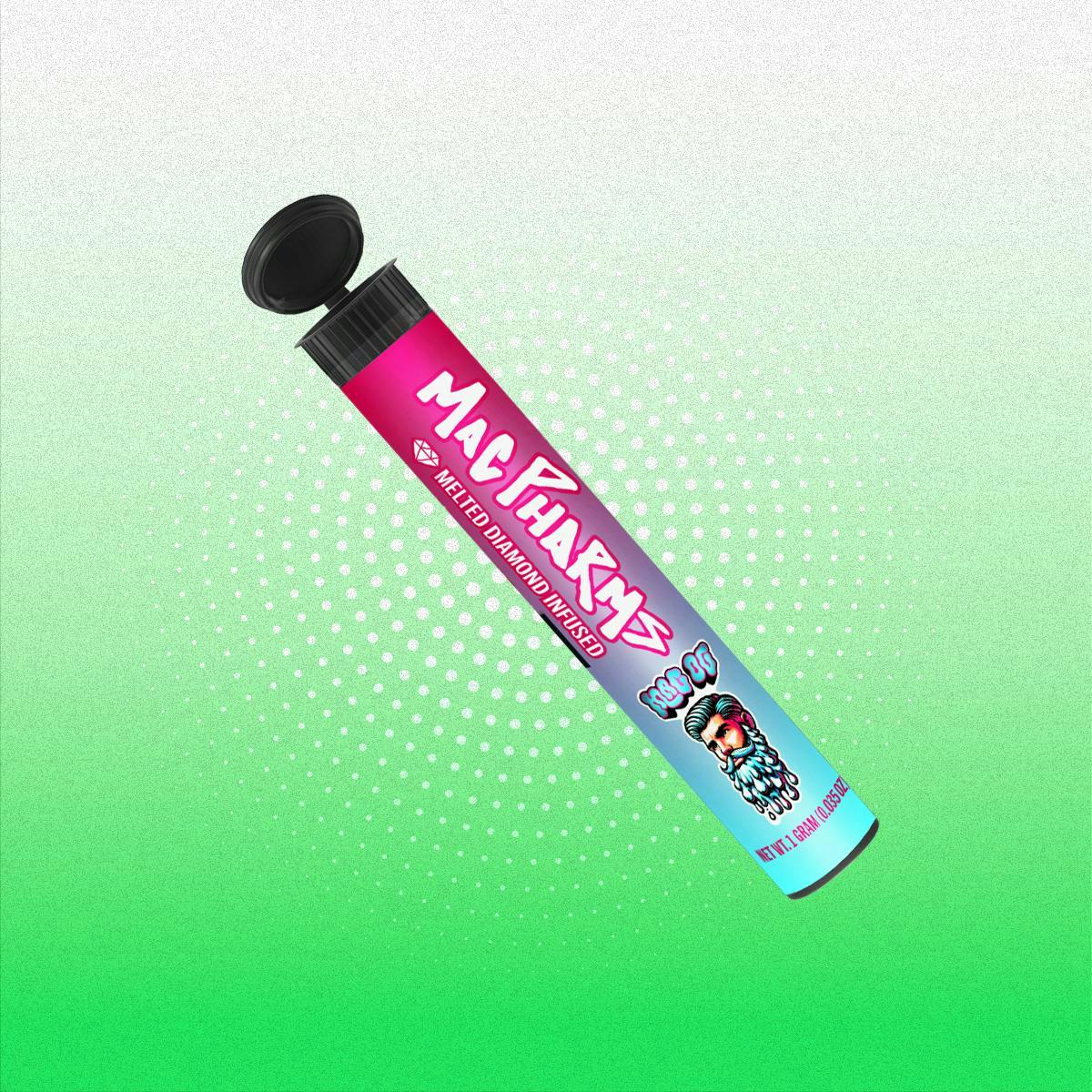
Mac PharmsMac Pharms | Strawberry Sherbet | Infused Pre-Roll · 1.2g
$15.04
$17after tax
About Sherbet
Everything to know about Sherbet.
Lineage & origin
Sherbet, widely marketed as Sunset Sherbet, traces its roots to Mr. Sherbinski, the San Francisco-based cultivator who became one of California's most recognized boutique breeders in the early 2010s. The strain is a cross of Girl Scout Cookies — itself a hybrid of OG Kush and Durban Poison — and Pink Panties, a largely private indica cultivar whose own lineage is not fully disclosed by the breeder. The GSC parentage places Sherbet squarely within one of the most influential genetic families of the last fifteen years, a lineage responsible for a cascade of award-winning descendants. Sherbinski released Sunset Sherbet as part of his Sherbinski brand sometime around 2015, and it gained rapid traction in California's premium dispensary market before spreading through the broader American cannabis scene via clone and seed reproduction. Its influence is now visible in dozens of downstream crosses, most notably Gelato — another Sherbinski creation pairing Sherbet with Thin Mint Girl Scout Cookies — and the expansive Gelato family that includes strains such as Gelato #33 (Larry Bird) and Bacio Gelato. Because of Sherbet's popularity, numerous phenotypes circulate under the name, some with perceptibly different terpene expressions and growth structures. Consumers should expect phenotypic variation between batches and cultivators, though the dessert-candy aromatic signature and indica-forward effect profile tend to remain consistent hallmarks of the genetic line.
Effects
Sherbet typically announces itself within five to ten minutes of inhalation, beginning as a gentle cerebral lift that softens the edges of analytical thought without fully displacing awareness. The onset is notably smooth — there is rarely the sharp, disorienting rush associated with some high-myrcene indicas — and most consumers describe an initial mood elevation that carries a quiet warmth rather than overt stimulation. This phase is attributed in part to the balanced cannabinoid and terpene interaction inherited from its GSC parentage. As the session progresses into its peak, the body component deepens considerably. A heaviness that originates in the shoulders and chest tends to spread downward, encouraging stillness and physical ease without the abrupt sedation of a pure indica landrace. The cerebral quality does not disappear but recedes into a pleasant, low-hum contentment — many consumers report heightened sensory appreciation during this window, particularly for music, food, and tactile comfort. The dominant terpenes myrcene and caryophyllene are understood to contribute meaningfully to this body-forward, tension-easing character. Duration is moderate to long, typically two to three hours for most consumers, with a gentle comedown rather than an abrupt drop. The tail end often settles into drowsiness, particularly in evening contexts or among those sensitive to myrcene. As with any potent indica-leaning cultivar, those new to cannabis or returning after a break are well advised to start low and go slow.
Aroma, flavor & terpenes
Sherbet's terpene architecture is one of its most celebrated qualities, built around a foundation of myrcene, caryophyllene, and limonene, with secondary contributions from linalool and humulene that add nuance without overwhelming the primary profile. Myrcene — the most abundant terpene in the majority of documented Sherbet samples — delivers the characteristic musky, ripe-fruit undercurrent that gives the strain its name-appropriate sweetness. It is the terpene most associated with the grape-candy and berry impressions that define the nose on a freshly opened jar. Limonene lifts and brightens the profile, introducing a citrus-peel quality — more mandarin and blood orange than sharp lemon — that keeps the sweetness from reading as cloying. Caryophyllene, a sesquiterpene that also interacts with the endocannabinoid system's CB2 receptors, contributes a subtle spice and mild earthiness, providing structural depth in both the aroma and the palate experience. Linalool rounds out the blend with a faint floral note, discernible on the exhale rather than the inhale, while humulene lends a woody, slightly herbal quality that grounds the otherwise candy-forward character. On the palate, Sherbet smokes with a creamy, almost dessert-like smoothness that has made it a reference point for the candy-terp genre. Vapor delivery accentuates the fruit-and-citrus top notes, while combustion draws out the earthier, spicier undertones from the caryophyllene. The finish is notably clean and sweet, leaving a lingering impression reminiscent of sherbet confectionery.
Appearance
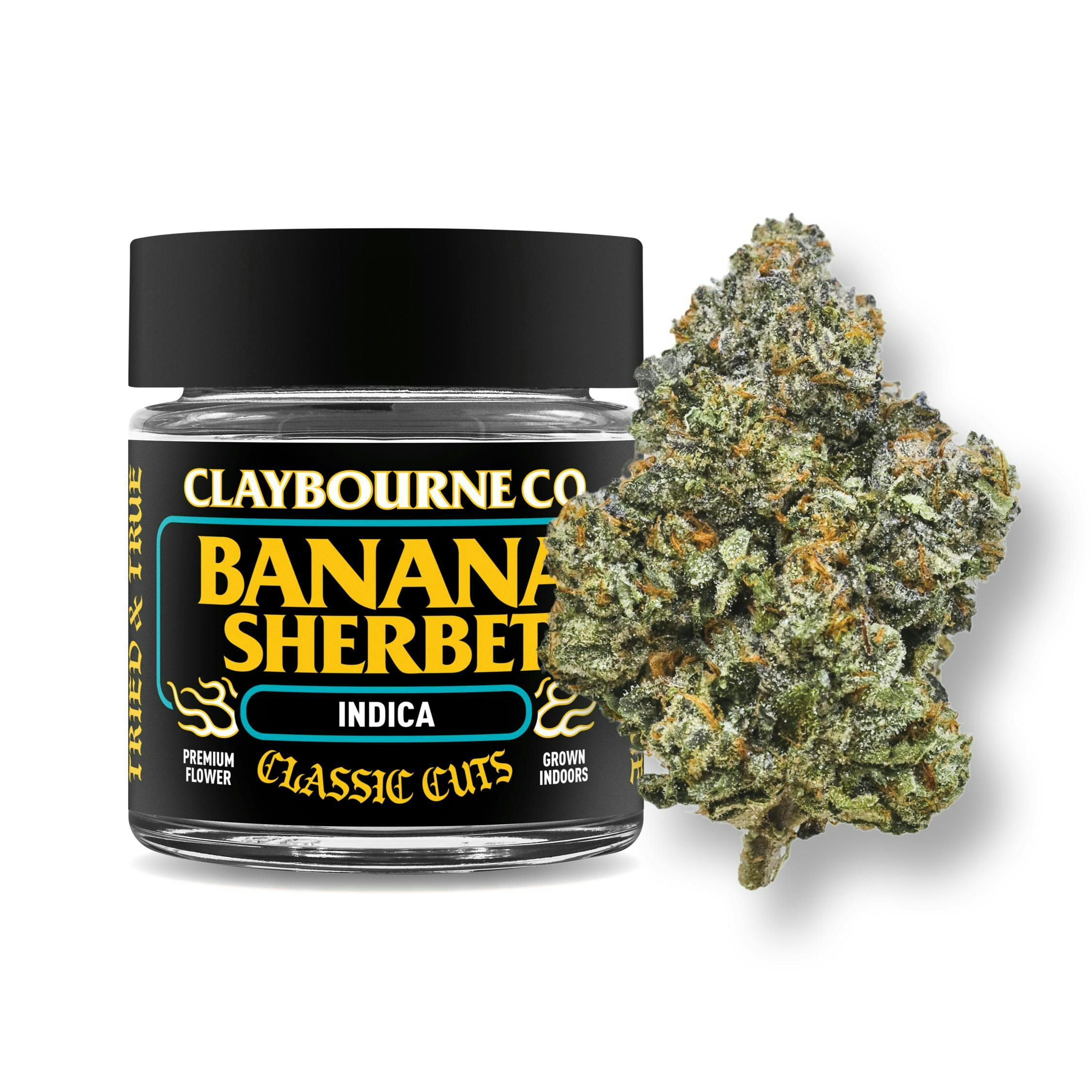
Well-cultivated Sherbet presents a visually striking bud structure that leans toward the dense, compact formation typical of its GSC heritage. Calyxes are tightly layered, producing chunky, rounded nuggets that feel substantial in the hand. The colour palette is one of Sherbet's most distinctive attributes: a base of deep forest green is interrupted by generous patches of soft purple and lavender, a phenotypic expression tied to anthocyanin development during cooler late-flowering temperatures. These cool tones are often more pronounced in batches grown with deliberate temperature drops in the final weeks of flower. Pistils present in shades of burnt orange to deep rust, threading visibly through the compressed bud structure and adding warmth against the cool purple backdrop. Trichome coverage is abundant and uniform, lending the surface a frosted, almost crystalline quality that speaks to the potency concentrated within the resin glands. Under direct light, the buds can appear almost iridescent — a visual quality that has contributed significantly to the strain's reputation on both the retail shelf and in editorial photography.
Growing notes
Sherbet is generally considered an intermediate cultivar — manageable for experienced home growers but likely to challenge those working their first few cycles. The plant inherits GSC's tendency toward compact, bushy growth, which makes it well-suited to indoor cultivation where canopy management through low-stress training or the Screen of Green method can meaningfully improve light penetration and yield potential. Indoor flowering time typically runs eight to nine weeks, and yields are considered moderate — generous enough for boutique producers, though not among the highest-output cultivars in the indica category. Outdoor cultivation is viable in warm, Mediterranean-like climates where the plant can fully express its terpene profile in natural light. Cooler night temperatures in the final weeks of flowering will encourage the purple and lavender hues that distinguish premium Sherbet batches. The strain shows some susceptibility to mold and powdery mildew, so airflow and humidity management are priorities regardless of environment. For the cultivator-curious shopper, Sherbet represents a strain whose visual payoff and aromatic reward are proportional to the care invested in its environment — it is a cultivar that responds to attention.
When it's best enjoyed
Sherbet is best understood as an evening companion — a strain aligned with the hours between dinner and sleep, when the desire for stimulation has quieted and the appeal of deep, uncomplicated comfort rises. It suits solo contexts particularly well: a dim room, a considered playlist, and an absence of obligation. The body-forward effect profile makes extended physical activity inadvisable, but passive creative engagement — listening with full attention, light reading, or unhurried reflection — pairs naturally with the strain's sensory-enhancement qualities. For food pairing, Sherbet's candy-citrus terpene signature aligns with desserts that share its profile: a blood orange sorbet, a citrus tart, or a plate of fresh berries with cream will feel like a natural extension of the experience rather than a contrast to it. Musically, the warm body sensation and mood lift correspond well to slow-tempo soul, ambient electronic music, or late-night jazz — anything with texture and space rather than urgency. For a social context, a small gathering of close companions on a quiet evening, where conversation is unhurried and atmosphere takes precedence over activity, is where Sherbet tends to show its most sociable side.
If you like Sherbet, also explore
Gelato
As a direct descendant sharing Sherbet as a parent, Gelato offers a closely related terpene profile and dessert-candy character, with a slightly more balanced cerebral component that appeals to Sherbet enthusiasts seeking marginal uplift.
Girl Scout Cookies
Sherbet's primary parent delivers a comparable earthy-sweet profile and indica-leaning body effect, making it an essential reference point for anyone exploring the GSC genetic family.
Wedding Cake
Another GSC descendant, Wedding Cake shares Sherbet's creamy, dense terpene character and body-forward indica effect arc, with added vanilla and dough notes that complement Sherbet's fruit-candy signature.
Zkittlez
For consumers drawn to Sherbet's vibrant candy-fruit aromatics and calming body effect, Zkittlez delivers a similarly sweet, grape-and-tropical terpene profile with a gentle, even-tempered experience.
Purple Punch
Sharing Sherbet's purple visual aesthetic, dessert-fruit aroma, and deeply relaxing indica character, Purple Punch is a natural recommendation for those who respond to Sherbet's evening-use profile.
Common questions
Is Sherbet indica or sativa?+
Sherbet is classified as an indica-dominant hybrid. Bred from Girl Scout Cookies and Pink Panties, it leans meaningfully toward the indica side of the spectrum in its effect profile — emphasizing body relaxation and a quieting of mental activity — while retaining a mild cerebral quality inherited from its GSC lineage. Most consumers and cultivators categorize it as an evening or late-day strain.
What does Sherbet taste like?+
Sherbet tastes much as its name implies: sweet, fruity, and dessert-adjacent, with dominant notes of berry, candy, and citrus peel. The palate experience is notably creamy and smooth, with a spiced, earthy undertone from caryophyllene emerging on the exhale. Vapor tends to accentuate the fruit and citrus notes, while combustion draws out the deeper, earthier elements of the terpene profile.
What are the typical effects of Sherbet?+
Sherbet typically produces a smooth onset characterized by mild mood elevation and cerebral warmth, transitioning into a deepening body relaxation during the peak phase. Most consumers report a sense of physical ease, heightened sensory appreciation, and a quiet contentment. The experience is generally associated with stillness rather than activity, and the comedown often leads naturally toward drowsiness, making it well-suited to evening use.
What strains are similar to Sherbet?+
Consumers who enjoy Sherbet often appreciate Gelato, its direct genetic descendant, as well as Girl Scout Cookies, Wedding Cake, Zkittlez, and Purple Punch. These strains share some combination of Sherbet's candy-fruit terpene character, indica-leaning body effect, or GSC genetic heritage, offering a familiar experiential territory while each presenting its own distinct expression.
Is Sherbet good for beginners?+
Sherbet can be approachable for beginners who prefer a calm, body-forward experience, but its potency — rooted in its dense terpene profile and GSC heritage — warrants caution. Those new to cannabis or returning after a long break are encouraged to start with a very modest amount and allow ample time before considering additional consumption. The strain's smooth onset can occasionally mask its full intensity until the peak arrives.
What are the dominant terpenes in Sherbet?+
The dominant terpenes in Sherbet are myrcene, caryophyllene, and limonene. Myrcene delivers the ripe fruit and musky sweetness central to the strain's identity. Limonene contributes citrus brightness and is associated with mood elevation. Caryophyllene adds subtle spice and earthy depth. Secondary terpenes including linalool and humulene round out the profile with faint floral and woody notes on the exhale.
Who created Sherbet and where does it come from?+
Sherbet, widely known as Sunset Sherbet, was developed by Mr. Sherbinski, a San Francisco-based cultivator who became one of California's most recognized boutique cannabis breeders. Released under his Sherbinski brand around 2015, the strain is a cross of Girl Scout Cookies and Pink Panties. It rose to prominence in California's premium dispensary market before spreading nationally and spawning a significant family of descendant strains, most notably Gelato.
When is the best time of day to consume Sherbet?+
Given its indica-dominant character and tendency to encourage physical ease and eventual drowsiness, Sherbet is most naturally positioned as an evening or late-night strain. It suits the hours after responsibilities have concluded — dinner and beyond — when relaxation is the primary aim. Consuming it earlier in the day is possible for those with higher tolerances, but its body-forward profile is generally not well-matched to active or demanding daytime contexts.
Related strains