THC 47.83%Hybrid
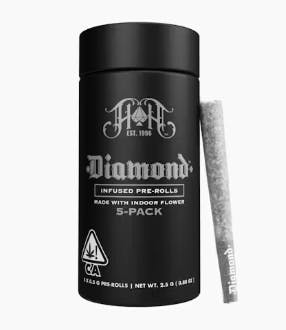
Heavy HittersHeavy Hitters | Peanut Butter Cake | Diamond Infused Pre-Roll 5pk · 0.5g/5pk
$65.00
$73after tax

weeddispensarynearme.com
You must be 21 years or older to enter. By entering, you confirm you’re of legal age in your state to purchase cannabis.
For use only by adults 21+ • Keep out of reach of children
1 live products in stock
Quick answer · What is the Peanut Butter Cake cannabis strain?
Peanut Butter Cake arrives at the intersection of indulgence and ease — a hybrid whose name is almost too accurate. Rich, nutty aromatics undercut by a whisper of vanilla and earth give this cultivar a distinctly dessert-like character, while its balanced genetic architecture delivers a session that feels both grounding and quietly euphoric. It is the kind of flower that rewards a slow, unhurried evening.
$73after tax
About Peanut Butter Cake
Peanut Butter Cake is generally attributed to the crossing of Peanut Butter Breath and Wedding Cake, two of the more celebrated hybrids to emerge from the mid-to-late 2010s American craft cannabis scene. Peanut Butter Breath itself — a child of Do-Si-Dos and Mendo Breath, popularized by ThugPug Genetics — brought the signature nutty, doughy terpene character that defines this family of cultivars. Wedding Cake, also known as Pink Cookies, is widely understood to be a cross of Triangle Kush and Animal Mints (though its lineage has been a point of some debate among breeders), and it contributed a dense structure, elevated resin production, and a sweet, vanilla-forward palate. The resulting Peanut Butter Cake inherits the best qualities of both parents: the savory, roasted-nut depth of Peanut Butter Breath married to the creamy confection of Wedding Cake. The specific originating breeder has not been uniformly credited across public sources, and multiple cuts circulate in the market, meaning phenotypic variation is common. Shoppers may encounter versions that lean more savory or more sweet depending on the phenotype and cultivation method. The strain gained meaningful traction in East Coast markets around 2020 through 2022, riding a broader consumer appetite for dessert-forward, terpene-rich hybrids.
Peanut Butter Cake typically presents a measured onset — most consumers report the first signs of effect arriving within five to fifteen minutes of inhalation, beginning as a gentle lift behind the eyes and a softening at the temples. The opening wave is predominantly cerebral without tipping into anxious territory, offering a quiet mental clarity and mild mood elevation that feels approachable rather than overwhelming. As the session progresses into its peak, the body tends to catch up with a relaxing, limb-heavy quality that is consistent with its indica-leaning hybrid profile. Caryophyllene — a dominant terpene in this cultivar — is associated in the literature with stress-modulating properties through its interaction with the endocannabinoid system, while myrcene contributes to the sedative, muscle-easing undertone that becomes more pronounced in the later stages. The overall character is one of contentment: sociable enough for easy conversation, settled enough to discourage restlessness. Duration tends to run moderate, with most consumers noting a comedown that is gradual and soft rather than abrupt. The descent rarely produces significant mental fog, though a gentle drowsiness may emerge as the session winds down, making this a strain best suited to the latter portion of the day. As with any potent hybrid, those newer to cannabis are well-served by the familiar principle of starting low and going slowly.
The terpene architecture of Peanut Butter Cake is what sets it apart most distinctly from the wider hybrid landscape. Caryophyllene typically leads the profile, delivering a faintly spiced, woody warmth — it is the compound responsible for the characteristic peppery undertone that anchors the otherwise sweet bouquet. Myrcene follows closely, imparting an earthy, faintly musky depth that keeps the aroma from reading as purely confectionary and gives it genuine complexity. Limonene, present in many phenotypes of Wedding Cake and carried through here, introduces a subtle citrus brightness — less zesty lemon and more the faint sweetness of a citrus rind, which lifts the mid-register of the aromatic profile. Together, these three terpenes create the illusion of roasted peanuts dusted with cracked pepper and set beside a slice of vanilla cake — an association that is less metaphor and more accurate sensory description. On the palate, Peanut Butter Cake delivers remarkably well on its aromatic promise. The inhale through a well-calibrated vaporizer or quality glass piece offers that recognizable nutty, doughy sweetness, while the exhale reveals a faint earthiness and a lingering vanilla note that coats the back of the throat pleasantly. The smoke is generally smooth and full-bodied, with little harshness at moderate temperatures, making it a satisfying option for those who appreciate flavor-forward sessions.
Peanut Butter Cake typically presents as a visually substantial cultivar. The buds are dense and tightly wound — a structural inheritance from its Wedding Cake parentage — with a somewhat rounded, popcorn-adjacent form that feels solid in the hand. Trichome coverage is generous and consistent across the surface, lending the flower a frosted, almost powdery visual quality that speaks to its resin-rich genetics. The color palette tends toward deep forest green at the core, with occasional patches of muted purple appearing in phenotypes that experienced cooler temperatures during the final weeks of flowering. Amber and rust-orange pistils weave through the canopy in moderate density, providing a warm contrast against the pale trichome layer. Under magnification, the resin glands are typically full and cloudy with a percentage transitioning to amber at peak ripeness — a useful visual cue for cultivators timing their harvest.
Peanut Butter Cake is considered a moderately demanding cultivar — accessible to dedicated home growers with some experience, but not ideally suited as a first-time project. It thrives in controlled indoor environments where temperature and humidity can be managed precisely, as its dense bud structure does carry some susceptibility to moisture-related issues if airflow is insufficient during the late flowering period. Indoors, Peanut Butter Cake typically completes its flowering cycle in approximately eight to nine weeks. Yield potential is considered moderate to above average for an indoor setup, with low-stress training techniques helping to maximize canopy light exposure. Outdoors, the strain prefers a warm, Mediterranean-style climate and generally reaches harvest readiness by mid-to-late October in the Northern Hemisphere. It responds well to organic soil amendments, which cultivators report can further enhance the terpene expression that defines this variety's appeal. For the shopper curious about what goes into producing this flower at its best, expect that premium cuts require careful environmental dialing-in.
Peanut Butter Cake occupies a particular niche in the evening-to-late-evening window — it is not a strain that asks you to accomplish much, but it is equally not one that insists on total dissolution. The early cerebral warmth makes it a natural companion for unhurried creative pursuits: sketching, reading long-form fiction, or working through a playlist that deserves full attention. The gradual body settle that follows makes it equally suited to a quiet night at home, particularly after a meal. In terms of sensory pairings, the nutty, vanilla-forward terpene profile finds a natural counterpart in dark chocolate — specifically something in the 70 to 75 percent cacao range, where the slight bitterness plays against the cultivar's sweetness in a rewarding way. Musically, the warm, settled quality of the peak experience suits itself to soul, jazz, or ambient electronic — genres where texture and mood take precedence over tempo. This is, ultimately, a strain for those evenings when the right atmosphere matters as much as the cannabis itself.
Peanut Butter Breath
As a parent cultivar sharing the same roasted, nutty terpene signature, fans of Peanut Butter Cake who want to explore a slightly more sedative, earthy expression will find Peanut Butter Breath a natural and satisfying step.
Wedding Cake
The other foundational parent, Wedding Cake offers a similarly dessert-forward palate with creamy vanilla depth and dense resin production, appealing to anyone drawn to Peanut Butter Cake's sweet confectionary character.
Gelato
Gelato shares the sweet, rich aromatic profile and balanced hybrid effect arc that Peanut Butter Cake devotees tend to appreciate, with a slightly more fruit-forward terpene expression rounding out the comparison.
Do-Si-Dos
A grandparent strain in Peanut Butter Cake's lineage, Do-Si-Dos delivers a similarly earthy sweetness and physically settling character that will feel familiar to those who enjoy this cultivar's later-session body quality.
Runtz
For consumers who love the dessert-hybrid category broadly, Runtz provides a comparably smooth, sweet smoking experience with a candy-adjacent terpene profile and an easy, mood-lifting onset.
Peanut Butter Cake is a hybrid cultivar with a slight lean toward indica-dominant characteristics in many phenotypes. Its onset delivers a cerebral warmth consistent with balanced hybrids, while the later stage of the experience carries the more physically relaxing, body-settling qualities associated with indica lineage — particularly through its Peanut Butter Breath and Wedding Cake parentage.
The flavor profile is notably faithful to its name. The inhale carries a rich, roasted-nut sweetness with a subtle doughy quality, while the exhale reveals vanilla undertones and a faint earthiness. A light peppery note from caryophyllene rounds the finish without sharpness. Overall, the palate experience is smooth, full-bodied, and firmly within the dessert-hybrid flavor tradition.
Most consumers report an initial mood lift and quiet mental clarity that arrives within ten to fifteen minutes, followed by a progressively deeper body relaxation as the session matures. The overall character is warm and contented rather than intensely stimulating. The comedown tends to be gradual, sometimes accompanied by mild drowsiness, which aligns this strain with late-afternoon or evening use.
Consumers who enjoy Peanut Butter Cake often gravitate toward its parent strains — Peanut Butter Breath and Wedding Cake — as well as similarly dessert-forward hybrids like Gelato, Runtz, and Do-Si-Dos. All share some degree of the sweet, creamy, or nutty terpene character and the balanced, body-inclusive effect profile that defines this corner of the hybrid category.
Peanut Butter Cake can be approachable for beginners who proceed thoughtfully. Its effect arc is relatively smooth and not known for producing abrupt or disorienting onset, but its potency — driven by dense resin production inherited from Wedding Cake — means that those new to cannabis should adhere to a start-low, go-slow approach and allow adequate time between sessions to gauge their response.
Caryophyllene, myrcene, and limonene are the terpenes most consistently reported in Peanut Butter Cake across public cannabis databases. Caryophyllene contributes a warm, spiced earthiness; myrcene adds depth and a faintly musky quality associated with physical relaxation; and limonene provides a subtle citrus brightness that lifts the overall aromatic complexity without dominating it.
Given its gradual drift toward physical relaxation and a soft drowsiness that can emerge in the later stages, Peanut Butter Cake is best suited to the evening or late afternoon. It maintains enough mental approachability early in the session for low-key creative engagement, but its settling body quality makes it less ideal for mornings or situations requiring sustained alertness or physical output.
Because multiple phenotypes circulate in the market without a single universally credited breeder, there is some variation in appearance between cuts. Most expressions share the dense bud structure, generous trichome coverage, and deep green coloration associated with Wedding Cake genetics. Purple hues and the depth of orange pistil development may vary depending on the specific phenotype and cultivation conditions.
Related strains
Pick your store
We'll show pricing, deals, and delivery zones for the store you pick. You can switch any time from the header.