
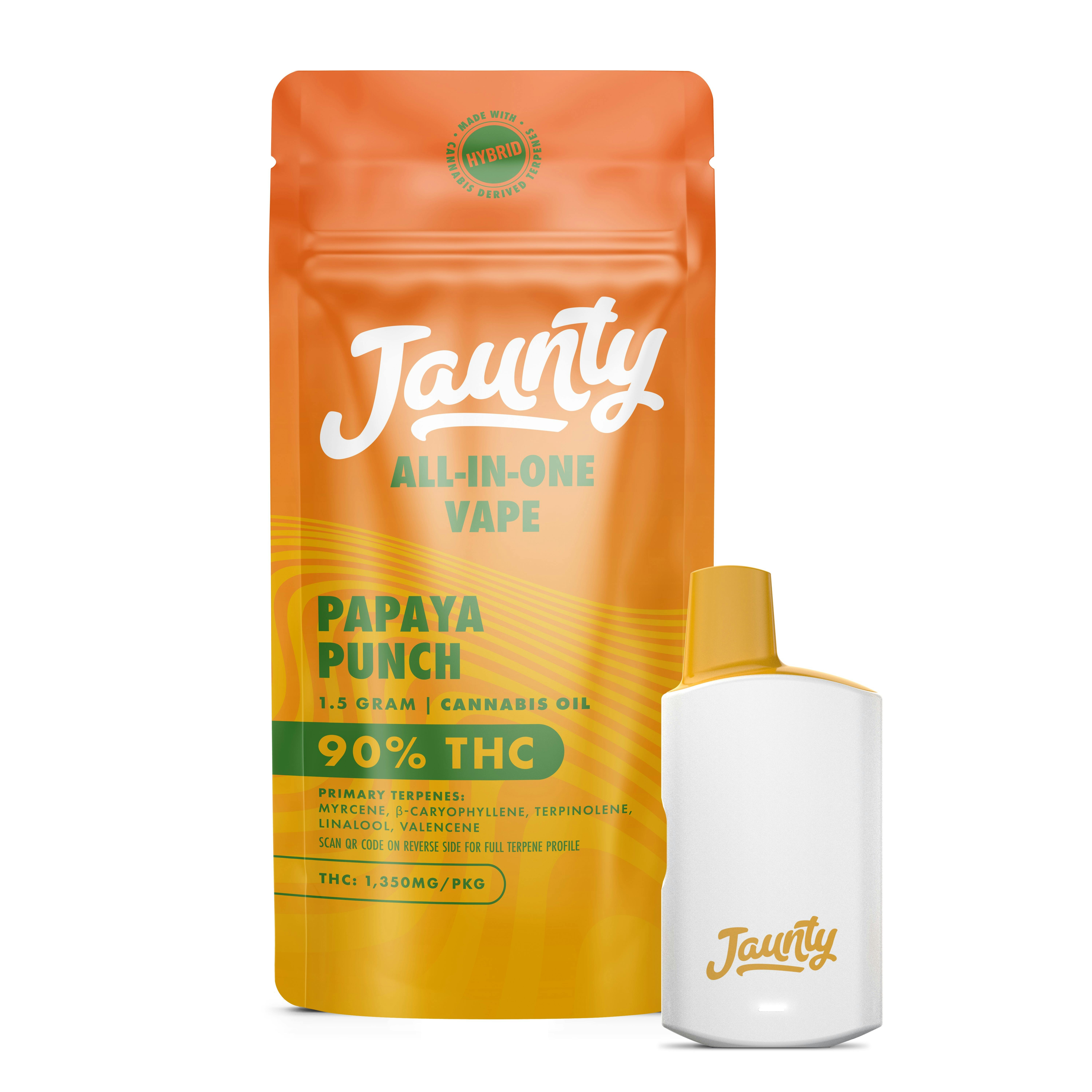
Indica
All strains Papaya Punch
1 live products in stock
Quick answer · What is the Papaya Punch cannabis strain?
Papaya Punch arrives like the last warm evening of summer — languid, tropical, and unhurried. A cross rooted in deeply sedative indica genetics, this strain layers ripe stone-fruit sweetness over an earthy, floral base. The experience is one of gentle dissolution: tension releases in quiet waves rather than sudden surges. For the discerning New York consumer seeking a measured, full-body unwind without sacrificing flavor complexity, Papaya Punch earns its place on the shelf.
Shop Papaya Punch · 1 of 1 live products
About Papaya Punch
Everything to know about Papaya Punch.
Lineage & origin
Papaya Punch is generally understood to be a cross of Papaya and Purple Punch, two strains whose combined pedigree reads like a who's who of modern indica breeding. Papaya itself — sometimes called Citrus Punch in certain European markets — was developed by Nirvana Seeds in the late 1990s and is believed to descend from Citral and Ice, the latter being a four-way cross of Skunk, Northern Lights, Shiva, and Afghan genetics. Papaya brought a distinctly tropical, mango-forward terpene profile and a reputation for reliably dense, resinous flower. Purple Punch, the second parent, emerged from the California market in the mid-2010s and was popularized by Supernova Gardens. Its lineage traces to Larry OG and Granddaddy Purple — a pairing that contributed both the deep berry-grape aromatics associated with GDP and the smooth, body-focused effect profile of Larry OG. Purple Punch became one of the more influential indica-leaning hybrids of its generation, spawning a wide family of crosses including Mimosa (with Clementine), Zkittlez Punch, and numerous other dessert-forward hybrids. Papaya Punch as a named cross does not have a single universally credited originator, and several breeders have produced versions under this name. Shoppers should note that phenotypic variation between batches is possible as a result. The strain began gaining wider recognition in the early 2020s through California and East Coast adult-use markets.
Effects
The onset of Papaya Punch tends to arrive within five to fifteen minutes of inhalation — a gentle warmth that spreads first through the shoulders and the back of the neck before settling across the torso. Unlike some aggressively sedative indicas, the opening phase carries a mild mood lift: a quiet, contented ease that clears the mental chatter without inducing anxious introspection. This is largely consistent with the myrcene-dominant terpene profile, which research associates with relaxing, muscle-loosening qualities, layered over the calming influence of caryophyllene. At its peak, Papaya Punch leans firmly into the body. The experience is characterized by physical heaviness rather than cognitive fog — many consumers report remaining clear-headed enough to hold a conversation or follow a film, while still feeling deeply anchored to their surroundings. This distinction matters for evening consumers who want sedation without total mental shutdown. Duration typically ranges from ninety minutes to three hours depending on consumption method and individual tolerance. The comedown is smooth and predictable, trailing off into genuine drowsiness in most cases. For that reason, this strain is best positioned as a late-evening or nighttime choice. Consumers new to indica-dominant cultivars are encouraged to start with a modest quantity and allow adequate time before redosing — the full body effect can deepen considerably on the second wave.
Aroma, flavor & terpenes
The terpene architecture of Papaya Punch is anchored by myrcene, which delivers the foundational earthiness and the characteristic musky, overripe-mango note that defines the strain's bouquet on first encounter. Myrcene is among the most prevalent terpenes in cannabis broadly, and in Papaya Punch it presents with unusual clarity — less herbal than in OG-family strains, more unmistakably fruity, evoking a fruit stand in late August heat. Caryophyllene, the dominant secondary terpene, adds a dry spice underneath the tropical sweetness — a subtle peppered wood note that prevents the profile from tipping into pure confection. Caryophyllene is also the only terpene known to interact with CB2 receptors, which may contribute to the strain's body-focused character. Linalool, where present in meaningful quantity, rounds the profile with a faint floral quality — a whisper of lavender that threads through the exhale and softens the overall impression. On the palate, Papaya Punch smokes with notable smoothness. The inhale presents tropical fruit and light sweetness; the exhale opens into earthier, slightly woody territory with that caryophyllene spice lingering at the back of the throat. Vapor from a quality dry-herb device tends to preserve the mango and floral notes with greater fidelity. The aftertaste is clean and gently sweet, without the heavy resin coat that some consumers find cloying in dessert-forward strains.
Appearance
Papaya Punch produces buds that reflect its indica heritage in structure: compact, densely packed calyxes that hold their shape well and feel substantial in the hand. The color palette draws on both parent strains — a base of deep forest green shot through with patches of muted purple that emerge more vividly when the plant has experienced cooler temperatures during the final weeks of flower. Pistils run a vivid amber to burnt orange, providing warm contrast against the cooler greens and purples beneath. Trichome coverage is generous and even, giving well-cured flower a frosted, almost silvery exterior that is visible without magnification. Under close inspection, the trichome heads appear full and globular, an indicator of cannabinoid and terpene maturity. Overall, Papaya Punch presents as an aesthetically considered specimen — the kind of flower that rewards a moment's examination before consumption.
Growing notes
Papaya Punch is considered a moderately approachable cultivar for home growers with some prior experience, though its dense bud structure demands vigilance around airflow and humidity management during the flowering phase. Like most indica-dominant plants, it tends toward a compact, bushy profile that responds well to low-stress training (LST) or light defoliation to encourage light penetration and prevent moisture buildup in the interior canopy. Indoors, flowering typically concludes between eight and nine weeks, with harvest windows aligning to late-season terpene expression. Indoor yields are generally moderate to generous when grown under optimized light conditions. Outdoors, the strain performs well in temperate to warm climates and is typically ready for harvest in the Northern Hemisphere by early to mid-October. The plant's relatively short stature makes it adaptable to limited-space grows. Phenotypic variation in crosses sold under this name means that growers may encounter slight differences in structure, color expression, and terpene output between seed runs or cuts.
When it's best enjoyed
Papaya Punch is, without equivocation, an evening strain — one that earns its place in the ritual of transition between the demands of a New York day and the quiet of a night off. It suits the solo wind-down particularly well: a drawn bath, a film that does not require total intellectual engagement, or a long playlist that rewards passive listening rather than critical attention. The mango-earth terpene profile pairs naturally with food experiences built around stone fruit and spice — a ripe mango sorbet, a Thai curry with coconut and lemongrass, or a generous pour of a slightly off-dry Riesling whose fruit character mirrors the strain's own. For social contexts, Papaya Punch works best in small, unhurried gatherings — a dinner that has finished and given way to comfortable conversation on a couch, where no one is expected anywhere afterward. It is less suited to high-energy or intellectually demanding environments. If a musical pairing is useful, consider something warm and unhurried: late-career Sade, a Khruangbin album, or the kind of deep soul playlist that asks nothing of the listener except presence.
If you like Papaya Punch, also explore
Purple Punch
As a direct parent strain, Purple Punch shares the grape-berry sweetness and deeply relaxing body effect that define Papaya Punch, making it the natural first recommendation for fans of this cultivar.
Papaya
The other parent in the cross, Papaya delivers the same tropical mango-forward terpene profile in a slightly earthier, less dessert-sweet expression that will satisfy consumers drawn to Papaya Punch's fruit character.
Zkittlez
Zkittlez shares the candy-fruit aromatic profile and full-body indica relaxation without extreme sedation, making it a compelling companion for consumers who appreciate Papaya Punch's balance of flavor and ease.
Tropicana Cookies
For consumers who enjoy Papaya Punch's tropical brightness but occasionally want a more mentally engaged experience, Tropicana Cookies offers a comparable citrus-fruit terpene profile with a slightly more balanced indica-sativa character.
Granddaddy Purple
GDP shares the grape-floral aromatics and pronounced body sedation present in Papaya Punch's Purple Punch lineage, and serves as a reliable reference point for consumers seeking that same evening-weight character.
Common questions
Is Papaya Punch indica or sativa?+
Papaya Punch is an indica-dominant hybrid. Its parent strains — Papaya (Nirvana Seeds) and Purple Punch — both carry strongly indica-leaning genetics rooted in Afghan, Skunk, and Northern Lights heritage. In practice, the experience reflects this: the effects are primarily physical, relaxing, and best suited to evening use rather than active daytime pursuits.
What does Papaya Punch taste like?+
Papaya Punch tastes primarily of ripe tropical fruit — mango and papaya are the most prominent notes — with an underlying earthiness and a dry spice on the exhale contributed by caryophyllene. A faint floral quality, likely from linalool, softens the finish. The overall palate impression is smooth and sweet without feeling heavy or overly resinous.
What are the typical effects of Papaya Punch?+
Consumers typically report a gentle mood lift followed by progressive physical relaxation that deepens into the body over thirty to sixty minutes. The experience is grounding and calming rather than intensely cerebral. Most find it suitable for unwinding at the end of the day, with drowsiness often developing as the session progresses. As with any cannabis product, individual experience will vary.
What strains are similar to Papaya Punch?+
Consumers drawn to Papaya Punch often enjoy its parent strains — Purple Punch and Papaya — for their overlapping aromatic and effect profiles. Zkittlez and Granddaddy Purple are also frequently cited as comparable options for those seeking fruit-forward indica relaxation. Tropicana Cookies serves as a useful alternative when a slightly more active experience is preferred.
Is Papaya Punch good for beginners?+
Papaya Punch can be suitable for adult-use consumers who are newer to cannabis, provided they approach it thoughtfully. Its indica-dominant character means effects can be pronounced, particularly the body sedation that deepens on repeated inhalation. The general guidance of starting with a small amount and waiting a full fifteen minutes before considering additional consumption is particularly relevant here.
What are the dominant terpenes in Papaya Punch?+
Myrcene is the dominant terpene in most Papaya Punch expressions, contributing the earthy, mango-tropical aroma that defines the strain's bouquet. Caryophyllene follows as the principal secondary terpene, adding dry spice and depth. Linalool is often present in smaller concentrations, lending a subtle floral note. Together, these three terpenes account for the strain's characteristic warmth and body-forward effect profile.
When is the best time of day to consume Papaya Punch?+
Papaya Punch is best suited to the evening or nighttime hours. Its indica-dominant effect arc — beginning with gentle relaxation and often progressing toward drowsiness — makes it a poor fit for mornings or any period requiring sustained focus, physical coordination, or social performance. It is well matched to the hours after dinner, when the agenda for the day is effectively complete.
Who bred Papaya Punch and where does it come from?+
Papaya Punch does not have a single universally credited originator. Several breeders have produced and sold flower under this name, primarily within California and East Coast adult-use markets. The cross is generally attributed to combining Nirvana Seeds' Papaya with Purple Punch, popularized by Supernova Gardens. Shoppers should expect some phenotypic variation between producers and batches as a result.
Related strains