
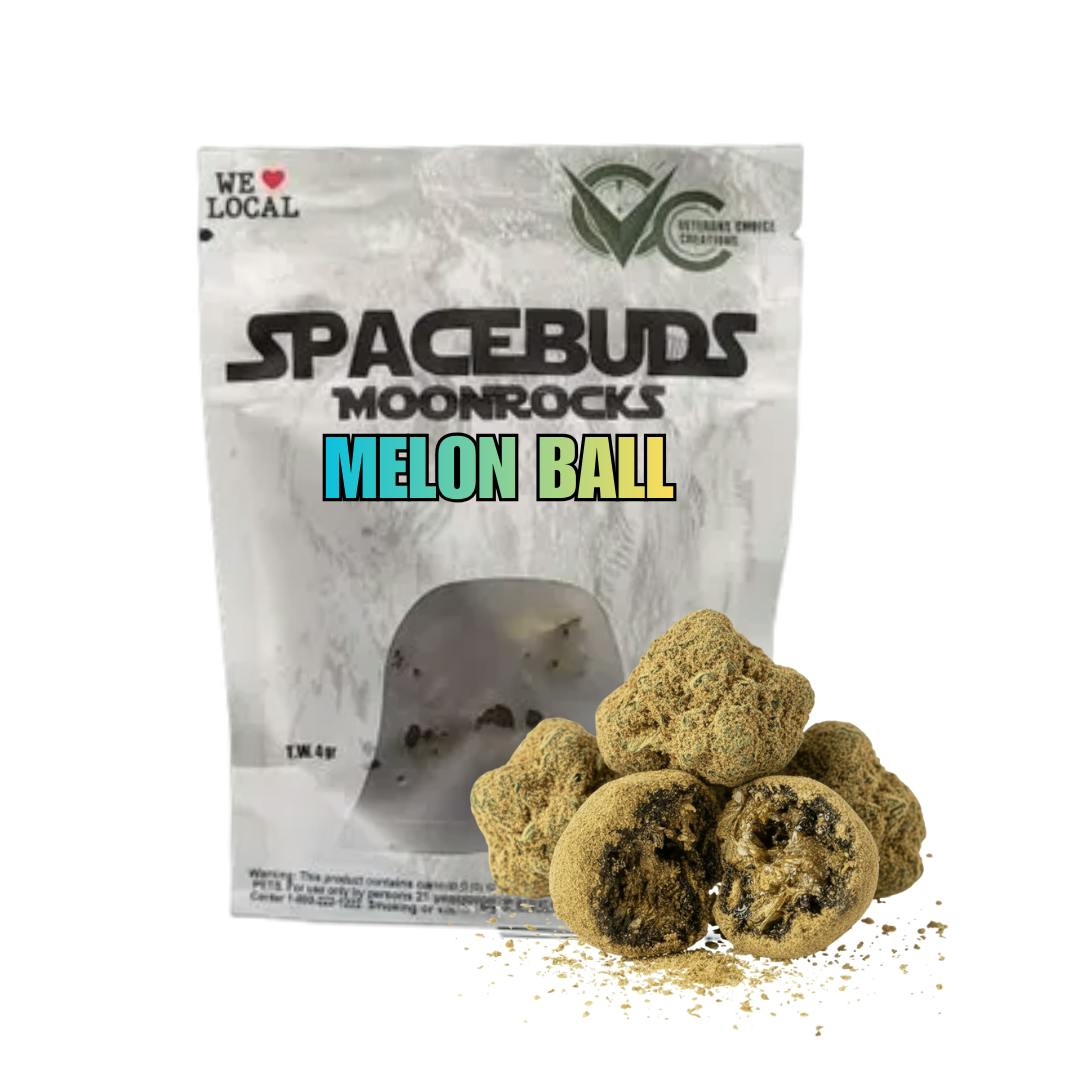
Hybrid
All strains Melon Ball
2 live products in stock
Quick answer · What is the Melon Ball cannabis strain?
Melon Ball arrives with the quiet confidence of summer fruit left to ripen on the vine — its perfume equal parts honeydew and tropical musk, its effect a measured, sociable warmth that settles without overwhelming. A hybrid that leans toward gentle euphoria and easy conversation, it occupies the middle ground between cerebral spark and physical ease, making it a natural companion for unhurried afternoons and the kind of evenings that seem to extend on their own.
Shop Melon Ball · 2 of 2 live products
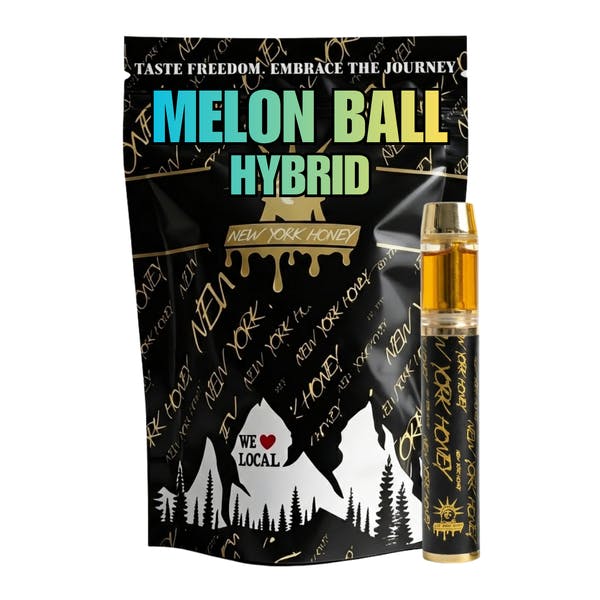
About Melon Ball
Everything to know about Melon Ball.
Lineage & origin
Melon Ball is generally attributed to a cross of Watermelon, Honeydew, and, in some documented phenotypes, an OG Kush or Kush-adjacent male, though the precise breeder responsible for stabilizing the variety has not been uniformly confirmed across public cannabis databases. Leafly and AllBud both list Watermelon as the dominant parent — a strain itself descended from an undisclosed indica lineage associated with Hash Plant genetics — while Honeydew contributes the sweeter, melon-forward aromatic profile that defines the cultivar's commercial identity. The strain gained visibility in the mid-to-late 2010s as the Pacific Northwest and California legal markets expanded consumer appetite for fruit-forward hybrids with approachable potency. It was not the product of a singular seed bank release with a publicized launch event; rather, its provenance follows the more common pattern of West Coast cultivation circles where phenotype selection preceded formal branding. Genetic siblings and analogues within this flavor family include Watermelon Zkittlez, Gushers, and various Melon-prefix cultivars that emerged around the same period — though Melon Ball is distinguishable by its comparatively lighter Kush undertone and more pronounced terpinolene signature. Consumers seeking verified seed stock should confirm with their retailer, as the name has been applied to more than one distinct phenotype in the broader market.
Effects
Melon Ball typically presents a relatively prompt onset — most consumers report the first perceptible shift within five to ten minutes of inhalation, beginning as a gentle brightening behind the eyes and a soft lift in ambient mood. The initial phase is predominantly cerebral: thoughts arrive with slightly more ease and color, conversation feels low-effort, and minor social friction tends to dissolve without the hyperactive edge associated with more sativa-dominant cultivars. This makes the early window particularly well-suited to group settings or creative tasks that do not demand precision. As the experience matures into its peak, usually somewhere between twenty and forty-five minutes in, a body warmth characteristic of its Watermelon parentage begins to register — a gentle gravity that does not impair mobility but encourages presence over productivity. The comedown is generally gradual and soft, fading toward a relaxed baseline rather than an abrupt drop. Total duration for most consumers falls in the two-to-three hour range. The terpene profile — notably terpinolene, myrcene, and caryophyllene — likely contributes to this balanced arc. Myrcene is broadly associated in the literature with sedative and muscle-relaxing qualities; caryophyllene, which binds to CB2 receptors, may moderate the experience toward physical calm without pronounced psychoactivity; terpinolene, common in fruit-forward hybrids, is frequently correlated with the uplifting, slightly giddy quality many consumers notice in the onset phase. As always, individual response varies — those new to cannabis are well advised to start low and go slow.
Aroma, flavor & terpenes
The aromatic identity of Melon Ball is among its most distinctive traits, built around a dominant terpinolene signature that delivers the cultivar's characteristic fresh-melon top note — bright, slightly floral, and evocative of honeydew rind. Terpinolene, while present in many strains at trace levels, appears here in meaningful concentrations, lending a sweetness that reads more botanical than artificial and distinguishing Melon Ball from heavier, earthier fruit-forward cultivars. Secondary terpenes deepen the profile considerably. Myrcene introduces a soft, musky warmth — the ripened-fruit-flesh quality that grounds the otherwise airy top notes — while a modest caryophyllene presence contributes a faint spice on the finish, not unlike the interior rind of a cantaloupe meeting the faintest suggestion of cracked black pepper. Ocimene, when present in this lineage, adds a herbal, almost tropical sweetness reminiscent of fresh basil or mango leaf, pushing the nose further into the fruit-garden register. On the palate, well-cured Melon Ball flower tends to smoke cleanly, with vapor that is smooth and cool relative to more resinous, caryophyllene-heavy cultivars. The inhale carries the melon sweetness forward faithfully; the exhale reveals the earthier myrcene foundation alongside a faint kush herbal note on the back of the throat. Flavor retention is generally good through the mid-bowl, though the more delicate terpinolene notes fade before the session concludes, yielding to a sweeter, slightly floral finish. A quality vaporizer dialed below 375°F will preserve the terpinolene expression most faithfully.
Appearance
Melon Ball buds are typically medium to large in structure, with a moderately dense, semi-rounded formation that reflects its hybrid heritage — neither the tightly packed, almost architectural density of a pure indica nor the airy, elongated clusters of a sativa-dominant cultivar. The calyxes are plump and well-developed, contributing to a slightly pillowed visual texture when examined closely. The color palette skews toward a muted, sage-green base with occasional chartreuse or pale lime accents — a visual warmth consistent with its fruit lineage. Pistils tend toward a burnt orange or amber, distributed evenly across the surface and adding a soft contrast to the green body. Trichome coverage is generous, producing a frosted, almost luminous quality under direct light that speaks to the resin development associated with its OG-adjacent genetics. Well-grown examples carry a visible stickiness that signals careful cultivation and proper cure.
Growing notes
Melon Ball is generally regarded as a moderately approachable cultivar for home growers with some prior experience, though its specific phenotype variation — owing to the loosely documented genetics — means that performance can differ meaningfully between seed sources. Indoor cultivation is the more common approach, where the flowering window typically falls between eight and nine weeks. Yields under controlled conditions are reported as moderate to above-average, rewarding growers who invest in proper canopy management. The strain responds well to low-stress training techniques and benefits from a stable environment with moderate humidity — ideally kept below fifty percent during the late flowering stage to protect trichome integrity and reduce the risk of mold, to which its denser bud structure can be somewhat susceptible. Outdoor cultivation is viable in temperate climates with reliably warm, dry late-summer conditions; harvest typically aligns with mid-to-late October in the Northern Hemisphere. Curious shoppers who ask about cultivation origins should note that asking a dispensary about the specific grow environment and cure process will often yield more relevant information than strain-level generalities.
When it's best enjoyed
Melon Ball occupies the territory of the unhurried social hybrid — a cultivar best appreciated when the agenda is loose and the company is comfortable. Its early cerebral lift makes it a natural companion for creative conversation, a vinyl listening session, or a leisurely walk through a neighborhood market on a warm afternoon. The gradual body ease that follows suits settings where extended sitting is welcome: a long dinner on a terrace, a slow Sunday at a gallery, or the hours between finishing a meal and beginning a film. From a pairing perspective, the terpinolene-forward, melon-and-spice profile makes intuitive sense alongside food with brightness and acidity — a chilled gazpacho, a stone-fruit charcuterie board, or a glass of sparkling water with cucumber. Musically, the experience maps well onto mid-tempo, textured work: early Tame Impala, Khruangbin, or the more expansive end of contemporary jazz sit naturally alongside its measured, warm arc. Those seeking a post-hike recovery session will find the latter-phase body ease equally agreeable, though the onset energy makes it more engaging than a purely sedating evening cultivar.
If you like Melon Ball, also explore
Watermelon Zkittlez
Fans of Melon Ball's fruit-forward sweetness and gentle hybrid balance will recognize a familiar aromatic register in Watermelon Zkittlez, with a comparably smooth, approachable effect profile.
Gushers
Gushers shares the same family of tropical, candy-fruit terpene expression alongside a body-present hybrid effect that mirrors Melon Ball's relaxed social character.
Mimosa
Those drawn to Melon Ball's bright, uplifting onset and clean citrus-adjacent nose will find Mimosa a natural step — leaning slightly more toward cerebral energy with a similarly elegant, fruit-driven flavor.
Tropicana Cookies
Tropicana Cookies offers a comparable terpinolene-tinged, citrus-fruit prominence with a mood-elevating effect arc that will feel familiar to Melon Ball consumers seeking slightly more creative drive.
Honeydew
As one of Melon Ball's reported parent cultivars, Honeydew shares the soft melon aromatic core and easy, even-handed hybrid effect, making it a logical adjacent choice for those exploring the lineage directly.
Common questions
Is Melon Ball indica or sativa?+
Melon Ball is a hybrid, drawing from both indica-leaning Watermelon genetics and the broader hybrid architecture of its lineage. In practice, it presents a balanced experience — an uplifting, sociable onset rooted in its more sativa-adjacent traits, followed by a gradual body ease consistent with its indica heritage. Most consumers and retailers classify it as a balanced or slightly indica-leaning hybrid, though phenotype variation means individual batches may skew in either direction.
What does Melon Ball taste like?+
Melon Ball delivers a clean, fresh-melon sweetness on the inhale — primarily honeydew and light tropical fruit — driven by a notable terpinolene presence. The exhale introduces a softer, earthier base from myrcene alongside a faint spice on the finish attributable to caryophyllene. The overall palate impression is smooth and fruit-forward without being cloying, and the flavor holds well through the first portion of a session before mellowing into a gentle herbal sweetness.
What are the typical effects of Melon Ball?+
Consumers most commonly report a gentle euphoric lift at onset — a brightening of mood and ease of conversation — that transitions over thirty to forty-five minutes into a relaxed, body-present warmth. The experience is generally described as sociable and approachable rather than intensely sedating or racingly cerebral. Duration typically falls in the two-to-three hour range. Those new to cannabis should begin with a conservative amount and allow adequate time before reassessing.
What strains are similar to Melon Ball?+
Consumers who enjoy Melon Ball tend to gravitate toward other fruit-forward hybrids with smooth, balanced effect profiles. Watermelon Zkittlez, Gushers, and Honeydew share its melon-and-tropical aromatic family, while Mimosa and Tropicana Cookies offer comparable brightness and sociability with slightly more citrus-driven flavor. All five represent cultivars that prioritize terpene expressiveness alongside a measured, approachable hybrid experience.
Is Melon Ball good for beginners?+
Melon Ball's balanced hybrid profile and fruit-forward, non-aggressive character make it one of the more approachable options for those newer to cannabis — particularly compared to high-myrcene indica-dominant cultivars or intensely cerebral sativa-leaning strains. That said, individual sensitivity varies considerably, and the standard guidance applies: start with a small amount, allow sufficient time to gauge the full effect before consuming more, and choose a comfortable, familiar environment for a first session.
What are the dominant terpenes in Melon Ball?+
Terpinolene is widely cited as the primary terpene in Melon Ball, responsible for its characteristic fresh-melon and faintly floral aroma. Myrcene follows as a significant secondary terpene, contributing earthy warmth and the ripened-fruit depth beneath the top notes. Caryophyllene adds a light spice on the finish and may contribute to the strain's physical ease. Ocimene has been noted in some analyses, lending an additional tropical, herbal sweetness to the aromatic complexity.
How long do the effects of Melon Ball last?+
For most consumers, the effects of Melon Ball fall within a two-to-three hour window when inhaled, with the peak experience — balancing cerebral lift and body warmth — typically occurring between twenty and sixty minutes after onset. The comedown is gradual rather than abrupt, fading toward a relaxed baseline. Consumption method, individual metabolism, and tolerance all influence duration meaningfully, so personal experience will vary from these general reference points.
When is the best time of day to enjoy Melon Ball?+
Melon Ball's balanced arc — energizing at onset, gently relaxing as it matures — positions it most naturally as an afternoon or early-evening cultivar. It carries enough initial lift to pair with social or creative activity without the stimulating edge that can complicate late-night use for some consumers. Those who find the body-ease component more pronounced in their personal experience may prefer it closer to evening, while those who respond primarily to the cerebral onset may find it well-suited to mid-afternoon hours.
Related strains