
Indica
All strains King Louis XIII
4 live products in stock
Quick answer · What is the King Louis XIII cannabis strain?
King Louis XIII is a deeply rooted California indica whose name alone conjures something ceremonial. Descended from OG Kush stock and shaped by Southern California's underground cultivation scene, this strain delivers a heavy, resinous experience characterized by earthy pine, subtle fuel, and a sedating body presence that settles in with quiet authority. It is the kind of flower that rewards patience and a considered setting.
Shop King Louis XIII · 4 of 4 live products
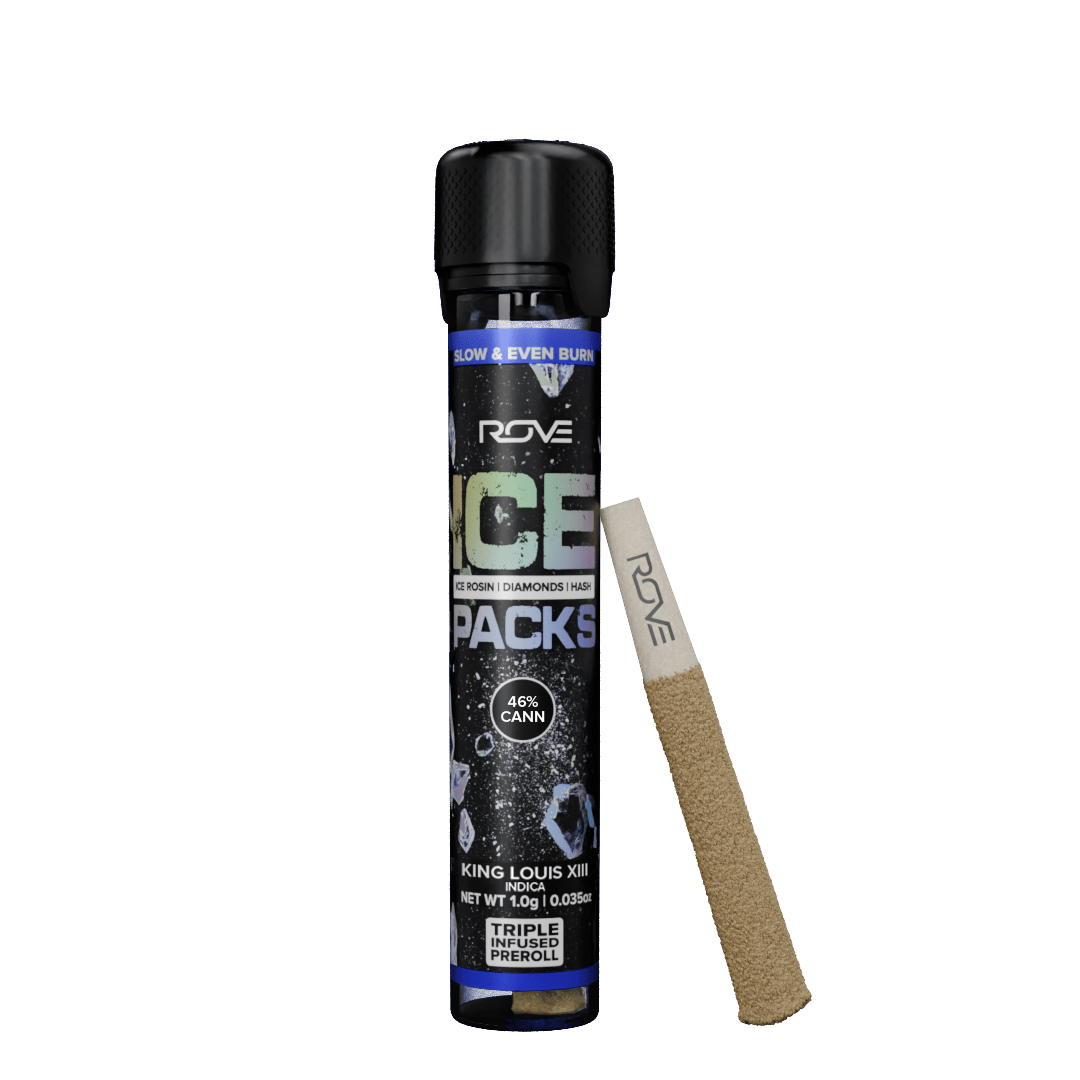
THC 38.99%Indica
RoveKing Louis XIII - Infused Ice Packs (Rosin, Hash, and Diamonds) 1g · 1g
$25.00
$28after tax
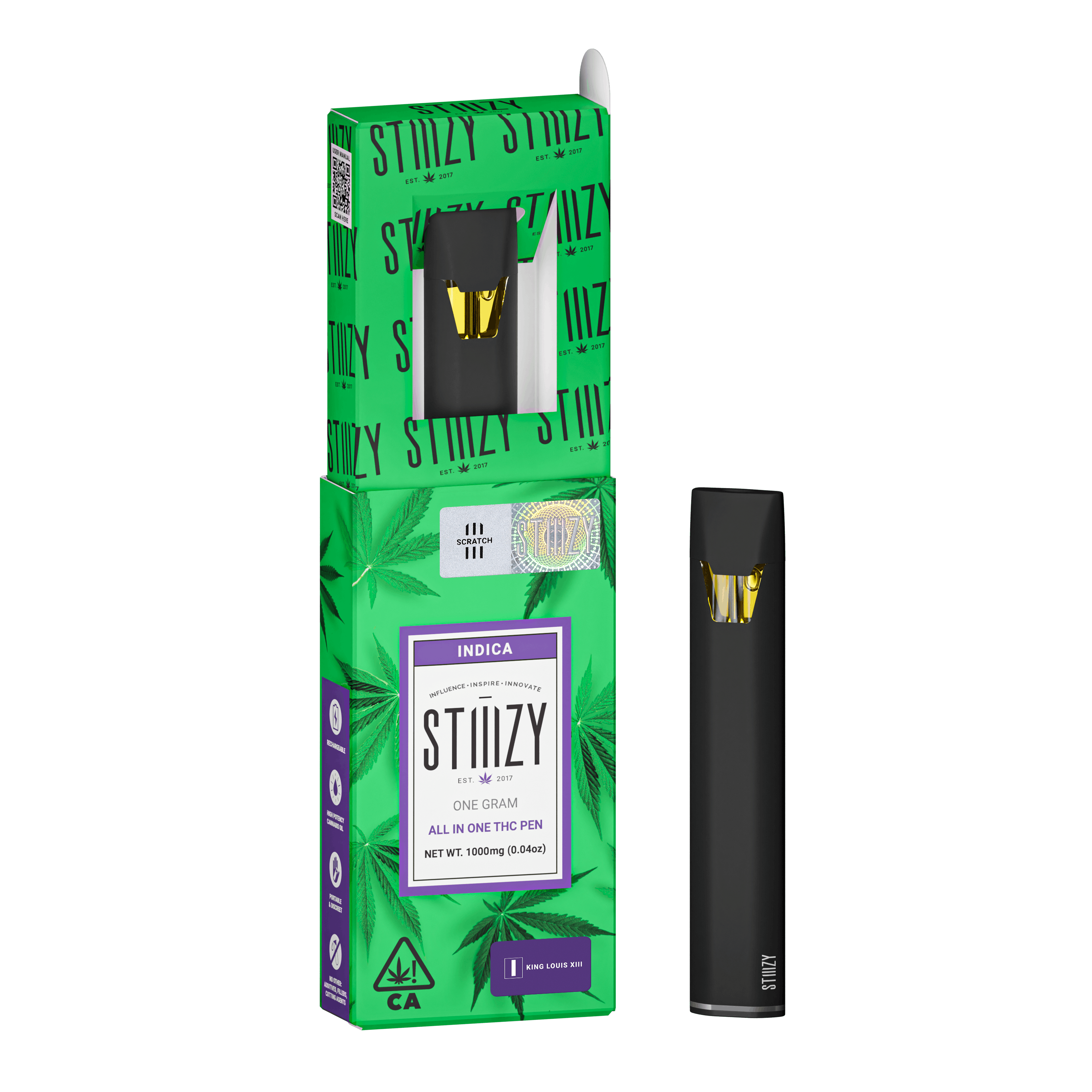
On sale· 25% OFF
THC 84.37%·CBD 0.46%Indica
STIIIZYKing Louis XIII All-In-One THC Pen | 1g · 1g
$34.52$46.02
$41after tax
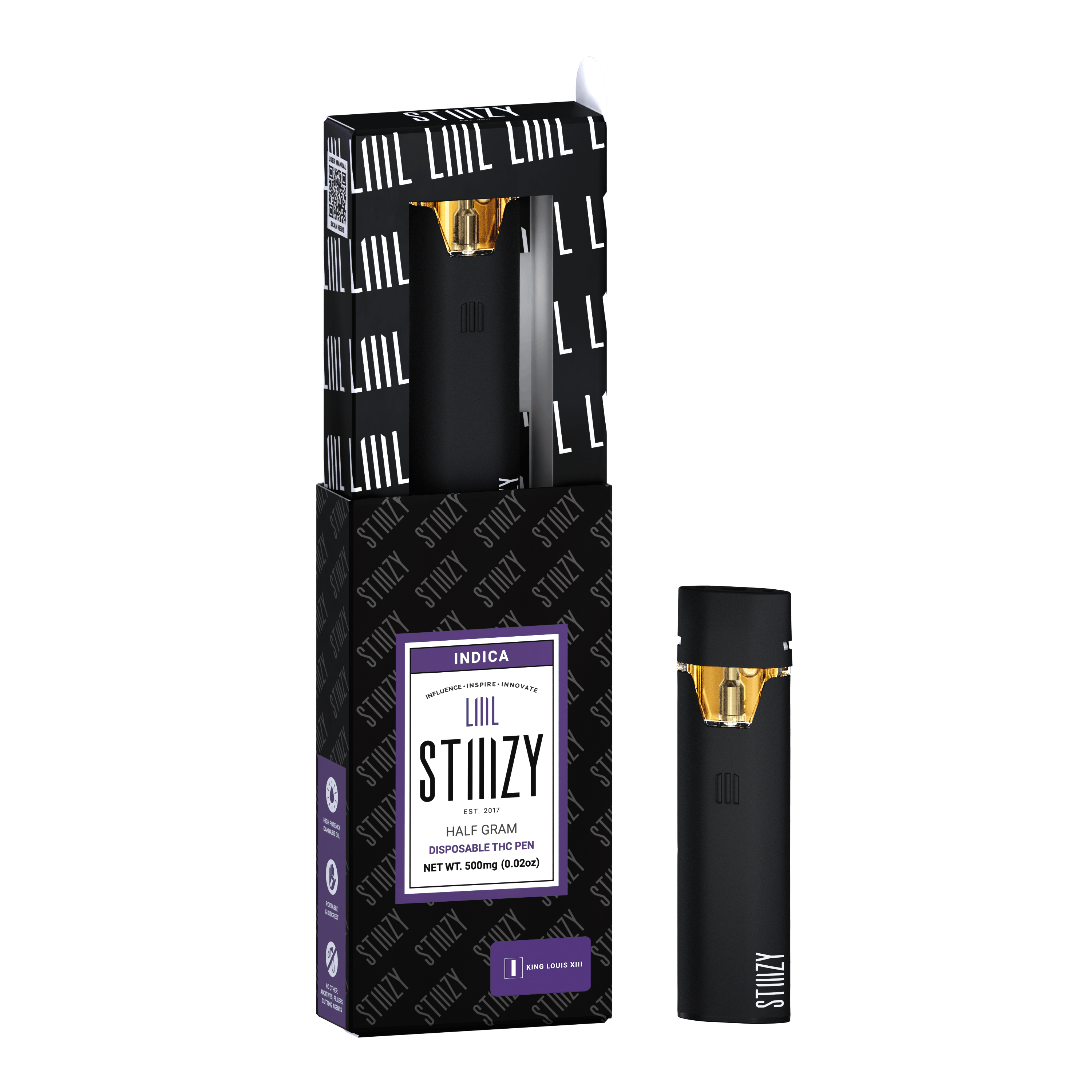
On sale· 25% OFF
THC 89.03%·CBD 0.44%Indica
STIIIZYKing Louis XIII LIIIL Disposable THC Pen | 0.5g · .5g
$20.57$27.43
$24after tax
About King Louis XIII
Everything to know about King Louis XIII.
Lineage & origin
King Louis XIII — often shortened to King Louis or Louis XIII OG — is widely attributed to the legendary OG Kush lineage, with most sources identifying it as a phenotype or direct cross involving OG Kush and LA Confidential. The precise breeder has not been publicly named with consistency, though the strain is strongly associated with the Southern California medical cannabis scene of the early-to-mid 2000s, a period when OG phenotype hunting was a defining cultural pursuit in Los Angeles dispensaries and collective gardens. The strain's name is a nod to King Louis XIII of France, a monarch associated with refined power and a certain aristocratic gravity — an apt metaphor for a cultivar that carries itself with unusual density and weight. LA Confidential, the presumed second parent, was itself a stabilized indica cross developed by DNA Genetics, combining Afghani and OG LA Affie genetics, which lends the lineage strong sedating qualities and a tight, resinous bud structure. Genetic siblings and related phenotypes include the broader OG Kush family — Tahoe OG, SFV OG, and Ghost OG among them — all of which share that signature terpene backbone of myrcene, limonene, and caryophyllene. King Louis XIII distinguished itself within this competitive family through particularly pronounced earthy and fuel-forward aromatics and a body-dominant effect profile that set it apart from the more cerebral OG expressions.
Effects
The onset of King Louis XIII is deliberate rather than immediate. Most consumers report a gradual pressure behind the eyes and across the temples that begins within ten to fifteen minutes of inhalation, slowly giving way to a full-body warmth that radiates outward from the chest and shoulders. This measured arc is characteristic of indica-dominant cultivars with a terpene profile weighted toward myrcene, which research suggests may enhance cannabinoid permeability and deepen sedative qualities. At its peak, the experience is body-forward without being fully incapacitating for experienced consumers. There is a gentle mental quietude — not a creative or introspective high, but rather a pleasant dimming of mental chatter. Tension held in the neck, jaw, and lower back tends to soften noticeably. The cerebral component is modest: a low-grade ease rather than euphoria, which contributes to the strain's reputation as an evening cultivar rather than a daytime companion. Duration runs approximately two to three hours for most consumers, with the comedown being notably soft. There is rarely a sharp drop-off; the experience tapers into drowsiness in a way that makes King Louis XIII particularly well-suited to the late evening. New consumers should approach with care and adhere to a start-low, go-slow approach, as the heavy body character can feel overwhelming if the session is rushed.
Aroma, flavor & terpenes
The aromatic profile of King Louis XIII is anchored by myrcene, the most abundant terpene in the cannabis plant and the primary contributor to the strain's signature damp earth and musk. On the nose, the flower presents first as a dense, resinous pine — clean and sharp, reminiscent of a forest floor after rain — before giving way to a secondary wave of diesel and skunk that speaks to its OG Kush heritage. This fuel note is the contribution of caryophyllene and limonene working in concert with the volatile compounds inherited from its Afghani ancestry. Limonene, present as a secondary terpene, lifts the overall profile with a faint citrus brightness — not a dominant lemon or orange note, but more of a rind-like edge that keeps the aroma from feeling entirely subterranean. Caryophyllene adds a subtle spice and pepper quality on the exhale and is the only terpene known to interact directly with CB2 receptors, which may account for some of the strain's characteristic body depth. On the palate, King Louis XIII smokes dense and full-bodied. Vaporized at lower temperatures, the pine and earth notes are most legible, with hints of wood and a mild sweetness on the finish. At higher temperatures, the fuel and spice character becomes more pronounced. The aftertaste is long and resinous, coating the palate in a way that lingers pleasantly.
Appearance
King Louis XIII presents as a classically structured indica bud — compact, tightly wound, and notably heavy for its size. The calyxes stack densely, forming small, rounded colas that feel almost waxy when handled, a result of the exceptional trichome coverage that defines the strain's visual identity. Under direct light, the surface shimmers with a near-continuous frost of milky white and amber trichome heads that give the flower an almost lacquered quality. The color palette leans toward deep forest green, occasionally punctuated by muted olive tones and, in colder-cured or late-harvested cuts, hints of dusty purple in the sugar leaves. Pistils are typically a warm burnt orange to rust, curling tightly against the dense bud structure. The overall impression is of a strain that has been cultivated and cured with care — the kind of flower that justifies close inspection before breaking apart.
Growing notes
King Louis XIII is considered a moderately demanding cultivar, better suited to cultivators with some experience managing OG-family genetics. Like most OG Kush descendants, it benefits from careful environmental control — consistent temperatures in the low-to-mid 70s Fahrenheit, moderate humidity during vegetative growth, and a significant reduction in humidity during late flowering to protect the dense bud structure from moisture-related issues. Indoors, the strain typically flowers in approximately eight to nine weeks and produces moderate yields relative to easier commercial cultivars, though the quality and resin density tend to justify the investment of attention. Outdoor cultivation is possible in warm, Mediterranean-style climates — think coastal Southern California or similar latitudes — with harvest typically falling in late October. The plant stays relatively compact, a trait inherited from its indica-dominant lineage, making it manageable in smaller indoor spaces. For the cultivator-curious consumer, King Louis XIII is a strain that rewards patience and precision over high-volume, low-effort growing approaches.
When it's best enjoyed
King Louis XIII is emphatically an evening strain — one calibrated for the hours between dinner and sleep, when the demand to be productive has passed and the only remaining obligation is to rest well. It suits the solitary wind-down as naturally as it suits the quiet end of a dinner party, when conversation has slowed and comfort has become the evening's primary currency. For solo sessions, it pairs exceptionally well with music that favors texture over tempo — the slow, enveloping warmth of a Miles Davis record, a Coltrane ballad, or a contemporary ambient work by artists such as Nils Frahm. The earthy, pine-forward terpene profile also makes it a compelling companion to foods with umami depth: aged cheeses, charcuterie, or a slow-braised dish where richness and earthiness are the dominant registers. This is not a strain for the first hour of a gallery opening or a brainstorming session; it is a strain for the walk home afterward, or the quiet hour in a well-lit room with no particular agenda.
If you like King Louis XIII, also explore
Tahoe OG
Another OG Kush phenotype prized for its heavy body sedation and earthy pine aroma, Tahoe OG will resonate immediately with King Louis XIII fans who appreciate the deeper, more physically grounding end of the OG spectrum.
LA Confidential
As the presumed second parent of King Louis XIII, LA Confidential shares its compact bud structure, Afghan-rooted earthiness, and strong indica body character, making it an intuitive next step for those exploring this lineage.
SFV OG
San Fernando Valley OG carries a similarly fuel-and-pine terpene signature with a slightly more cerebral onset, offering King Louis XIII devotees a related experience that leans fractionally more toward the mind.
Ghost OG
Ghost OG shares the dense trichome coverage and earthy citrus-fuel profile of King Louis XIII while offering a touch more euphoric lift, making it a fitting choice for evenings when a lighter mood is welcome.
Skywalker OG
Skywalker OG blends OG Kush's resinous depth with a slightly sweeter, more relaxed character, appealing to King Louis XIII fans who enjoy the heavy body presence but occasionally prefer a softer aromatic profile.
Common questions
Is King Louis XIII indica or sativa?+
King Louis XIII is an indica-dominant strain, widely understood to descend from OG Kush and LA Confidential. Its effect profile — heavy body relaxation, mental quietude, and a sedating comedown — aligns closely with what most consumers associate with indica-leaning cultivars. It is not a strain suited to daytime activity or situations that require sustained focus or physical energy.
What does King Louis XIII taste like?+
King Louis XIII has a dense, resinous flavor profile anchored by earthy pine and damp soil, with secondary notes of diesel and subtle citrus rind inherited from its OG Kush lineage. The smoke or vapor is full-bodied and coats the palate in a long, resinous finish. Caryophyllene contributes a faint pepper spice on the exhale, while limonene adds a mild brightness that keeps the profile from feeling entirely heavy.
What are the typical effects of King Louis XIII?+
Consumers typically describe a gradual onset of pressure around the eyes and temples, followed by a spreading body warmth that softens physical tension. The mental experience is one of quiet ease rather than euphoria or creativity. The peak is body-dominant and sustained, lasting approximately two to three hours, with a soft comedown that tends toward drowsiness. It is considered an evening strain best enjoyed when no further demands are placed on the day.
What strains are similar to King Louis XIII?+
Strains closely related in lineage or effect include Tahoe OG, LA Confidential, SFV OG, Ghost OG, and Skywalker OG. All share some combination of OG Kush's resinous, pine-and-fuel terpene profile and indica-weighted body character. Consumers drawn to King Louis XIII for its earthy depth and sedating arc will find familiar territory across this family of cultivars.
Is King Louis XIII good for beginners?+
King Louis XIII is not an ideal starting point for first-time or low-tolerance consumers. Its indica-dominant character and resinous density can produce an intensity of body sensation that may feel disorienting if approached without care. Those newer to cannabis who are still curious about this strain are encouraged to follow a strict start-low, go-slow approach and to consume in a comfortable, familiar environment with no obligations for the remainder of the evening.
What are the dominant terpenes in King Louis XIII?+
Myrcene is the dominant terpene in King Louis XIII, contributing the strain's characteristic earthy, musky, and damp pine aroma while deepening the sedative body character. Caryophyllene follows as a secondary terpene, adding spice and pepper notes and interacting with CB2 receptors. Limonene is also present, providing a subtle citrus brightness that lifts the otherwise heavy profile. Together, these three terpenes define the strain's sensory and experiential signature.
When is the best time of day to consume King Louis XIII?+
King Louis XIII is best reserved for the evening or late night. Its sedating body character and quiet mental arc make it poorly suited to mornings, workdays, or any situation requiring alertness, coordination, or social energy. It is most at home in the final hours before sleep — paired with a slow meal, quiet music, or simply the transition from the demands of the day into genuine rest.
Where did King Louis XIII originate?+
King Louis XIII is firmly rooted in the Southern California cannabis scene, most commonly associated with Los Angeles dispensaries and collective gardens from the early-to-mid 2000s. It emerged during a period of intense OG Kush phenotype hunting that defined LA's cannabis culture. The specific breeder has not been publicly named with consistency, but the strain's lineage — believed to involve OG Kush and LA Confidential — points clearly to that Southern California cultivation tradition.
Related strains