
Hybrid
All strains Honeycrisp
3 live products in stock
Quick answer · What is the Honeycrisp cannabis strain?
Honeycrisp arrives with the quiet confidence of a late-summer orchard at its peak — a hybrid whose name alone conjures the crisp, sweet bite of its apple namesake. Balanced in character and refined in profile, this cultivar layers bright citrus and stone-fruit sweetness over an earthy, grounding base. Its effects follow a similarly measured arc: uplifting without unmooring, relaxing without sedating. For the discerning New York cannabis consumer, Honeycrisp represents a thoughtful middle ground between occasion and ease.
Shop Honeycrisp · 3 of 3 live products
THC 10mg·CBD 5mgHybrid
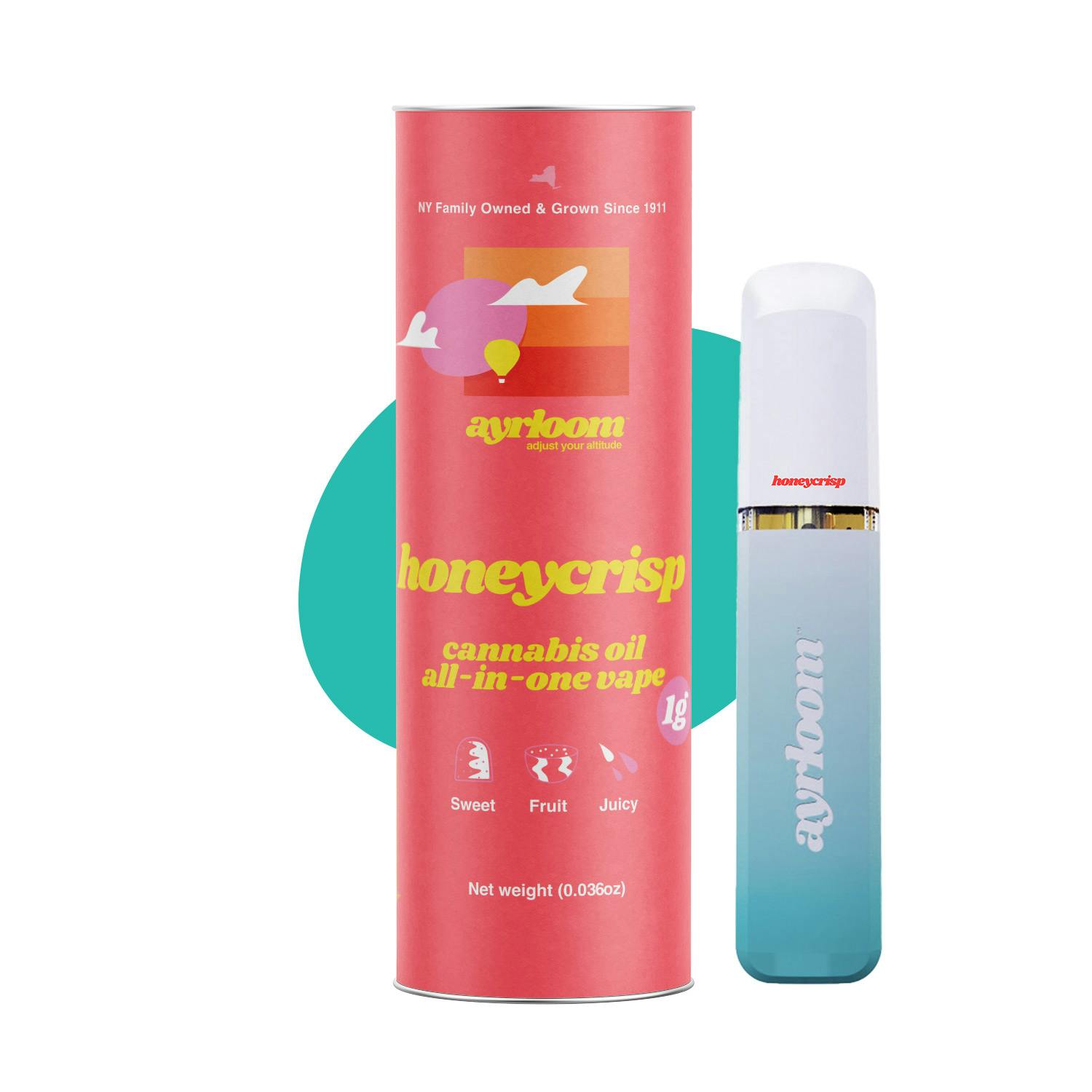
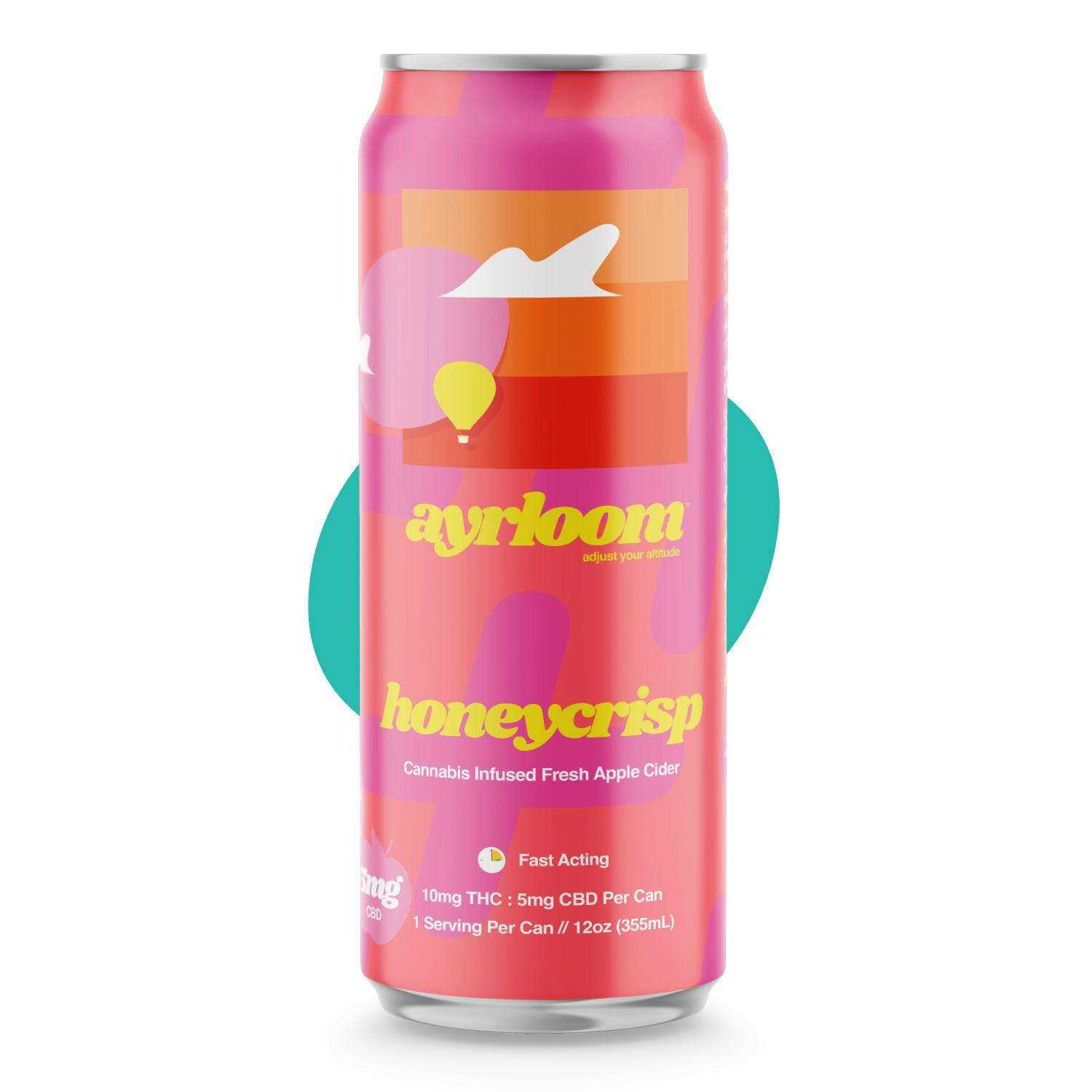
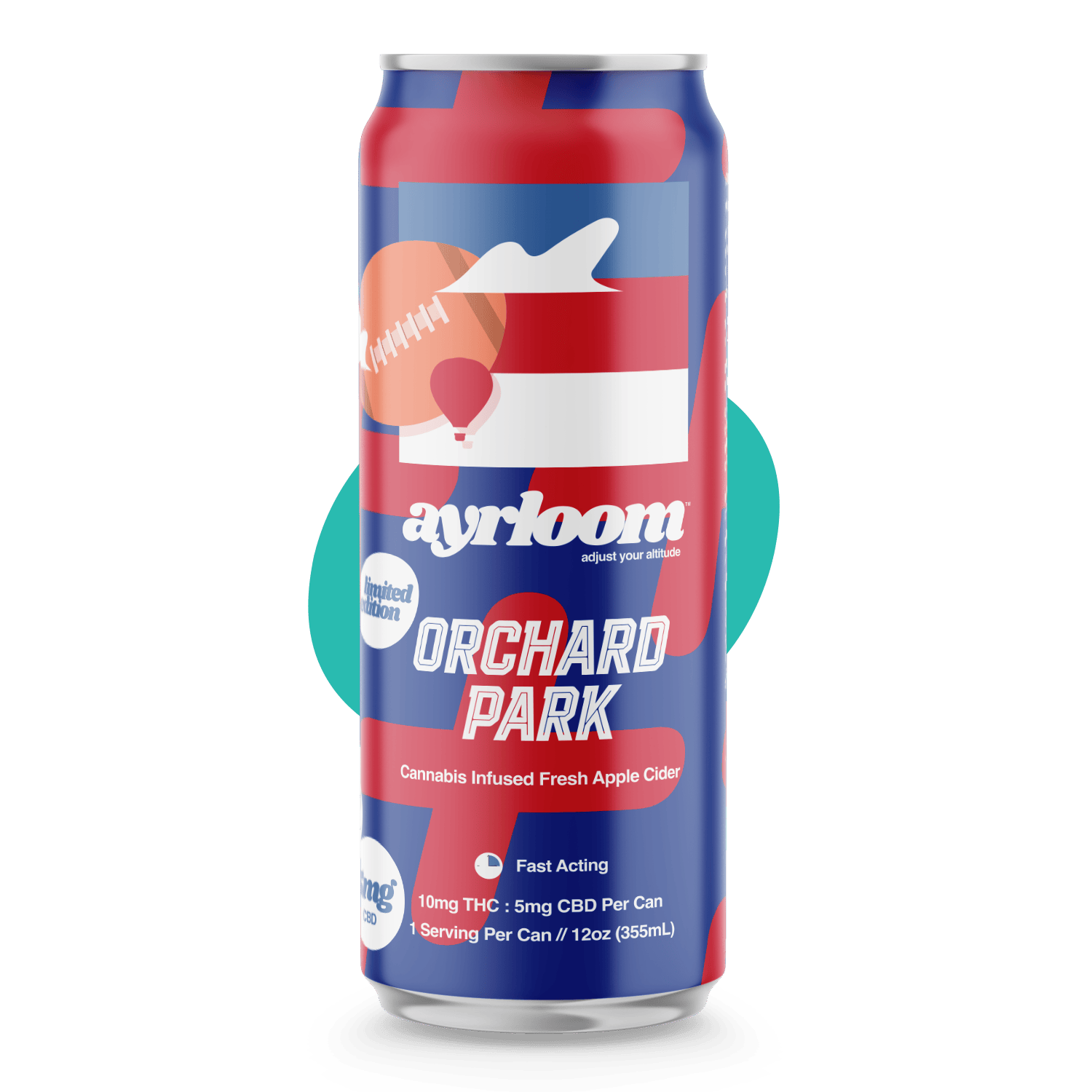
ayrloomayrloom | Honeycrisp "Orchard Park" | 2:1 | 10MG THC : 5MG CBD · .1g
$4.43
$5after tax
About Honeycrisp
Everything to know about Honeycrisp.
Lineage & origin
Honeycrisp's genetic lineage is not universally settled in the public record, and the breeder has not issued a single, widely-cited definitive account of its parentage. What is broadly reported across cannabis databases including Leafly and Wikileaf is that Honeycrisp is understood to be a hybrid cultivar with roots that draw from sweet, terpene-forward parent strains — often cited as carrying lineage adjacent to apple- and fruit-forward families such as those descended from DJ Short's Blueberry or similar fruited indica-dominant lines crossed with uplifting sativa-leaning genetics. Some phenotype reports associate the strain with breeders working in the Pacific Northwest and upper Midwest legal markets during the mid-to-late 2010s, a period when fruit-named cultivars gained significant commercial traction. The strain shares its name — intentionally or coincidentally — with the celebrated University of Minnesota apple cultivar introduced in 1991, and this branding alignment is widely regarded as a marketing touchstone rather than a strict botanical claim. Genetic siblings and phenotype variants surface under similar naming conventions (Honeycrisp OG, Honeycrisp Kush), though these remain largely regional and their lineage documentation is inconsistent. Consumers seeking verified COA-linked genetics should consult their licensed retailer for batch-specific breeder disclosures, as the Honeycrisp name has been applied to more than one distinct phenotype in the broader market.
Effects
Honeycrisp tends to announce itself gently. Onset typically falls within five to fifteen minutes of inhalation — a soft brightening behind the eyes and a mild elevation of mood that signals the sativa-influenced side of its hybrid nature. This initial cerebral lift is sociable rather than racing; thoughts become fluid and conversation feels unhurried, making the early phase well-suited to creative engagement or light social interaction. The experience has a quality of clarity without edge. As the session progresses into its peak, the body begins to register the cultivar's indica character — a relaxed warmth that settles across the shoulders and into the upper back without producing pronounced sedation in moderate consumption. This dual-register quality, alert mind alongside a composed body, is the defining trait most commonly reported for Honeycrisp across consumer accounts. Terpenes such as myrcene are thought to contribute to this measured physical ease, while limonene and ocimene are associated with the brighter, mood-oriented qualities of the onset. The comedown is notably smooth. Duration for most consumers falls in the two-to-three-hour range, tapering gently without abrupt drop-off. Those newer to cannabis should approach with the standard caution: start with a modest amount and allow sufficient time before reassessing. The experience rewards patience and intention.
Aroma, flavor & terpenes
The nose on Honeycrisp is immediately inviting — a prominent top note of sweet apple and ripe pear underscored by bright citrus zest. This fruit-forward opening is consistent with a terpene profile in which limonene and ocimene feature prominently. Limonene, commonly associated with lemon and orange peel, contributes the sharper citrus brightness that lifts the overall aroma, while ocimene adds a soft, almost floral sweetness that approximates the interior flesh of tree fruit rather than its skin. Beneath this fruit register, myrcene grounds the profile with an earthy, faintly herbal quality — the olfactory equivalent of damp soil beneath an orchard canopy. Caryophyllene introduces a subtle, warm spice note on the finish, a faint black-pepper undercurrent that keeps the aroma from reading as purely confectionary. Some phenotypes reportedly carry a whisper of linalool, which softens the overall profile and adds a delicate floral dimension that integrates well with the dominant sweetness. On the palate, Honeycrisp delivers a smooth, sweet inhale that closely mirrors the aromatic promise. Vapor expression accentuates the fruit and floral notes, while combustion brings the earthy and spice qualities into sharper relief on the exhale. The finish is clean, with minimal harshness, and the sweetness lingers pleasantly without cloying.
Appearance
Honeycrisp typically presents in medium-to-large, moderately dense buds with a structure that reflects its hybrid balance — not the tight, compact formation characteristic of a pure indica, nor the elongated, airy architecture of a sativa-dominant cultivar. The calyxes stack with enough density to suggest careful cultivation while retaining a slight looseness that allows the trichome layer to be appreciated from multiple angles. The color palette skews toward a vivid mid-green with occasional yellow-green variation across the leaf surfaces. Phenotypes grown in cooler finishing temperatures may develop faint lavender or pale amber highlights along the sugar leaves, adding visual complexity to the bud. Pistils present in warm amber and burnt orange, distributed generously across the surface and contributing a soft contrast against the green backdrop. Trichome coverage is generous and consistent — a frosted, resinous coat that speaks to the cultivar's aromatic density and gives cured flower a luminous quality under direct light.
Growing notes
Honeycrisp is generally described by cultivators as a moderately approachable hybrid — more forgiving than finicky landrace sativas, though still demanding enough to reward attentive growers over casual ones. It performs reliably in both indoor and outdoor environments, though indoor cultivation under controlled conditions tends to yield the most expressive terpene profiles, particularly the fruit-forward top notes that define the strain's identity. Indoor flowering time is typically reported in the range of eight to nine weeks, consistent with many mid-cycle hybrid cultivars. Indoor yields are considered moderate to above-average when trained using low-stress techniques such as topping or light screen-of-green methods. Outdoor cultivation suits temperate climates with warm summers and low late-season humidity — conditions that map well to New York's Hudson Valley and similar northeastern regions when planted after last frost. Harvest timing outdoors generally falls in early-to-mid October in northeastern latitudes. The cultivar shows reasonable resistance to common mold pressures, though adequate airflow remains advisable given the density of its canopy during late flower. Home cultivators in New York should review current state regulations regarding personal cultivation before pursuing any grow project.
When it's best enjoyed
Honeycrisp occupies a particularly comfortable space between function and leisure — a strain that does not demand a specific occasion so much as it rewards thoughtful placement within one. Its balanced arc makes it well-suited to the transitional hours of a Saturday: the late morning into early afternoon when the day has not yet committed itself, and a gentle elevation of mood and sensory attention feels like a gift rather than an interruption. Solo creative work — writing, sketching, browsing a record collection with genuine intention — benefits from the clarity of its early phase. For a social setting, Honeycrisp pairs naturally with a well-composed cheese board featuring aged cheddar, honeycomb, and sliced firm apple — a pairing that mirrors the cultivar's own terpene character with satisfying precision. On the musical side, the strain's measured, unhurried quality aligns with mid-tempo jazz or acoustic folk: Bill Evans, Gillian Welch, or a vinyl afternoon that unfolds without agenda. Post-dinner, as the body component of the high becomes more present, the strain eases naturally into a quiet evening wind-down, making it as appropriate at 9 p.m. as it is at noon.
If you like Honeycrisp, also explore
Fruit Loops
Fans drawn to Honeycrisp's sweet, layered fruit aroma and balanced hybrid effects will find a familiar sensory register in Fruit Loops, which shares a brightly sweet terpene profile with a comparably easygoing mood lift.
Mimosa
Mimosa's citrus-forward nose and uplifting sativa-leaning onset share significant tonal overlap with Honeycrisp's limonene-driven brightness and socially open early effect.
Strawberry Cough
Those who appreciate Honeycrisp's smooth, sweet palate and gently euphoric cerebral onset will recognize a kindred spirit in Strawberry Cough's fruit-accented, clarity-forward experience.
Pineapple Express
The tropical-fruit sweetness, moderate potency, and balanced hybrid character of Pineapple Express make it a natural recommendation for consumers who find Honeycrisp's profile appealing.
Blue Dream
Blue Dream's well-documented blend of blueberry sweetness, measured body ease, and reliable hybrid balance positions it as an excellent reference point for the Honeycrisp consumer seeking something widely available and similarly approachable.
Common questions
Is Honeycrisp indica or sativa?+
Honeycrisp is classified as a hybrid cultivar, expressing qualities associated with both indica and sativa lineages. Its onset tends toward the cerebral brightness typical of sativa-influenced genetics, while its mid-to-late effect arc introduces the physical ease more commonly associated with indica heritage. Neither character dominates completely, which is precisely what makes it a versatile choice for a range of settings and times of day.
What does Honeycrisp taste like?+
Honeycrisp delivers a smooth, sweet inhale with pronounced notes of crisp apple, ripe pear, and citrus zest — terpene qualities associated with limonene and ocimene. The exhale brings earthy undertones and a faint warm spice from caryophyllene, grounding the sweetness without overwhelming it. The finish is clean and lingers pleasantly, making it a strain that tends to be appreciated by consumers who favor fruit-forward, well-rounded palate experiences.
What are the typical effects of Honeycrisp?+
Most consumers report an initial mood lift and gentle cerebral clarity within the first ten to fifteen minutes, followed by a progressive body relaxation that builds through the peak of the session. The overall character is balanced — alert without being anxious, relaxed without being sedated. Duration typically runs two to three hours, with a smooth and gradual comedown. As with any cannabis product, individual experience varies; starting with a modest amount is always advisable.
What strains are similar to Honeycrisp?+
Consumers who enjoy Honeycrisp's fruit-forward aroma, balanced hybrid effects, and smooth palate often find similar satisfaction in Mimosa, Blue Dream, Pineapple Express, Strawberry Cough, and Fruit Loops. Each of these cultivars shares at least one defining characteristic with Honeycrisp — whether a bright citrus or fruit-driven terpene profile, a comparable hybrid effect arc, or a similarly approachable and even-keeled character.
Is Honeycrisp good for beginners?+
Honeycrisp's balanced hybrid nature and reported smoothness of onset make it a reasonable consideration for those earlier in their cannabis experience — but no strain is without variability. The standard guidance applies: start with a small amount, allow fifteen to thirty minutes before reassessing, and consume in a comfortable, familiar environment. ZenZest staff are always available to help guide newer consumers toward a pace and format that suits their comfort level, in accordance with New York adult-use guidelines for consumers 21 and older.
What are the dominant terpenes in Honeycrisp?+
Honeycrisp is most commonly associated with a terpene profile led by limonene, ocimene, and myrcene, with secondary contributions from caryophyllene and, in some phenotypes, linalool. Limonene provides the bright citrus and mood-elevating character; ocimene adds floral, sweet-fruit depth; myrcene grounds the profile with an earthy base; caryophyllene contributes subtle warmth and spice; and linalool, where present, introduces a gentle floral softness to the overall composition.
What is the best time of day to enjoy Honeycrisp?+
Honeycrisp's balanced hybrid profile makes it well-suited to daytime and early evening consumption. Its initial cerebral lift supports creative, social, or gently active pursuits without producing the kind of intensity that disrupts function. As the session progresses and physical ease becomes more prominent, it transitions naturally into a relaxed evening wind-down. Many consumers find it particularly well-suited to the transitional afternoon hours — after obligations ease and before the evening fully settles in.
Does Honeycrisp have a verified genetic lineage?+
The exact parentage of Honeycrisp is not conclusively documented in widely available public cannabis sources, and more than one breeder has applied the Honeycrisp name to distinct phenotypes in regional markets. The strain name is broadly associated with fruit-forward hybrid genetics, with some accounts suggesting indica-dominant heritage crossed with brighter, sativa-leaning lines, but consumers seeking verified lineage documentation should request batch-specific certificates of analysis and breeder disclosures through their licensed retailer.
Related strains