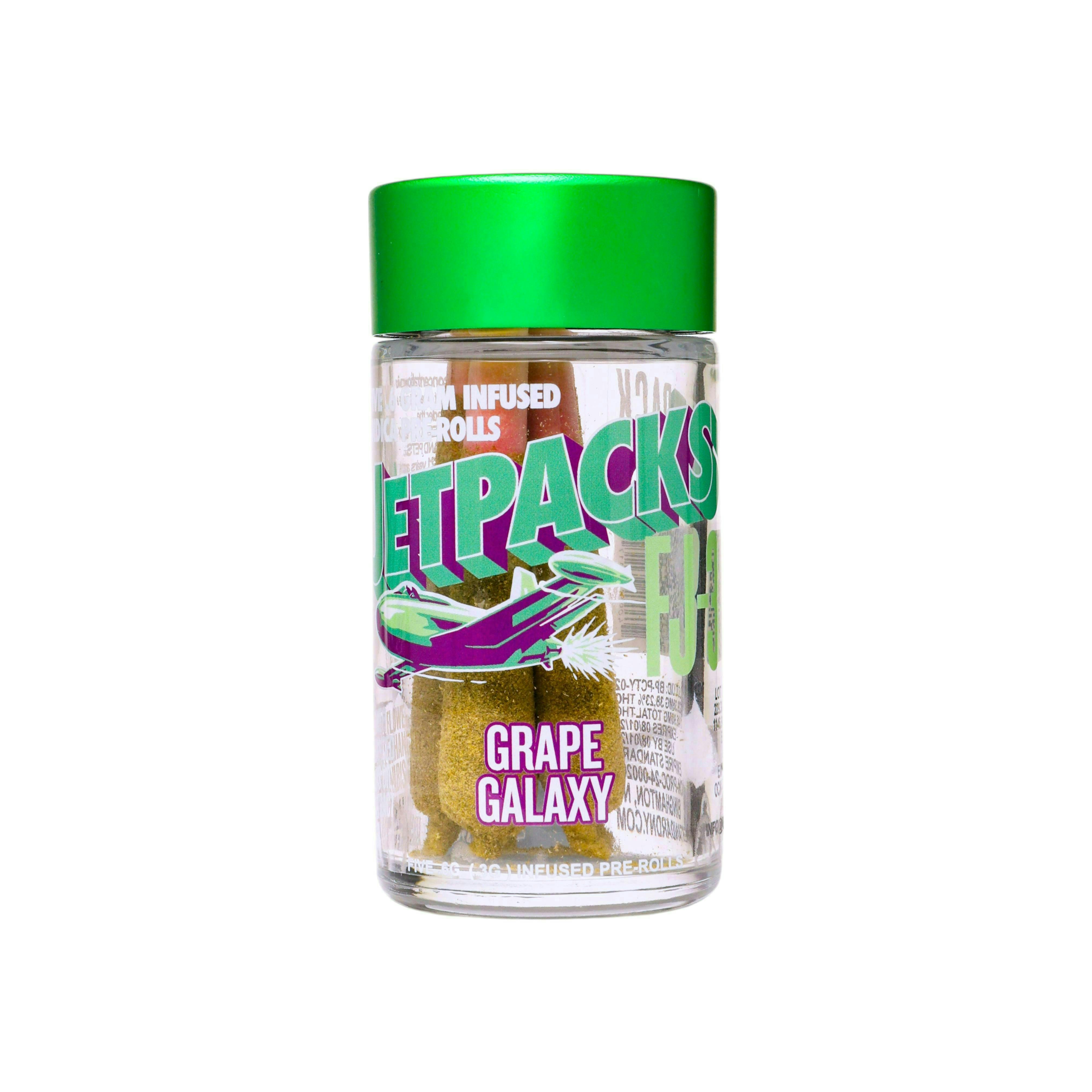
THC 35.24%Indica
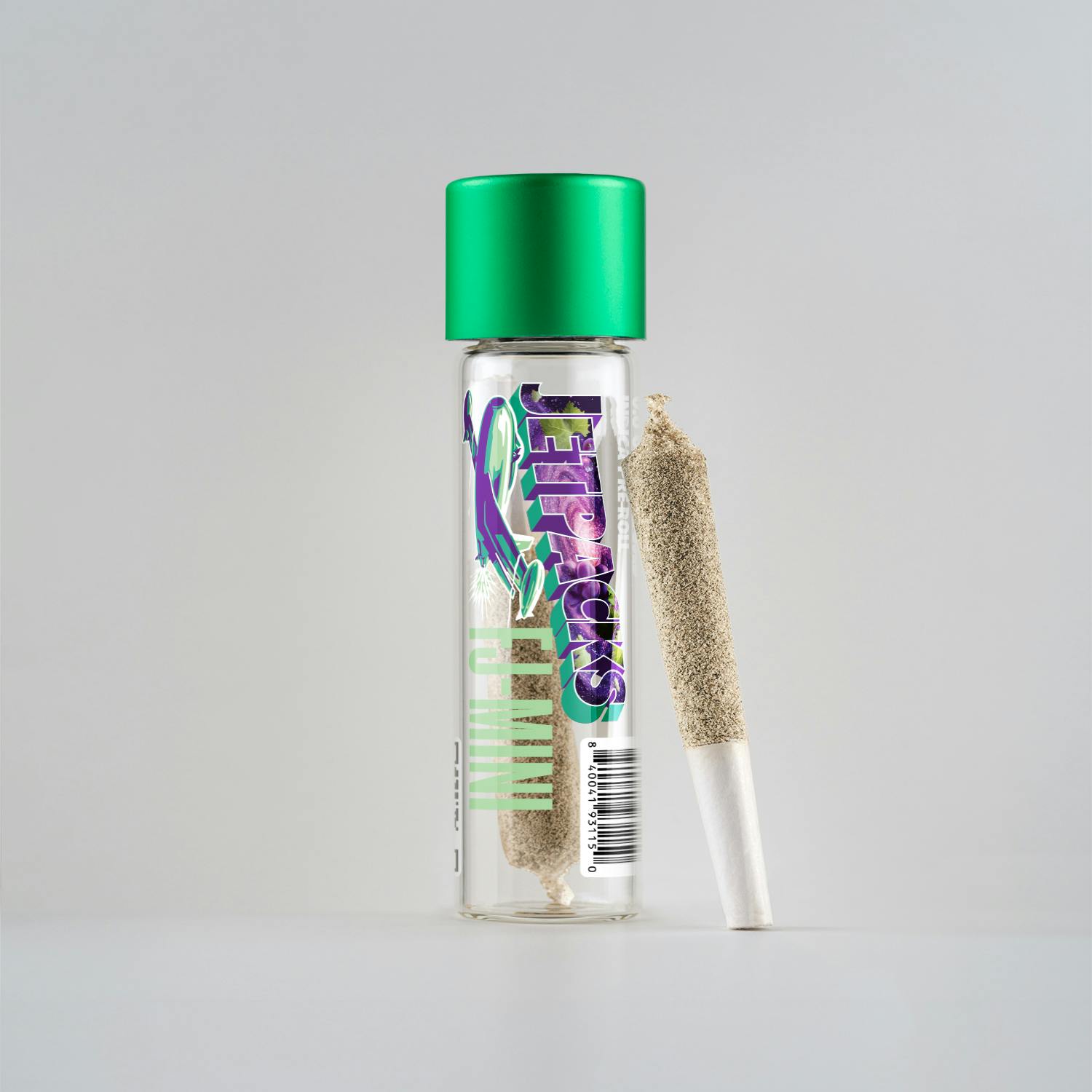
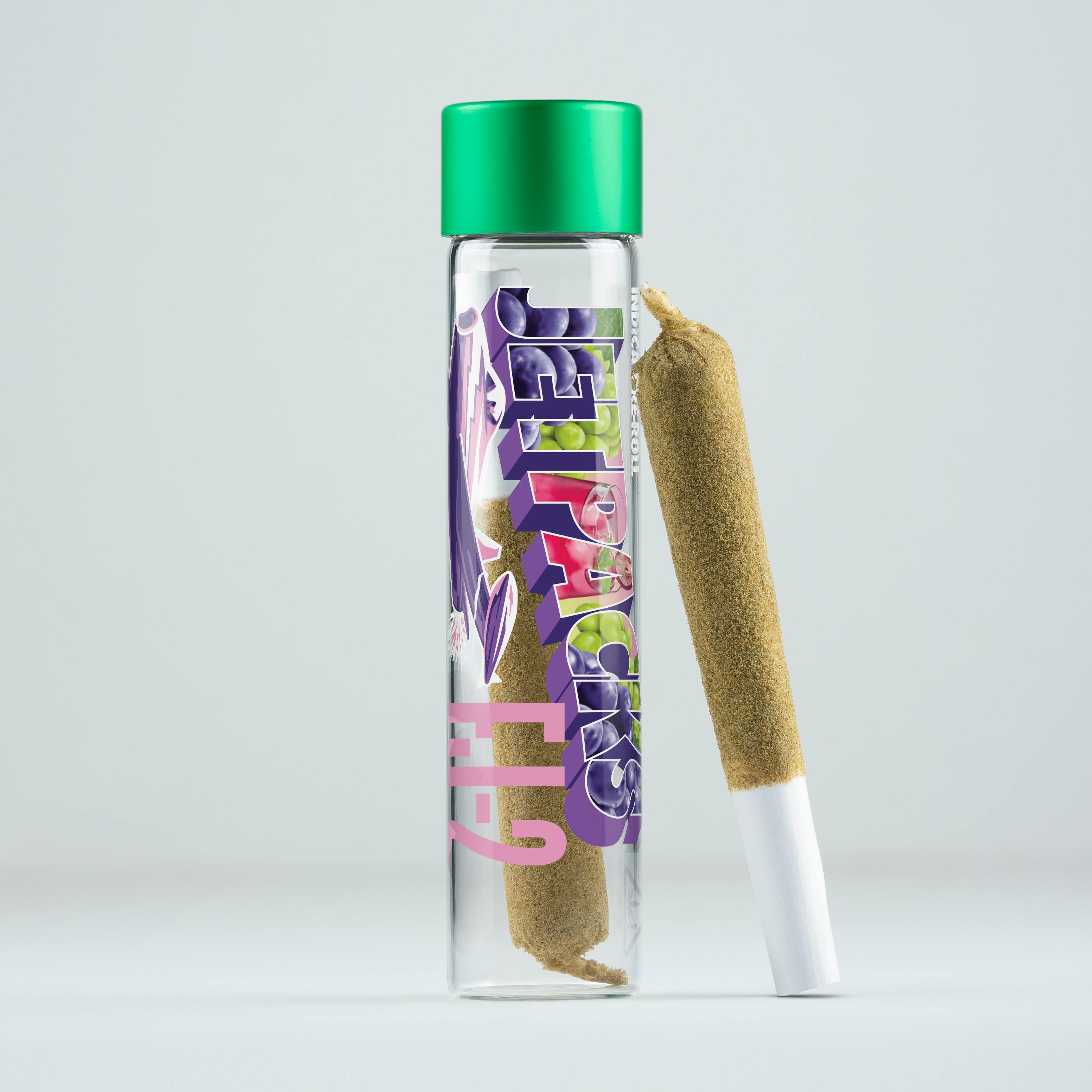
JetpacksJetpacks | Grape Galaxy | FJ-3 | Infused Pre-Roll 5pk · 0.6g5pk
$49.56
$56after tax

weeddispensarynearme.com
You must be 21 years or older to enter. By entering, you confirm you’re of legal age in your state to purchase cannabis.
For use only by adults 21+ • Keep out of reach of children
3 live products in stock
Quick answer · What is the Grape Galaxy cannabis strain?
Grape Galaxy is a deeply pigmented indica whose violet-hued buds and lush, fruit-forward aroma have made it a quiet standout among New York's growing catalogue of premium flower. With an unhurried, body-centered character and a palate that layers ripe Concord grape over subtle earthy sweetness, this strain rewards those who set aside an evening and settle in with intention. It is, above all, a strain for sensory appreciation.
$56after tax
About Grape Galaxy
Grape Galaxy's precise genetic lineage is not uniformly documented across public cannabis databases, and the breeder has not made a fully transparent, widely cited disclosure of its parent strains. What is broadly reported is that Grape Galaxy descends from a cross of Grape Ape and a Galaxy-leaning hybrid, with Grape Ape serving as the more firmly established parent. Grape Ape itself is a well-documented indica cross of Mendocino Purps, Skunk, and Afghani, popularized by Apothecary Genetics and Barney's Farm in the mid-2000s. That lineage is directly responsible for Grape Galaxy's signature purple pigmentation and its dense, resinous bud structure. The Galaxy parentage contributes a terpene complexity that softens the heavy afghani backbone with lighter, almost ethereal top notes. Some phenotypes exhibit characteristics consistent with a Tahoe OG or Master Kush influence, though this remains anecdotal rather than confirmed. Within the broader family of grape-forward indicas — which includes Purple Punch, Granddaddy Purple, and Grape Stomper — Grape Galaxy occupies a middle register: less narcotic than GDP at its heaviest, more grounded than the fruitier sativa-leaning grape crosses. It became notable in West Coast markets before finding its way into East Coast adult-use catalogues, where its striking visual profile and approachable but satisfying effect set have earned it a dedicated following.
Grape Galaxy follows the classic indica arc with enough nuance to hold attention through each phase. Onset tends to arrive within ten to fifteen minutes of inhalation — a gentle warmth that begins at the temples and spreads with measured deliberateness into the shoulders and upper back. The initial cerebral phase is mild rather than expansive: there is a quiet elevation in mood, a softening of the day's accumulated tension, without the racing ideation associated with more sativa-dominant varieties. This makes the opening window particularly pleasant for those who find purely cerebral highs overstimulating. As the experience deepens into its peak phase — typically between twenty and fifty minutes in — the body component becomes the dominant voice. A progressive physical ease settles through the limbs, encouraging stillness rather than activity. Myrcene, which is among the most prevalent terpenes in this strain, is understood by researchers to contribute to sedative and muscle-relaxing qualities, and its presence here is palpable. Caryophyllene's spicy, anti-inflammatory contribution adds a subtle grounding quality. The comedown is gradual and gentle. There is little of the abrupt cognitive drop that can accompany heavier indicas; instead, Grape Galaxy tends to ease the consumer toward rest in a way that feels natural rather than imposed. Duration typically runs between two and three hours for most consumers, though individual response varies. Those new to cannabis are advised to start with a modest amount and allow ample time before reassessing.
The aromatic profile of Grape Galaxy is one of its most immediate and compelling qualities. On the nose, the dominant impression is of ripe, slightly fermented Concord grape — sweet without being candied, with a depth that suggests something closer to a well-made grape preserve than a synthetic flavoring. This character is primarily driven by myrcene, the terpene most associated with musky, fruity, and herbal notes across the cannabis spectrum. Its presence here is generous, lending Grape Galaxy its distinctly wine-adjacent quality. Beneath the leading grape note, secondary terpenes contribute meaningful complexity. Caryophyllene introduces a faint spice — something between cracked black pepper and dried clove — that prevents the sweetness from becoming cloying. Linalool, the same terpene found in lavender, adds a floral undercurrent that surfaces most clearly mid-exhale on vapor and gives the strain a slightly perfumed finish. Pinene, present in smaller but discernible quantities, provides a clean, resinous edge that reads as fresh pine or herb, grounding the sweeter elements and lending the aroma profile a pleasing balance. On the palate, whether smoked in a well-maintained glass piece or consumed via low-temperature vaporization, Grape Galaxy is notably smooth. The inhale delivers a round, berry-forward sweetness, while the exhale opens up to reveal the earthier, more complex base terpenes. Combustion tends to amplify the spice notes, while vaporization preserves the full aromatic range with greater fidelity. The finish is clean, with a lingering sweetness that dissipates slowly.
Grape Galaxy is a visually striking strain by any measure. The buds form dense, tightly packed structures consistent with its indica heritage — compact calyxes that feel substantial in the hand and break apart with a satisfying resistance. The color palette is one of the strain's most immediately arresting features: deep forest green forms the base, overlaid with pronounced violet and plum tones that intensify toward the interior of each bud. This pigmentation is a direct expression of the anthocyanin compounds inherited from the Grape Ape lineage, activated by cooler temperatures during the final weeks of cultivation. Trichome coverage is generous and evenly distributed, giving well-cured examples a frosted, almost luminescent quality under direct light. The resin glands are dense enough that the buds feel slightly tacky to the touch without being excessively sticky. Pistils run in warm amber and burnt orange, threading through the deep purple foliage and adding a final layer of visual contrast. Properly dried and cured Grape Galaxy has a slight sheen that reflects its resin richness.
Grape Galaxy is considered a moderately challenging cultivar, more rewarding for those with some prior growing experience than for those attempting their first crop. It performs well in both indoor and outdoor environments, though indoor cultivation offers more precise control over the temperature fluctuations that bring out the strain's characteristic purple pigmentation — a drop toward the lower end of the optimal nighttime temperature range during the final two weeks of flowering is generally cited as the most reliable method for encouraging anthocyanin expression. Flowering time falls in the range of eight to nine weeks under standard photoperiod conditions. Indoor yields are moderate, rewarding growers who invest in proper canopy management techniques such as low-stress training or light defoliation to improve light penetration into the lower bud sites. Outdoor cultivation suits Mediterranean-style climates with warm days and cool late-season nights. The dense bud structure requires attentive humidity management to reduce the risk of moisture-related issues late in the flowering cycle. Harvest typically arrives in mid-October for outdoor Northern Hemisphere grows.
Grape Galaxy is, at its core, an evening strain — one best encountered after the obligations of the day have been set aside rather than alongside them. Its unhurried onset and progressive body effect make it particularly well-suited to solitary decompression: a quiet apartment, low light, and the absence of a pressing agenda are its natural companions. It pairs with music that operates at a similar tempo — the measured, textured work of artists like Norah Jones or early Bill Evans, where space and stillness are compositional elements rather than absences. At the table, Grape Galaxy's fruit-forward terpene profile finds natural resonance with dishes that carry complementary sweetness and acidity — a well-composed cheese board anchored by aged gouda or gorgonzola, paired with honeycomb and dried fruit, would extend the tasting experience rather than interrupt it. For those who prefer experience-based pairings, a slow, undemanding evening walk in a quieter part of the city, followed by a return to a comfortable interior space, aligns well with the strain's measured, body-forward character. It is not a strain for crowds or high-stimulus environments; it is a strain for chosen company or considered solitude.
Grape Ape
As one of Grape Galaxy's parent strains, Grape Ape shares the same dense structure, purple pigmentation, and grape-dominant aroma, making it the most direct point of comparison for consumers seeking a familiar but slightly heavier experience.
Granddaddy Purple
GDP's grape-and-berry terpene profile and deeply relaxing indica effects occupy the same flavor and experience territory as Grape Galaxy, appealing to the same evening-use consumer.
Purple Punch
Purple Punch shares the sweet, dessert-fruit aroma and progressive body relaxation that define Grape Galaxy, with a slightly more approachable potency ceiling for newer consumers.
Zkittlez
Consumers drawn to Grape Galaxy's layered fruit complexity and smooth palate will find Zkittlez's mixed-berry sweetness and gentle, body-forward effect profile equally satisfying.
Blueberry
DJ Short's foundational Blueberry strain shares the anthocyanin-driven color palette, fruit-forward aroma, and measured, relaxing indica character that Grape Galaxy fans tend to appreciate.
Grape Galaxy is classified as an indica. Its genetic lineage, rooted in Grape Ape and its Afghani and Mendocino Purps ancestry, produces the compact bud structure, dense resin production, and body-centered, relaxing effect profile typically associated with indica-dominant cannabis. Consumers seeking an energizing or cerebral experience would likely find Grape Galaxy better suited to evening rather than daytime use.
Grape Galaxy delivers a palate that leads with ripe Concord grape sweetness — round, slightly jammy, and genuinely fruit-forward without tipping into artificial candy territory. On the exhale, secondary notes of spice, earth, and a subtle floral finish emerge, contributed by caryophyllene and linalool. Vaporization tends to preserve the full range of terpene nuance most faithfully, while combustion amplifies the spice and earth elements.
Grape Galaxy produces a measured, body-forward experience. Onset arrives within ten to fifteen minutes as a warm physical ease, beginning in the head and shoulders and spreading progressively through the body. The cerebral component is mild — a quiet mood elevation without significant cognitive intensity. The peak phase is defined by physical relaxation and a general sense of calm. The comedown is gradual, typically guiding the consumer toward rest over a two-to-three-hour window.
Consumers who enjoy Grape Galaxy tend to appreciate other fruit-forward, body-relaxing indicas in the same family. Grape Ape, as a direct parent strain, offers the most immediate comparison. Granddaddy Purple and Purple Punch share the grape-and-berry terpene profile and evening-use character. Zkittlez offers comparable fruit complexity with a slightly different aromatic signature, and Blueberry provides a similar color palette and relaxing effect arc.
Grape Galaxy can be approachable for adult-use consumers new to cannabis, provided the standard guidance of starting with a small amount and waiting a full fifteen to twenty minutes before reassessing applies. Its body-forward character and measured onset are generally easier to navigate than more intensely cerebral varieties. That said, its indica depth means overconsumption can result in significant sedation. New consumers should approach with care and in a familiar, comfortable setting.
Myrcene is the dominant terpene in Grape Galaxy, responsible for its herbal, musky, and fruit-forward aroma and its contribution to the strain's relaxing, body-centered effects. Caryophyllene follows as a notable secondary terpene, adding spice and earthiness. Linalool contributes a floral, slightly lavender-adjacent quality, while pinene provides a clean, resinous counterpoint that adds aromatic balance and freshness to the overall profile.
Grape Galaxy is best suited to evening or late-afternoon consumption. Its progressive physical relaxation and tendency to encourage stillness make it poorly matched with daytime responsibilities, social obligations requiring alertness, or any activity demanding sustained focus or physical coordination. It performs most naturally in low-demand, low-stimulus environments — a quiet evening at home, a slow wind-down before sleep, or an unhurried social setting among trusted company.
Grape Galaxy's appearance is among its most recognizable attributes. Dense, tightly packed buds carry deep violet and plum pigmentation layered over a forest green base — a direct expression of the anthocyanin compounds inherited from its Grape Ape lineage. Generous trichome coverage gives well-cured examples a frosted quality, while amber and burnt-orange pistils thread through the foliage, creating a visually rich, jewel-toned presentation that stands out in any curated display.
Related strains
Pick your store
We'll show pricing, deals, and delivery zones for the store you pick. You can switch any time from the header.