
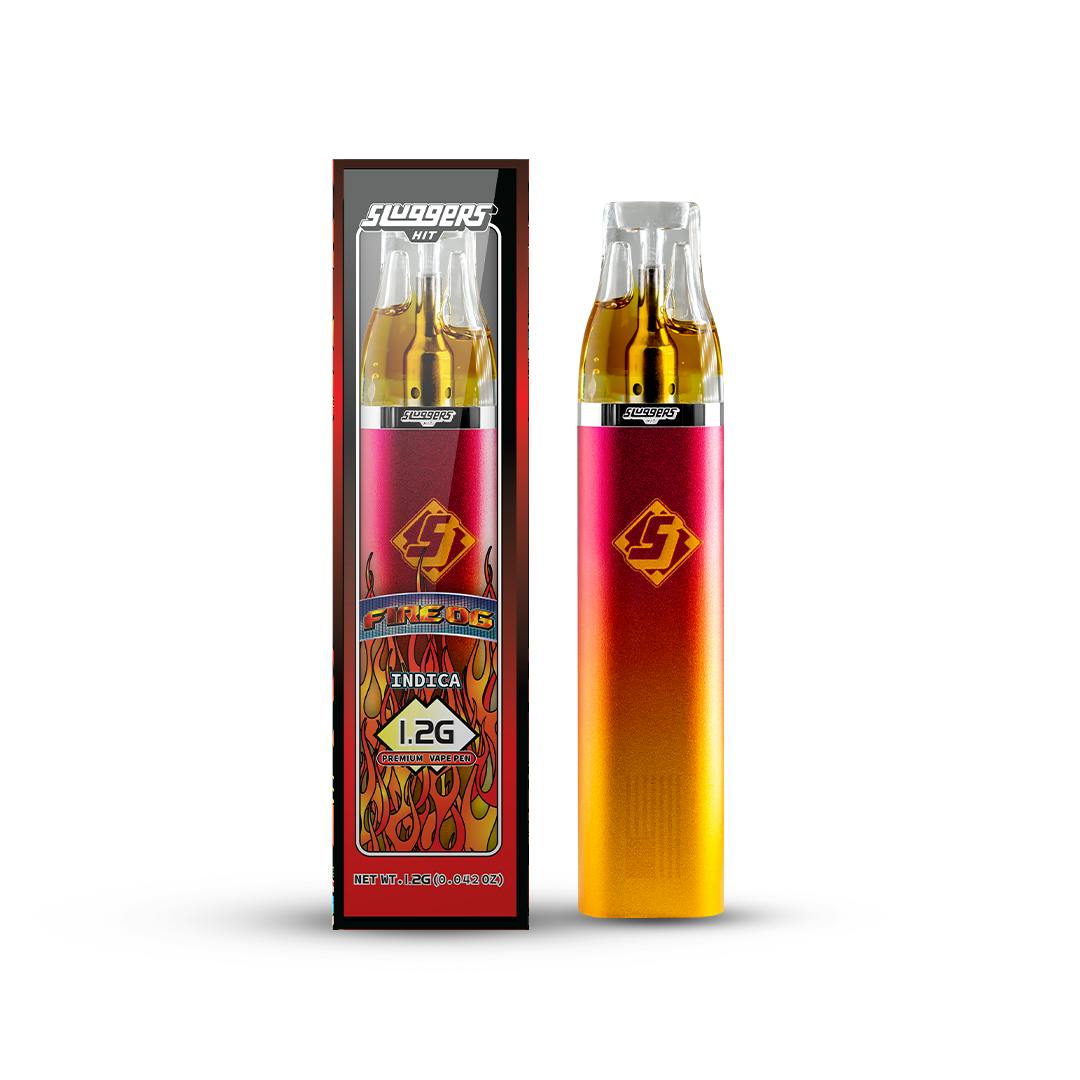
Indica
All strains Fire OG
1 live products in stock
Quick answer · What is the Fire OG cannabis strain?
Fire OG commands quiet authority among the West Coast OG lineage — a dense, resinous indica with an unmistakable fuel-and-citrus perfume and a deeply grounding physical presence. Named as much for the flame-red pistils that streak its trichome-laden calyxes as for the intensity of its character, this strain rewards the patient and the experienced with a long, unhurried descent into ease. It is a benchmark expression of what the OG family does best.
Shop Fire OG · 1 of 1 live products
About Fire OG
Everything to know about Fire OG.
Lineage & origin
Fire OG is widely documented as a cross between OG Kush and SFV OG Kush — two pillars of the Southern California OG family — and is most commonly attributed to breeder B-Real of Cypress Hill alongside joint credit given to various Los Angeles-based cultivation circles active in the mid-to-late 2000s. Some community accounts place its stable circulation around 2008 to 2010, a period when the OG Kush phenotype was being aggressively hunted and refined across Southern California's underground market. OG Kush itself traces to a disputed but widely cited cross of Chemdawg with Hindu Kush and Lemon Thai genetics, while SFV OG Kush — named for the San Fernando Valley — is a well-regarded OG Kush phenotype selected and popularized by cultivator Swerve of Cali Connection Seeds, known for its heavier, more sedative character compared to other OG expressions. The union of these two related but distinct OG phenotypes concentrates the family's hallmark fuel and earth terpene profile while amplifying the physical weight of the experience. Genetic siblings and closely related selections include SFV OG, Tahoe OG, and Ghost OG — each representing a different phenotypic emphasis within the broader OG Kush family. Fire OG distinguished itself within this crowded lineage through a notably high resin output and a visual signature — vivid red and orange pistils against deeply frosted green calyxes — that made it recognizable on sight.
Effects
Fire OG is a deliberate, full-bodied indica whose experience tends to unfold in stages. Onset is typically felt within five to ten minutes when inhaled — a mild cerebral lift and a gentle loosening behind the eyes that signals the beginning of a longer transition. The opening phase carries a modest sense of mental ease and mood elevation, enough to soften the edges of a demanding day without producing significant cognitive activation. As the experience moves into its peak, usually between twenty and forty minutes in, the body effects become the dominant note. Users commonly report a pronounced physical heaviness — a settling into furniture, a warmth through the limbs, and a disinclination to move with any urgency. Myrcene, the strain's lead terpene, is well-documented for its sedative-adjacent, muscle-relaxing qualities, and its elevated presence in Fire OG is consistent with the body-forward nature of the peak. Caryophyllene contributes a spicy, grounding character and is noted in the literature for its interaction with the endocannabinoid system's CB2 receptors. Duration tends to run long relative to many contemporary strains — two to three hours is a reasonable general expectation for experienced consumers. The comedown is gradual rather than abrupt, easing into a restful, quieted state. This is not a strain for the middle of a productive day; its rhythm belongs to the evening.
Aroma, flavor & terpenes
The aromatic identity of Fire OG is rooted in a terpene profile dominated by myrcene, caryophyllene, and limonene, with secondary contributions from linalool and occasionally humulene — a profile that reads clearly on the nose as earthy fuel undercut by a citrus brightness and a faint herbal sweetness. Myrcene, the most abundant terpene in a well-grown Fire OG, delivers the characteristic musky, ripe-fruit earthiness — think overripe mango layered over damp soil — that serves as the strain's aromatic foundation. Caryophyllene adds a dry, peppery edge that sharpens the fuel note and gives the overall profile a slightly resinous, almost balsamic character. Limonene cuts through with a recognizable lemon-rind brightness that keeps the nose from feeling too heavy, and linalool introduces a barely-there floral softness that rounds the blend without sweetening it. On the palate, Fire OG is rich and full — the smoke (or vapor, at lower temperatures) delivers that fuel-earth combination cleanly on the draw, with the limonene citrus note more apparent on the exhale. Vaporized at a moderate temperature, the linalool and caryophyllene notes become more distinct, offering a pleasantly complex finish that lingers. The aftertaste is resinous, slightly piney, and long — a quality that experienced OG consumers tend to regard as a marker of well-cultivated material.
Appearance
Fire OG presents with the dense, compact bud structure that is characteristic of well-expressed OG Kush genetics — tightly packed calyxes, minimal leaf-to-bud ratio, and a weight that feels deliberate in the hand. The buds are typically small to medium in size, often resembling rounded pine cones, and they hold their structure firmly even after a gentle squeeze. The color palette leans into deep, saturated greens — olive to forest — with the defining visual detail being the vivid red-orange pistils that weave through and over the surface in dense, almost flame-like clusters. This coloring, more pronounced in well-cured examples grown in cooler temperatures toward the end of flowering, is the origin of the strain's name and remains its most immediately recognizable trait. Trichome coverage is substantial and even — a full, milky-to-amber frost that gives the buds a slightly silver cast under direct light. Resin glands are of medium size and densely spaced, reflecting the strain's reputation as a high-yield resin producer and a favored choice for concentrate production.
Growing notes
Fire OG is generally considered a moderately challenging strain for home cultivators — it rewards attentive technique but is not forgiving of significant environmental inconsistencies. It performs reliably indoors under controlled conditions, where growers can manage humidity carefully to protect its dense bud structure from moisture-related issues late in flowering. A well-dialed indoor environment — stable temperatures, good airflow, and a low-stress training approach to improve canopy light penetration — tends to produce the best expression of its trichome density and color development. Flowering time is typically cited between nine and ten weeks, placing it on the longer end for an indica-leaning strain. Indoor yields are moderate — not the heaviest producer in the OG family, which aligns with its concentration of resin over sheer bulk. Outdoor cultivation is viable in warm, Mediterranean-type climates with low late-season humidity; cooler night temperatures in the final weeks of flowering encourage the development of the distinctive red pistil coloring that defines a premium Fire OG phenotype. For the cultivator-curious, this strain offers a genuinely expressive finish when conditions are right — the visual and aromatic reward is significant.
When it's best enjoyed
Fire OG belongs to the later hours — the kind of evening that asks nothing further of you. Its physicality and duration make it a natural fit for solo unwinding: a long shower, a meal you have already finished cooking, a comfortable chair, and something unhurried on the stereo. The terpene profile, with its earth and citrus and light floral thread, pairs naturally with food that mirrors its weight — think aged cheeses, cured meats, or a simple braised dish where the richness has had time to settle. Musically, the strain's character aligns well with recordings that reward close listening without demanding active attention — late-period John Coltrane, or the quieter passages of a well-produced ambient record. The pace of the experience invites presence rather than productivity. For social occasions, Fire OG is best reserved for small, familiar gatherings where the evening has already wound down — conversations that have moved past the lively stage and into the reflective. It is not a party strain and does not perform well against an early morning. Those newer to cannabis or to high-resin indica varieties are well advised to approach it with restraint and without a schedule.
If you like Fire OG, also explore
Tahoe OG
Fans of Fire OG will recognize Tahoe OG's shared OG Kush foundation and similarly heavy, sedative body effect, though Tahoe's profile leans slightly more toward earth and pine than Fire's citrus-forward fuel character.
SFV OG
As one of Fire OG's parent strains, SFV OG shares much of the same terpene architecture and physical weight, making it a natural reference point for those who want to understand where Fire OG's sedative depth originates.
Ghost OG
Ghost OG offers a similarly resinous, OG-lineage experience with comparable trichome density and a fuel-and-citrus aroma profile, making it an easy transition for Fire OG enthusiasts seeking a close genetic neighbor.
Skywalker OG
Skywalker OG's indica-dominant character and deep body sedation appeal to the same consumer who gravitates toward Fire OG's long, grounding evenings, while its OG-meets-Skywalker sweetness adds a slightly different aromatic dimension.
OG Kush
The ancestral strain at the root of Fire OG's lineage, OG Kush rewards exploration for anyone who wants to trace the classic fuel-earth-citrus terpene signature back to its most documented and widely studied expression.
Common questions
Is Fire OG indica or sativa?+
Fire OG is classified as an indica-dominant strain, a designation consistent with its documented parentage — OG Kush crossed with SFV OG Kush — and with the body-forward, physically grounding experience it typically produces. Its effects lean heavily toward physical relaxation and a quieted mental state, particularly in the peak and later phases, which aligns with the broader character of indica-leaning OG Kush family genetics.
What does Fire OG taste like?+
Fire OG delivers a rich, layered palate shaped by its dominant terpenes — myrcene, caryophyllene, and limonene. On the draw, the primary impression is earthy fuel with a resinous, slightly piney weight. The exhale opens up a cleaner lemon-rind citrus note that brightens the profile without sweetening it. A mild peppery spice from caryophyllene carries through to the finish, which lingers in a way experienced OG consumers tend to associate with well-grown material.
What are the typical effects of Fire OG?+
Fire OG typically produces a staged experience that opens with a mild cerebral ease and mood softening before transitioning into a pronounced, sustained body heaviness. The peak is physically grounding — a warmth through the limbs, a disinclination toward movement, and a quieted mental state. Duration tends to run long, often two to three hours, with a gradual comedown into a restful state. It is best suited to experienced consumers and evening use.
What strains are similar to Fire OG?+
Strains within or adjacent to the OG Kush family make the most natural comparisons. Tahoe OG and Ghost OG share the resinous, fuel-earth-citrus character and sedative physical weight. SFV OG, as a direct parent strain, offers a closely related but slightly softer version of the same profile. Skywalker OG and OG Kush itself are also logical reference points for consumers who appreciate Fire OG's indica-dominant, terpene-rich character.
Is Fire OG good for beginners?+
Fire OG is generally not recommended as a starting point for those new to cannabis. Its resin density, indica-dominant character, and long duration make it a strain that rewards experience and measured consumption. Those who are newer to cannabis or to high-potency indica varieties are well advised to follow a start-low, go-slow approach — beginning with a small amount and allowing adequate time to gauge the full arc of the experience before consuming further.
What are the dominant terpenes in Fire OG?+
The terpene profile of Fire OG is typically led by myrcene, which contributes the strain's characteristic musky, earthy, ripe-fruit foundation and sedative-adjacent quality. Caryophyllene follows, adding a dry peppery spice and a resinous edge. Limonene provides the lemon-rind citrus brightness that distinguishes Fire OG within the OG family. Secondary terpenes may include linalool, contributing a subtle floral softness, and humulene, which adds a faint herbal, woody depth.
Why is it called Fire OG?+
The name Fire OG references two distinct qualities: the vivid red and orange pistils that streak across the surface of well-grown buds in dense, flame-like clusters — a striking visual trait that sets it apart from other OG phenotypes — and the intensity of its overall character, which is widely regarded as one of the more potent expressions within the OG Kush family. The 'OG' designation places it firmly within the Southern California OG lineage.
When is the best time of day to consume Fire OG?+
Given its pronounced physical sedation, long duration, and generally quieting effect on mental activity, Fire OG is considered an evening or late-night strain. It is not well-suited to daytime use or to occasions that require sustained focus, physical coordination, or social energy. Its ideal context is one where the day's obligations are complete and a long, unhurried wind-down is the only remaining item on the agenda.
Related strains