THC 33.15%Indica
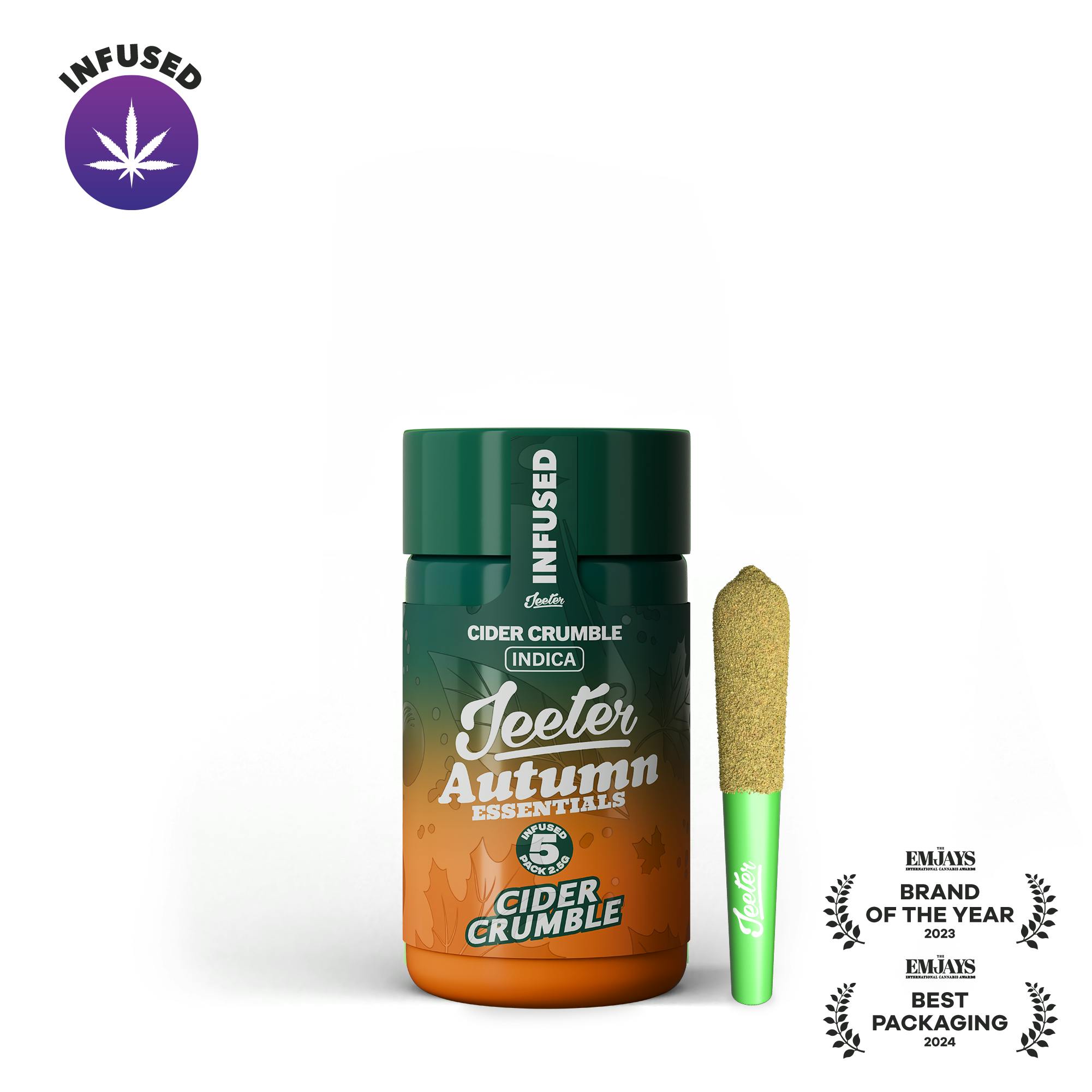
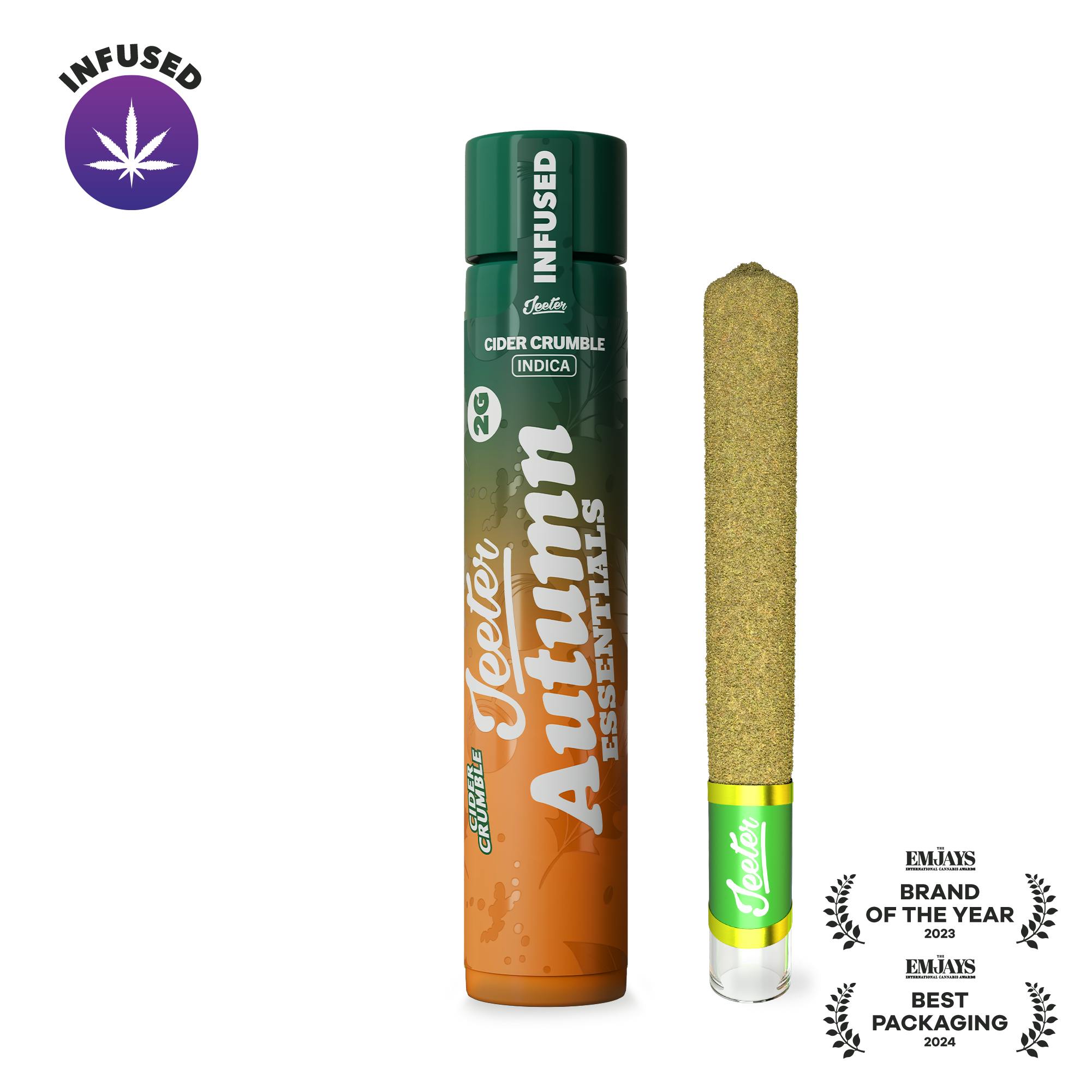
JeeterJeeter Cider Crumble Infused W/ Liquid Diamonds, Rosin, Dusted In Kief Baby Preroll 5pk - Indica · 0.5g/5pk
$43.36
$49after tax

weeddispensarynearme.com
You must be 21 years or older to enter. By entering, you confirm you’re of legal age in your state to purchase cannabis.
For use only by adults 21+ • Keep out of reach of children
5 live products in stock
Quick answer · What is the Cider Crumble cannabis strain?
Cider Crumble arrives like the first cool weekend of October — unhurried, warm, and faintly sweet. This indica-leaning cultivar carries an orchard-floor aromatic signature that feels at once nostalgic and refined. Dense, resinous buds yield a smoke that settles into the body with a measured, deliberate ease, making it a natural companion for quieter evenings when the pace of the day finally deserves to slow.
$49after tax
$23after tax
$45after tax
$96after tax
$45after tax
About Cider Crumble
Cider Crumble is a relatively recent indica-dominant cultivar whose precise lineage has not been fully disclosed by its breeder in public-facing documentation, which is not uncommon for boutique or craft-tier genetics entering the New York market. Based on its terpene expression and phenotypic characteristics, many in the cultivation community speculate parentage rooted in apple- or fruit-forward crosses — potentially drawing from lines related to Sour Apple, itself a cross of Sour Diesel and Cinderella 99, and a dessert-style indica contributor such as a member of the Girl Scout Cookies family or a similar OG-adjacent cultivar. The Cookies lineage, developed and popularized in the Bay Area during the early 2010s, brought the dessert-strain archetype into mainstream cannabis culture and remains a dominant genetic influence in contemporary indica breeding programs. The name itself is evocative rather than taxonomically precise, a branding choice that has become common as craft cultivators seek to communicate a strain's sensory identity before a customer ever opens a jar. Without verified breeder documentation, the lineage should be understood as provisionally described. If confirmed parentage becomes publicly available, that information would sharpen the genetic picture considerably. What is consistent across reported phenotypes is a reliable indica character — compact structure, heavy trichome production, and a terpene suite that leans fruity and spiced rather than fuel or pine-dominant.
The onset of Cider Crumble follows the unhurried rhythm characteristic of well-grown indica cultivars. Within roughly ten to fifteen minutes of inhalation, most consumers report a gentle pressure beginning behind the eyes and across the forehead — a soft, not intrusive, cerebral warmth that signals the experience is underway. This initial phase carries a mild mood-brightening quality, a quiet contentment rather than a pronounced euphoric surge, which suits the strain's restrained, after-hours personality. As the experience deepens over the following twenty to thirty minutes, the body component becomes more pronounced. A heaviness spreads through the shoulders and lower back, often described as a physical unwinding rather than sedation — though for those with lower tolerance or those consuming later in the evening, genuine drowsiness is a reasonable expectation. The peak tends to sit in a balanced, body-forward space that does not entirely cloud cognition but does soften ambition and encourage stillness. Myrcene, likely the dominant terpene here, is well-documented in the scientific literature as contributing to this kind of physical ease. Caryophyllene may add a mild grounding quality. The comedown is gradual and gentle, rarely accompanied by the abrupt fogginess some heavier indicas produce. Total duration for most consumers sits in the two-to-three-hour range, making it manageable for an evening session. As always, those new to cannabis or to this cultivar are encouraged to start low and allow ample time before reassessing.
The aromatic profile of Cider Crumble is its most immediately distinguishing quality. On first encounter — whether opening the container or breaking a bud — the nose finds something reminiscent of a farmers' market in September: ripe apple, a whisper of brown sugar, and a faintly earthy bakery note underneath. This is not a synthetic sweetness but rather an organic, layered one, the kind that suggests fermentation and spice rather than candy. Myrcene is almost certainly the foundational terpene, contributing the characteristic musky-fruit earthiness that underpins so many indica expressions. Caryophyllene, the only terpene known to interact with the endocannabinoid system's CB2 receptors, likely introduces the subtle peppery warmth that keeps the profile from tipping into cloying territory. Terpinolene, when present in smaller concentrations, can contribute the faint floral and apple-adjacent brightness that lifts the mid-register of the aroma. Some phenotypes reportedly carry a secondary linalool note — a lavender-like softness that adds a dessert-pastry quality consistent with the cultivar's name. On the palate, the smoke is smooth and medium-bodied, with the sweetness landing on the front of the tongue and the spiced, slightly woody finish arriving on the exhale. Vapor production through a quality dry-herb vaporizer tends to express the fruit and floral notes more clearly, while combustion brings the earthier, slightly toasted-bread undertones forward. Either method rewards slow, considered inhalation.
Cider Crumble presents the dense, compact bud architecture typical of well-bred indica genetics. The calyxes stack tightly, forming rounded, almost nugget-like formations that feel substantial in the hand without being overly compressed. The color palette skews toward deep forest greens with occasional hints of muted purple — particularly in phenotypes that experienced cooler temperatures during the final weeks of flowering, which encourages anthocyanin expression. Trichome coverage is notably generous across well-grown examples of this cultivar. The resin glands appear milky to amber at peak harvest, giving the surface a frosted, slightly golden quality in strong light that is both visually appealing and indicative of cannabinoid maturity. Pistils — the fine, hair-like structures winding through the bud — tend toward deep amber and burnt orange, standing in warm contrast against the green and purple of the underlying flower. The overall presentation is tidy and dense, consistent with a cultivar bred with commercial and connoisseur standards both in mind.
Cider Crumble demonstrates the characteristic cultivation preferences of an indica-dominant cultivar: a preference for controlled indoor environments, a shorter flowering window, and a compact stature that makes efficient use of vertical growing space. Flowering time for indica-leaning genetics of this profile typically falls in the eight-to-nine-week range, with some phenotypes finishing on the earlier end of that window under optimized conditions. Indoor yields for well-managed plants in this category generally fall in the moderate-to-generous range, rewarding cultivators who invest in proper canopy management techniques such as low-stress training. Outdoor cultivation is viable in temperate climates with long, warm summers and low humidity during the late flowering period — a challenging ask in the New York region, though not impossible for experienced home cultivators working with greenhouse or hoop-house setups. The dense bud structure that defines this cultivar's appeal also creates some susceptibility to moisture-related issues if airflow is inadequate, making humidity management a genuine consideration. Overall, Cider Crumble sits in the intermediate difficulty range: accessible enough for a motivated home cultivator working from reliable genetics, but rewarding for those who bring attention and patience to the process.
Cider Crumble is most fully itself in the early evening — that specific window between the obligations of the day and the full surrender of sleep. It suits a solo evening in as much as it suits a small, comfortable gathering: the kind where conversation moves slowly and no one is checking their phone. Its body-forward, mood-tempering character makes it a natural accompaniment to activities that reward presence without demanding focus. On the culinary front, the strain's apple and warm-spice terpene profile pairs with notable harmony alongside aged hard cheeses, roasted root vegetables, or a slice of something made with brown butter and cinnamon — think a classic tarte tatin or a simple apple crumble, a pairing the name practically invites. For a musical accompaniment, the measured warmth of late-period Bill Evans, the quieter moments of Bon Iver's catalog, or any recording that prioritizes texture over tempo serves the experience well. Those inclined toward creative work will find it a gentle, non-intrusive companion for journaling, sketching, or reading — tasks that benefit from a quieted internal monologue rather than an accelerated one.
Sour Apple
Fans of Cider Crumble's orchard-forward fruit aroma will find Sour Apple occupies a familiar aromatic register, with a similarly tart, green-apple character and a body-calming effect profile.
Granddaddy Purple
Granddaddy Purple shares the deep body relaxation, purple-tinted visual appeal, and sweet-fruity aroma that define Cider Crumble's evening-hour character.
Apple Fritter
A Cookies-lineage cultivar with a distinctly dessert-pastry and apple-forward aroma, Apple Fritter offers a similarly warm, body-dominant experience for those drawn to Cider Crumble's flavor profile.
Zkittlez
Zkittlez delivers the same densely resinous, candy-fruit aromatic sweetness in an indica-leaning package, making it a natural next step for admirers of Cider Crumble's terpene expression.
Northern Lights
One of the foundational classic indicas, Northern Lights offers the same measured, full-body ease and unhurried onset that Cider Crumble's admirers tend to seek in an evening cultivar.
Cider Crumble is an indica-dominant cultivar. Its bud structure, terpene profile, and reported effect arc all align with the characteristics associated with indica-leaning genetics — namely a body-forward, physically relaxing experience with a mood-tempering quality rather than a pronounced cerebral or energizing character. It is best suited to evening or late-afternoon use for most consumers.
Cider Crumble carries a layered, fruit-and-spice flavor profile centered on ripe apple, a subtle brown-sugar sweetness, and a gently earthy, warm-spiced finish. The smoke is smooth and medium-bodied, with the fruit notes most prominent on the inhale and a faint woodsy, peppery quality emerging on the exhale. Vaporizing tends to accentuate the floral and fruit registers most clearly.
Consumers typically describe Cider Crumble's effects as a gradual physical settling accompanied by a mild, contented mood lift. Onset arrives within ten to fifteen minutes, moving from a gentle head warmth into a more pronounced body relaxation over the following half hour. The experience is calming and unhurried, with a duration of roughly two to three hours. Those with lower tolerance may find it meaningfully sedating, particularly later in the evening.
Consumers who enjoy Cider Crumble's apple-and-spice aromatic profile and body-dominant indica effects often find common ground with Sour Apple, Apple Fritter, and Zkittlez for the fruit-forward flavor dimension, and with Granddaddy Purple or Northern Lights for the deep physical ease and evening-appropriate character. Any cultivar sitting at the intersection of fruit aroma and indica relaxation is likely to resonate.
Cider Crumble can be approachable for beginners, though its indica potency warrants the standard caution: start with a small amount, allow fifteen to twenty minutes before reassessing, and choose a comfortable, familiar setting for a first session. The effect profile is not abrupt or disorienting by indica standards, but consumers new to cannabis should approach any cultivar with patience and without time pressure.
Based on its aromatic and effect profile, Cider Crumble's dominant terpenes are likely myrcene — the earthy, musky-fruit compound common across indica cultivars — followed by caryophyllene, which contributes the subtle peppery warmth on the exhale. Terpinolene and linalool may appear as secondary contributors, adding the apple-adjacent brightness and faint floral-pastry quality that give this cultivar its distinctive dessert-orchard character.
Cider Crumble is best suited to the early evening or the hours immediately preceding sleep. Its body-dominant, physically settling effect profile does not lend itself to tasks requiring sustained concentration, social output, or physical coordination. It is an ideal cultivar for winding down — a deliberate transition between the active part of the day and genuine rest, shared quietly or enjoyed in solitude.
The full lineage of Cider Crumble has not been publicly confirmed by its breeder, which is not uncommon for newer or craft-tier cultivars entering regional markets. Phenotypic and terpene evidence suggests possible parentage within fruit-forward or Cookies-adjacent genetic lines, potentially including Sour Apple-related genetics, but this remains speculative until the breeder releases verified documentation.
Related strains
Pick your store
We'll show pricing, deals, and delivery zones for the store you pick. You can switch any time from the header.