THC 24.01%·CBD 0.09%Indica
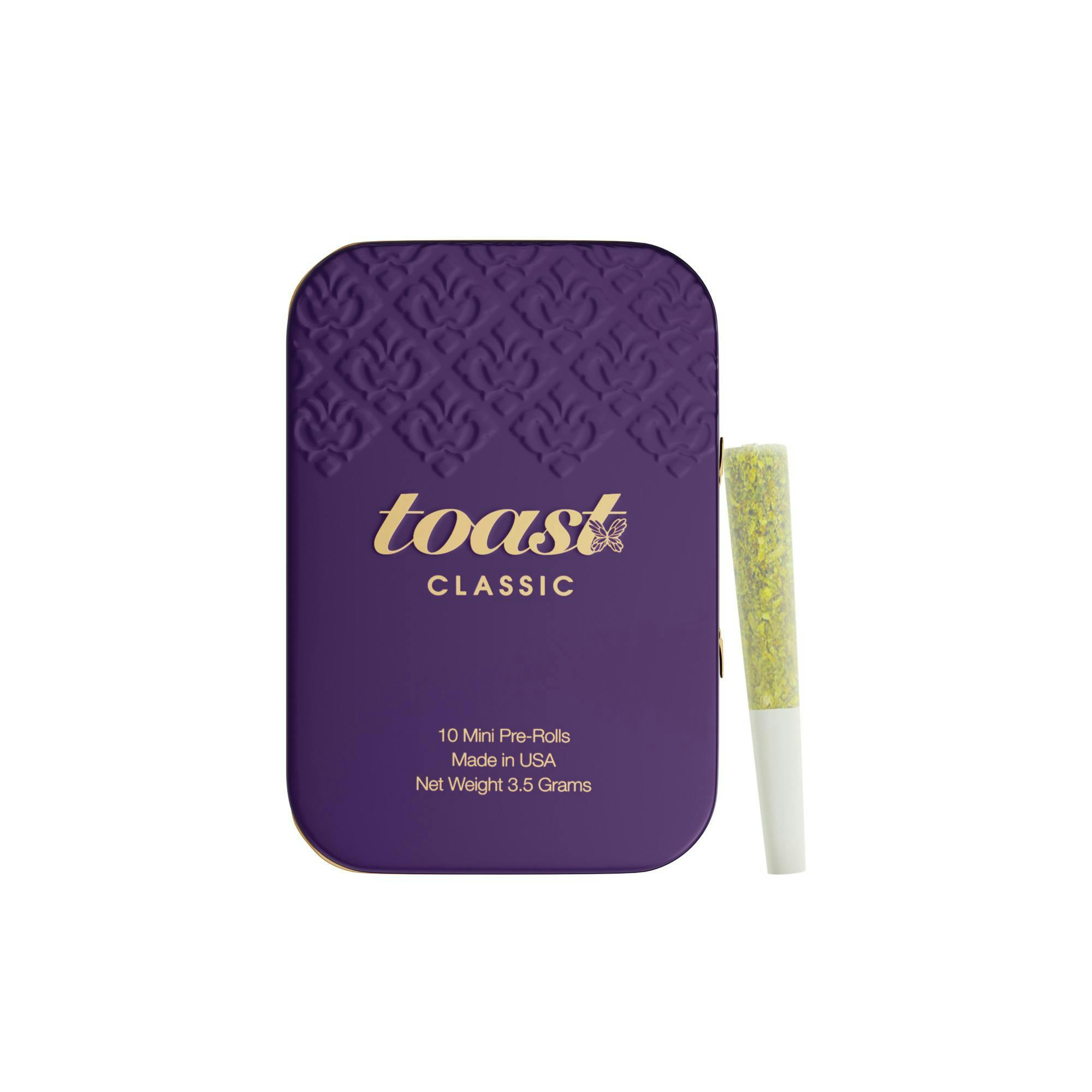
ToastToast | Big Apple Dream | Classic Minis Pre-Roll 10pk · 0.35g/10pk
$44.25
$50after tax

weeddispensarynearme.com
You must be 21 years or older to enter. By entering, you confirm you’re of legal age in your state to purchase cannabis.
For use only by adults 21+ • Keep out of reach of children
1 live products in stock
Quick answer · What is the Big Apple Dream cannabis strain?
Big Apple Dream is a grounded, full-bodied indica whose name pays quiet homage to the city that never truly sleeps — though this cultivar may coax even the most restless New Yorker toward a well-earned pause. Earthy, subtly sweet, and draped in a dense trichome frost, it carries the unhurried temperament of a late-autumn evening spent indoors, offering a layered sensory experience that rewards those who approach it with attention and intention.
$50after tax
About Big Apple Dream
Big Apple Dream is a regional cultivar whose precise genetic documentation remains limited in publicly available breeder records, a circumstance not uncommon among East Coast market strains that emerged during the transitional period between medical and adult-use legalization. The name itself suggests a deliberate nod to New York identity, and the strain appears to draw from indica-dominant heritage consistent with Afghani or OG Kush lineage, though the breeder has not publicly confirmed the specific parent strains. Some accounts associate it with crosses that incorporate elements reminiscent of classic sedative indicas popular in the Northeast market — dense, resinous, and structured around a broad-shouldered cannabinoid profile. It is worth noting that regional market strains sometimes share names with unrelated cultivars produced elsewhere, so phenotypic consistency can vary between cultivators. Big Apple Dream should be understood as a cultivar whose influence is rooted in its sensory and experiential character rather than a well-documented breeding pedigree. As with many strains that gain traction through retail and word-of-mouth in emerging legal markets, its story is still being written. Shoppers seeking definitive lineage verification are encouraged to consult the specific cultivator's documentation available at the point of sale.
Big Apple Dream follows the classic indica arc: a measured onset that typically arrives within five to fifteen minutes when smoked or vaped, beginning as a gentle pressure behind the eyes and a softening of the shoulders. The early phase tends to carry a mild cerebral quality — not a sharp, sativa-style uplift, but rather a quiet clearing of mental noise, the kind that allows a wandering mind to settle without demanding engagement. This opening window is often where the strain feels most versatile. As the experience deepens into its peak phase — generally between twenty and forty-five minutes in — the body component asserts itself more fully. Myrcene, if present at meaningful levels as reported by many similar indica profiles, is associated with muscle relaxation and a heavier physical quality; caryophyllene may contribute a grounding, subtly warming undertone. The overall character at peak is one of composed heaviness: present and embodied rather than sedated. Duration for most consumers tends to run ninety minutes to two hours, with a gradual, undemanding comedown. As with any potent indica-leaning cultivar, those new to cannabis or returning after a break are well advised to start with a modest amount and allow adequate time before considering more.
The aromatic profile of Big Apple Dream reads as a study in earthy depth with understated sweetness — a combination that distinguishes it from louder, more citrus-forward cultivars. On the nose, the dominant impression is of damp earth and rich forest floor, suggesting a myrcene-forward terpene structure. Myrcene, the most prevalent terpene across many indica varieties, contributes that characteristic musky, slightly herbal earthiness that many experienced consumers associate with physical ease and warmth. Beneath this foundation, secondary notes emerge: a mild sweetness that gestures toward stone fruit or dark berry, possibly indicative of linalool contributing a gentle floral lift, and traces of a spiced, almost peppery quality that aligns with the presence of beta-caryophyllene. Caryophyllene is notable as the only terpene known to interact with the endocannabinoid system's CB2 receptors, lending it a distinctive quality beyond aroma alone. On the palate — whether smoked from a well-rolled joint or drawn through a clean glass piece — Big Apple Dream delivers a smoke that is fuller and rounder than sharp. The inhale carries the earthen, slightly sweet character faithfully, while the exhale tends to linger with a soft, woody finish. Vapor at lower temperatures can reveal additional nuance in the fruit register. The overall flavor experience is cohesive and unhurried, consistent with its indica temperament.
Big Apple Dream presents with the compact, chunky bud structure typical of well-grown indica-dominant cultivars. The calyxes stack closely, producing a dense, almost sculptural formation that holds its shape well and speaks to careful cultivation and a thorough cure. The color palette leans toward deep forest and olive greens, occasionally punctuated by hints of purple or violet in phenotypes that have experienced cooler temperatures during the final weeks of flowering — a purely aesthetic outcome of anthocyanin expression rather than a marker of potency. Amber and rust-toned pistils wind through the surface with quiet persistence, adding warmth to an otherwise cool color story. Trichome coverage is generous, with a crystalline frost layered across both the calyxes and the smaller sugar leaves that frame each bud, giving the flower a luminous, slightly silvered quality under direct light. The overall visual impression is one of density and deliberate maturity — a cultivar that rewards a moment of inspection before consumption.
Big Apple Dream, consistent with indica-dominant genetics, tends to express a compact, branchy growth structure well suited to controlled indoor environments. Indoor cultivators can expect a flowering window in the range of eight to nine weeks, a timeline typical of Afghani-influenced indica lineages. Yields indoors are generally moderate to robust when canopy management techniques such as low-stress training or light defoliation are applied to improve light penetration to lower bud sites. Outdoors, the strain is reported to perform well in temperate climates with reliable late-summer warmth, with harvest typically falling in early to mid-October in the Northern Hemisphere. Its relatively compact stature makes it manageable for those working within spatial constraints, though the dense bud structure does call for attentive humidity management during flowering to reduce the risk of moisture-related issues. For the cultivator-curious shopper rather than the experienced grower, Big Apple Dream represents a strain whose finished product reflects the care taken in its final weeks — proper drying, curing, and storage are what ultimately translate the plant's terpene potential into the jar.
Big Apple Dream is a strain that belongs to the quieter hours — the stretch of an evening after obligations have dissolved and the city's ambient noise has softened to something almost musical. It is well suited to solo unwinding: reading in a dim room, working through a slow-cooked meal at home, or settling into a long playlist without any particular destination in mind. Its physical groundedness and mild cerebral opening make it a thoughtful companion for creative pursuits that benefit from stillness rather than stimulation — journaling, sketching, or revisiting a film one already knows well. For food pairings, the earthy, stone-fruit warmth of its terpene profile finds a natural counterpart in roasted root vegetables, aged cheeses with a mineral quality, or a glass of a full-bodied, unoaked red wine. Musically, it aligns with recordings that share its unhurried weight: the deeper catalog of artists like Bill Evans or the slower movements of contemporary ambient composers. This is not a strain for a crowded rooftop or a fast-moving social evening; it is for the person who has already made their choices for the day and is ready to be present within them.
Granddaddy Purple
Fans of Big Apple Dream's deep body relaxation and dark-fruit aromatic notes will find a well-documented parallel in Granddaddy Purple's grape-forward, physically grounding profile.
Northern Lights
Northern Lights shares the same Afghani-rooted indica lineage and resinous, earthy character that defines Big Apple Dream's composed, full-body experience.
Bubba Kush
Those drawn to Big Apple Dream's dense bud structure, coffee-and-earth aroma complexity, and heavy evening temperament will recognize a kindred spirit in Bubba Kush.
Blue Cheese
Blue Cheese's earthy-sweet aromatic layering and unhurried indica descent offer a comparable sensory arc for consumers who appreciate Big Apple Dream's grounded, multi-note profile.
Skywalker OG
Skywalker OG's OG-rooted earthiness and pronounced physical ease make it a natural next step for Big Apple Dream admirers seeking slightly more defined lineage documentation alongside similar effects.
Big Apple Dream is classified as an indica-dominant cultivar. Its growth structure, bud density, and reported effect profile — characterized by physical relaxation, a measured onset, and a grounding quality — are all consistent with indica-leaning genetics. While the specific parent strains are not publicly confirmed by any known breeder, the overall character of the cultivar aligns closely with classic indica benchmarks such as Afghani and OG Kush descendants.
Big Apple Dream delivers an earthy, slightly sweet palate anchored by a rich forest-floor quality on the inhale. Secondary notes gesture toward dark fruit and a mild spiced warmth, likely reflecting contributions from myrcene, linalool, and caryophyllene respectively. The exhale tends to be smooth and woody, with a lingering finish that is fuller and rounder than sharp. Vapor at lower temperatures can surface additional fruit-forward nuance.
The typical experience begins with a quiet settling of mental activity and a softening of physical tension, usually within five to fifteen minutes of inhalation. As the session deepens, a more pronounced body heaviness emerges that many consumers describe as composed rather than sedating. The overall duration tends to run ninety minutes to two hours. The comedown is gradual and undemanding. Those new to cannabis or indica-dominant cultivars should start conservatively and allow sufficient time between sessions.
Consumers who enjoy Big Apple Dream often find comparable satisfaction in Granddaddy Purple, Northern Lights, Bubba Kush, Blue Cheese, and Skywalker OG. Each shares at least one defining characteristic — whether it is the earthy-sweet aromatic profile, the dense indica bud structure, the grounding body effect, or the unhurried evening temperament — that makes the transition between these cultivars feel intuitive rather than arbitrary.
Big Apple Dream can be a suitable introduction to indica-dominant cannabis for adults who approach it thoughtfully. Its effect profile is grounding rather than disorienting, and the sensory experience is cohesive and relatively predictable. That said, as with any potent indica-leaning cultivar, the standard guidance applies: start with a modest amount, allow a full fifteen to thirty minutes to assess the onset, and avoid combining with alcohol or other substances, particularly for first-time or returning consumers.
Based on its reported aromatic and effect profile, Big Apple Dream appears to be myrcene-forward, with myrcene contributing the characteristic earthy, musky depth common to many indica cultivars. Beta-caryophyllene likely plays a secondary role, lending a spiced, peppery warmth, while linalool may account for the subtle floral-fruit sweetness detectable in the mid-register. As with all strains, actual terpene composition varies by batch, cultivator, and growing conditions, so lab-verified certificates of analysis offer the most accurate picture.
Big Apple Dream is most at home in the late evening or on an unhurried afternoon when physical and social obligations have concluded for the day. Its grounding, body-forward character makes it less compatible with tasks that demand sharp cognitive engagement, quick reflexes, or active social performance. It is a cultivar that rewards stillness — a deliberate pause rather than a point of departure — and is best enjoyed when the consumer has nowhere pressing to be afterward.
No breeder has publicly confirmed the specific parent strains of Big Apple Dream as of current available records. It is a regional cultivar whose name reflects its New York market identity, and its genetic story remains partially undocumented — a situation not unusual for strains that gained traction through the Northeast's emerging adult-use landscape. Consumers seeking precise lineage verification should request the cultivator's documentation or certificate of analysis at the point of purchase.
Related strains
Pick your store
We'll show pricing, deals, and delivery zones for the store you pick. You can switch any time from the header.